
Life 3.0 by Max Tegmark
Being Human in the Age of AI (Book Summary)
Max Erik Tegmark is one of the RockStar Gods of AI.
He is a Swedish-American physicist, cosmologist and machine learning researcher. He is a professor at the Massachusetts Institute of Technology and the president of the Future of Life Institute.
After finishing the book “SuperIntelligence” by Nick Bostrom [blog link provided at the end], I was searching for similar books on the same topic. That is when I bumped into a YouTube video on the future of AI and of humankind.
The video was that of a conference that had amongst its speakers the likes of Ray Kurzweil, Nick Bostrom, and Elon Musk. The conference was hosted by none other than the rockstar god of AI himself — Max Tegmark.
That video motivated me to follow him and read Life 3.0.
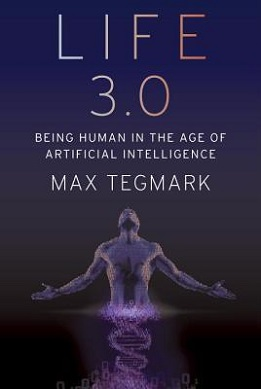

Life 3.0 is a non-fiction book that discusses AI and its impact on the future of life on Earth and beyond. The book discusses a variety of societal implications, what can be done to maximise the chances of a positive outcome, and potential futures for humanity, technology and combinations thereof.
Here is a part-wise summary:
Part 1: The Future of Life: This section begins with a discussion of the concept of “intelligence” and how humans have evolved their level of intelligence over time. Tegmark then proposes a classification system for possible levels of intelligent life, known as the “Life 1.0 to Life 3.0 scale.”
Life 1.0 refers to organisms that only react to their surroundings.
Life 2.0 refers to organisms that can learn and plan.
Life 3.0 refers to organisms that can modify their software and hardware to improve themselves.
Tegmark also discusses the possibility of a future form of life — Life 4.0, which would be intelligent life that has transcended the physical constraints of the universe.
Part 2: The Near Future: In this section, Tegmark discusses the current state of artificial intelligence and its potential applications. He describes the differences between narrow AI and general AI and outlines the various areas where AI is already being used, from self-driving cars to medical diagnosis.
Tegmark also considers the possible economic implications of advanced AI, such as the displacement of human workers and the concentration of wealth. He concludes by arguing that in order to maximise the benefits of AI while minimising the potential risks, we must develop a “friendly AI” that shares our values and goals.
[Please refer to my article on economic implications of advanced AI and Isaac Asimov’s laws for what Tegmark is referring to as friendly AI — blog link provided in the end]
Part 3: The Far Future: The final section of the book considers the long-term future of artificial intelligence and its potential impact on humanity. Tegmark discusses the possibility of machine consciousness and the ethical implications of creating a sentient AI.
He also considers the possibility of a technological singularity, in which AI progresses so rapidly that it becomes impossible for humans to control or understand it.
Tegmark concludes by arguing that the development of advanced AI is not inevitable and that our choices as a society will determine whether AI leads to a utopia or a dystopia.
Philosophical Takeaways:
- Intelligence is likely a spectrum and humans are not necessarily the pinnacle of intelligence.
- The development of AI requires careful consideration of ethical and moral implications.
- The rise of AI has the potential to drastically change our social, economic, and political structures.
- It is up to us as a society to determine the outcome of AI development and whether it will lead to a positive future or a negative one.
Related blogs:
- “SuperIntelligence” byNickBostrom
(https://readmedium.com/superintelligence-by-nick-bostrom-94940668a614)
2. What if the customer was a robot?
https://readmedium.com/what-if-the-customer-is-a-robot-9820ec0a5e89]