
Let’s Take Off The Masks We All Wear Pridefully
Being authentic is the dreamland we all have been looking for
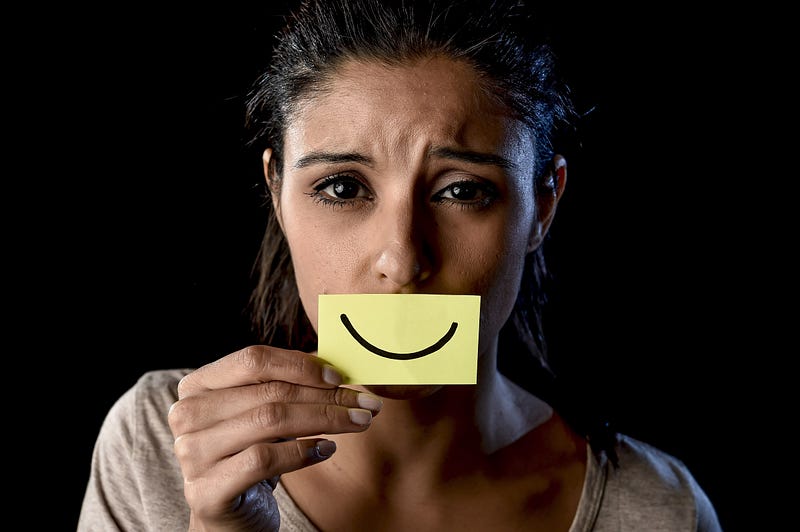
Authenticism is a forgotten sport in today’s world. So many of us wear masks that we don’t want, simply because they fit us.
I know people with the best personalities and characters but as soon as you change their environment they become someone else.
I am guilty of that as much, if not more, as the next person.
It is because deeply we don’t feel enough. But the truth is we are.
The irony of changing personalities
The reason we are all guilty of meddling with our personalities is to appeal to a community or society, mostly revolves around having them like us more.
According to research, however, authentic people tend to have happier relationships than the rest.
Moving on, authentic people are generally happier as well. They have higher self-esteem too.
Speaking like this it seems as if there is no problem in being authentic. Why is it then, that so many people feel safer in self-carved masks?
Lets first clarify what inauthenticity means
It all revolves around being fake or insincere. Who hasn’t done that?
I have made so many commitments despite the fact I knew I wouldn’t follow through on them. The reason was simple — to impress people with my hefty commitments.
A simple one was,
I will wake up early every day and go for a run
It sounds cool, doesn’t it? Immediately after saying it, I felt a sense of regret. At the same time though, I knew no one would care if I didn't.
But it goes beyond this too.
I have been part of groups that were so dissimilar to me in every shape and form. It involves taking up values and beliefs you just don’t believe in.
If you don’t agree with them you are a p*ssy or a loser.
We all have been there.
So why do we become inauthentic?
The perfect statement does not exist, and so I can’t talk about everyone else.
I was guilty of this because it felt like a shortcut.
When in Rome do as the Romans
The shortest way to be a part of a culture is to take up the most accepted beliefs and wear them as a badge of honour.
If you start by being authentic and real to who you are, you will have fewer relationships. After all, you can’t appeal to everyone, right?
Having fewer friends automatically labels you as a loner or a loser.
No one wants to go around being called a loser.
So what do we do? We take the shorter route.
I wish I could tell you it is easy to be real, and that nothing will change if you go about it but that is not true.
I have been on both sides of the coin. I have enjoyed the real side more. But of course, anyone would say that.
So let me tell you my experience of the other side.
It was the essence of the worst year of my life in 2020.
For me being fake was ignoring things that went in my head, be it emotions that went unexpressed or reservations that went unsaid. It was smiling and taking sh*t from other people because saying something would cause a conflict and maybe a termination of that certain relation.
Of course, when you keep things on your chest, there comes a time when they become too much to bear. You end up exploding.
That messed up my relationships. When people consider you a ticking time bomb they stop spending as much time with you.
Nonetheless, it was a good thing. It taught me to not overburden myself with things that don't matter. Not only that, it told me to stay away from toxic people.
People who can't get enough of themselves and didn't respect anyone else set me off. That was my kryptonite. They made me want to burst in flames.
I knew a living price tag once. Spend 5 minutes with him and he would tell you what everything he had cost.
We haven’t talked in a very long time now.
Sometimes you have to cut people out of your life for your own peace of mind.
You can’t tell someone to be real and get them to do it
Life has taught me this.
It is not because people don’t listen or whatnot. It is just because experience is the best teacher.
When you see the difference between both sides of the coin, you tend to choose the right one.
No matter how many videos you watch, how many articles or books you read, nothing can teach you better than your own experience.
Most of the experience is mental. It is hard to share in words. It is only when you go through it you understand what you have been doing wrong all this time.
In one moment all the information you have consumed about authentic people tends to click together.
It happened to me. I thought,
I am such an idiot, I should have known.
But it is never too late. The sooner you do it the better, the longer you stretch it the harder it becomes, but it is never too late.
That is a good thing because it leaves you with no excuses.
Inauthenticity gives rise to a network where you don’t belong. When that network becomes bigger and bigger, it becomes harder and harder to say no to it.
But if you feel stuck at any point, want a break, or want a sure shot chance at improvement, it is never too late to pull the plug.
Realness is a patient game
The first days after you pull the plug involves people wanting to pull you back in the rabbit hole you just jumped out of.
It feels tempting and your brain makes you want to see the positive side rather than the negative side simply because change is scary, but don't be fooled.
This is where you want to be.
A good side-effect is that relationships start to fade that shouldn't have been there in the first place.
You see people you should have in your life in damning contrast to those who shouldn't have been there. You feel proud. It is a bold move.
One of the ways people try to get you back in that same disaster circle is by calling you names and pretty much trying to instigate you in every which way.
The important thing to know is, good relationships always follow the rule of the occasional call.
People have the capacity to call you without demanding anything.
I recently got a message from a ‘friend’. He messaged me out of the blue after like 5 months.
“You forgot me, I was disappointed, didn't expect that”
I was tempted to respond in a people pleaser way,
No, it isn't like that, I just had a lot going on, how are you?
But I waited.
The next message came,
Can you place a vote for me?
He sent me a link and kept sending question marks till a few days later.
I hadn't messaged him, I saw through it. He wanted a favour, of course, he did.
If he had simply messaged me asking a favour and no sugarcoating of
You forgot me
I would have done the favour for him. This time I just knew better.
The key to having good relationships with anyone is being authentic
Research suggests that people are unconsciously more likely to associate deceitful words with liars and associate honest words with people telling the truth, without knowing who is who.
On the contrary, when consciously spotting liars, people tend to not do as well.
Turns out, we do have a third eye for liars and deceit. So we subconsciously do not like people who lie habitually.
Quality relationships aren't built in a day. They take a while.
But they last longer and tend to be more effective too. Shallow relationships mess with your mind and mental health, while deep relationships have mutual concern and benefit.
Having a quality relationship with a friend, relative, or partner doesn't mean you won't fight. Neither does it mean you can't or won’t ask for favours. It means you trust the other person enough to just be you.
Your crazy eccentric self.
You know that if you make mistakes or certain accusations are levelled against you, the other person knows you enough to defend you.
If you in fact did something wrong, the relationship doesn't just end, it can be mended because there is mutual respect.
Interestingly, if you ask for a favour and it is declined, the relationship doesn't just end. Because that was not a basis for the relationship in the first place.
You can also say what you have in mind to the other person.
At the same time, you shouldn't put them down in public.
Yes, you can level your reservations politely but firmly, but not aggressively.
Here is something to live by when it comes to building genuine relationships with people close to you,
Don’t criticise, condemn, and complain
Imagine having the right people around you all the time. People who are like you and have the same ambitions.
Imagine being able to share concerns about the other person to their face instead of at their back and not have it end up in an argument.
Imagine having a network of people ready to take your back and for whom you would sacrifice as well.
All of that is a dreamland. But it is not an unreachable dream.
Being real in a not-so-real world makes you the odd one out. But what it also does, is put a beacon on your head that signals to others like you.
Those people tend to stay close to you and they trust you.
They are the formation of genuine quality relationships.
Summary
Mildly put, being authentic means being consistent with your beliefs and values and staying by them.
Simon Sinek explains briefly but very effectively how it works.
When you stand by what you believe in, you build trust with other people. They respect you more.
In the long run, it is ultimately beneficial to you.
So take the short term criticism but hold tight, because even if things don't go the way you expect them to, at least you ended up living a truthful life.
If you enjoyed reading this, consider following and subscribing by email. That way you will get an email every time I publish.
Subscribe to Medium to get access to thousands of amazing articles from all writers on the platform here!
If you have come this far, consider giving these a read!


