
Mental health/ADHD
Let ADHD Kids Fidget — It Can Help Them Learn Better
We should be building in exercise and movement at home and at school
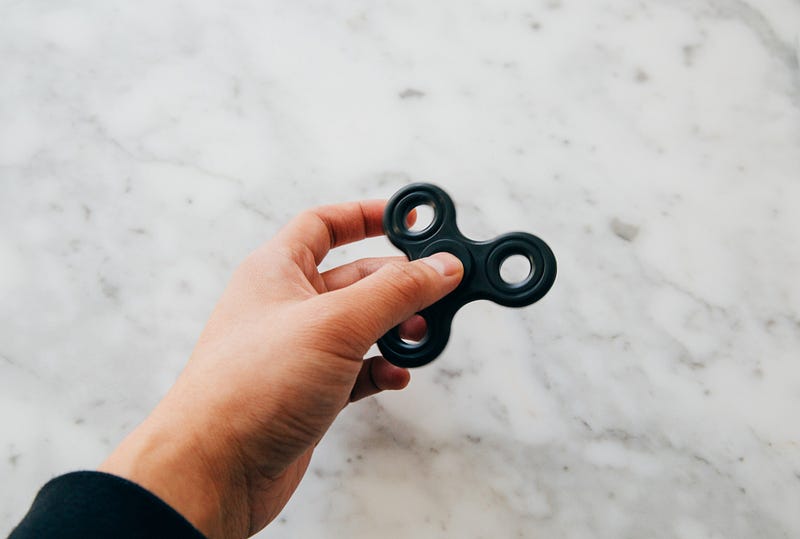
Many teachers and parents of ADHD kids think that sitting still and not squirming will help ADHD kids learn better. You know the old story of telling kids to focus and do one thing at a time. The latest ADHD research shows this is wrong. Read on to discover why we need to rethink this.
Researchers at Florida State University found that the more kids can move around while trying to learn, the better. All that finger tapping and fidgeting is a very important aid to help them learn and pay attention.
The ADHD expert, Dr. John Ratey,(author of Spark) explains that any physical activity such as fidgeting actually increases the dopamine and norepinephrine brain transmitters, just like the ADHD meds do. As we all know, these are the chemicals that really help ADHD children to pay attention and stay focused.
Sydney Zentall of Purdue University has also researched this and found that the kids need a secondary physical activity to help them with focusing on the main task which might be reading or paying attention. So, doing two things at the same time is great for focusing.
“You can also give students options for movement while they are focusing. This could be something like giving them a pipe cleaner to play with, which allows their hands to move. Movement options often help students focus better.”— Sydney Zentall.
Her research is also mentioned in Thomas Armstrong’s book, The Myth of the ADHD Child.
Finger tapping and fidgeting may help.
If you see these kids finger tapping, squirming or fidgeting, this is actually helping them to concentrate and learn.
These are not distractions although they may be for the teachers!
An interesting experiment involved ADHD teens. This was organized by the UC Davis Mind Institute in California. They were told to keep track of darting arrows from one side to the other in a “flanker test.” The researchers attached sensors to their ankles.
The teens who were the most restless got the best scores. This again suggests that a secondary physical activity will help the cognitive processes of paying attention and learning.
As long as these physical activities do not disturb other learners, ADHD kids and teens should be allowed to tap, squirm, jiggle, and fidget.
“Parents and teachers shouldn’t try to keep them still. Let them move while they are doing their work or other challenging cognitive tasks.” — Professor Julie Schweitzer, Director of UC Davis ADHD Program.
Stability balls in the classroom
Are stability balls in the classroom useful? One doctoral dissertation shows that ADHD children were able to stay longer on a task when they were balancing on these balls. They were also displaying lower levels of hyperactivity before and after the task. Kids and teachers were pleased because both felt these had enhanced teaching and learning.
Ideally, these balls should have anti-rolling stabilizers to prevent falls.
Parents can try these stability balls for their kids at home and see if they may help.
ADHD accommodations.
Under the ADHD accommodations for schools, kids can be allowed to move around and teachers should be alerted by parents if they think this will help. Some teachers can allow a child with ADHD to have two desks so they are free to move from one to the other.
Also, parents need to talk to teachers about what sort of punishment is useful and certainly avoid the denial of recess. It is interesting to note that Finland has one of the lowest rates of ADHD in the world. One reason may be that children are obliged to play outside (whatever the weather!) and they have a 15-minute break after 45 minutes of class and then have up to two recesses lasting 30 minutes.
“Physical exercise may be the single most powerful somatic treatment for ADD that we have.” — Dr. Edward Hallowell, ADHD expert and author.
Why ADHD kids need to exercise more
Any physical movement helps to switch on a child’s brain. It is interesting to read in the Journal of Abnormal Child Psychology how movement can affect a child’s learning. They set up an experiment where one group of children had to do 20 minutes on the treadmill. The other group played a game sitting down. Those kids who had been physically active on the treadmill were getting better test scores than those who had been sitting down.
“Physical exercise is really for our brains.” — Dr. John Ratey, ADHD expert
Future prospects
While the rates of ADHD diagnosis have increased between 1997 and 2016, there may be many reasons for this such as increased awareness among doctors and parents themselves.
One fact is certain. All the ADHD experts are convinced that whether a child with ADHD is treated with meds or behavior therapy or both, exercise and movement must complement these therapies.
Additional resources:-
Daily Exercise Ideas:-
Exercise for children with ADHD:-
The Benefits of Exercise for Children with ADHD
You may be interested in other ADHD stories I have written:-