
Lessons Learned from Climbing a 3000-Foot Vertical Cliff Without Ropes
Skill Development Expert Profile — Alex Honnold
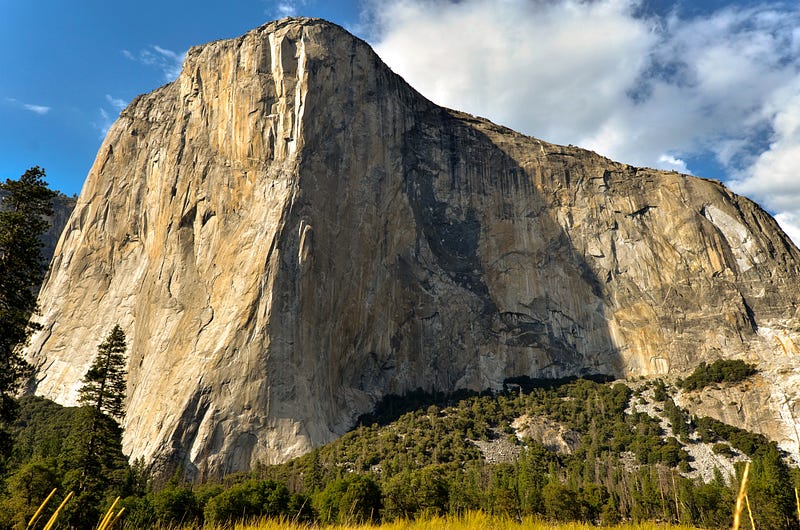
On June 3rd, 2017, Alex Honnold did something that for a long time was considered impossible by professional rock climbers. He climbed El Capitan, one of the world’s most iconic cliffs, without ropes. That’s more than 3000 feet straight up, on a very technical and strenuous route.
After three hours and fifty-six minutes, Alex stood on the top, almost 1000 meter’s higher. That’s an extraordinary accomplishment. How did he do it? And how did he prepare to achieve this level of performance? What type of person does it take to prepare for a climb, where any small mistake can lead to a fall and a certain death?
The Climb
“Imagine an athletic gold medal performance, and if you make a single mistake, you will die. That’s the level of performance it takes to free-solo El Capitan.” — Tommy Caldwell, legendary rock climber.
Before accomplishing the climb, Alex had spent ten years thinking about it, almost two years planning and training for it, and more than a year choreographing and fine-tuning thousands of precise moves.
Finally, after two seasons of preparation, he felt ready. He knew every hand and foot-hold on the route. On the day of the climb, he woke up like any other day, ate his regular breakfast, and hiked to the base of the wall. He knew exactly what to do and how to do it. He had planned every detail and was perfectly executing his free-solo routine. Free-soloing is the climbing term to describe climbing without any ropes.
“On the day of the climb, it felt as natural and comfortable as a walk in the park, which was what most people were doing in Yosemite that day.” — Alex Honnold
Preparation
“The amount of preparation made the climb feel doable, not comfortable. But going from something impossible to within the limits of what’s possible.’” — Alex Honnold
When he was 23, Alex free-soloed a route on Half Dome (another tall cliff nearby), almost without preparation. Before the climb, he only climbed it once with a friend, on ropes. Near the end of the ascent, he came to parts where he did not feel comfortable at all and was hanging on for his life. He was terrified. Eventually, he made it to the top but didn’t feel good about it. He felt lucky to be alive. After the experience, Alex said, “I want to be a great climber, not a lucky climber.” Climbing Half Dome, he felt he got away with something, that he got a bit lucky.
Among all the greatest free-solo climbers in the world, very few are still alive. There are lots of accidents, and an accident leads to almost certain death.
Before attempting a climb with the difficulty level of El Capitan, Alex wanted to feel that he had done everything he possibly could do to prepare for it.
“The desire to solo a route has to be weighed against the possibilities. Can I physically do it? Am I prepared? Am I absolutely sure of myself?” — Alex Honnold
During the planning of the climb, Alex was extremely methodical and took notes every day after climbing, about how he did and felt, and what he could improve. When you’re hanging onto your fingertips 500 meters above the ground, every detail matters. Things change when you’re not attached to a rope. You need to be able to trust every hold.
For example, he climbed about 1500 feet up the wall, to clean a two-meter section of the wall of loose rocks, filling up a big backpack with rocks. It took a whole day. He analysed every foot of the route, to be sure he could do it.
“If there is a single foot of those 3000 feet I can’t climb, then basically I can’t do the climb. So, I had to be really meticulous.” — Alex Honnold
For almost two years, he memorised sequences to such a degree that they were deeply ingrained in his memory, and there was no chance of error. Every section of the climb was practised thousands of time. Much of the memorisation was done with visualisation practice. He would not only memorise the technical execution of the climb but also how each grip would feel in his hand. The texture of each hold. Everything was imagined like a choreographed dance, very far off the ground.
He also worked on the emotional components of the climb. What if he got afraid, too tired, had doubts or something unexpected happened. He had to be prepared for almost anything. According to Alex, doubt is the precursor to failure.
He also had to be physically ready for the climb. Unless you are physically strong enough to pull yourself up, no visualisation or preparation will help you. Alex was obsessive about his physical training and would spend hours every day on building his grip strength and exercising out of the van he lived in, on top of the time he spent climbing outdoors. He also did a daily stretching routine every morning, to increase his flexibility and thereby make certain moves easier to perform.
Focus
“It’s easy to remain focused when your life is on the line.” — Alex Honnold
Alex is an expert at reaching the flow state, which is defined as the state of complete focus, absorption and concentration occurring when intellectual or physical capacities are engaged to their full potential. When in flow, people often lose their sense of time, and are so focused on the task at hand, that they fail to notice other things happening around them.
About half-way up his climb of El Capitan, Alex encountered another climber in a unicorn suit. This would have distracted most people, and potentially could have ruined his climb. But Alex was so focused on what he was doing, that he quickly moved passed, fully absorbed on what he had to do next.
“Finally, I commit, and once I start, there’s a complete focus. The only thing that exists is the rock around me and the next few moves of climbing.” — Alex Honnold
Fear
“I definitely have a fear of death, the same as everyone else, and I would very much like not to die while climbing.” — Alex Honnold
When climbing, Alex tries to step outside of his fear. Rather than suppress it, he tries to expand his comfort zone by practising the moves over and over again. He works through the fear until it’s just not scary anymore.
Alex does not exactly have a normal relationship to fear, however. During a MRI-scan where he was shown a sequence of pictures that usually activates the brain’s fear centre, the amygdala, Alex’s brain showed almost no activation. The results suggest that it takes a lot to scare him.
According to Alex, free soloing plays with the mind. Whereas the physical effort is mostly the same as climbing with ropes, staying calm and performing at your best when any mistake could mean death, requires a certain kind of mindset.
Growing up
“I was never, like, a bad climber as a kid, but I had never been a great climber either. There were a lot of other climbers who were much, much stronger than me, who started as kids and were, like, instantly, freakishly strong, like they just have a natural gift. And that was never me. I just loved climbing, and I’ve been climbing all the time ever since, so I’ve naturally gotten better at it, but I’ve never been gifted.” — Alex Honnold
Although Alex didn’t consider himself naturally gifted, he climbed a lot during his adolescence. His mother brought him into a climbing environment very early, and when he was 10 years old, he started going to the climbing gym on his own.
Alex was very introverted, so he naturally started to enjoy bouldering or any climbing he could do on his own, such as free-soloing. As he got old enough, he acquired a van which he could live out of, to be able to spend a lot of time close to the best climbing routes. He lived in Yosemite national park most of his summers.
Through his dedication to climbing and commitment to perfecting every move, he has become one of the best free-solo climbers in the world and managed to climb a 3000-foot vertical cliff, one of the most celebrated ascents of all time.
Take-Home Message
Alex’s achievement is truly inspirational, and to understand how it’s possible we need to look at the story behind it. I strongly recommend watching the documentary Free Solo, which shows in more detail how Alex was preparing for the climb.
He has been honing his skill of climbing for over 20 years, and for two years he specifically prepared to climb El Capitan. That’s the focus and commitment required to achieve extraordinary performance.
Honnold has an extreme focus on detail. He made sure that he did everything he could to prepare, before attempting the most challenging climb of his life.
Alex has an unusual relationship with fear. His capability to remain calm and logical in exceedingly dangerous situations is exceptional.
He has a long background in climbing, but he wasn’t more talented than people around him when growing up. He simply worked harder.
Thanks for reading, sharing, and following! :)
If you liked this article, you may also like:


