
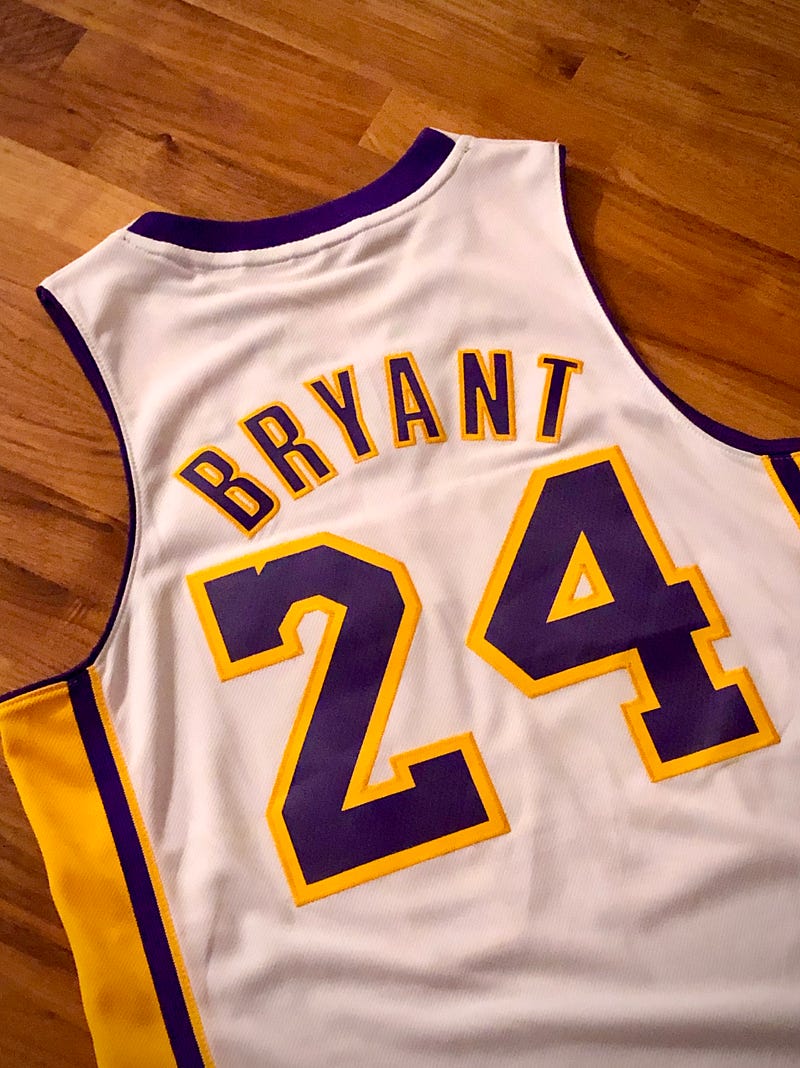
How Kobe Outworked the Rest to Go from Summer League Failure to 5x NBA Champion
Skill Development Expert Profile — Kobe Bryant
When Kobe Bryant was ten years old, he played in the local basketball summer league, and didn’t score a single point, for the whole summer!
Kobe says he was terrible at this point. But he was already extremely determined and decided to get to work, focusing on the basics, improving one sub-skill at a time. Close shots, simple layups, dribbling the ball.
The next summer, he came back and did a lot better. He kept working at more and more advanced skills. Two years later he came back and was dominating the league. At age 14 he was the best in the state.
Kobe represents the story of what it takes to go from summer league failure to one of the best players of all time and a 5x NBA champion. And his secret weapon was his work ethic.
Determination
“Everything was done in order to become a better basketball player. Everything. When you have that view, the world becomes your library, to help you to become better at your craft.” — Kobe Bryant
At the age of 13, Kobe made the decision to dedicate his life to basketball and make it his number one priority. He says the inspiration came from the love of the game, and the challenge it would take to become the best.
Everything he did in life, everyone he talked to, everything was done to become a better basketball player. His days were planned so that he could maximise practice time. And when he wasn’t practising, he was studying videos of the best players in the game, and preparing the moves and skills he would work on next.
His goal was to work as hard as he could every day so that he wouldn’t have any regrets when his career was over. And if you live your life in a way where you get a little bit better every day, for 20 years, then you end up with something exceptional.
Trivial things weren’t going to pull my attention. It had to be things that had a purpose. Anything that didn’t bring me closer to becoming the best basketball player I could be, anything that was outside of that lane, I didn’t have time for. -Kobe Bryant
Kobe decided to skip college and go straight from high school to the NBA. He was ready for the NBA as a 17-year old, already with a dream of becoming the best basketball player of all time.
How Kobe Practised
“You start with thinking about what your game could be. What would make you unstoppable? And then you start from the ground. You start building it one piece at a time. One move at a time.” — Kobe Bryant
Kobe had concrete goals in practice. For example, 800 made jump shots. But these weren’t just any type of shots. During training, he always practised game shots. With the same speed and intensity as if it could happen in a game. He tried to shoot from similar positions and situations as if they could occur in a game. He focused deliberately on developing the skill of making baskets. The time he spent doing it was almost an afterthought.
When most people talk about working hard, they use the amount of time they work as an indicator of how hard they worked (e.g. ‘I worked 70 hours this week!’). Putting in a lot of time might make you tired, but it doesn’t guarantee that you will become better. It’s not the same as practising deliberately. Most people who think they are working hard are developing the skill of being in the gym, not the skill of making baskets. Don’t just work hard; work hard with an intention.
Asking Questions to Improve
“I call people all the time. If I want to learn something, I pick up the phone and ask.” — Kobe Bryant
Kobe always asked a lot of questions. He used to sit down with current and former greats and ask them why they were doing every single detail. He asked questions such as:
- What were you thinking at the time?
- What happened there?
- What did you feel there?
- What was the purpose of that specific move?
- Why this? Why that?
He would pick them apart. He studied all the legends of the game, to better understand the in’s and out’s of the game. He asked them how they approached the game, how they improved all the details of their game, and how they practised getting better.
‘I would watch Magic play, I’d watch Michael play, and I would see them do all these unbelievable things. And I would say to myself, could I get to this level? I don’t know, but let’s find out.’ -Kobe Bryant
Kobe was also asking questions for himself. Especially when things didn’t work out. What could he do to improve and make it work next time? What sort of training did he need to do to make it better for the next game?
Questions don’t always have to be directed at someone else. You can also learn a lot by asking yourself questions, when watching others or when reading a book. The benefit of asking questions is that it will encourage you to think about what you can do to improve and what it is that makes others so good at what they do.
Work Ethic — Outwork Your Potential
“I think the best way to prove your value is to work; is to learn; is to absorb; to be a sponge. You always want to outwork your potential. As hard as you believe you can work. You can work harder than that. If your practices aren’t more competitive than the games themselves, you are doing the wrong thing.” — Kobe Bryant
Kobe worked with full determination, every day for 20 years. He tried to maximise and improve every detail of his game. He studied every part of the game to find out where he could make a small improvement. He would always think about how he could get an advantage, and then do that.
Jay Williams, who himself is famous for outworking other players, had an experience of what it’s like to face Kobe Bryant. In a game against the Lakers, which would start at 7 pm one night, he decided to come in at 3 pm, to do 400 made shots in preparation for the game. When he arrived at the stadium, Kobe was already there, working out. And when Jay finished his practice after one and a half hours, he still heard the ball bouncing on the other side. Kobe was still practising, going full machine, for another half an hour. Later that night, Kobe went on and scored 40 points against Jay’s team. After the game, Jay went over and asked why in the world Kobe was working so hard before the game. Kobe replied, ‘because I saw you come in, and I wanted you to know that it doesn’t matter how hard you work, that I’m willing to work harder than you. You inspired me to become better.’
If your job is to be the best basketball-player you can, you have to practice as much as you can, as often as you can. You could wake up at 10 am, train for a couple of hours at midday, then take a rest to let your body recover. Then you can get back out and train again for a couple of hours at 6–8 pm, go home, shower, eat dinner and go to bed. Wake up and repeat every day. Those are two sessions.
This sort of schedule is what most players would follow, but not Kobe. Instead, he would get up and train from 4 to 6 am, then again from 9 to 11 am, 2 to 4 pm, and 7 to 9 pm. He would get in twice as many sessions as his competitors, and over several years, the separation would be massive. At some point, the difference becomes so large, that they are never going to catch up, no matter how much work they start putting in. They are just too far behind.
‘I know that if I start early enough, I’m gonna get more practice in than my opponent. And I know that, because I know their practice schedule, so I’m gonna get up earlier than that, and get more practice in. And the gap is just gonna widen and widen, and they won’t be able to get that back.’ -Kobe Bryant
Creative Ways to Improve
In the 2000 NBA finals, Bryant suffered the worst sprained ankle of his career. While he was able to get through the games, he realised that this was a recurring injury and that he needed to be proactive about prevention. So that summer, he took up tap dancing.
After doing some research, Bryant discovered that tap dancing was one of the best ways to build up ankle strength while simultaneously improving foot speed and rhythm. So, he hired an instructor and worked on it all summer. He turned himself into the Fred Astaire of the basketball court. Bryant was only concerned about what worked and found creative solutions to his challenges.
Legacy
“Kobe would all want us to become the best we can be at whatever we are doing. That’s his legacy.” — LeBron James
According to Bryant, the true value of your career is not what you have done, but what you inspire the future generation to become. When he retired, he could do it feeling satisfied, as he had done everything he could to be the best basketball player he could be.
His life ended tragically, in a helicopter accident, together with his daughter Gianna and seven others, on January 26th, 2020. But his legacy of what it takes to achieve greatness, lives on, through his words and achievements.
The best way to honour him is to implement his work ethic to the skill you want to become successful at. If you work hard every day, improving one thing at a time, you will outwork your competition, and end up with results you can only dream of.
Take Home Message
Kobe became better than the rest by outworking them. Others had similar skill and talent, but he worked harder than the rest and thereby became better.
Kobe planned everything in his life around improving his ability to play basketball.
Asking questions to other great players helped him understand what and how he needed to practice.
His life ended early, in a tragic accident, but his legacy lives on.
Thanks for reading, sharing, and following! :)
If you liked this article, you may also like: