
Lessons I Learned From My Osteoarthritis
The downside — and yes, the upside
“Slow Down!”
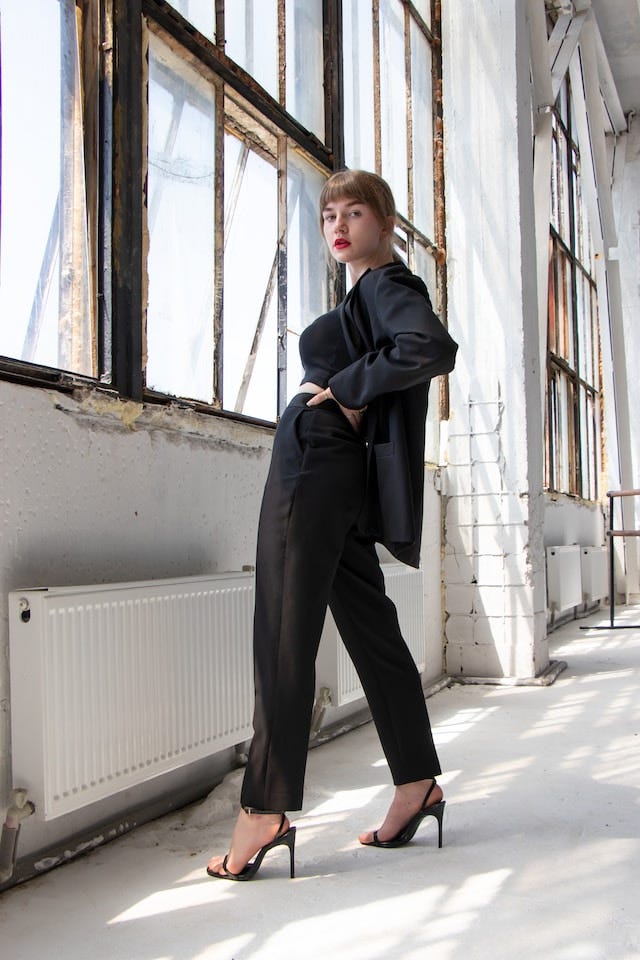
Ah…I remember the days when I used to be able to outwalk any person, male or female, in my 4” heels.
As a younger woman, I had always walked at a good clip, probably because I felt so much of my life had been stymied — by a combination of my parents and barriers in my profession. So naturally, I wanted to make up for lost time, intent on traversing from Point A to B as quickly as possible.
There were so many things to do and I wanted to make sure I’d finish them before the first half of my life was over. And for some reason, I found it easier to walk in heels than flats — probably because of my high arches. I walked as tall and proud as I possibly could to lift up my petite 5’5” frame.
Not that this was always easy. Nearly everyone around me complained that I walked too fast. Certainly, my mother did. Boyfriends felt ashamed of being outwalked by a girl, so they’d tell me to slow down, making the excuse that their hips were hurting.
Random people on the street would also tell me to slow down, as if it were any of their business–even if I walked around them. Then there was a former friend who would make sarcastic quips loud enough for others to hear, like ”Jesus, I’m not trying to race you, you know”: to which I’d retort just as loudly, “Well, maybe if you walked a little faster, you could lose a few more pounds.”
In fact, I could even outwalk others on cobblestones–sans stilettos–as I discovered in England.
The only place in the world where people walked at my speed was in Manhattan. For once, I was outpaced by many–and I became only…average! I had never lived there–the Bronx was as close as I got–but I felt at ease with no one complaining. Maybe New York City was my true home after all!
Feeling Flat and Deflated
But that began to change when I turned 51. My right thigh had somehow lost strength even though I had not suffered any accidents. It worsened considerably the following year–which happened to be a year after the death of my mother. I could no longer wear heels and had to stick to ugly flats or rubber-soled shoes that looked like orthopedic footwear. Earth to earth, I thought despairingly. I was now flat and deflated.
This was terrible as I had become so accustomed to wearing heels which were all the rage after 2000. In short (pun intended), I could no longer walk tall and proud. If I was never beautiful, I was at least able to compensate by dressing elegantly; how I loved hearing I looked like something out of a magazine! And now that option was no longer open to me. I could not have felt more desexed and neutered.
Then I started to lose mobility in the other leg. By now, I was limping badly. Hunched over my new cane, I could only move at a turtle’s pace. How ironic, given my Chinese zodiac of the hare! I felt guilty about my crablike gait, knowing how impatient I used to be.
Going up or down an escalator terrified me; would I be able to keep my balance? What if someone got impatient and shoved me? I also found myself worrying about what would happen if there were a fire in a building and none of the elevators were working.
Things were bad enough at home as it was. Chores took twice as long. I stumbled when I had to pick up my 86-year-old father off the floor when he fell from his wheelchair. Even getting from one end of my house to the other seemed to take an eternity at times as did a simple clean-up.
And days when I needed to pill one of the cats were a nightmare as I had to chase him around and crawl under the bed. Hot days were particularly worse, making me feel twice as encumbered.
Aging Faster than the Speed of Light!
I had no idea what happened and was afraid of finding what caused this immobility. Did I have cancer in my pelvic area? Were these problems caused by my constant wearing of heels? I didn’t have an annual check-up until late 2018 when I was finishing my textbook.
As I explain here, I feared that the discovery of cancer while I was in the midst of my book would deter me from completing it: and I wanted that book done more than anything else.
At last, I had x-rays and a pelvic exam done. There was no sign of cancer. Whew! However, my primary doctor could not figure out what caused this osteoarthritis as she called it. She recommended me to the bone institute for further examinations two years later. In turn, the orthopedist urged me to undergo a hip replacement — even though he too was stumped by my condition.
But I had heard far too many stories of complications. What if I were left even worse off with no one to help me? What if I could no longer manage my laundry? If I couldn’t even muster the strength to crawl up and downstairs? And not least, I was worried because of my two cats. Who could take care of them while I was gone?
Yes, for someone who was used to outwalking just about everyone–and in heels, no less–this osteoarthritis felt like sheer hell, insult added to injury after the loss of my mother. The fact that my new thyroid medicine helped me shed even more weight so I was down to 102 lbs bothered me. If only I could still be chic now that I was thinner than ever!
Even worse, I felt far older. Ironically, if I was slowing down, my aging seemed to be speeding up. People were now calling me ma’am. They asked me if I was retired even though retirement would not be for another at least ten years: for someone who had always been assumed to look much younger than she really was, this came as a blow.
It seemed like only yesterday when I was getting carded in liquor shops. And now, there were women decades older than me opening doors and feeling sorry for me! I had become 55 going on 86.
It seemed even more bizarre to feel weak and debilitated despite the fact that I had never felt more intellectually self-assured. After all, I had just completed a major textbook. I was getting more requests to do peer reviews for scholarly journals and book publishers.
If only I could travel to give talks and apply for jobs that require a train or plane! To travel to libraries in other states for a book in the works. As it was, I couldn’t even muster the strength to venture out to my local public library.
Not surprisingly, then, there were days that I just wanted to end it all. What did life matter if I couldn’t live life the way I wanted to? If I was losing opportunities to improve my career?
Appreciating the “kindness of strangers”
At the same time, if there was one silver lining that emerged, it was the realization that people are not all terrible.
Now that I was beginning to grasp my past privilege as an abled person, I was also discovering a new side of humanity with all the numerous efforts that others made to help me. Given my past brushes with racism and casual rudeness when I was healthy, I had expected far worse. I found myself marveling at the Uber drivers, nurses, waitresses, delivery men, and random people on the street who offered me assistance so patiently and willingly.
I’m referring to the ones who held my hand, even during Covid. The ones who went to the trouble of getting me a wheelchair. The ones who walked me across the street without even breathing the least sign of frustration. The ones who escorted me to the restroom. The ones who did special favors for me. And I still feel thankful for the time I had just barely made it to the bus when others kindly let me in front of them despite the numerous passengers ahead. Would I have done that?
I was now tasting for the first time that “kindness of strangers” mentioned by Tennessee Williams’ Blanche Dubois.
It didn’t matter if this “kindness of strangers” came from Trump or Biden supporters — judging from the occasions that I’ve had political discussions. Whenever I arrived home, I felt a new lightness, thankfulness, and believe it or not, happiness. Not just because I managed to avoid any accidents or suffer inconveniences, but because I learned a deeper lesson.
You see, however much I deplored my condition, I came to realize that the world was not as terrible as I had always pictured it. That humanity had not lost its sense of empathy and compassion in our sorely divided world. There was still patience, support, and caring in abundance. All this felt like a beam of hope amid all of my mobility issues, dissatisfaction with my style, and other inconveniences.
And so I too learned a little more patience, a little more empathy, and a little more compassion. Suddenly, life didn’t seem to be as bleak. It was now worth living as never before.
Frances A. Chiu is currently completing her second book, Reading the Gothic: Matthew Lewis’ Monk for Manchester University Press. She is also writing a book on cat loss, “It’s Only a Cat”: A Guide to Grieving the Loss of a Cat.
© Frances A. Chiu, September 24, 2023. All Rights Reserved.