
Back to my Future?
Nostalgic longings for my childhood home
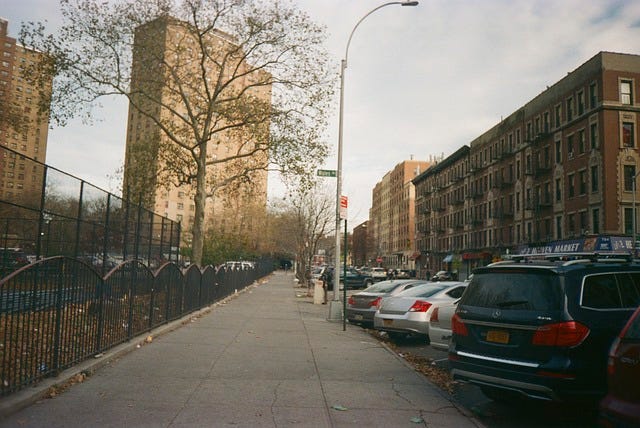
Scenes from Childhood
As long as I can recall, I have always enjoyed reflecting on the past by constantly asking my mother, “Do you remember…? Do you remember that trip to Longwood Gardens when I was three? Do you remember the time that the Lins stayed at our apartment? Do you remember the party…?”
Sometimes, she would answer yes, adding to my happy recollections. But at other times, when she wasn’t in so pleasant a mood, she would snap, “why are you always thinking about the past? The future is more important!”
But I was already a backward-looking child. After all, my favorite movie then was The Sound of Music, a film set in 1930s Austria. This was also about the same time that I had begun to discover Western history, if only on a pictorial basis. As Mom cooked in our tiny, windowless kitchen, she would put me in the adjoining room where I found a stack of her Time-Life art books in a brown shopping bag.
I pored over them on a daily basis, never tiring of the same paintings. Even though they were mostly black and white, I wondered why people didn’t dress like that anymore. I admired the long flowing gowns and robes, as well as the sumptuous furnishings, and scenic landscapes that one simply didn’t see in the present.
Here, my historical nostalgia peeked through as I asked, “Mommy, why don’t people dress like that anymore?” Sometimes, she’d laugh when I danced to the tunes she played on the piano — Schumann’s Kinderszenen, Beethoven’s Für Elise, and Mozart’s Rondo Alla Turca. I was indeed a strange child. (Little did she know I would become a serious Mozart fan!)
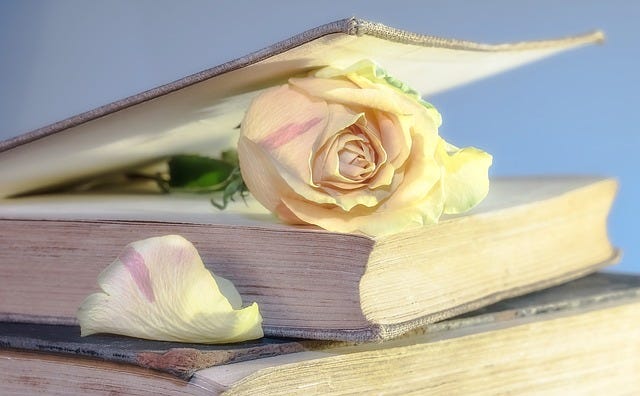
“Oh, I believe in Yesterday”
It wasn’t until my first year of high school, however, that I grew interested in history. Our joint Humanities class in history and English taught not only European history, but also literature, art, and music of each major period. I can still recall those Monday afternoons when I would hurry down to the basement, tearing into a new weekly history packet and answering questions from our textbook while playing my favorite albums.
It was then I realized that all the paintings I admired as a 4-year-old were mostly medieval and Renaissance.
Looking back at the Raphael and Rembrandt, which I hadn’t seen for some years, triggered renewed longings for those easy days in the Bronx. If the term nostalgia was coined by a Swiss physician who attributed soldiers’ mental and physical maladies to their longing to return home — nostos in Greek, and the accompanying pain, algos, perhaps it made perfect sense that I yearned for my childhood days in the Bronx. The Beatles were right: yesterday came too suddenly.
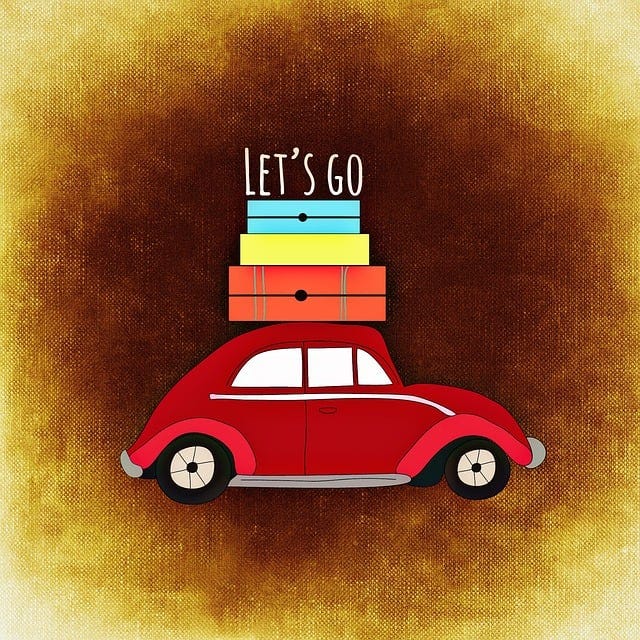
What a carefree time that was, when I was safe and didn’t have to worry about bullying or grades. I thought of the preschool days when I could just draw and listen to The Sound of Music all day long. The rainy days when Mom read to me on the couch. And what fun it was too when Dad brought us, along with his parents, to D.C., Niagara Falls, and Philly (especially Longwood Gardens). Then I thought of the unofficial holidays I had in kindergarten when Dad brought just me and Mom to his conferences in our red VW Beetle. (Never mind that it always smelled like gasoline!)
How I enjoyed the stunning Pocono mountains with its greenery…and the public library in Amherst, Massachusetts (little did I anticipate that I would attend a nearby college in Northampton). How I relished the hamburgers and fried chicken at the various Howard Johnson restaurant/diners on the highway. And yes, sleeping with Mom and Dad in the same bed — how cozy that felt! Interestingly, however, I overlooked the numerous spankings I’d gotten. Or the times Mom locked me in the bathroom.
But little did I know at the age of 14 that one day, my scribbling in the basement would eventually also become a fond recollection too.
That summer, nostalgia for my childhood led the 15-year-old me to search for music from the ‘60s: I wanted to hear Frankie Valli wail out Big Girls…they don’t cry-y-y. I wanted to hear the Toys sing their Bach-inspired “Lover’s Concerto.” Today, I still recall the puzzled look from the salesman when I asked for some Lou Christie. “Aren’t you way too young for his music?” I’ll be waiting in line cos I’m gonna make you mine.
My parents found it curious too. Not unlike her question, “Why are you always thinking about the past,” Mom asked me why I was listening to that “old music.” Better to sing along to the big Mac’s “Don’t stop, don’t stop thinking about tomorrow.” Having said that, my parents thought there was nothing wrong with my interest in Mozart while my friends joked I was born in the wrong century.
Today, of course, modern psychologists would probably not find any of this odd. As psychologist Krystine Batcho suggests, nostalgia “stimulates memories of the times when we were accepted and loved unconditionally,” a period in which “we didn’t have to earn our love” and “our parents…or our siblings or our friends simply loved us unconditionally.” This is an undeniably “comforting feeling when we’re undergoing any kind of turmoil in our personal lives.”
No wonder I felt nostalgic my first year in high school when I was not only being bullied but being increasingly pressured by my parents who disregarded my interests — as I have written about here, here, and here. There was no respite anywhere, it seemed. In fact, it’s hardly astonishing that I continued to feel nostalgic through a good portion of my adult life, when worries of graduate admission, graduate work, and lingering brushes with racism turned into worries about employment, book writing — and finally, the death of my mother in 2014.
“You and Me against the World”
That’s when everything became a trigger. For years, it was Mom and me against the world – and now she was gone.
Certain sunny days would remind me of preschool afternoons at the park in the Bronx…other days would remind me of just a year ago when Mom and I shopped at the local mall. As I worked on my book, listening to some of my favorite Electric Light Orchestra, I would recall Mom offering me cookies when I was buried in my history homework. Even seeing a sweater that I wore when I visited Mom at rehab would bring back recollections of that day.
Of course, all of these memories boiled down to one thing–wanting her back again in my life: just like the numerous dreams I had of her that first year she was gone–imagining that I was accidentally bumping into her but not finding her again even though she promised to meet me.
And yet, what else could I do? As Helen Reddy once sang to her daughter, remembering is all we can do when one of us is gone, and the other is left to carry on.
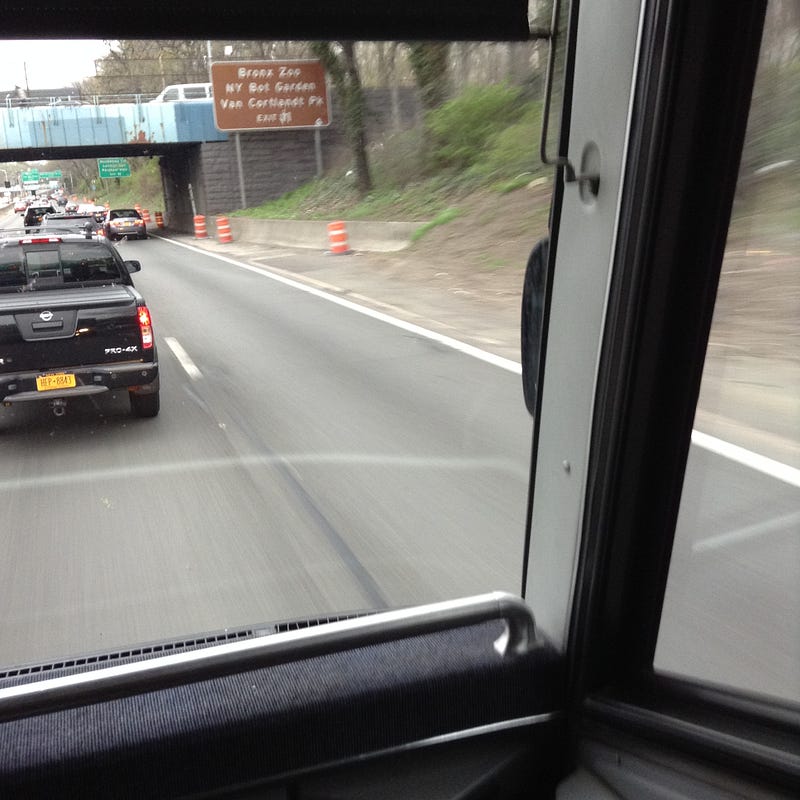
I certainly felt the collision of past and present the year I taught in NYC. Tuesdays and Thursdays would begin with a morning cab ride to the bus station where I would pass the hospital where Mom died. “Hi, Mom,” I would whisper to myself. “It’s been three years, but I still miss you.”
But the real nostalgia overload would kick in on the way back home in the evenings as the bus passed the back of my old Bronx neighborhood. I would put my books down just to revel in my childhood. How many times had we cruised this highway, years ago, on the way to the Bronx Zoo and the Botanic Garden? How many times had I watched the stars twinkling amid the lights on the George Washington bridge?
Then I remembered the less distant past when Mom and I took this very route to Smith during my first year of college— and then just a few years ago when we returned from an afternoon in NYC.
Yet…I thought to myself, little did I imagine back then as a child in my father’s Beetle — or even as a college student, that one day I would be teaching in my favorite city again. Little did I know that I would be teaching horror–my favorite childhood genre. Little did I know I would be the one taking care of Mom, bathing her and feeding her just as she did me. Little did I know I would write a book on the work of a man who lived not too far from the Bronx in New Rochelle–Thomas Paine. For a brief moment, I realized that I was truly at home.
But it was only a fleeting moment. As the bus drove past those familiar buildings, I could only think to myself how I wished I were still in that same apartment with Mom! Finally, upon arriving back in Connecticut, passing by her hospital again, I would say to myself, “Bye, Mom. I wished you could have been with me to see our neighborhood.”
“This Used to be my Playground”
Ironically, however, this nostalgia for my youth also led me to a new research interest: the 1960s and ‘70s.
I had actually emailed the editor of the Palgrave Handbook of the Vampire to ask if I could write on Sheridan Le Fanu’s “Carmilla.” Nope, he answered–that’s been taken. So he listed a few topics which were still available. One of them was Hollywood Vampires, 1950–1979.
At that moment, I swear I could hear Madonna singing “This used to be my playground/ This used to be my childhood dream…” Ah, maybe I could relive the 1960s and ’70s after all — maybe I would learn the full backdrop behind my happiest years. I took a chance and said yes to the editor.
Naturally, memories surged as I watched a slew of vampire films from this period while reading histories and recollections of the period. As I rewatched Dark Shadows, hearing the familiar theme music and seeing Jonathan Frid, I recalled how the 3-year-old me sat with Mom watching it while snacking. Certain episodes made me think how amazingly the show recapitulated so many English and American classics that I would study in later years–as if foreshadowing my lifelong interest in history and literature.
The 3-year-old me certainly would not have been aware of this. And then I wondered to myself if the thoughts in that much younger me who sat staring at the screen were those which ultimately spurred what would become my present interests in horror, in literature, and yes, the past. Again, I came to realize how far I had come over the years — not unlike that brief epiphany I had on the Bronx highway a few years earlier.
“Don’t Stop”
That’s when it fully struck me that all the distant, younger me’s did have a role in shaping the adult me–that the child is indeed the mother of the woman, to put a twist on Wordsworth’s famous words. There was the childish me admiring paintings in Mom’s art books, as if pining for a distant past. There was the adolescent me pining for my childhood past while taking a new interest in distant ages. Then there were all of those 60s ideals of human rights, freedom, and equality that had been instilled in me over the years by friends, teachers, and professors–just as the disappointments of the 1970s had played a role in leading me to distrust the powers-that-be–beginning with my father. These were all undeniably me.
This sense of progress–this realization that we have grown–arising from our wistful recollections could well be one of the benefits of nostalgia according to psychologist Dr. Sedikides, who observes that when we focus on the past in an existential way–”what has my life meant?” — we can “potentially benefit.” Dr. Batcho makes similar claims that “Nostalgia is like a measurement. It’s a way we keep track of things, we monitor progress through life.”
Nostalgia then is a home away from home–one that acknowledges our love for a past that can never be retrieved: but one that also reminds us how all that we’ve felt, believed, and longed for along our path of life remain as meaningful as ever even if configured differently through the years.
It is knowing we contain multitudes of our past selves. And that somehow, some way, we’ve managed to weather all the storms we’ve encountered to move onto the next phase of life even when we long for the past.
© Frances A. Chiu, September 10, 2023. All Rights Reserved.


