
Nature Photography, Poetry, Bees
Leave it to the Bees
Precious Pollinators
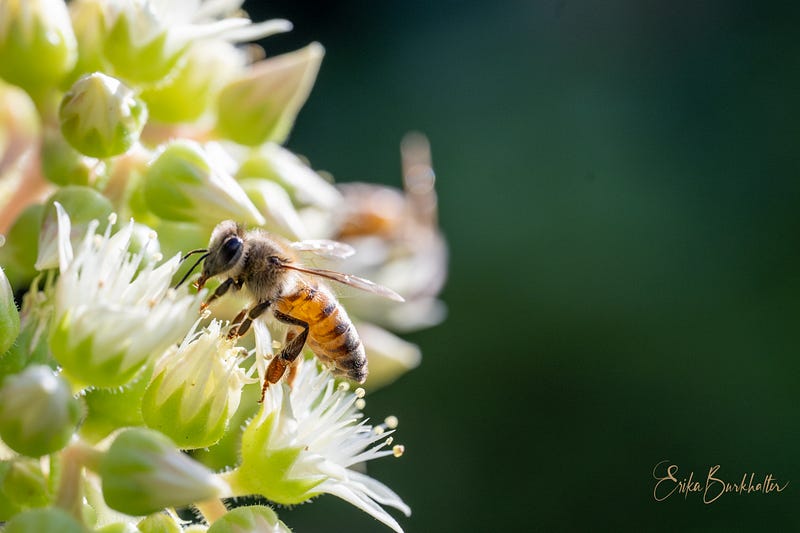
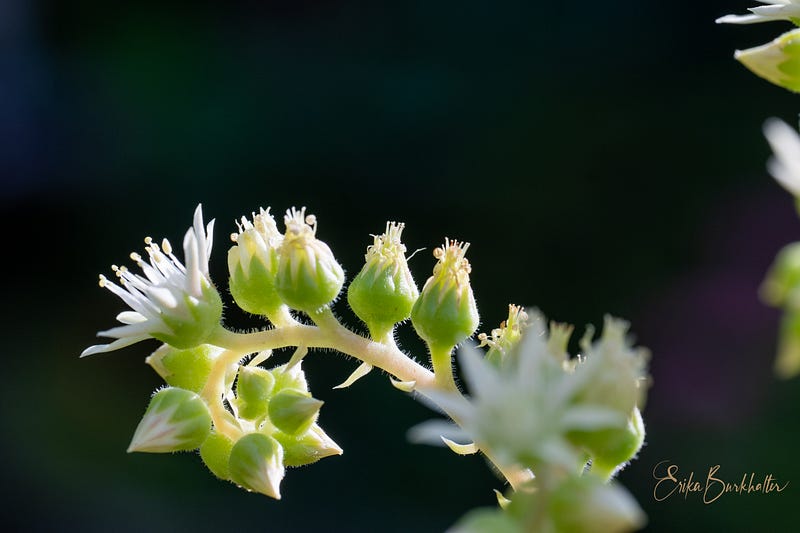
While roaming about my garden last week with my new macro lens, I was so struck by the back-lit illumination on the succulent blooms. Like showy sparks of bursting white fireworks, the buds unravel, one by one, along the spine of the flower. And when the sun is behind them, they look absolutely ethereal.
While my camera was nose-deep into the flowers, this little bee showed up to sample the sweetness of the nectar.
Flowers and bees actually feel a little jolt when they connect, if the flower has not been pollinated recently. Bees develop a negative charge when flying and flowers develop a positive charge when swaying in the breeze. A bee can tell if another bee has recently visited a flower by the lack of a “zap” of electricity when the bee and flower touch.
It does make you wonder if the bee and the flower get a little jolt of pleasure when the bee lands, knee-deep, in an un-pollinated blossom.
I wrote this little poem about it last year (first published in Scribe):
The Bees Knees
Oh, that tickle of your toes on my pollen-clad stamen and the buzz of wing against my breast of petal pink…
It’s electric, like metal melting in your mouth after a lightning storm which scorched the earth beneath your feet.
A little too close.
Perhaps.
But if you never take the chance, you won’t know what it’s like to stand with lips dampened by scouring rain, or to howl into the wind
or to wish again for that little zap of electricity which the flower feels when the bee’s knees are thick with pollen.
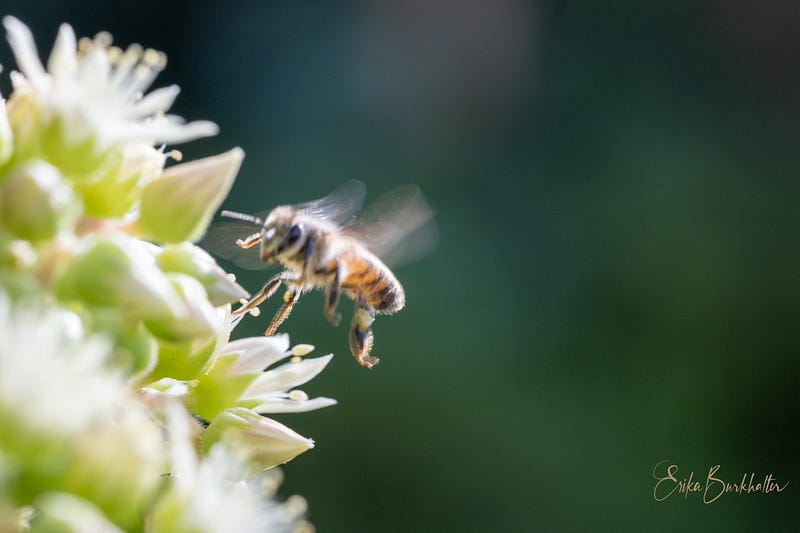
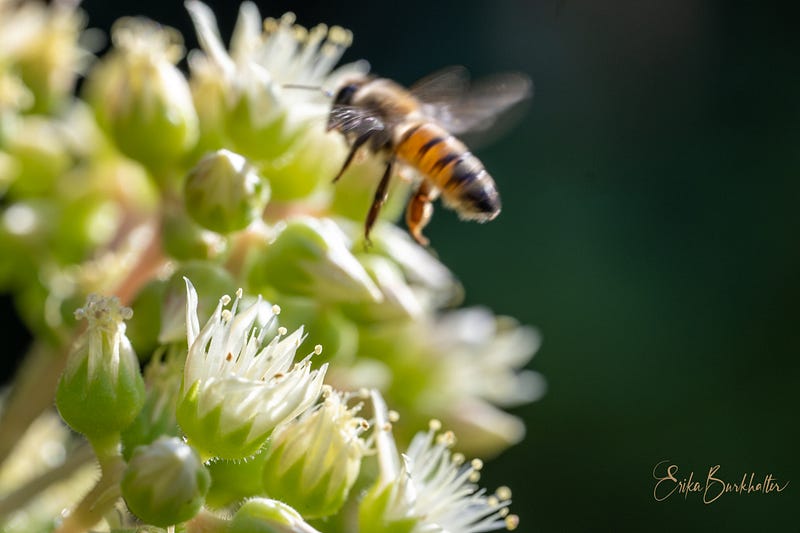
While these precious pollinators love flowers, one of the best things that you can do for them, especially in the hot summer months, is to provide a water source. We’ve certified our yard with the National Wildlife Federation and one of the things we’ve pledged to do is to offer both running water (we have two water fountains) and still water (several bird baths) for the birds, bees and butterflies.
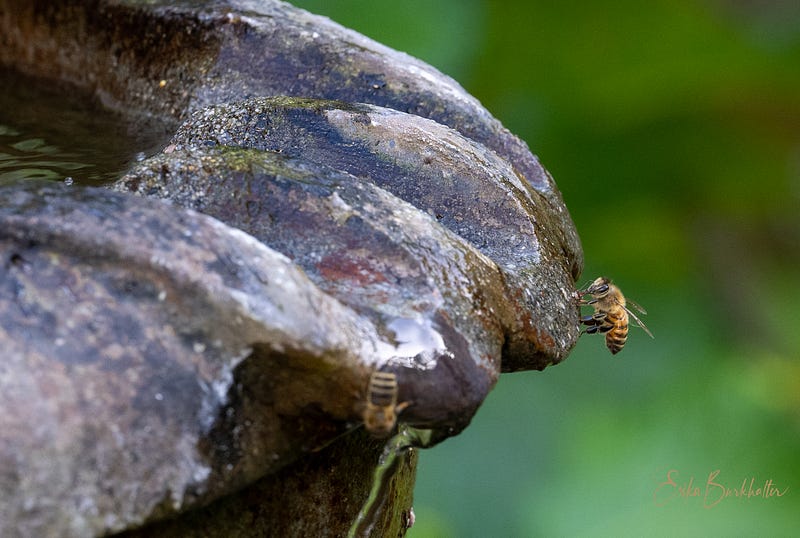
They’re such busy little workers. A single bee can visit up to five thousand flowers a day. And to make one pound of honey, a hive of bees must travel over 55,000 miles and visit two million flowers!
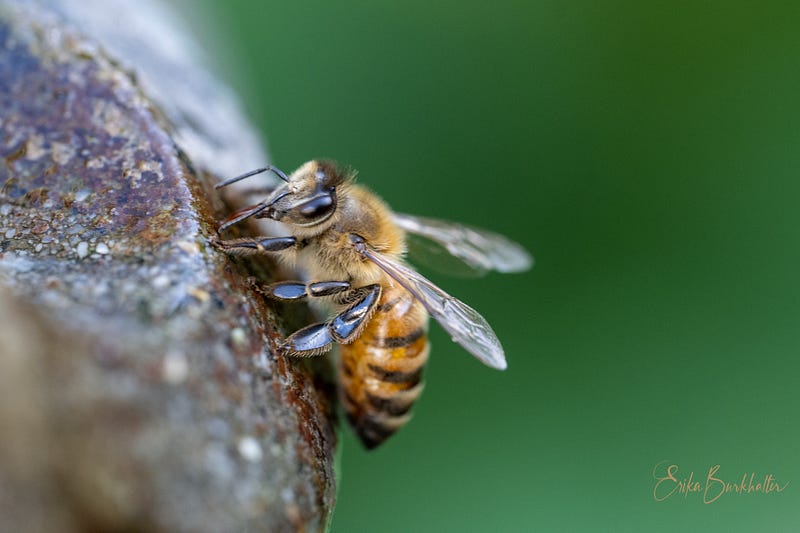
We need the bees. These delicate little creatures pollinate up to a third of the world’s food supply, pollinate 85% of all flowering plants and perform 90% of all pollen transfers on our orchard crops.
Given the enormity of their tasks, I feel like we need to do all that we can to make their jobs a little easier, so we’ve planted all sorts of their favorite flowers, like borage and salvia, in our garden.
And I have to say that every time I see them buzzing around, it gives me a little jolt of pleasure too!
Erika Burkhalter is a yogi, neurophilosopher, cat-mom, photographer, and lover of travel and nature, spreading her love and amazement for Mother Earth’s glories, one photo, poem or story at a time. (MS Neuropsychology, MA Yoga Studies).
All photos were taken with a Nikon Z9 and Nikon’s new 105mm macro lens.
You might also enjoy:
If you enjoyed this piece, you might consider subscribing to my stories. You’ll get an alert whenever a story gets published. While I do normally post my stories with free “friends” links on social media, if you enjoy reading on medium, you can help the many talented writers here by joining. It helps to support the arts and to keep us writing!
And, because I’ve had a few people asking lately, if you’re ever interested in purchasing a photo, just leave me a note.
Photos and story ©Erika Burkhalter. All rights reserved.
Ian Hanson, my fellow Z9er with a 105mm macro lens, I thought you might like this one, so I’m tagging you.


