
Nature Photography, Travel
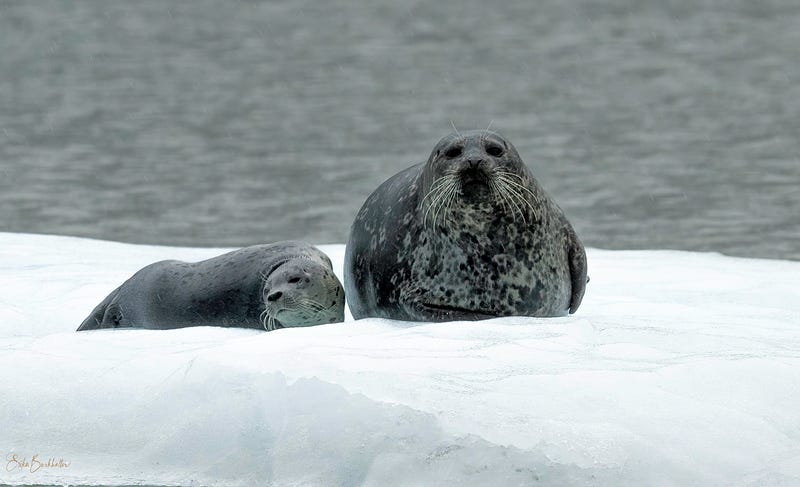
Mother and Baby Harbour Seals at the LeConte Glacier, Alaska
Wildlife Trekker May challenge: Baby Wild Animals
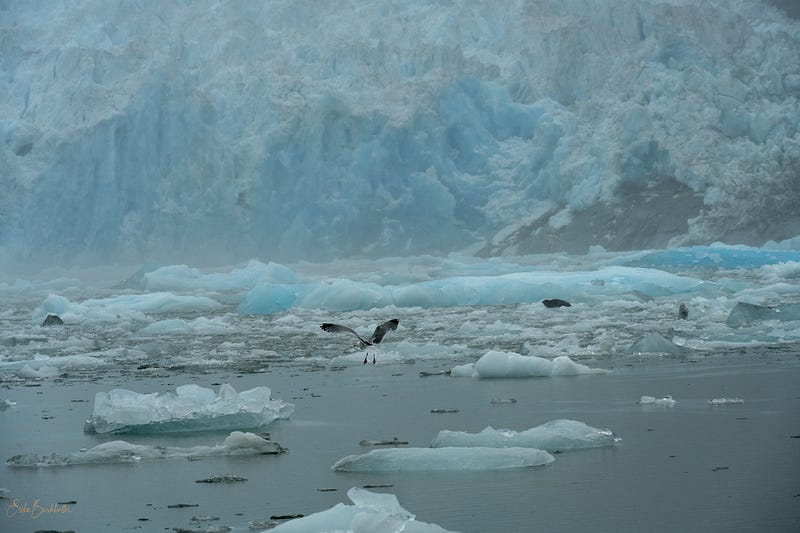
The frigid air sliced at any exposed skin. Icebergs, which looked as if they were lit by an inner blue fire, bobbed everywhere amongst the slushy water. Freezing rain pelted my fingers while I braved the cold for a few seconds to adjust my camera settings.
I feared for the hull of the flat-bottomed boat we were traversing this icy fjord in, but I trusted in intrepid Captain Mark, who seemed to know exactly how to maneuver over the miles of water between four and fourteen feet deep, while avoiding chunks of ice. Twice, we had sucked up a stick and had to reverse to spit it back out.
Now, we had entered the mouth of the fjord, on the way to see the LeConte Glacier. The radar on the screen showed the depth dropping abruptly to three hundred feet, then to eight hundred feet.
I had heard about how icebergs and glaciers glow in the rain, but we’d never seen it before. Honestly, to say that they glow is an understatement. It’s more like they are lit from within.
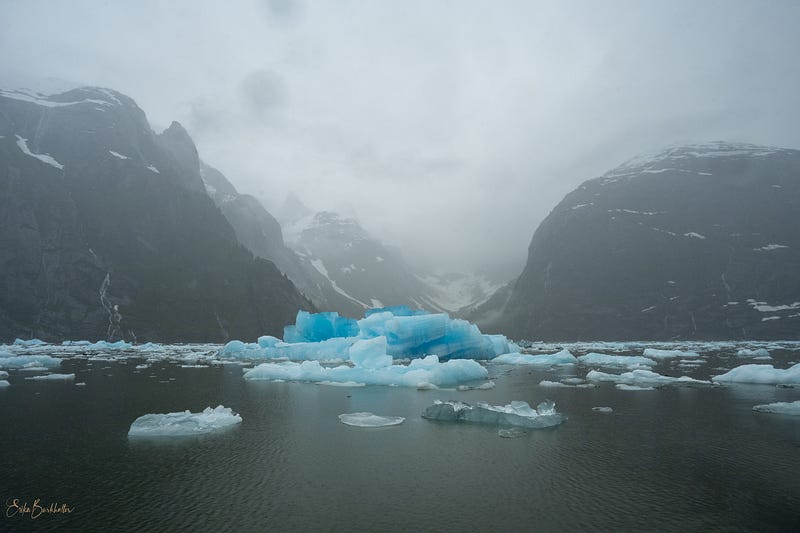
I wondered, briefly, about what would happen if one of these glowing pieces of artistry in ice penetrated the skin of the boat. But, then, I decided that there was really no point in worrying. There was nothing to do in that moment but to surrender to the universe and bask in her wild vastness.
As we got closer to the glacier, we began to see black smudges atop the ice. With a start, I realized that all of those dots were Harbour Seals, “taking in the day.”
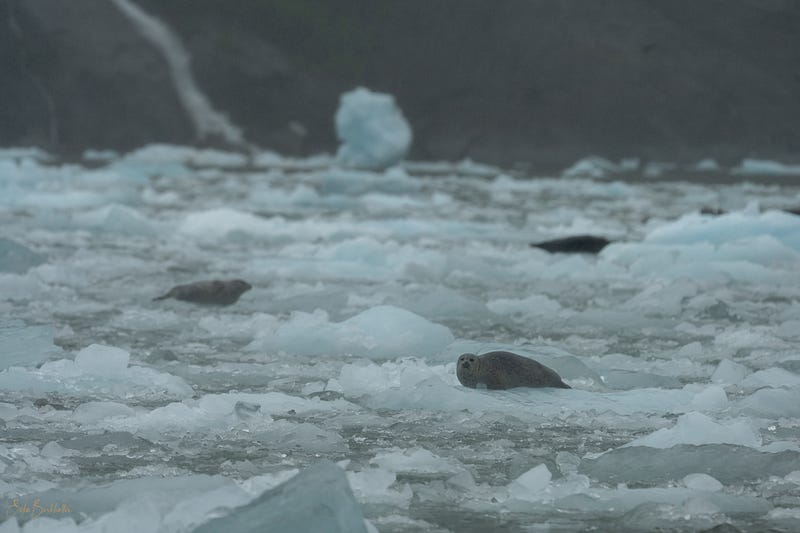
They take to the ice because it provides them some safety from their main predator — Orcas. Orcas are known as the “Wolves of the Sea” because they are the top predators. And they find these seals to be quite tasty.
The mothers carry their babies for nine months. The pups can weigh up to thirty-five pounds and are able to swim and dive within hours of birth. Adults can be up to six feet in length and weigh three-hundred-and-seventy pounds. They are not petite little creatures.
They feed on a variety of fish such as salmon, menhaden, anchovy, sea bass, herring, mackerel, cod, whiting and flatfish. But they also eat shrimp, crabs, mollusks, and squid. While the arctic looks inhospitable, it is actually quite a fertile place for seals and whales to feed.
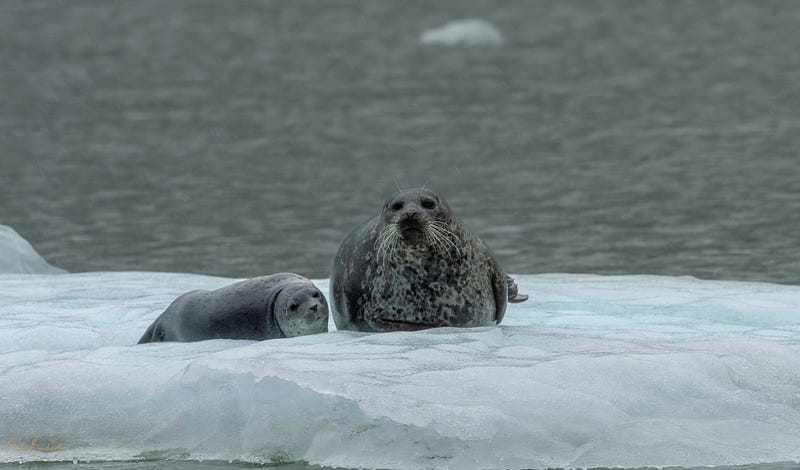
As we drew a little closer to this mother and baby pair, they seemed to be quite interested in us.
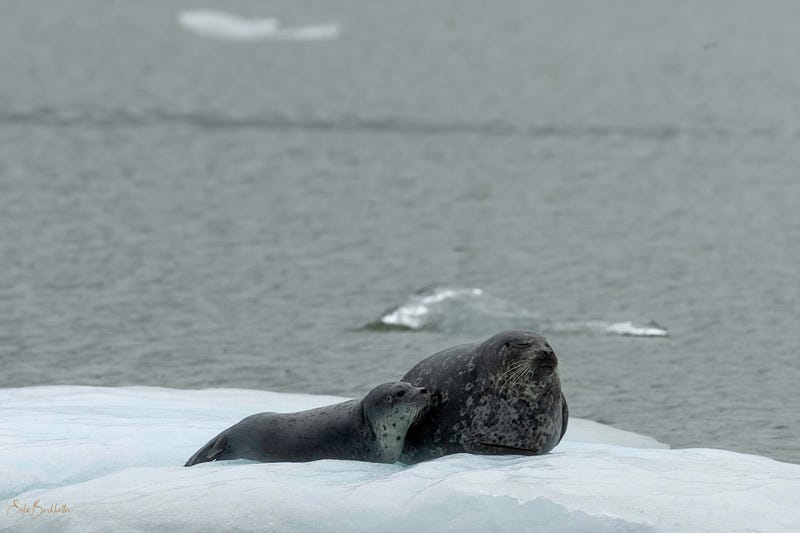
The mom was a little wiser to the ways of humans and didn’t seem to worried. But her little one seemed to think that she better keep her eyes on us.
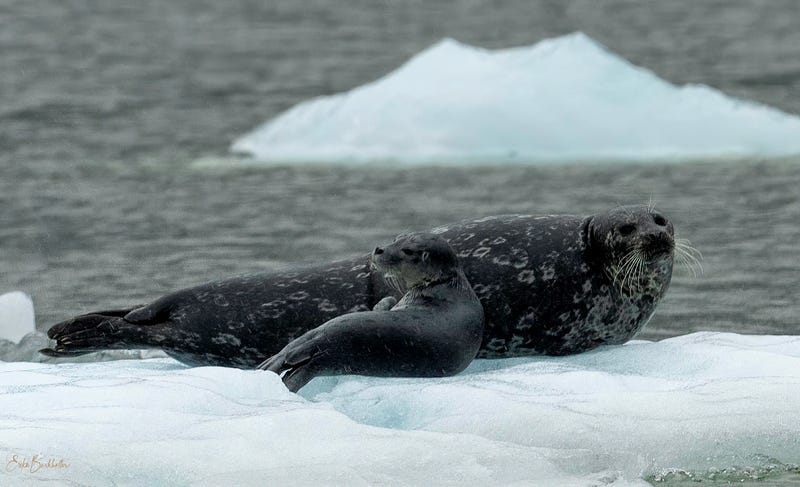
She relaxed a bit as we sped away.
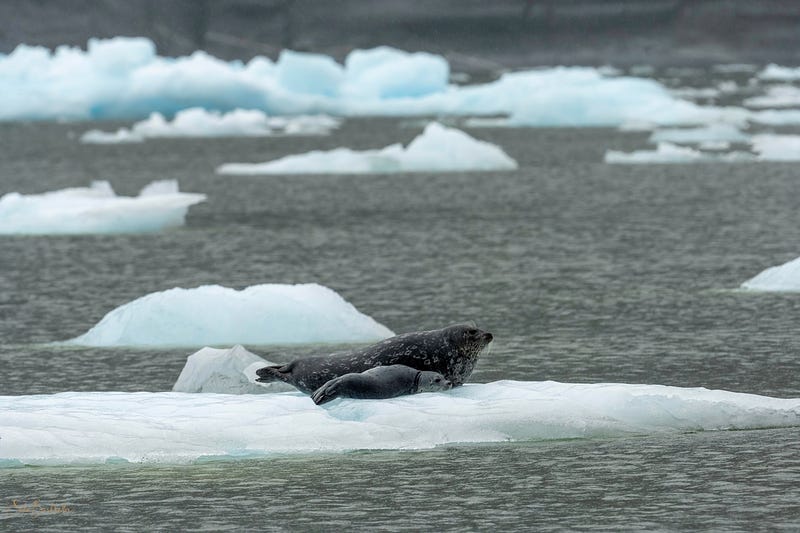
And then it was time to take a little dip into the water for some play!
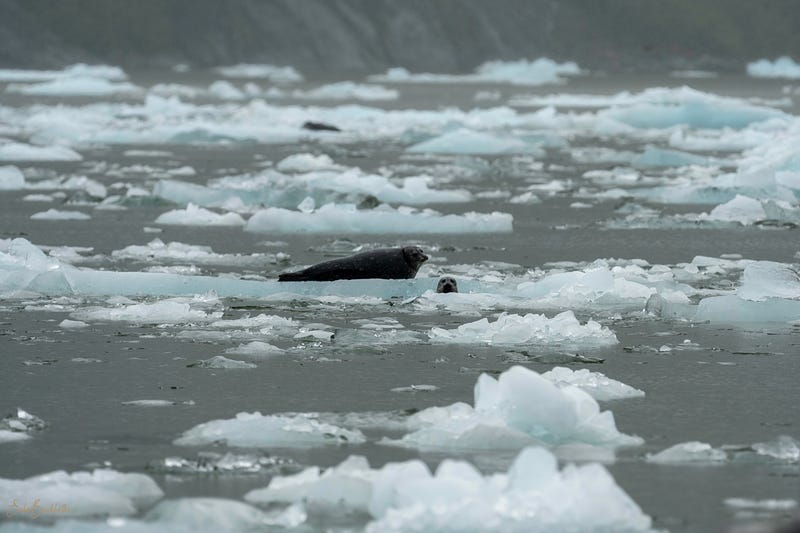
The rawness of this place seeps into your soul. The tenacity of the seals and terns and whales and the sheer beauty of this vastness is inexpressible in words. It truly is like taking a glimpse into nature primordial.
Erika Burkhalter is a yogi, neurophilosopher, cat-mom, photographer, and lover of travel and nature, spreading her love and amazement for Mother Earth’s glories, one photo, poem or story at a time. (MS Neuropsychology, MA Yoga Studies).
All photos were taken with a Nikon Z7 and a fixed 500 mm lens.
You might also enjoy:
If you enjoyed this piece, you might consider subscribing to my stories. You’ll get an alert whenever a story gets published. While I do normally post my stories with free “friends” links on social media, if you enjoy reading on medium, you can help the many talented writers here by joining. It helps to support the arts and to keep us writing!
And, because I’ve had a few people asking lately, if you’re ever interested in purchasing a photo, just leave me a note.
Photos and story ©Erika Burkhalter. All rights reserved.


