
SEO Writing
Keyword Research Made Easy for Beginners
Your free alternative methods to do keyword research.

I used to think Search Engine Optimization (SEO) is all about adding the right keywords to your online content. But it isn’t. It’s just part of the SEO process.
Keywords are words and phrases people search online for a particular topic. And with the right ones, your web pages, blogs, or ads will rank high in the search results. Hence, increase visibility to your target audience.
There are three types of keywords:
- Short-tail (also known as Head keyword)
- Mid-tail
- Long-tail
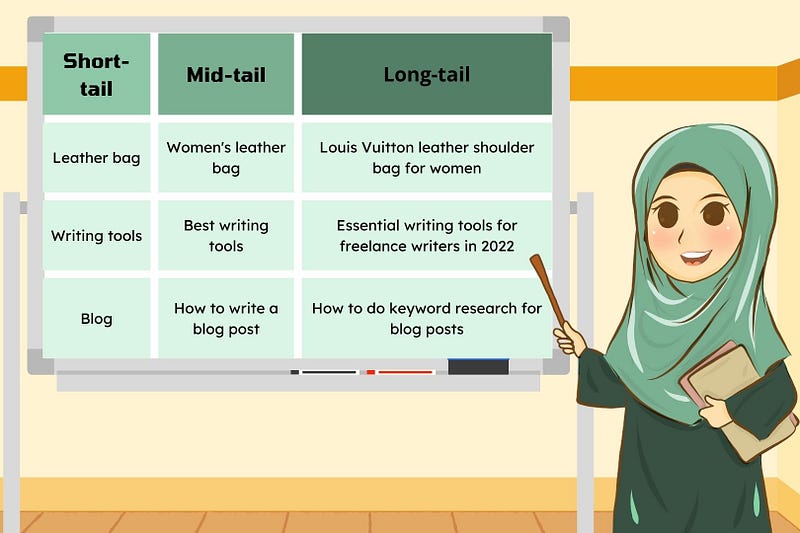
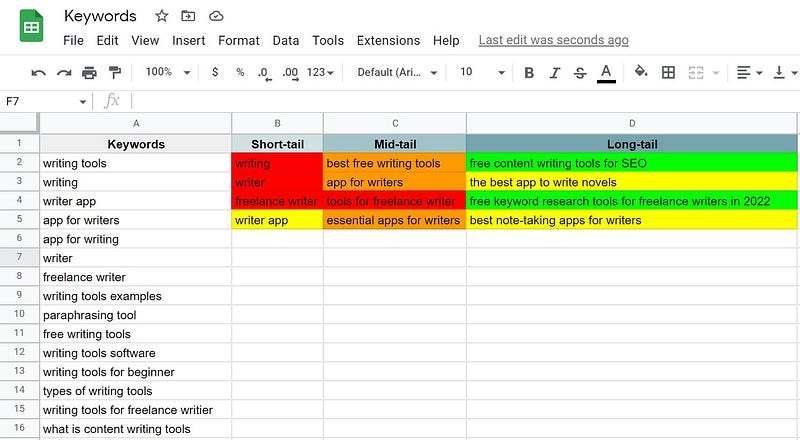
Short-tail is typically less than three words and has a higher search volume, whereas long-tail has lower search volume but is more niche down and descriptive.
I wrote about keyword research briefly in a previous post — 11 Free Online Writing Tools to Write Polished Blog Posts.
While the methods I mentioned in that article are necessary for the SEO process, keyword research is a bit more complex than that.
But no worries, we’ll get into that in a bit.
For beginners, learning about keyword research can be daunting. Even I’m still trying to wrap my head around it. Also, if you’re just starting out, I’m pretty sure you prefer not to spend too much on premium tools.
So I hope after reading this post, you’re better equipped with the knowledge and cost-free methods to do keyword research.
1. List Down Your Keywords
Once you’ve found your topic, brainstorm for words and phrases people usually type in search engines.
Or you can use free keyword research extensions like Keyword Surfer and Ubersuggest to get more keyword ideas related to your topic.
I often use both methods to fill up my list. The point is to gather as many keyword ideas as possible. The more, the better.
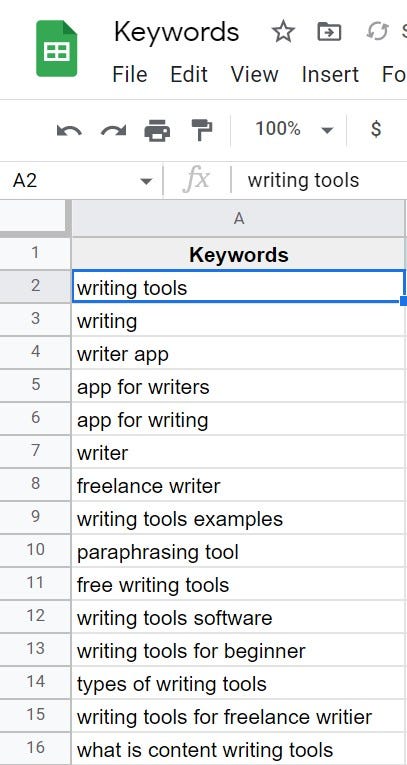
You can then list them in a spreadsheet, like Google Sheets or Excel.
2. Research Your Keywords
Now do some digging. A LOT of digging!
Search the listed keywords and use Google autocomplete to gain related key phrases and synonyms.
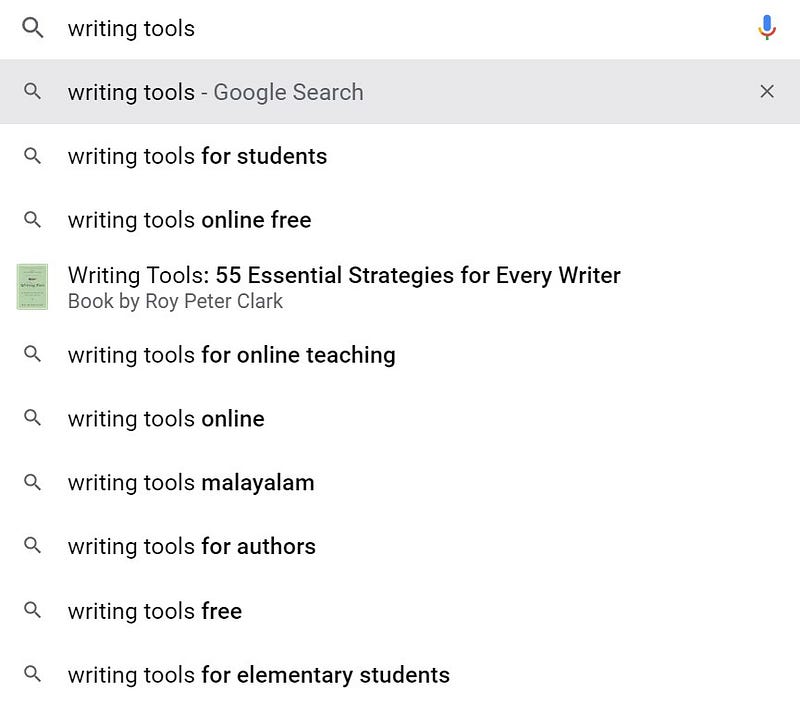
Synonyms are vital to improving the readability so that you won’t repeat a specific keyword throughout your writing.
But remember only to use the relevant ones to your content and what people are looking for online. You want your writing to make sense, so no keyword stuffing!
Another tool you can use to look for related keyword phrases is AnswerThePublic. But it’s only limited to three searches daily, by the way.
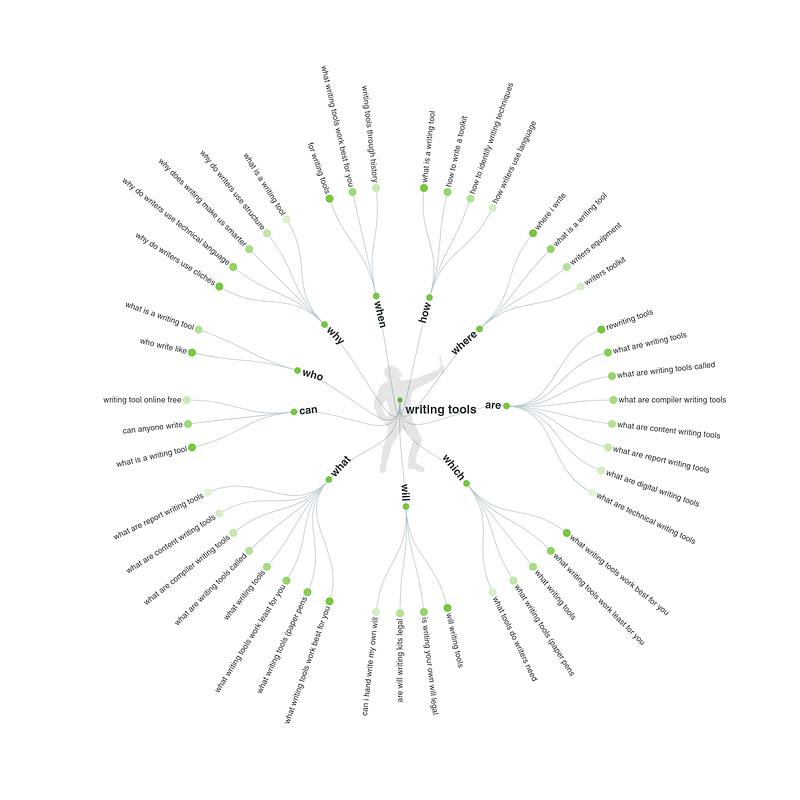
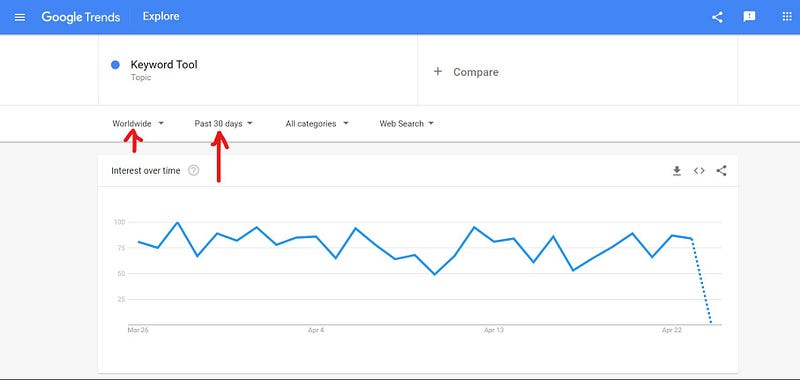
Now add all the related keywords to your spreadsheet and look them up on Google Trends for the global monthly volume. This is to narrow down to the current highly searched keywords to add to your content.
3. Long-tail Keywords
Long-tail keywords have lower search volume but higher conversion rates because they are more specific.
It’s a strategy many businesses and blogs use to attract a particular demographic that would most likely invest in a service or product.
You can search for long-tail keywords related to your topic by using:
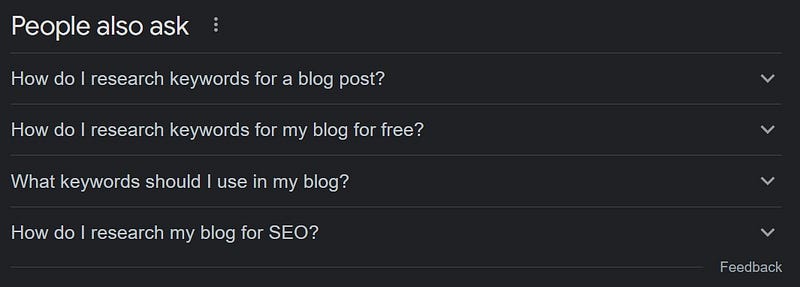
- Google Autocomplete
- AnswerThePublic
- Related Search
4. Take a Peek at Your Competition
Just because a keyword has high search volume doesn’t mean you’ll rank in the search results due to your competition.
You can easily determine the competition level with a good paid keyword research tool.
But you’d still be able to do this for free by typing the keywords in the search engine and checking out the top results.
A keyword has a high competition level if the top three are high-traffic sites and big corporations.
But if you’re writing for a high-traffic website or brand, the keyword will most likely do well regardless.
To keep track, add some notes or color-code your keywords according to the competition level in your spreadsheet.
5. Search Intent
You could rank high without getting clicks and engagements. But that’s not the point, isn’t it?
You want people to read your article.
You want them to share your blog post.
You want them to buy a product.
To put it simply, you want them to take action!

That’s why it’s essential to find out the keyword intent for optimized content.
There are four types of keyword intent:
1. Informational: Looking for an answer to a specific question.
- How-to
- Listicles
- Tutorials
- Tips
- Guides
- General Questions
2. Navigational: Trying to navigate to a website selling specific products or services.
- Product
- Service
- Website
- Company
3. Commercial: Looking to learn more about products or services.
- Reviews
- Comparisons
4. Transactional: When a searcher wants to purchase something.
- Product
- Service
Find out what type of content ranks the highest by searching each keyword on your browser to determine the keyword intent.
For instance, when I searched best writing tools, listicles type of content ranked the highest.

Final Thoughts
I know different writers prefer different approaches when researching keywords. It all depends on what works best for you.
Paid keyword research tools are necessary to collect accurate data, and it saves time, especially if you’re catching deadlines.
But if you’re just starting to learn about SEO and keyword research, it’s completely okay to use these free alternatives.
So are you just starting to learn about keyword research? Or perhaps you’re experienced. In that case, what are your go-to methods and tools?
Keen to know what’s more there is to SEO? Then you should learn about these three links. ⬇
But wait! 🖐🏼 SEO is more than that. Check out my post ⬇ about how image optimization improves SEO.
🕖 Follow and be a writer for Time To Write The Next Article, a Medium publication founded by Don Sabado.
🖋 Time To Write The Next Article welcomes pieces about writing, travels, teaching, and making money online!
📋 You can read the recently updated guideline here, and start writing the next article! 😊


