
Keep Feeling Fascination — in Older Novels
I prefer old novels to new ones. Why is that, and how am I ever going to get through my TBR list???
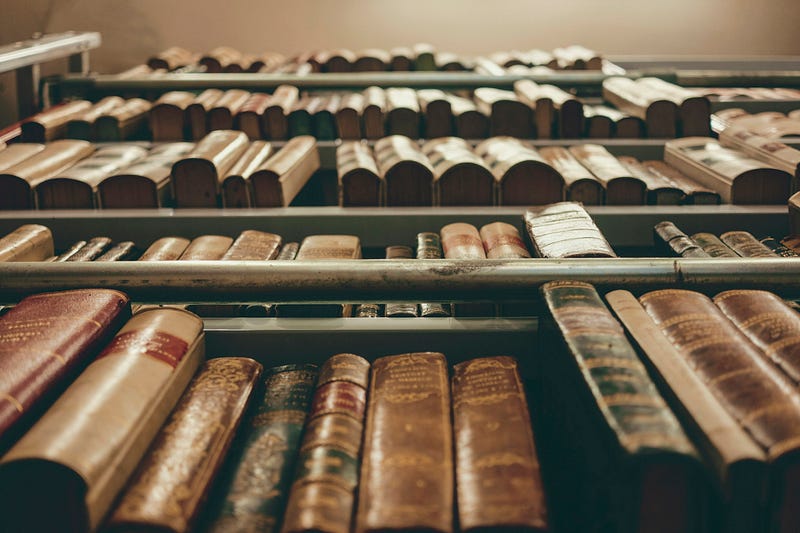
I read mostly novels, but as I’ve grown older, I read fewer new books. To be honest, when I browse in the bookstore, nothing new really grabs me.
My bookshelves are already overloaded. A lot are hardcovers; that’s my preferred reading format. I often buy old ones for cheap — they needn’t be first editions. I also have plenty on my Kindle. I have too many books.
Just typing the words “too many books” makes me cringe. It sounds like Emperor Joseph II in Amadeus saying that Mozart’s music has “too many notes.” How could any reader ever have too many books?
I’m a slow reader, and I read every word. On top of all other demands on my time, I manage to read 20-25 books a year — mostly novels, though I occasionally read nonfiction (usually biography or history).
I’m 57, and if I’m lucky enough to live another 30 years, I’ll have read another 600-750 books. Perhaps fewer, if I re-read a few. Perhaps more, if I gain enough extra time. That doesn’t seem like a lot to me, so I’ve become pickier in my choices.
There is too much great literature out there still waiting to be read, and I’m gaining more satisfaction from reading works of more substance.
New novels, to me, are a crapshoot. You can try to rely on good reviews, but too often I haven’t been able to get very far into a new book, and if I can’t get past 10%, I will put it down and donate it to my public library.
Rather than rate a book two stars, I’d rather not finish it. Life is too short.
I dropped out of college early, because I did not want to have any student loans of my own (this turned out to be a wise choice), and my parents couldn’t afford to pay even the smallest of tuitions on my behalf. I would likely have majored in English literature, and that would have required reading many books typical in a college syllabus.
Instead, I’ve had to read these books on my own, and I’ve never stopped. Reading them as a mature adult, I usually feel I’ve gotten more out of them than I would have as a younger man. Moby-Dick is one example — I loved it and was glad no one had ever “taught” it to me. So, too, with The Scarlet Letter (which most Americans are required to read in junior high school, but I never had to).
For me, these novels never became a burden, with an accompanying essay assignment. I’ve been lucky to read them for my own pleasure. I also feel sorry for anyone who had a bad experience with them in school, such that they would never go back and give them another go.
Here’s a small example of what I’ve been reading from “classic” authors, on my own, for my own pleasure:
- Herman Melville: Moby-Dick, Redburn, The Confidence-Man, The Piazza Tales
- Nathaniel Hawthorne: The Scarlet Letter, The Blithedale Romance, The House of the Seven Gables, The Marble Faun, Twice-Told Tales, Mosses From an Old Manse, The Snow-Image
- Mary Shelley: Frankenstein
- Henry James: The Ambassadors, The Portrait of a Lady, The Wings of the Dove, The Golden Bowl, The Turn of the Screw, Washington Square, The Bostonians, Daisy Miller, The Sacred Fount
- Anthony Trollope: Can You Forgive Her?
- Henry Fielding: Joseph Andrews
- Miguel de Cervantes: Don Quixote (trans. Edith Grossman)
- Joanot Martorell and Martí Joan de Galba: Tirant lo Blanc (trans. David H. Rosenthal)
- André Gide: Lafcadio’s Adventures (a/k/a Les Caves du Vatican), The Counterfeiters, The Immoralist (various translators)
- Thomas Mann: Death in Venice, Doctor Faustus (various translators)
- Joseph Conrad: Heart of Darkness, Nostromo, Under Western Eyes, The Secret Agent
- Ford Madox Ford: The Good Soldier
- E. M. Forster: A Room With a View, Where Angels Fear to Tread, Howards End, A Passage to India, Maurice
- Fyodor Dostoevsky: Crime and Punishment, The Idiot, The Brothers Karamazov (various translators)
- Ivan Turgenev: Fathers and Children, The Torrents of Spring
- Mikhail Bulgakov: The Master and Margarita
- Yevgeny Zamyatin: We
Well, that’s all well and good, but when I think for a moment about what else I haven’t read, it boggles the mind.
For example, I’ve only read one novel thus far by Anthony Trollope — but he wrote at least 47. I’ve read Joseph Andrews, but I haven’t read Tom Jones. I’ve never read Barry Lyndon by Thackeray. I’ve never read anything by Balzac, Stendahl, Hugo, Flaubert, or Proust, nor Les Liaisons Dangereuses, by Pierre Choderlos de Laclos. I’ve only read one novel each by Hemingway and Fitzgerald. I’ve never read anything by John Steinbeck, Sinclair Lewis, Willa Cather, James Joyce . . .
I love Melville but have never read Typee, Omoo, Mardi, Pierre, or any of his poetry. Speaking of poetry, I have a large volume of Walt Whitman on my shelf — but I haven’t read a word. There are still many other Henry James novels and several volumes of his short stories waiting to be read.
I’ve read a ton of Russian authors from the 19th and 20th centuries, but there are many more I want to read.
There are also a number of 20th century authors I’ve not read enough of. For British and Irish authors alone, the list is endless. I’ve read two novels by Beryl Bainbridge, but there are many, many more — all on my TBR list. I’ve read a lot of Brian Moore, but there are more unread than read. I’ve read several Anthony Burgess novels, but not nearly enough. I’ve read several by John le Carré, but there are more. I’ve only scratched the surface of Elizabeth Bowen. I’ve read two novels by David Storey — many more to go. I’ve read only three novels by Evelyn Waugh — he wrote several others. I’ve only read one novel each by Robert Graves (who was very prolific), Rex Warner, Aldous Huxley . . . I could go on and on.
There are tons of 20th century American novelists I’ve never read at all. I’ll spare you the list.
On top of that, there are many modern international authors whose work I want to read (in English translation). Too many to list here.
If you hear a recurring theme, it is: “too many.” There are simply too many old novels on my TBR list, and too many unread books already sitting on my shelves. Why should I make the problem worse by reading new books?
If I look back over the last 5 years of my reading, I can add up how many I read from recent years, compared with farther back:
- 2023: 23 books in total, 1 published in 2023 (The Road to Roswell, by Connie Willis, 2023)
- 2022: 25 books in total, 3 published in 2021/22 (The Incandescent Threads, by Richard Zimler, 2022; The Promise, by Damon Galgut, 2021; and The Kingdom of Sand, by Andrew Holleran, 2022)
- 2021: 12 books in total (this is the year I read Don Quixote, which took some time!), 1 published within the last few years (The Lying Life of Adults, by Elena Ferrante, 2019)
- 2020: 26 books in total, 3 published within the last few years (Find Me, by André Aciman, 2019; Damascus, by Christos Tsiolkas, 2019; and On Earth We’re Briefly Gorgeous, by Ocean Vuong, 2019)
- 2019: 20 books in total, 2 published within the last few years (Agent Running in the Field, by John le Carré, 2019; The Gospel According to Lazarus [a/k/a The Lost Gospel of Lazarus], by Richard Zimler, 2016)
That means only 10 out of the 106 books I read in the last 5 years were new. The other 96 were all from earlier decades.
I understand these are simply my tastes. Others do love new books, and that’s great. I’ll certainly jump on a new book if it catches my eye, but so few of them do. If you only like recent novels, I can heartily recommend the ones mentioned above from my 2019–2023 readings. If you want to try some older ones, I’d recommend anything on my earlier list up above.
But my main point is . . . if you aren’t reading older novels, you should be. There’s a lot more reading pleasure out there than just “new releases.”
Do you prefer older novels? Or do you read only new ones? Or a mix of both? Let me know in your comments. Happy reading!