
“Live All You Can — It’s a Mistake Not To”
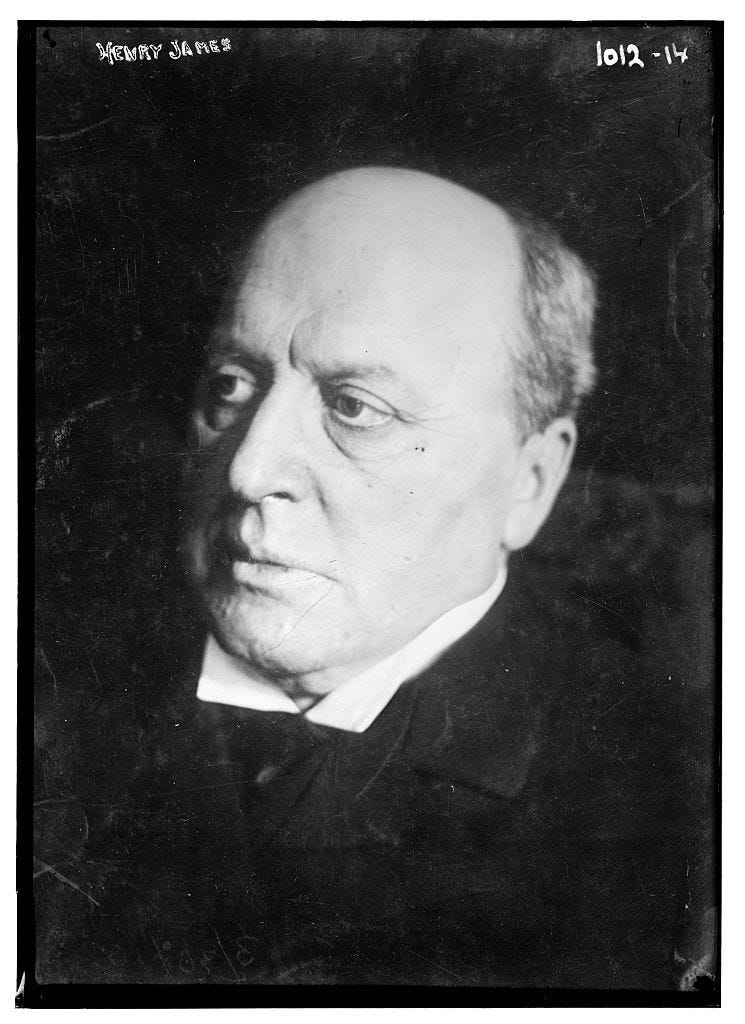
At 50, I re-read THE AMBASSADORS, by Henry James, for the third time. Now, as I near 57, it may be time to read it again …
The Ambassadors, a novel by Henry James, was first published in 1903.
I first attempted to read it when I was 20 years of age and failed (I found it impenetrable).
I tried again at 30 and succeeded in finishing it, but I still felt baffled and defeated by it.
I read it again at 40 and marveled at what I’d missed, fell in love with it, stood in awe of it — a revelation!
I don’t normally re-read novels. But something about The Ambassadors invites repeat visits. At least for me …
Once I turned 50, I re-read The Ambassadors yet again, and it vaulted to the top of my list of favorite novels. Every nuance I missed before seemed to reveal itself to me like a blossoming flower.
In part, this may have been due to the fact that in the preceding decade, I (an American) had been living abroad, first in Canada, then in England.
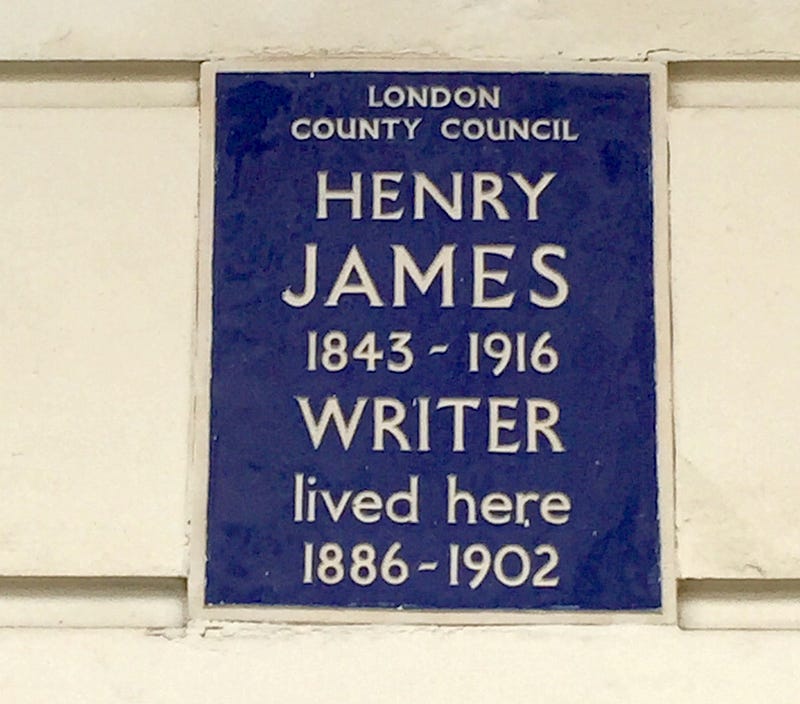
James himself was an expatriate American who felt increasingly divorced from his native land and in due course became a British citizen.
The influence on James of his life abroad, in London, in Europe, colors his point of view in The Ambassadors and skews it towards Europe in something of a rebuke to the provincial, Puritanical ways of the United States.
James is honored by the British with an enormous stone marker on the floor of Westminster Abbey, featuring his name and dates along with a quote from The Ambassadors:
“Live all you can. It’s a mistake not to.”
This enduring line is spoken by the main character, Lambert Strether (55 years of age) to Little Bilham, a young American in his twenties, though of all the characters in The Ambassadors, Little Bilham is the person least likely to require this bit of advice….
It seems obvious — something which, in today’s world, we might find popping up in an influencer’s social media “feed” as inspirational advice — but you may not “get” it as James intends it until you read the novel.
Strether himself doesn’t “get” it until well into the story. That’s part of the point — Strether’s epiphany, as it were.
Strether has been sent to Paris from Woollett, Massachusetts, by the cold-thinking Mrs Newsome, on a mission to retrieve her son Chad from the horrors of his presumably corrupt lifestyle in the Old World. Strether is tasked with whisking Chad back home to assume the mantle of the family business and to marry young Mamie Pocock (his mother’s idea).
(Woollett makes a certain household article that dares not speak its name throughout the entire novel — it’s hinted that it may be a porcelain toilet.)
Not inconsequently, our hero Strether, a widower who lost his wife and child many years ago, is a trusted family friend who has become more or less engaged to the “magnificent” Mrs Newsome.
Until Strether himself sets foot in Paris, it seems that the eventual return to Woollett and union with the Newsome family is all he can look forward to.
However, Paris opens up his eyes as they have also opened up Chad Newsome’s, in ways unpredictable and, as James would say, “wonderful.”
But nothing further. No spoilers here …
If you’ve never read The Ambassadors, you may find it baffling at first (unless I was merely dense when I first read it). Finally, though, after I passed the half-century mark myself and started to approach the age of “our friend” Lambert Strether, I simply cannot express the exquisite pleasure I enjoyed on my third reading of this masterpiece.
I do recommend you read every word, and do not skim. Why? Because James often hides significant facts deep within a paragraph. Skimming James simply makes no sense.
The only question left is, when should I read it next?
I last read it at 50. I’m about to turn 57 — now older than Strether.
I think it’s time again. It can no longer wait until I’m 60. Thus, it’s back on my reading list for 2024. I’m heeding Strether’s advice:
“Live all you can. It’s a mistake not to.”
I’ll get to it again just as soon as I finish reading The Golden Bowl. I promise.
Postscripts
For reasons too complex to explain here, the text of The Ambassadors has often been muddled in certain editions by the transposition of two chapters. For that reason, I recommend the Penguin Classics edition, which presents the full text in its corrected order. This contributes to a better comprehension of the story.
Curiously enough, The Ambassadors has been filmed only once, for a BBC Television production in 1977. It also served as a key inspiration for Patricia Highsmith’s The Talented Mr Ripley, as Highsmith herself acknowledged. At the beginning of her novel, Tom Ripley is enlisted by shipping executive Herbert Greenleaf to go to Italy and bring back his son, Dickie Greenleaf — the same mission on which James sets Lambert Strether with respect to Chad Newsome. When, if ever, will we see a modern movie adaptation of The Ambassadors?
Please feel free to share any comments. What is your favorite Henry James novel? Have you read The Ambassadors? If so, at what age did you read it?


