
Job Hunting 101: The Ultimate Guide to Finding a Job in the Time Of COVID
Find a job even if you are not looking for one
In my previous article: This is why it’s still POSSIBLE to get a job, even amid a Pandemic, I shared reasons of why it’s still possible to find a job, even with a pandemic in the way, and even if everyone around you is saying that you will never find a job.
Now that we preached the concept, it’s time to share the process; because like you, I hate people who criticize without offering an alternative or a better way to do things.
In this article, I’ll include everything I know on how to land the job of your dreams in a pretty concise & intentional way; if you are willing to put in the time & the discipline it takes. We are going to phase this in a chronological order to make the process super easy to follow.
REMEMBER: This is not a one time remedy that you will apply once, and then all will be betterflies & roses;
This is a complete shift in how you look at & consider the job hunt: it’s an ongoing, never-ending process; even when you are not job hunting.
Let’s hit it!
Have you heard of the 5 P’s rule? The first time I heard of this, it was the brilliant Nic Breyer who introduced me to the concept. Here they are in case you missed them before:
Proper Preparation Prohibits Poor Performance
Today, I’ll share my 3 P’s rule of any job hunt you plan to do: Preparation, Practice & Pacing.
Preparation: The Mentality Shift
The first thing you need to soak into your core is this: you don’t start looking for a job when you need a job; you are ALWAYS looking for a job.
What does that mean? Your everyday habits are including -by nature- a scanning eye of any great-potential opportunity for a job, consultancy, or even voluntary work.
You are always in the Hunter mindset: if you spot a great opportunity with potential for you to fit in, you WILL follow the process below.
You need to always to have a clear answer for the following questions:
1. What are your TOP 10 companies to work for?
This list needs to be ready at all times: what are the top companies you wish to join? And the reasoning of why you want to join them could vary between loving the culture, admiring the product they sell, or just the company being your everyday fancy- dream employer. No matter why you wish to join those companies, you need to: 1) Have the list handy in your mind, and 2) Have the list added to a LinkedIn alert.
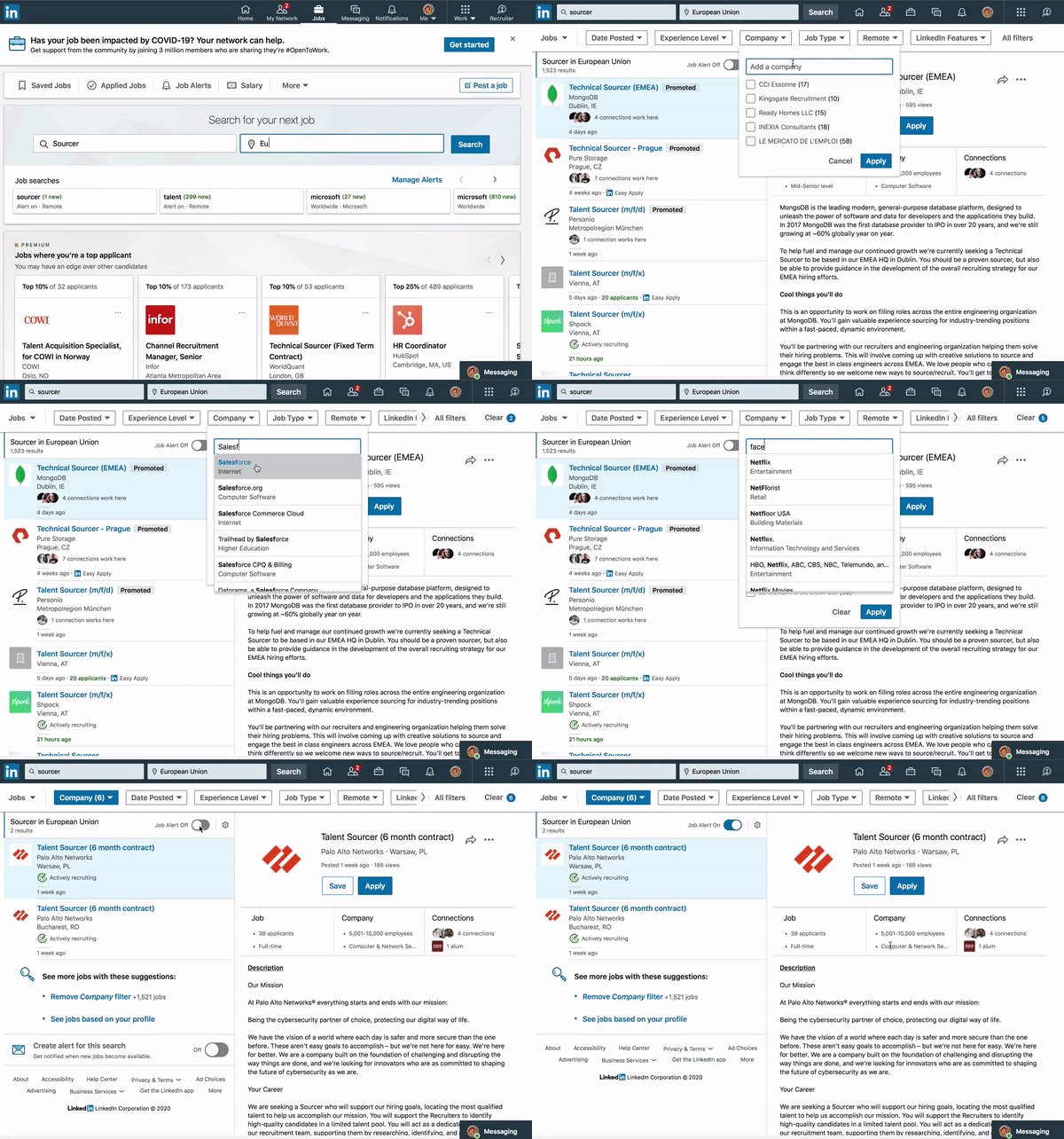
2. Are you engaging enough on LinkedIn?
Many professionals mess on this point as they fear feeling fake by reaching out when they only need a job. Engaging with talents like yourself over LinkedIn is the exact same thing you do when you get into a networking event: you talk to people; this is how you can increase your visibility as a professional on LinkedIn.
3. Is your profile THE best representation of your experience?
Some people nowadays argue that your LinkedIn profile is not as important as it used to be 5 years ago. Even if this proved to be true -and as a Talent Sourcer, I highly doubt it-, then you still need to make it the best resume you have yet to share.
Think of this scenario: if 5% of recruiters & sourcers are still looking at LinkedIn profiles, will you risk that one of your top companies above may check your LinkedIn profile, and because of some advice on the internet you haven’t update it? I doubt that anyone would be ok with such scenario.
Your profile is your resume. Actually, most companies won’t ask for your resume until later in the hiring process; they will visit your profile.
Make sure you pimp your profile by doing the following:
A) Make The Headline your best friend:
In this article: How changing this 1 LinkedIn line got me 3X views in 16 hours! I shared a 1 update to your profile that will be a game-changer:
This is a really simple yet super powerful trick that can actually drive great traffic to your LinkedIn profile. If you are looking for a job now OR if you may think of starting the hunt for a job a year later, then this is traffic to your profile that you need RIGHT NOW.
B) Take that Summary section up a notch:
This is a tip I got from LinkedIn Learning’s Head of Business Content Strategy Jolie Miller, the instructor of the course Finding a Job. Jolie shared her insight from her years of experience as of what she believes is a big mistake we all fall for -I know I did prior to talking to her-:
“The biggest mistake you may do: You tell a great story of why you are a great candidate, but your Summary section doesn’t.” — Jolie Miller, LinkedIn
Your summary section shall be an exciting storyteller. This is your elevator pitch: why do you think you are cool? and why should anyone hire you?
Be direct, be intriguing, and be numeric. Give in a nutshell a brief of your achievements & what makes you great at what you.
Not sure how to package that? Here are some great examples:
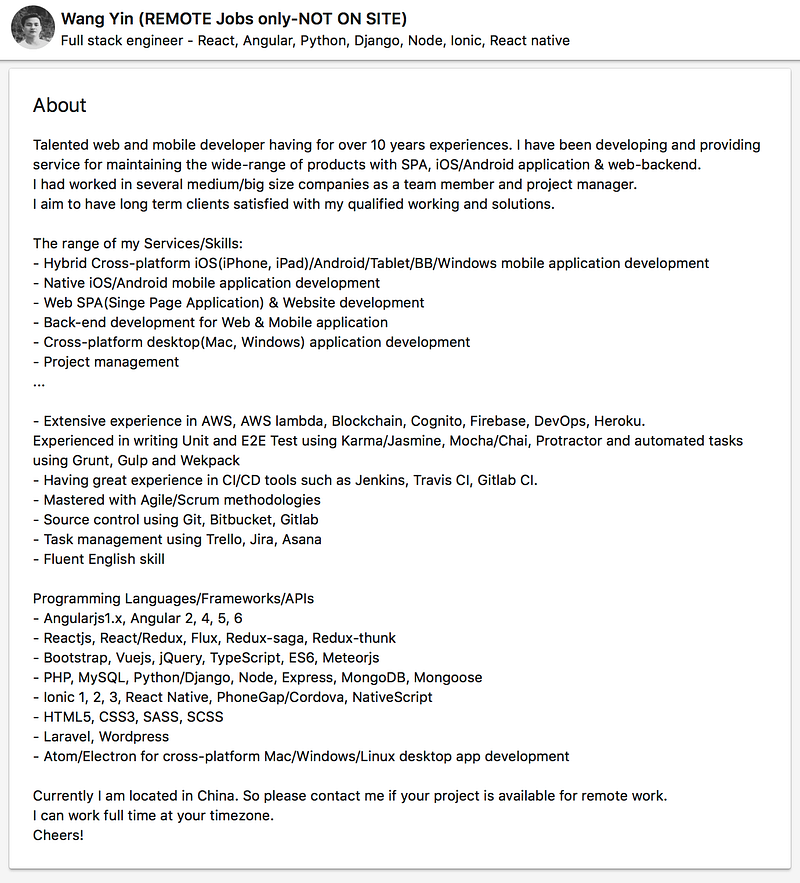
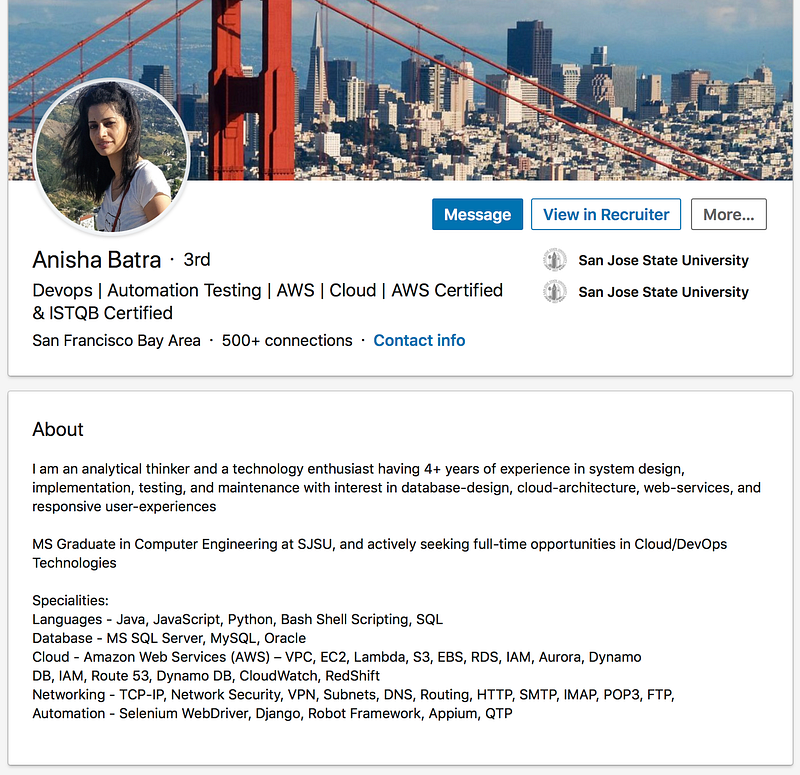
And it’s ok if you are not a technical expert, you can still highlight your achievements in an easy-to-read layout:
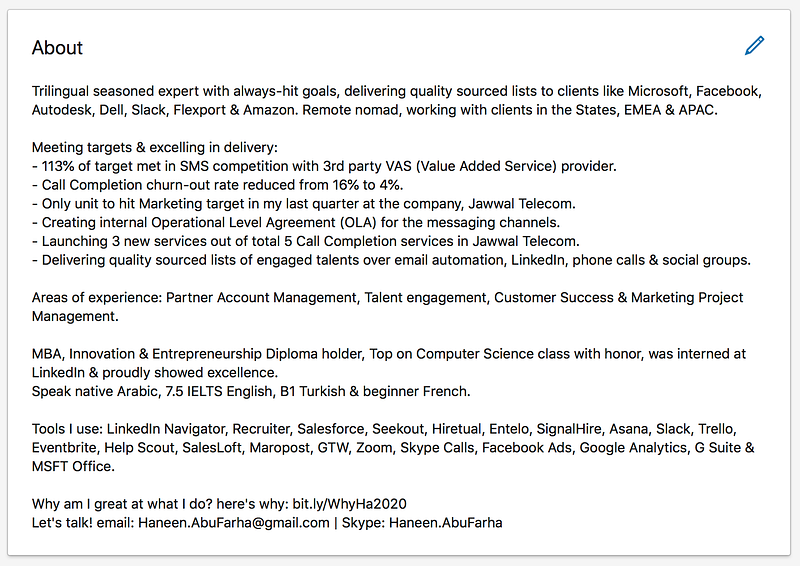
C) Fill the Featured Section:
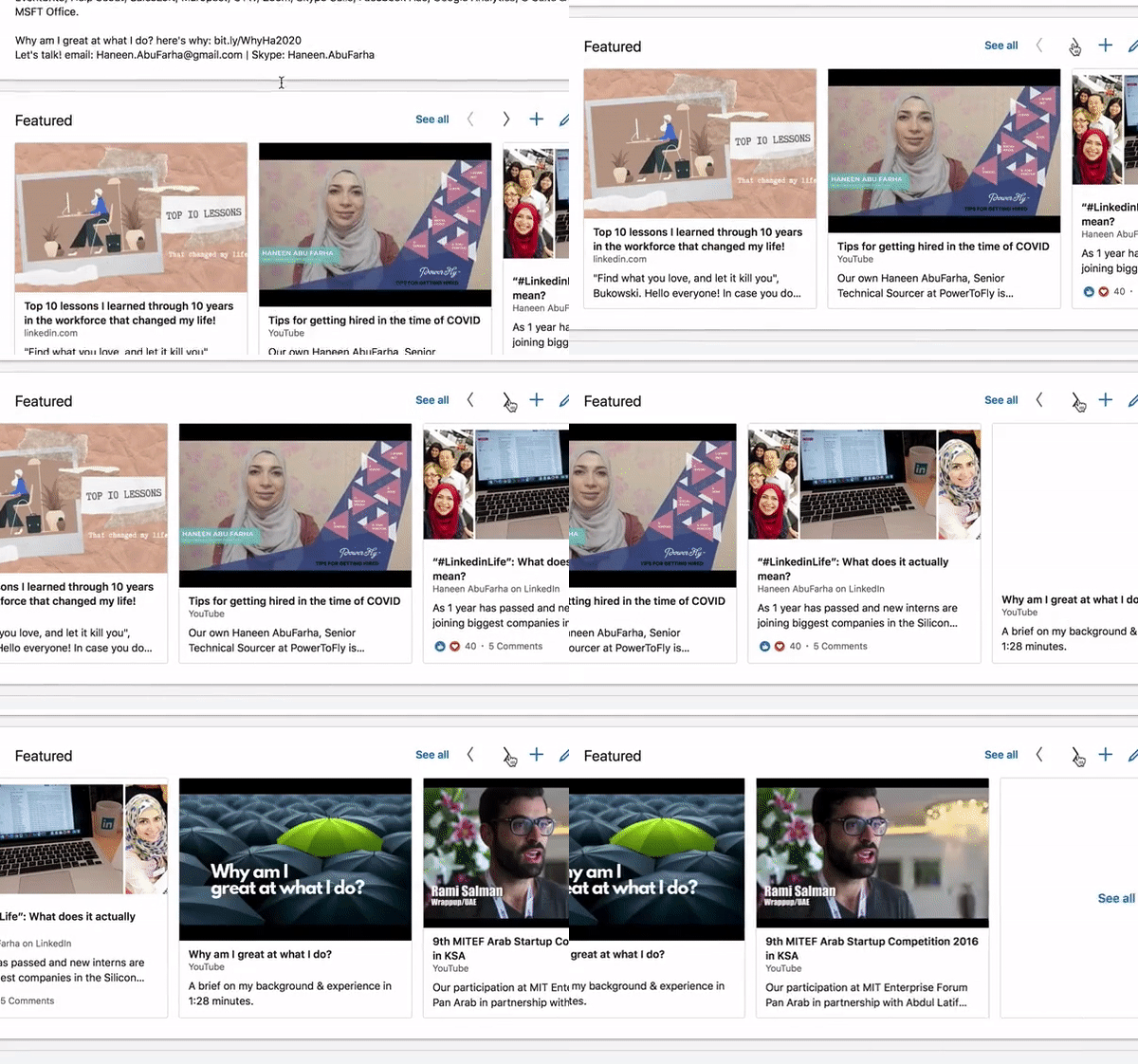
I know a good number of friends who keep this section empty. DON’T! If you write, add links to your articles. If you were hosted by a podcast or a talk show, attach a link to that hosting episode. Add certificates, mentions & other items. People don’t know how awesome you are, so add details that would make people interested in knowing more about YOU!
D) Include numeric evidence:
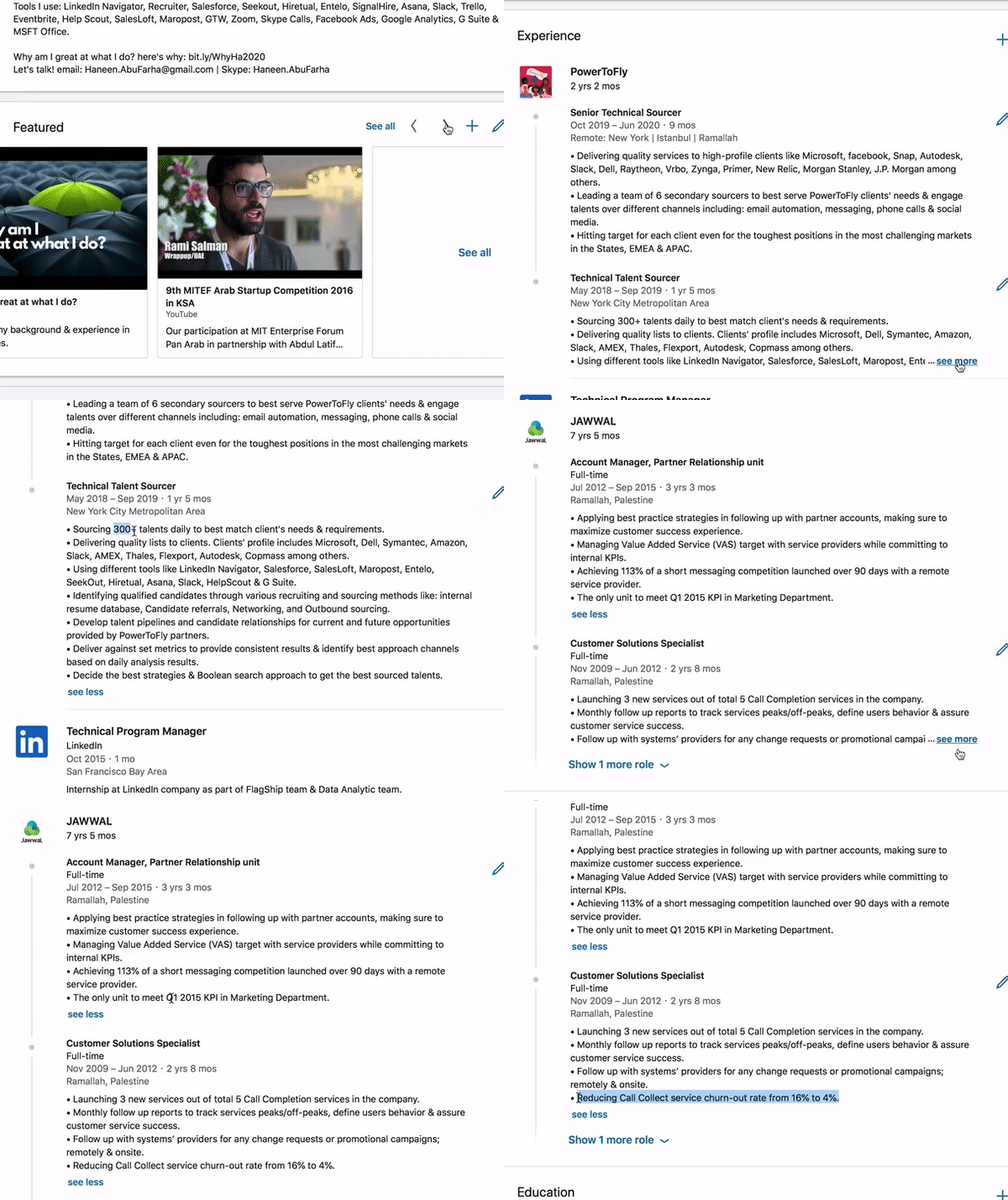
Whenever possible, replace phrases with numbers. Instead of saying that you managed Partner Accounts, mention how you increased the ROI of the company by X% while you managed accounts of Y number of Partners. Here are some examples from my profile that looked horrible at a time, but a 1-hour consultation 4 years ago with Kim Clancy helped me focus on what matters; results, not activities.
In other words: Show me in numbers what you did, not how you did it.
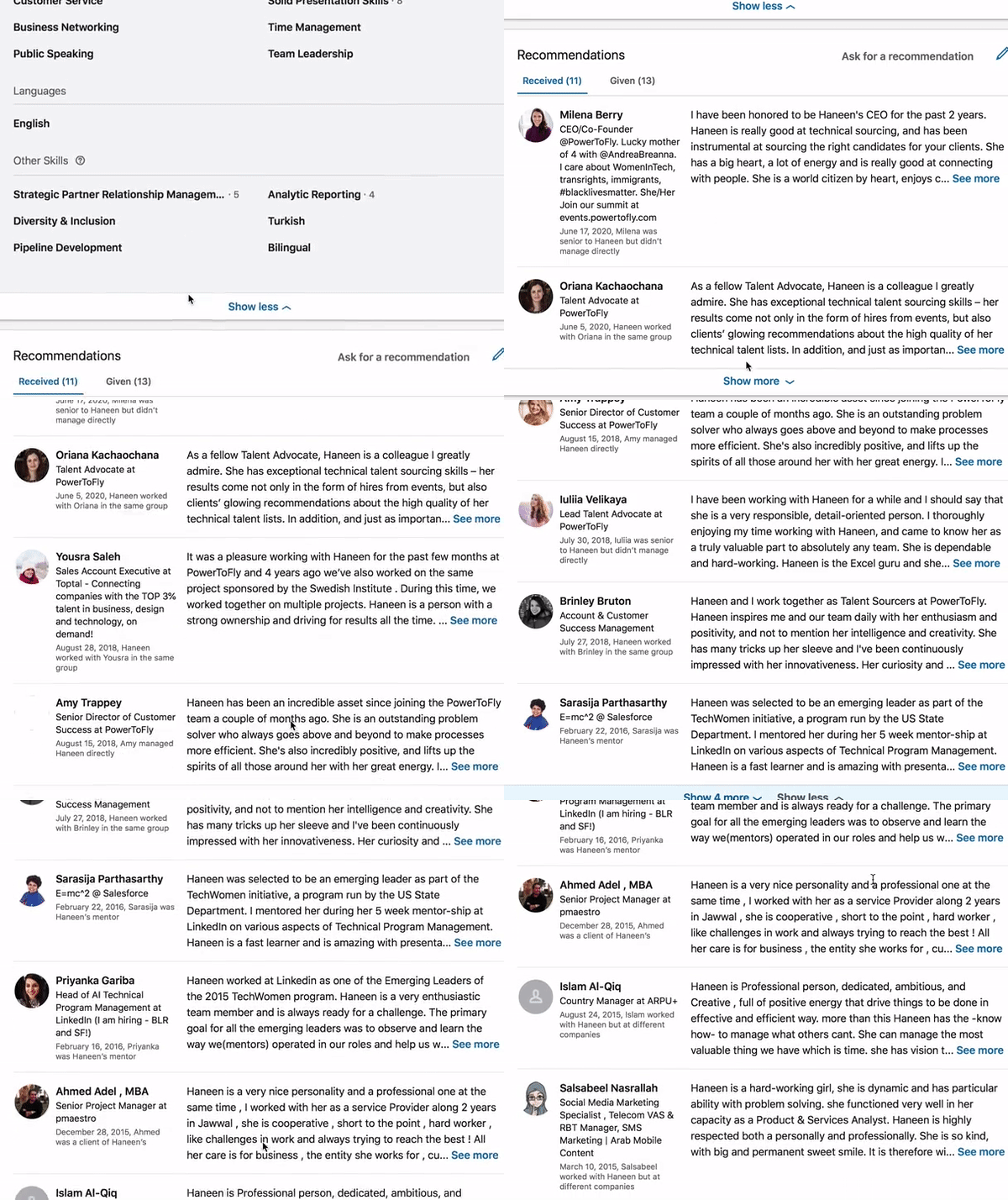
E) Look like an expert by adding Recommendations:
The more you get of those, the better you’d look. Think of Recommendations as soldier’s badges; the more decorated you look, the higher you’d be ranked.
Those are the testimonials of your experience I need to see as a sourcer looking for great talent like yourself:
Practice: The Hunt Strategy
Here are the three phases you need to follow:
1. PHASE I: Pre-job hunting
You need to be crystal clear with yourself on the following points. Be clear, be blunt, and be brutal; as figuring out those points early in the process would help you strategize your search:
A) Understand your strengths:
What is it that you do differently? The skill or two you are a real rockstar in?
This can be anything from being a rockstar of presentations, the leader-with-no-title among each group you join, the Excel guru, or public speaking go-to person.
Understanding your strengths will help you better spot the perfect jobs for you just by reading the job description.
If you don’t know what your strengths are, then try checking your endorsements section, or ask trusted colleagues:
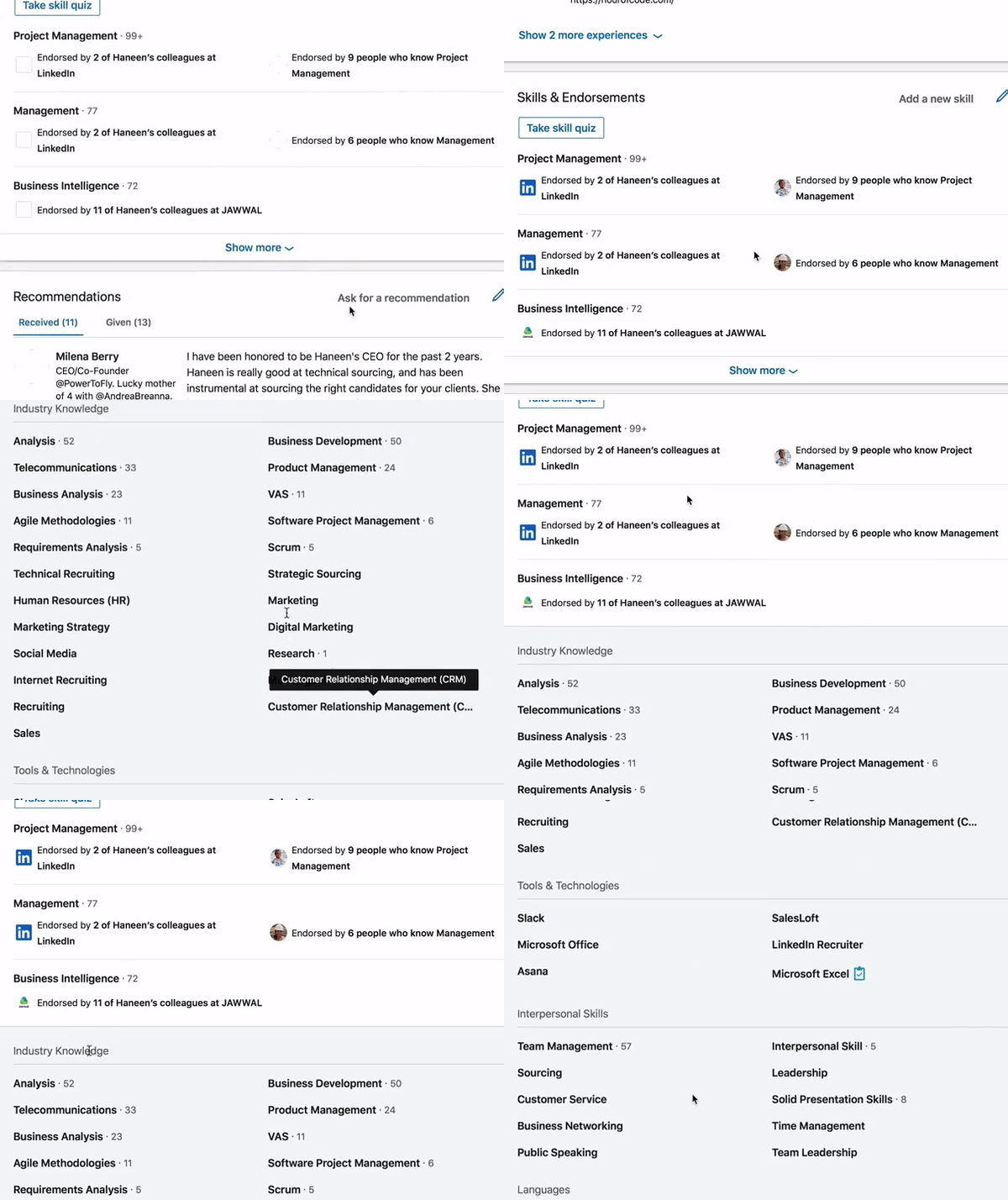
When your brain is already familiar with those specific keywords that represent your strengths, your eyes will look for those keywords without even you put the effort to actually spot them on.
B) Define your area of expertise:
Those two will be the main directing force of your search. Even if you have a different experience in other fields, you need to be specific in your search as job hunting is a long, draining & daunting process.
You don’t want to waste your time & energy on areas where you won’t be the perfect candidate; only apply for the jobs where you’ll shine & be THE hero among your mates.
C) Do your homework on the basics:
There is a certain pool of questions every recruiter asks: Why our company? Why are you leaving yours? Give me one situation when this happened, how did you solve the problem? In this case, how would you make X become Y?
The questions are all the same with some tweaks, so make sure you are prepared & well educated. Glassdoor is a great place to collect all the data you need on 98% of the companies on the Internet:
2. PHASE II: The job hunting
If you really want to get an interview at ANY company, this is what you should do:
A) Be strategic in your approach:
You need to be strategic & proactive in your job hunt. Yes, you need to keep an eye on the different job boards: LinkedIn, Glassdoor, Monster & PowerToFly; but the process is draining & time-consuming. Be intentional in using the job alerts we mentioned for LinkedIn, keep following your top 10 companies so you can be one of the first 25 applicants of any job opening -LinkedIn statistics shows that the sooner you apply, the better your chances to get an interview would be-.
B) Use the ultimate cheat sheet:
That would be the Job Description of the job you wish to apply for. NEVER use the same resume for all positions you’re applying for. Update your vocabulary, use the company’s terminology. Think of yourself as the copywriter of the company: all your writing pieces shall follow the same guidelines, and so shall your resume.
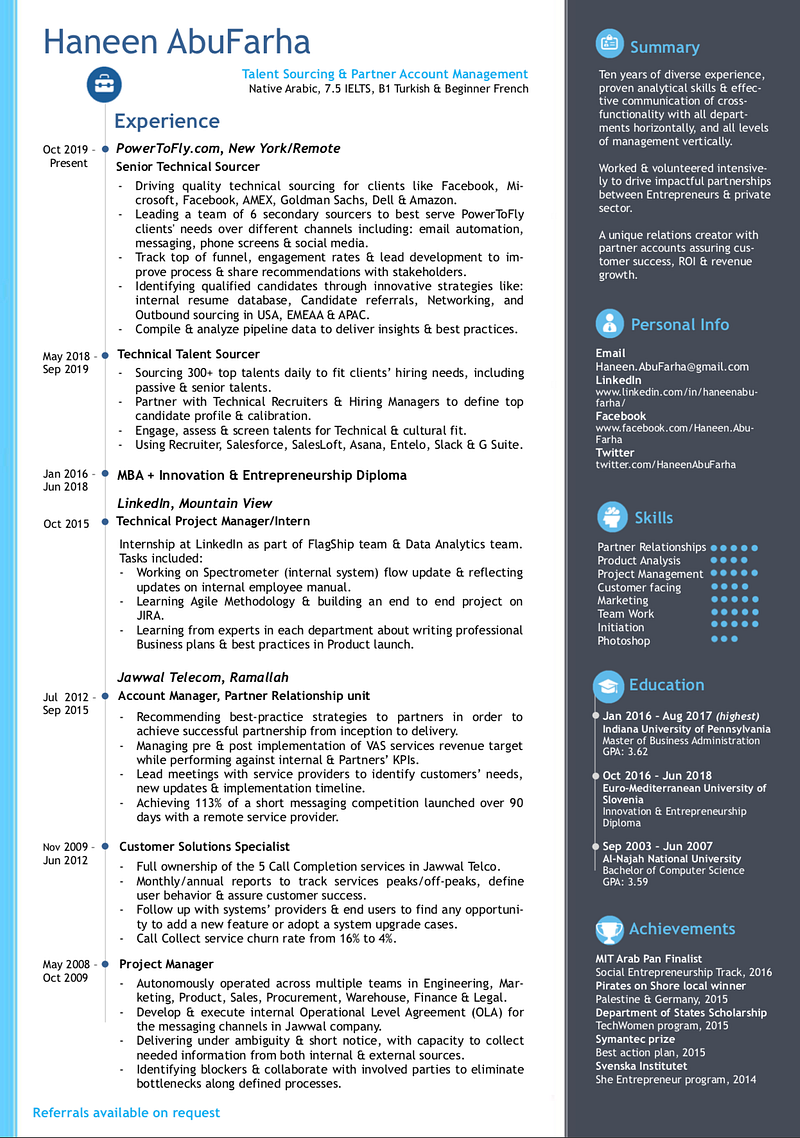
Here’s a sample CV of 1 page & all needed details:
C) Engage, engage, then engage more:
Follow top talents from your top companies list: the professionals of the same department you wish to join, recruiters & anyone in between. Comment on other people’s posts, add a different perspective to an ongoing discussion & show your real metal. By engaging with employees of those companies, you get an insight of the company’s values, share thoughts & get exposure to potential future colleagues, and when the time comes & an opening job is posted, you may actually get a referral!
D) Ask for Referrals:
Jeff Weiner talked about the power of LinkedIn’s referrals many times. As per LinkedIn statistics, you are 13 times more likely to land an interview if you apply through a referral. Remember, ask for a referral before applying, because in 9 out of 10 times, you will get a separate link to apply, and that link won’t work if you have already applied for the job. This may result in not being among the first 25 to apply for the job as we mentioned above, BUT referrals beat the first bird advantage, EACH TIME!
E) Send a personal email:
Many people connect with the hiring managers over LinkedIn, which is great but guess what? everyone is doing it. You need to stand out, especially in the current COVID situation with the huge layoff among the biggest companies. If you were competing against 100 talents before, you need to multiply that number by 3 if not 5 now to get the size of the current competition. Got the picture?
This means you NEED to stand out. How? Send a personal email of why you are THE perfect match for the company & what you’ll add. Don’t talk about what the company will add to you; they already know! Study your target company & the job description, then sell yourself: why should they pick you over all the other candidates?
F) Add a personal touch:
Following the above rule & whenever needed, add a personal touch to your email with more emphasis on what you mentioned in your email.
This may be a presentation, an infographic, or a cover video. I attach a cover video to all my emails to recruiters with whom I’m looking for an interview. Even when I have an interview set on my calendar, I find out the name/s of the recruiter/s I’ll meet, I send them a personalized LinkedIn message explaining how eager I am to meet them, and include the cover video to make the data stick in their minds & be a bit different. In the last round of interviews I did, all recruiters I talked to -with no exception- mentioned that they loved the video addition, and how they find it refreshing:
3. PHASE III: Post-job hunting
Whether you want to take a break from looking for a job, you found a job, or you’re no longer looking for a job; a post-job hunting strategy is needed to keep the momentum you created in the first 2 phases.
This is simple, yet it requires discipline & consistent steps:
A) Keep channels open:
Don’t make the mistake of stopping the communications with people you’ve added to your network only because you are no longer looking for a job. This will send a bad message to the hiring managers & to your network that you only reach out when you need something. A bad message, don’t you think?
B) Keep that top companies’ list handy:
Yes, you are no longer looking for a job, but if I came now & told you that one of the companies on your top 10 list has a vacancy that 200% matches your skills, would you turn your back & tell me that you are no longer looking for a job?
That is exactly why you need to always have that list in mind, for whenever you spot a matching opening.
C) Don’t remove the LinkedIn Alert:
If you felt like the LinkedIn alert notifications & emails are too much, just update their redundancy to become weekly instead of daily, use the notifications only & ditch the emails. Never get rid of the alerts as they may bring you something you’ve long desired for.
Pacing: Keeping The Momentum
Along the road above, you’ve created a great network of talents, professionals, potential referrers, and potential future colleagues. Now is not the time to take a nap! You need to use this network for your advantage, whether that advantage was finding a job, creating your personal brand, or growing an audience. No matter what your current plans may be -or may not be, you may have 0 ideas of what you’ll do next & that’s perfectly fine-, do the following to keep the flow going:
1. Follow up with a Thank you email:
Always send a follow-up email to flavor things up & stick in the minds of recruiters. Who knows, an opening may open up soon, or in few cases, the selected candidate would decline & guess whom they’ll contact next?
As per J.T. O’Donnell, CEO of WorkItDaily.com, Sending a Thank you email shall include 3 main points: 1) Send it immediately within the following 24h, 2) Make it a straight forward thank you note; don’t resell yourself, and 3) Add a P.S. note; add something like “I saw this video on ABC & it reminded me of our conversation about XYZ. She promises if you do this, you’re gonna WOW them!
2. Offer help to strangers:
I truly believe that even if the reasons were wrong, as long as results are serving the greater good, then it’s good. Offer to help others: give advice if you know the answer, offer to connect two professionals in your network, and provide resources for those looking for resources.
There’s always some kind of value you can add to others. Don’t ask people to serve you, serve them first & you’ll be surprised by how karma works.
“What goes around comes back around”
3. Start blogging/vlogging:
The best way to show your knowledge about something is by writing/talking about it. Your time off -if you are not working at the moment- might be the gift you’ve never had when you were busy hustling ALL DAY. This is your opportunity to shine, share your wisdom, and show recruiters what you’re truly made of & how amazing your knowledge & personality are.
4. Read, so you can engage:
Being actively engaging on LinkedIn is a key before, during & after any job hunt. You need to show up, you need to articulate, and you simply need to shine among the crowd. One of the key activities highly engaging people do is reading: books, blogs, newsletters, and Medium articles. The more you read, the better person you’ll be, and the more proof-based your conversations will become.
Conclusion
The final thought here would be never to make the job hunt the center of your universe. While some people may land a new job in 2 weeks, others may need a year to get a decent job.
You have to keep yourself sane: work out, go for a walk, find a new hobby, and remember to breathe.
If things didn’t work out, try to find another source of income -even if low- until you land your new gig. This might be a craft or a hobby you never thought of monetizing before. Whatever you decide, don’t let pessimistic thoughts drag you into an abyss of misery & depression.
Time solves all, but first: you need to give time some time to work its magic.
Are you ready to start your job hunt? I’m ready to help.
The Mini Post-Grad Survival Guide
A 5-day email course with tips on budgeting, investing, and productivity for 20-somethings. Sign up for free.


