
Don’t Believe Anyone Who Tells You to be Exceptional
Simplicity is where all the magic happens.

We live in a society that pushes success and perfection down our throat. From the time we’re young, we are told be a good girl or boy. At school, we’re expected to work hard, get awards, and be the best.
So much emphasis is on what we should do and not who we are. In between these demands and expectations, we learned that we needed to be outstanding to deserve a place in this world.
If your parents where anything like mine, you would hear, “you’re the best, you’re a star” or my personal favorite; “you’re the answer the world has been hoping for”.
As well-meaning as my parents were, this conditioning is what almost destroyed me 20 years later.
I’m not blaming them, they did the best they could after all, I was born in a time when positive affirmation was the best way to bring up children.
Primed for success, I worked hard and aimed for perfection. After school I revised, during holidays I worked even harder. I spent every moment striving and accomplishing. I had to be excel, being average was never an option.
Movies, music videos, and adverts reinforced this mentality. Imagery everywhere showed what success looked like: flashy cars, yachts, mansions, and exotic holidays. And what outstanding people achieved: Power, respect, and admiration.
This was enough for me to follow the blueprint of success to the T. Got my undergraduate, my honors, and my master’s degree. I even embarked on a Ph.D. Yet no mattered how I tried I wasn't fulfilled.
To make matters worse, my degrees and accolades didn’t make me outstanding.
I didn’t get a high paying job, and I didn’t come up with a cure for a deadly disease. I didn’t own a yacht or live in a mansion.
After all my efforts, I turned out ordinary.
I was angry at the world for not rewarding my efforts, mad at myself for chasing a reward that wasn’t guaranteed. I became depressed and suicidal.
Often I muttered I don’t want to survive; I want to thrive those very words show how deeply this idea of success had affected me. To a point where I rendered my life worthless if I didn’t prosper.
After months wallowing in self-hate and self-pity, I went back to my village, a place untainted by human civilization.
Something about its simplicity and tranquillity offered me peace. Perhaps it’s the sounds of the birds chirping, or the rhythmic tap of streams hitting against rocks. Maybe it’s the beautiful landscape or how everyone possesses the spirit of Ubuntu (oneness).
When I was there, none of my accomplishments mattered. Success didn’t matter. There was no pressure to be exceptional.
You didn’t have to prove yourself to be worthy, you just were.
Everyone participated in plowing the field, rearing chicken, milking the cows, and fetching water. We all worked together laughing, sharing jokes, and teasing. Occasionally you’d hear squabbles and fights which always ended in high fives, fist bumps, and hugs.
In practical terms, this way of life seemed poor and uninspiring, yet everyone was happy and content. That’s when I finally understood the words of the philosopher Michel de Montaigne:
“Storming a breach, conducting an embassy, ruling a nation are glittering deeds. Rebuking, laughing, buying, selling, loving, hating and living together gently and justly with your household — and with yourself — not getting slack nor belying yourself, is something more remarkable, more rare and more difficult.”
In my village, people found joy in doing ordinary, mundane things. Their work wasn’t as exciting as getting a Nobel Prize, or as prestigious as making partner. It wasn’t even worth a billion dollars.
It was just….ordinary. Watching them plow in the field, rear chicken, and dance in the dirt were beautiful.
This beauty is what the Dutch artist Johannes Vermeer, wanted the world see through his painting the little street (picture below). He captured the inherent beauty in cleaning the yard, darning cloth, and raising children.
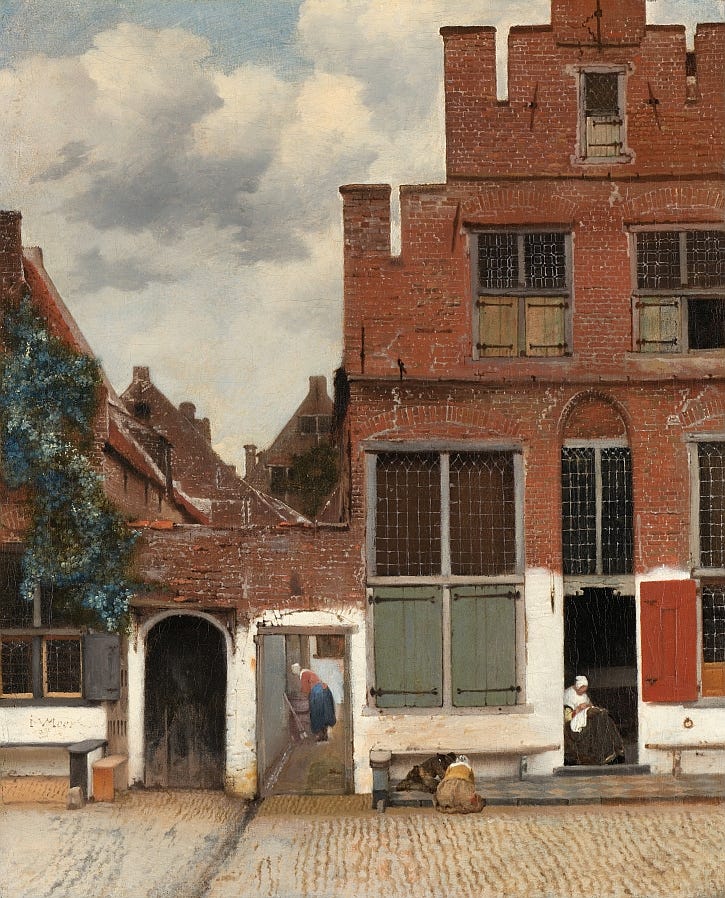
By putting a spotlight on things we often overlook and frown upon, he brought it honor. It resonated with so many people that today it is among the most expensive and most studied pieces of art in the world.
The work of Vermeer and the words of Montaigne challenges our idea of outstanding and exceptional. Reminds us that we don’t have to attain status or do anything extraordinary to be amazing.
However, those who do ordinary things faithfully almost always become exceptional. Once we’re able to find beauty in every day life and work patiently in what we truly enjoy, we will eventually be exceptional in one way or another. The aim is never to chase it but to let it to find you.
Before you leave
We tend to forget the therapeutic nature of sadness, here is an article to remind you, What a cancer diagnosis taught me about sadness.
Or you might like A Letter to men from a sexually frustrated woman.
© Dona Mwiria 2020