
Food Supply Solutions
It’s Time to Get Serious About Making Our Own Stuff Ourselves. Start now.
You won’t have a choice in the not too distant future
I made candles last night.
I made chicken stock this morning.
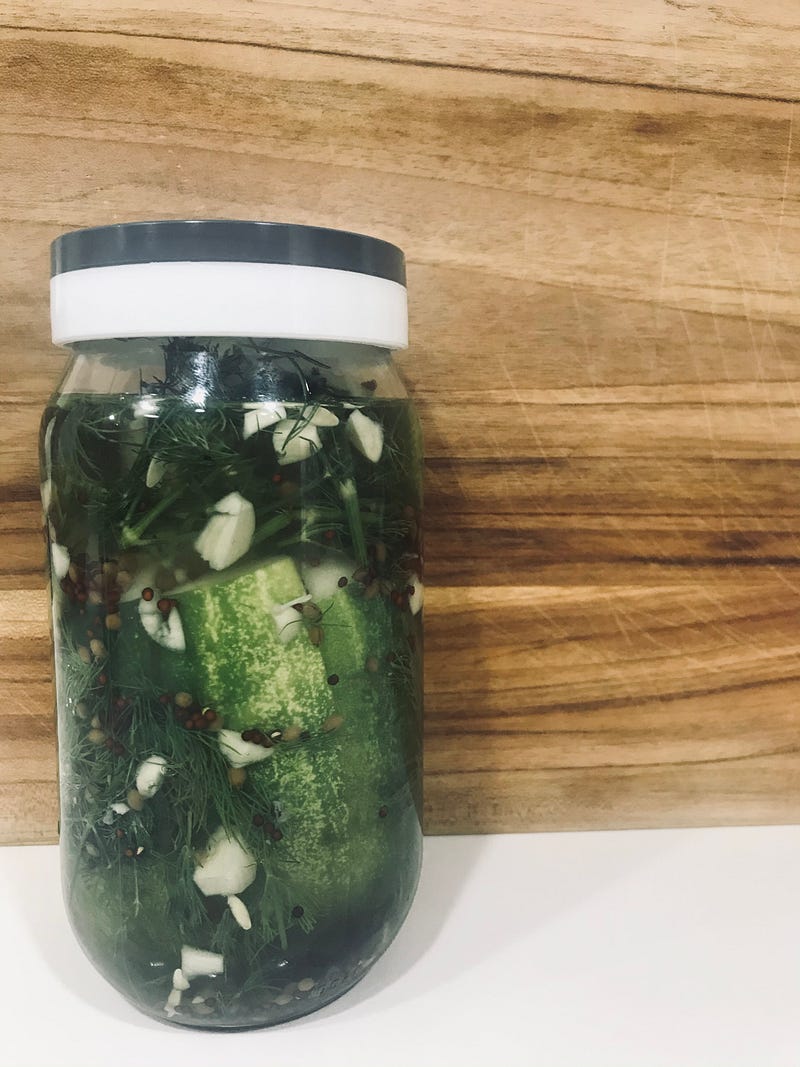
Just now I made pickles. I’ll come back to that in a minute.
It’s becoming more and more clear that we are coming to a tipping point regarding the security of our food supply.
Many parts of the world have had to deal with this issue for decades, but now it’s our turn. And we are shocked to see how expensive food is getting and that sometimes the items that we are accustomed to having within easy reach are now at times in short supply.
We know there are complicated reasons for this, but not many of us have the time or energy in our lives to really investigate further. We know there is a problem. We are told there is a problem. Predictably, we will look around for someone to blame and it will be the politicians who take the fall.
It’s not that they are without blame, but the problem is that they have no idea what to do. And equally predictably, the people that propose to replace them have no idea either.
It’s time to stop looking at them for answers. They have none and instead seek to maintain their grip on power by keeping people who have common cause divided, in competition with each other and at each other’s throats through the bullshit of Cancel Culture and Culture Wars.
I say that it’s time for us to look at ourselves and our own buying and consumption habits. I say that the purpose of the industrialised food production system is more to consistently increase profits for shareholders and less to provide a nutritious supply of quality food. I say that we don’t have to take part in it if we don’t want to.
I say it’s time to start making our own stuff. If we start now, while we still have a choice, we can be just a little more prepared for the coming time, when we don’t.
So what’s going on out there?
We are used to a constant supply of food. We’ve never walked into grocery stores or supermarkets and seen shelves empty.
We are used to being able to select food from all over the world. Avocados from Chile, strawberries from Mexico, lamb from New Zealand. Not anymore.
We are used to convenience. We expect to be able to drive to the store, park, go in, load it all into the car and drive home. The cost of a tank of gas makes this task increasingly expensive. Furthermore, we want our food to be easy. Prepared and packaged so that we can take it home and microwave it. But it’s not food.
Processed food is cheap. Cheaply made and cheaply sold. The problem is that the more people consume it, the more they avoid actual food, because it’s too expensive. That’s the knock commonly heard against organic food, “it’s too expensive and not everyone can afford to eat that way.” No! That’s actually what food costs!
And as we are finding out now, cheap is expensive.
The monumental rise in gas prices is playing a big role in this, since everything you get at the store is brought there in a truck that runs on gasoline. This increase can’t be borne by the truckers or the trucking companies, so it is passed on to the consumer.
This is all without addressing the environmental impact of our food production and delivery system. Will this be the moment that politicians get behind solutions to our addiction to cheap oil? Or will they double down in continued deference to oligarchs and oil companies that own them as bought and paid for employees, and continue to line their own pockets in support of this disastrous charade?
We hear about supply chain issues as though these were not human creations with human solutions. If we stop expecting to be able to buy things from all over the world and buy what is available locally, suddenly these supply chain issues go away.
Among other things, Vladimir Lenin said that “all families are three missed meals away from chaos”. We can assume that he was referring to societies as well. In short, hungry people are angry people. Angry people are revolutionary people. Revolutionary people are interested in quick solutions that are presented to them that allow them to eat. Think about how exploitable these people are, by the wrong kinds of people.
But wait.
A potential solution exists on a micro scale. It may or may not put a dent into the macro scale, which is designed to absorb the shock of a small percentage of people opting out of it.
It involves using what exists around you to make your own things. I mentioned at the beginning some of what I’ve made yesterday and today. I’ve written a few articles about other things that you can do easily, tastily and cheaply at home and these are linked at the bottom.
But back to the pickles. Who doesn’t like a good pickle?
I realize there might be a few people out there, but I sure do.
Before living where I do now — Kingston, Jamaica — I lived three years in East Africa in Dar es Salaam, Tanzania. There was no issue with the food supply there. If you had money, you could have food. Lots of it.
But though I looked all over, I could not find pickles that suited me. They were expensive. They came from far away. They were full of ingredients that I didn’t recognize. They didn’t taste very good and had lost their crunch, sitting so long in salty brine.
So I decided to make my own.
Here is how you can too. It’s so easy, you will kick yourself.
Ingredients you will need: cucumbers / salt / white vinegar / apple cider vinegar / water / mustard seeds / coriander seeds / fresh dill / garlic
Kitchen gear you will need: large bowl / colander / small pot
The process goes in two distinct stages:
First, cut up your cucumbers as you see fit. I leave the seeds in, but you can take them out. I prefer long spears or wedges but some prefer coins so that they can be put on hamburgers. Why not get crazy and do both? Get these into a colander and put that into a bowl. Salt liberally. This will draw the water out of the cucumbers. Put that into the fridge for 3–4 hours.
While that is happening, heat up 2 parts vinegar, 1 part apple cider vinegar and 1 part water with a tablespoon of mustard seeds and another of coriander seeds. Bring it to boil for 5 minutes and then let cool. If you were to add this to the cucumbers in a jar right now, you would cook them and that is not good. So leave it until the cucumbers are ready.
Alright, so 3–4 hours later, it is time to assemble everything.
Rinse the salt off the cucumbers but don’t be too meticulous. A bit of salt is ok. In your jar(s) put the cucumbers in with some roughly chopped fresh dill and garlic. Add the liquid mixture, ensuring the seeds get into the jars as well.
You are done. Put them in the fridge and forget about them for at least a week. It will take that long for them to be ready.
I think the main thing that I want to get across in these articles is how easy it is to do these things. Their quality, which is always going to be better than anything you’ll find in the store, is its own reward.
The key thing is that when you figure these things out and make them work for you, you have to share them with people. The products themselves or the method for making them, or both. Above all, the mindset shift that got you excited about doing these things has got to be shared out among others.
Buy as local as you can, my friends. And Make. Your. Own. Stuff.
A few more for you here, if you are so inclined:
I really do hope that you like what you have just read. If you want unlimited access to thousands of writers, consider a subscription to Medium. It will set you back $5 a month and if you use this link, then I get a slice of that and will continue to buy from local producers before I go to a supermarket.


