
Coffee and Travel
The Easy Way to Lift Up Your Boring Morning Coffee Routine
Maybe I should have said “spice up”
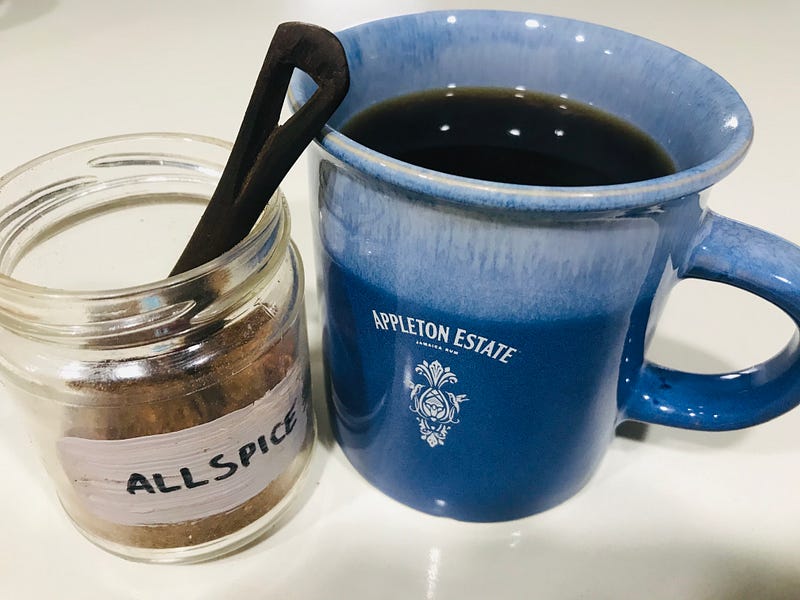
For something so many of us look forward to — hell, rely on — from the moment we open our eyes in the morning, our first cup sure has the propensity to disappoint every now and again.
It’s hard to expect a day to recover when that happens.
Who knows why it does that? Could be that your beans weren’t fresh anymore. Maybe you didn’t grind them long enough. Perhaps the water wasn’t hot enough. Might be that you didn’t let it sit long enough. Possibly, you are bored with your method of preparation.
It doesn’t have to be this way. There is a way to save a not so great cup of coffee and elevate an already good one to a truly great one.
A disclaimer is necessary at this point. Everything I say from here on assumes that you grind your own beans in the morning and you drink your coffee black without any sweetening devices or milk type products, just the way God intended.
Whether you are an insufferable coffee snob, or happy with the stuff from Tim Horton’s (Canadian reference for bad coffee…every country has its own version), you might know that coffee or kahve originated in Ethiopia. Millenia ago, the people there figured out that if you could gather the cherry of the coffee plant, let it to ferment, roast the bean inside, grind it up and heat it with water, there were benefits to be gained.
Say what you like, but for many of us it was Starbucks in the 90s that brought to our attention the fact that many places in the world produce great coffee given the different climates, growing conditions, soil quality, traditions, bean genetics, they all grow coffee that tastes different.
Colombia, Guatemala, Jamaica, Indonesia, Ethiopia, Vietnam, Kenya, Tanzania are all a huge part of the global coffee trade and in each of these places, you will get a cup of coffee that tastes like nowhere else, though most of their best goes to the export market.
There is no Starbucks in Addis Ababa as yet, but there are four in Kingston, Jamaica. And six in Bogota, Colombia. Again, say what you like and I digress.
Given the geographic origins of coffee, it is natural that it spread first southwards to the East African coast of the Indian Ocean and then was brought by traders to the Arabian peninsula. Trade in coffee is a significant part of what motivated the Arab exploration of and expansion into what today is known as the Swahili coast of Kenya, Tanzania and Northern Mozambique.
About halfway up this coast, a 2 hour ferry ride from Dar es Salaam (Tanzania’s largest city where I spent three years) is the fabled island of Zanzibar. Today it’s best known for its beaches, but the archipelago was so important and profitable from the 1400’s to the 1800’s, that it was eventually made the capital of the Omani empire and the centre of its trading routes to the south and all the way north to India.
Though the spice trade has declined in this part of the world, Zanzibar is famous for it. It’s only natural that the spices that the island is best known for found their way into coffee.
I call it All Spice. But this is not to be confused with the trade name for ground pimiento, which is so central to Caribbean cooking.
I call it that because it has all the spices that make the world taste good: cinnamon, cloves, nutmeg, pimiento and black peppercorn.
Here is how you can make it yourself, incredibly easy and cheaply at home. Done right, it has the potential to change your morning and therefore, your whole day.
You can use the ground version of all of these that you’ll find at the grocery store, no problem. It will still work out well. But if you have access to cinnamon bark, whole cloves, nutmeg that needs grating, whole peppercorns and whole pimientos, then things will turn out that much better.
Mortar and pestle would be the traditional way to grind these all up, but for me, I’m prepared to take my artisanality only so far, so a coffee grinder does wonders. I won’t include exact measurements because this is a game of trial and error until you find what works for you.
For me, the majority is going to be cinnamon bark — somewhere between 60–70% of the space in the grinder. You’ll want to break that up into smaller pieces, lest it jam your grinder blades. Next will be a small handful of whole cloves, followed by grated nutmeg — I find a half a nut works well. That might be it for you, right there. Or you might take it a step further with half a teaspoon of pimiento and an equal amount of peppercorns.
Pulse the grinder a few times and then let it go. It won’t take long — maybe 30 seconds — and it’s ready to go.
I use a French press for my coffee and it makes about 2 mugs. For that amount, I use about a quarter to half teaspoon of my All Spice with 4 good tablespoons of ground coffee. I pour the hot water over all that, give it an easy stir, cover it with the plunger and wait about 5–6 minutes.
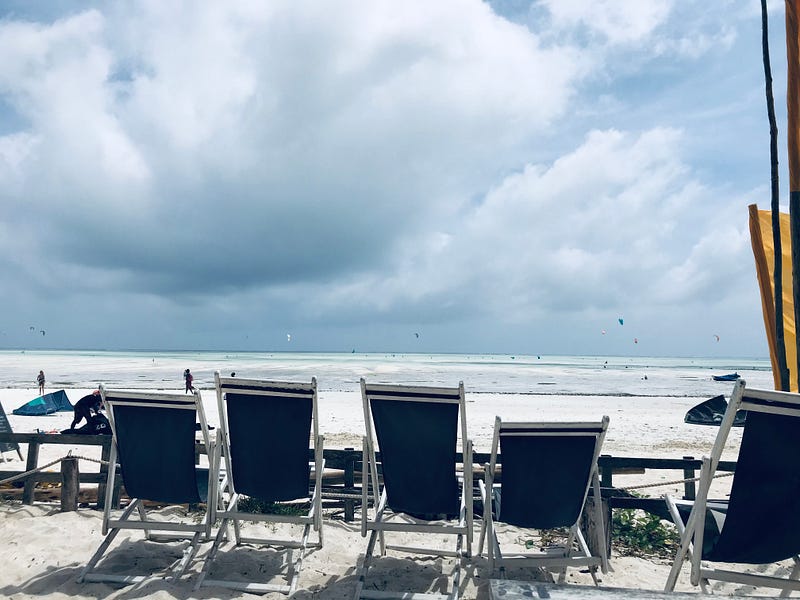
Patience, grasshopper. You will smell it before you taste it and you should be able to close your eyes and hear the Indian Ocean lapping on the shore of Pajé Beach on the southeastern coast of Zanzibar. And then…your first sip…keep those eyes closed and think to yourself, now that’s what coffee is supposed to taste like. Feel free to take your time before diving into your day.
Finally, here’s a quick kitchen hack for cleaning out that spicy coffee grinder. Throw in a handful of white rice, pulse the grinder 4–5 times and the rice will take care of everything. Bob ni mjomba wako. That’s KiSwahili for Bob’s your uncle.
Want more? Here’s another way to do spice up your morning yourself
One last thing…if anyone has any recommendations or suggestions for what publication this might fit best in, please let me know in the comments.
I really do hope that you like what you have just read. If you want unlimited access to thousands of writers, consider a subscription to Medium. It will set you back $5 a month and if you use this link, then I get a slice of that and I will use it to buy local coffee only.


