
It’s a Great Day to Be a Tiger
The unparalleled power of symbolism

They call me Tiger.
Well, okay, my wife does; and a handful of her friends.
It started as a pet name after we had been dating for a while. At first, I railed against it; too cutesy, and besides I didn’t necessarily identify with characteristics I believed to be tiger-ly.
I am not ferocious or fierce, and I don’t have the “go-getter at all costs” approach to things that I believed was implied by the moniker.
I don’t command a room. Even in leadership roles, my approach was to listen unobtrusively, then begin to assimilate into any new group situation, quietly providing support, loyalty, empathy and trust. Qualities that were true for me both in a work and personal setting.
Something more along the lines of Labrador rather than Bengal.
But then, in one of the random occurrences of serendipity that is Amazon, one of the Prime Free Reads of the month was a children’s book titled, “I am a Tiger”.
Of course, I had to leaf through the sample pages. Well-illustrated and cleverly written, even in the first pages it was clear that the protagonist boy-tiger embodied characteristics beyond stereotypical tiger-isms.
This immediately brought to mind Bill Watterson’s timeless stuffed tiger Hobbes, the conscience and philosophical foil to the action-before-thought human boy Calvin.
Those illustrated characters got me thinking. Perhaps there is more to being a tiger than sharp claws and pouncing. Maybe there are some tiger principles that do resonate with me. So, I did a little reading.

Tigers in the wild hunt only when necessary, choosing larger prey as it is more economical to expend energy in bursts and spend several days eating and lounging afterward.
Tigers like solitude yet are comfortable in groups when the situation demands (tigers are introverts).
Tigers are very family oriented and male tigers can help with raising children, keeping them safe from other predators.
Tigers, unlike most cats, like water and frequently will lounge and play in pools during hot weather.
It turns out there was a lot I could get on board with regarding tigers. The tiger symbolism began to take shape for me. My wife’s nickname for me began to resemble more of an ideal, and I built out the archetype with additional qualities that resonated with my tiger symbolism:
Tigers are trustworthy, loyal and empathetic. Tigers are family oriented and are great listeners. Tigers are caring and kind and demonstrate those qualities publicly whenever they can. Tigers are grateful for what they have, and they exude a grace of presence that comforts others and invites replication.
A tiger is who I want to be.
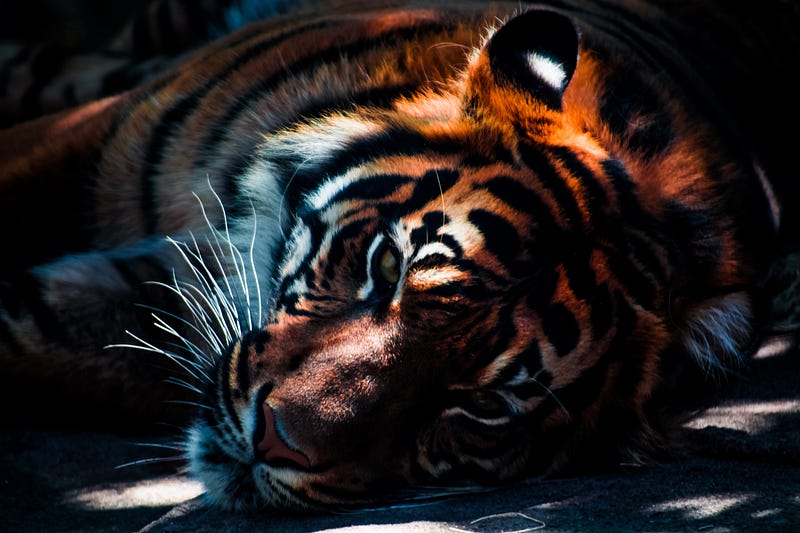
There is a reason that sports teams have names with symbolic meaning. While each particular iteration has some sort of history or meaning behind the assignment to the team, each team has also, over time, come to define what it means to be a Seahawk, or Philly, or Angel etc.
The leadership of the team uses the symbol to represent and embody the characteristics and behaviors that are tantamount to being a contributing member of the organization.
Sports teams that get this right have a competitive advantage that transcends the collective athletic and technical abilities of the players and coaches. Teams that build this chemistry of each member buying into what it means to be an Eagle (or whatever) enjoy that small, but significant, advantage of comprehensive unity.
That locker room chemistry shows up on game day in the form of inches and seconds. Inches and seconds that mean the difference between defeat and winning. The bedrock for such chemistry is the symbolism around what it means to be a member of that team.
In many ways, sports are allegories to life; seconds and inches can make all the difference in real life as well.
That door held for a person, the kind remark, the smile; those are the figurative inches that could mean the difference between victory and defeat for someone on any given day. Those extra seconds spent listening and being present change relationships for the better.
The thing is, as humans, we don’t always remember or value that concept. We forget. We let that door blow closed. We stay silent. We frown. Those inches and seconds are foregone, never to be claimed.
I am certainly that way. Tim is forgetful at times and can be self-involved. Tim lets opportunities to have positive interactions slip by unnoticed and can have a cynical viewpoint after years as a public servant. Tim procrastinates and gets distracted rather than writing or being otherwise productive. But tigers don’t do that.
That is why I have a tiger coffee cup and a tiger avatar on my computer log in. That is why I had a vinyl press-on banner made to place above my bedroom door that reads, “It’s a great day to be a tiger”. And, it’s why I smile whenever my wife says something like, “Tiger, where are my keys?”
It is because each day I want to be a little less like Tim, and a lot more like Tiger. These symbols remind me of the qualities I aspire to master — kindness, compassion, trustworthiness, loyalty, gratitude and grace.
The tiger ideal and symbolism remind me to attain those daily inches; the ones that can truly make a difference in my life and others’.

We aren’t all tigers. But we can all benefit from the use of symbolism in our daily routines. It really doesn’t matter what it is, only that there is an ideal or goal that you want to achieve and that you have a way to remind yourself of that every day.
Maybe it is a picture on the bathroom mirror, or a tattoo, or piece of jewelry. As long as that symbol reminds you of what you want to be or achieve, then it can have remarkable power in your life.
I happen to be lucky; my symbol was offered to me as a gift in the form of a nickname from someone very special. Tigers can be a bit obtuse initially, but given a little time to reason things out, we become quite wise.
I hope you are equally blessed with meaningful symbolism in your life.
It’s a great day to be a tiger!
If you liked this story, you may also like:
Timothy Key spent over 26 years in the fire service as a firefighter/paramedic and various fire chief management roles. He firmly believes that bad managers destroy more than companies, and good managers create a passion that is contagious. Compassion, grace and gratitude drive the world; or at least they should. Follow me on Instagram, Facebook, and Twitter, and join the mail list.


