
It Did Happen Here
Journey to Manzanar
In the 1935 novel, “It Can’t Happen Here” by Sinclair Lewis, American Senator Buzz Windrip champions “the forgotten man” and “traditional” American values. After defeating Franklin D. Roosevelt and winning the presidential election, he became a dictator. The characters and story were inspired by the fall of the German democracy in 1932 and the rhetoric of the Louisiana politician Huey Long.
Also, during the 1930s, American Nazis in California and others were planning to round up all the Jews, socialists, and non-Christians into concentration camps, as detailed in the book “Prequel: An American Fight Against Fascism,” by Rachel Maddow.
The book was a warning about the possible abuses of American Fascists. One federal agency adapted the book into a play that was performed across the country. Audiences may have left the performance wondering “how could Americans put other Americans into concentration camps?”
Then We Did
In December 1941, Charlie Coleman was a teenage American Army mechanic stationed in the Philippines when the war with Japan started. By April, the American army was defeated, and Charlie was part of 75,000 American and Filipino soldiers who were part of the “Death March” out of Bataan. He was later transferred to a prisoner of war (POW) camp in Tokyo.
Charlie survived, and thirty years later, he was working with me as a clerk at a liquor store. At nineteen, I was awestruck by his stories of deprivation and survival. I introduced Charlie to one of my best friends, Clifford, when Cliff visited the store. Clifford was on leave from West Point Military Academy.
I said, “Charlie was a prisoner of war during World War Two.”
Charlie shook Clifford’s hand and said, “I bet your parents were prisoners of war too.”
Clifford replied, “Yes, they were.”
Clifford Nakayama had been my friend for six years. I knew his family; I had dated his cousin. His brothers, Ben and Rob, were sometimes my lunchmates at the University of California, Riverside. But I had never touched that historical scab. A few days passed, and I asked Clifford about his parents' experience during the war.
“They don’t say much.” He replied.
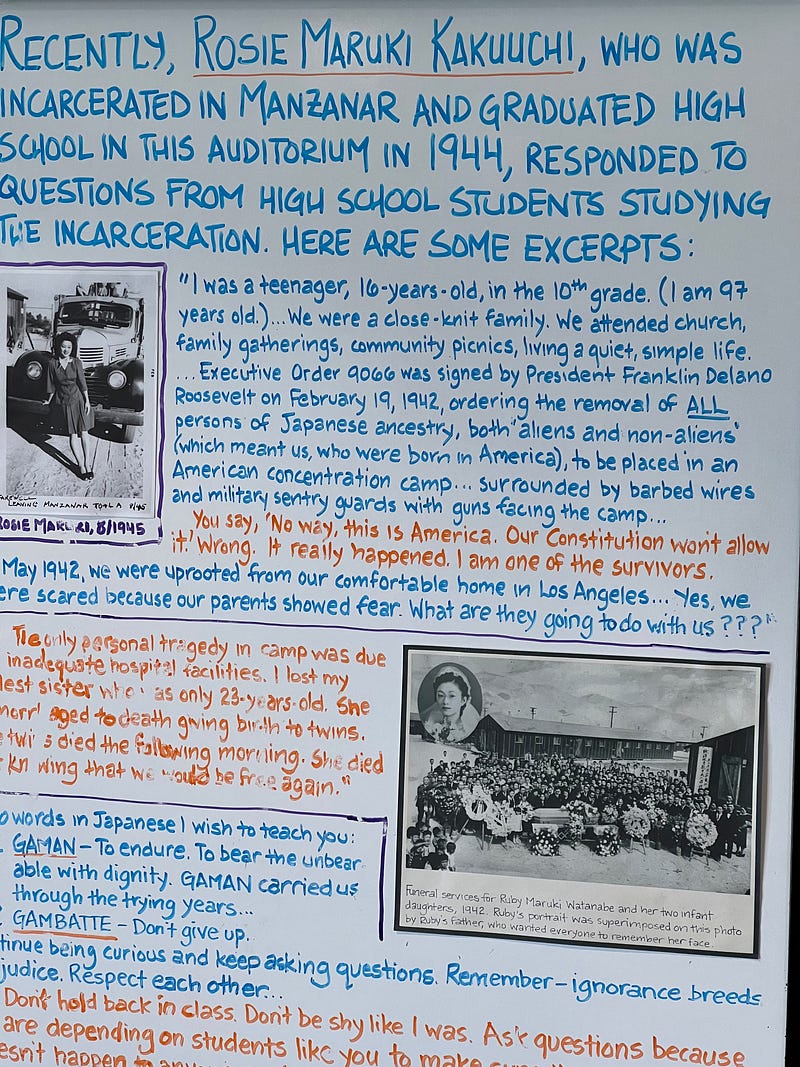
Years later, I sat with his aunts and uncles in his parents’ living room at Clifford's wedding reception. And I asked the difficult question: What was it like? They told stories of loss, betrayal, and separation.
On December 7th, 1941, the Japanese attacked the United States. A few days later, Nazi Germany declared war on the US. Within the week, the US, through executive orders and decrees, put into effect restrictions and/or confinement of enemy aliens. This included the internment of the citizens of Germany, Italy, and Japan.
On February 19, 1942, President Franklin D. Roosevelt issued Executive Order 9066. It authorized the forced removal of all persons deemed a threat to national security from the West Coast to “relocation centers.” This resulted in the incarceration of American citizens who were of Japanese descent. Two-thirds of the people sent to the camps were American citizens. Only Japanese Americans who were born in the United States were citizens. The first-generation immigrants from Japan were not allowed citizenship or the ability to own land.
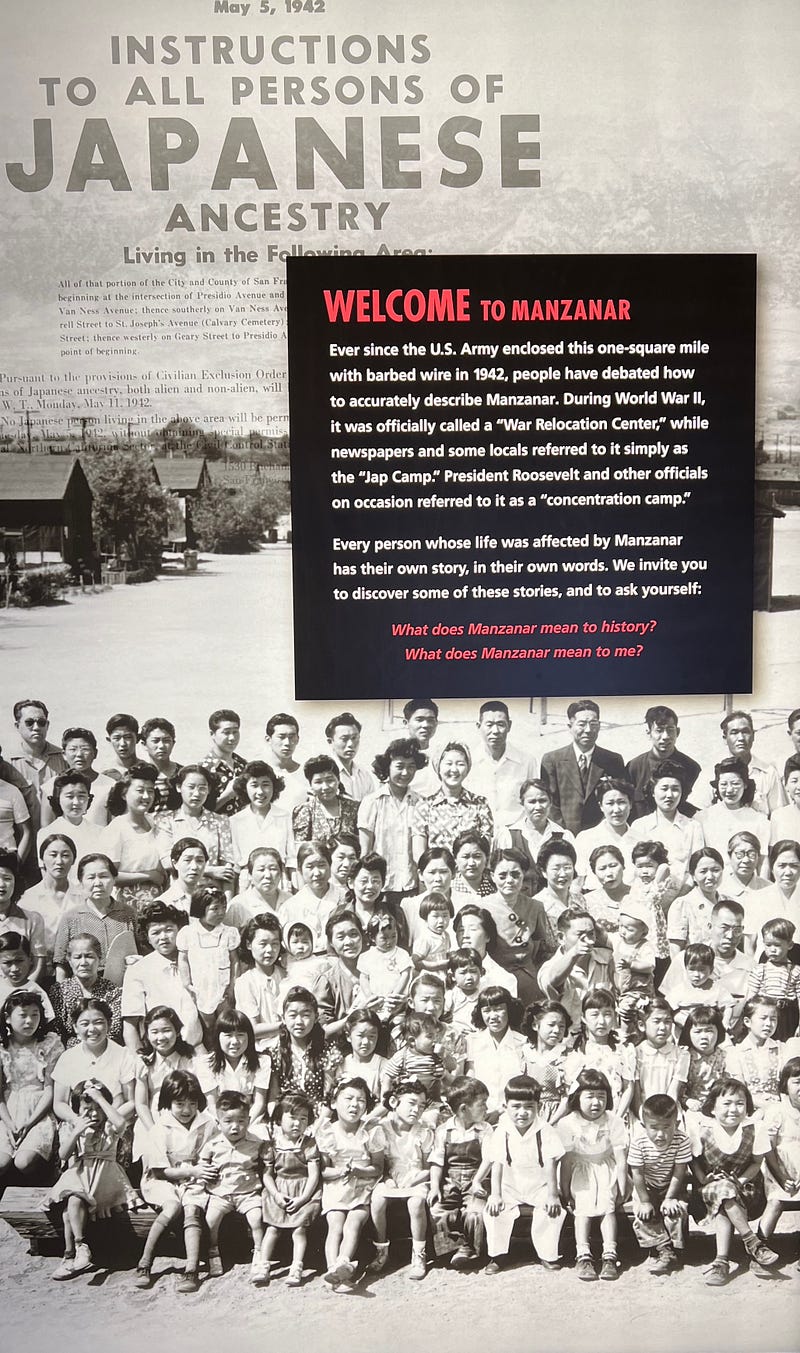
They were forced to leave their jobs, sell their homes, businesses, cars, or fishing boats. They left their pets, and they left their communities.
On May 16. 1942 at 9:30 a.m.. we debarted… for an unknown destination…I can remember vividly the plight of the elderly, some on stretchers, orphans herded onto the train by caretakers, and especially a young couple with four pre-school children. The mother had two frightened toddlers hanging on to her coat. In her arms, she carried two crying babies. The father had diapers and other baby paraphernalia strapped to his back. In his hands he struggled with duffle bag and suitcase. -Grace Nakamura. From a quote on a poster at Manzanar.
Milton Eisenhower, the youngest brother of future President Dwight Eisenhower, was put in charge of the relocation. He sought the protection of the property for his fellow citizens. He wanted students to be able to continue their college education. He asked governors of interior states to allow Japanese Americans to relocate. He was met with resistance at every turn and quit after 90 days. He told his replacement to take the job only if he could sleep at night.
Despite public misconceptions, Japanese Americans in Manzanar were as diverse as any group of 10,000 people. They were from cities and farms, young and old, rich and poor, extended families and single people. Most had never been to Japan, yet others only spoke Japanese. Fishermen from Terminal Island, doctors from Los Angeles, Buddhist priests and Catholic nuns were all forced from their prewar homes to live in crowded apartments in identical barracks in Manzanar. — from a poster at the Manzanar National Monument
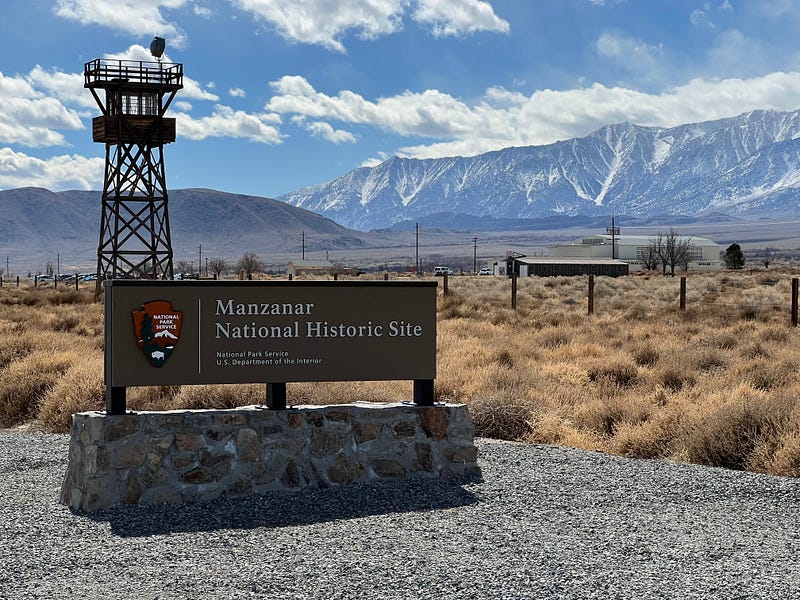
Manzanar was only one of ten camps around the nation. They were all in isolated locations.
George Takei described his memories and the effect of incarceration on his family in the graphic novel “They Called Us Enemy.” His family was moved from Los Angeles to the Rohwer War Relocation Center in Arkansas.
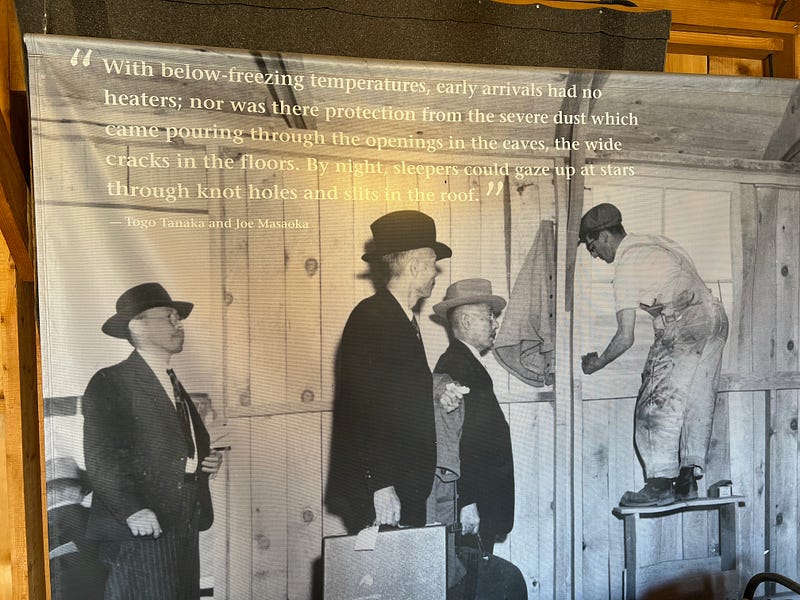
Scenes from the Manzanar National Monument
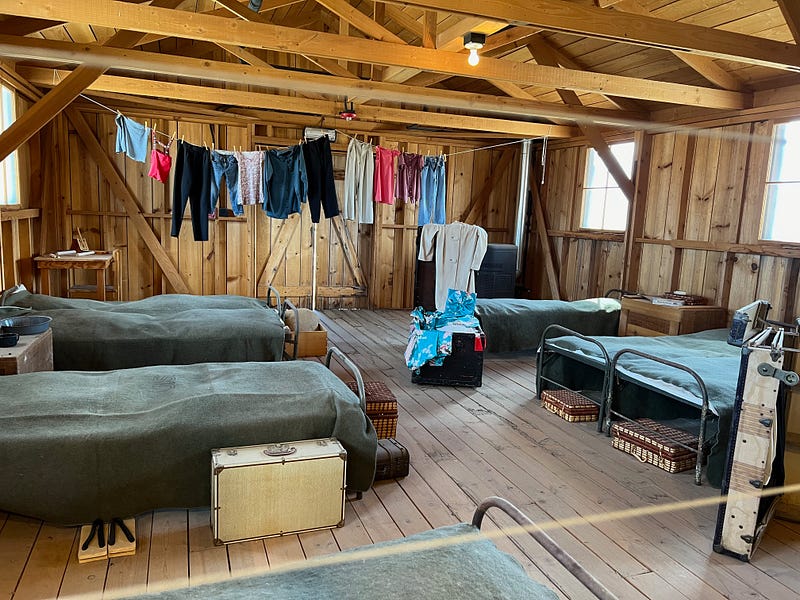
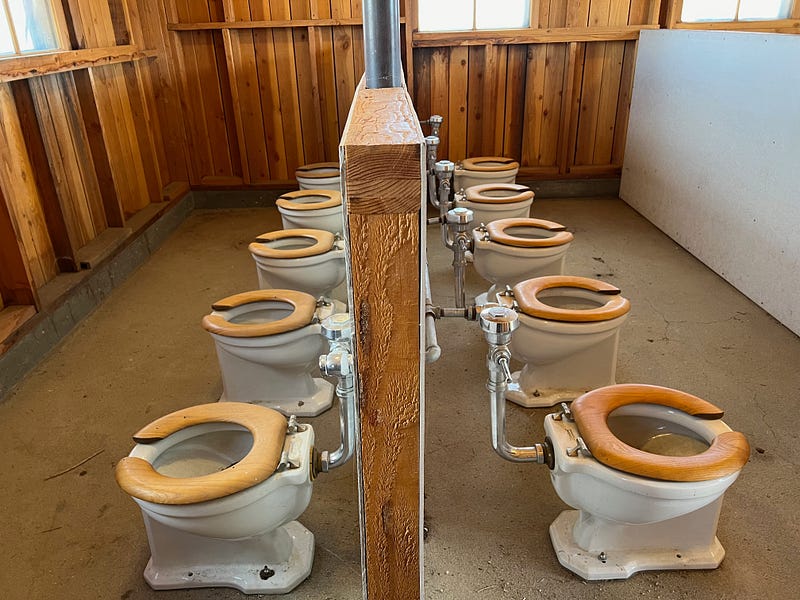
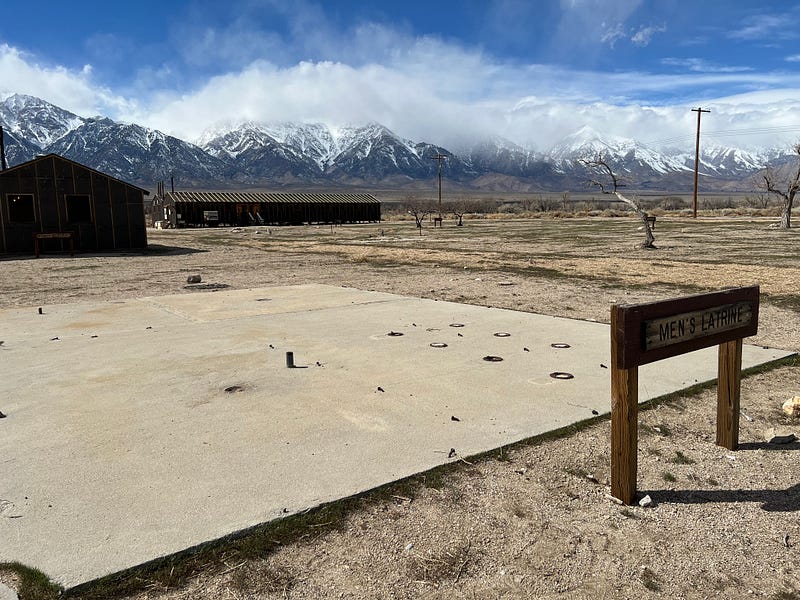
In February 1943, the government distributed a loyalty questionnaire to the 110,000 people in the camps. The government was looking for recruits for the war effort, but many of the people in the camps saw questions as tricks meant to prolong their ordeal. This led to labeling people as “loyal” or “disloyal.” The later group were moved to the Tule Lake Segregation Center. It had a larger number of guards, more barbed wire, more guard towers, and even tanks. Within the camp was a prison.
Many of the “disloyal” people were American citizens who did not like being questioned about their loyalty. George Takai’s family was moved to Tule Lake.
Internment- refers to a legal process in declared wars, in this case applied to the nationals of a country with which the US was at war. Approximately 8,000 Japanese nationals were formally interned by the US Department of Justice during WWII, beginning as early as the night of December 7/8, 1941. Although commonly referred to as “internment” what the 110,000 Japanese Americans incarcerated in the 10 War Relocation Centers experienced is not accurately defined as internment, as the majority were US citizens. — National Park Service pamplet
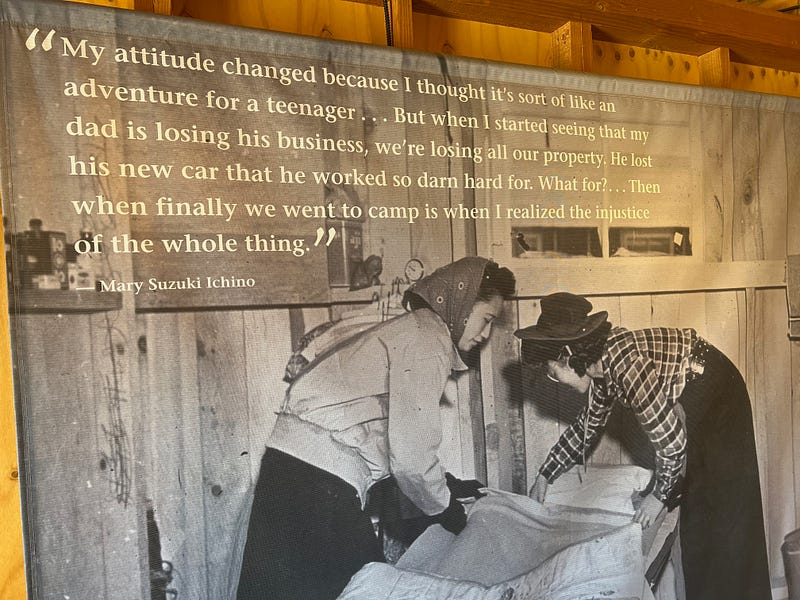
When the war was near its conclusion, the camps started to close. Japanese Americans were allowed to return home. But their homes were gone. George Takai and his family were penniless. They lived in the Skid-Row neighborhood of Los Angeles for five years.
Detaining Japanese Americans did not start with the attack on Pearl Harbor. For years, there was mistrust of all Asians in the United States. The war provided a means to act upon those fears.
On August 10, 1988, the Civil Liberties Act of 1988 was signed by President Ronald Reagan. It established reparation payments and a letter of apology to all of the surviving detainees.
There was a lot of fear of the “other,” that is, anyone not like you. Fearmongers still prey upon our prejudices to suit their agendas. The Civil Liberties Act of 1988 did not include other groups injured due to their race, such as Native Americans or the families of the enslaved.
If It Did Happen Here, Could It Happen Again?
Along with reupping his old ideas, Trump has spoken at length about how he intends to scale up his past policies, calling for the “largest domestic deportation operation in American history.” He’s focused, too, on bringing back wide-ranging raids to round up undocumented immigrants and setting up new camps where they’d be forcibly detained. And he’s interested in testing out proposals he didn’t get to last term, such as severely limiting birthright citizenship. — Vox.com (Feb 29, 2024)
What do you think?


