
Inside a Japanese American Internment Camp During World War II
Francis Stewart captured scenes behind Minidoka’s fences
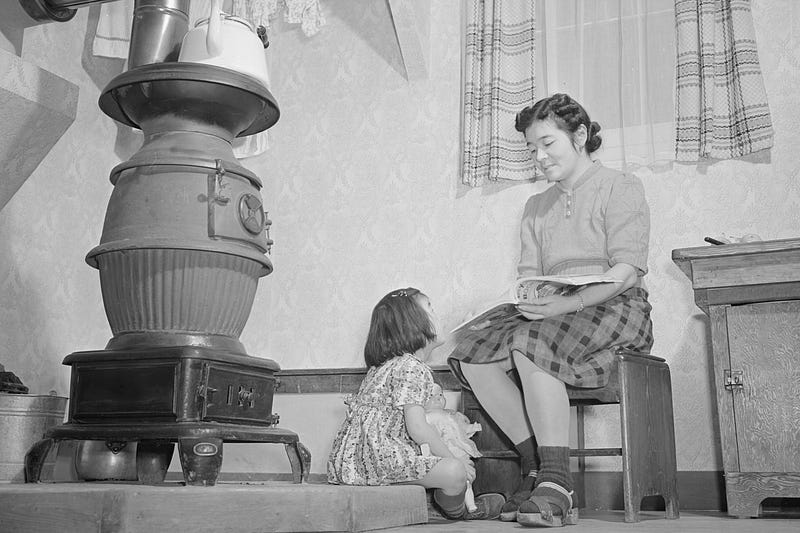

Imagine regulations force you to leave your life tomorrow. Your job, your home, your community vanish in a couple of blinks. Before you know it, you find yourself on a windswept plain with only a couple of structures. It was your new home. Approximately 112 000 Japanese Americans experienced this dislocation during World War II. Minidoka Camp, in Idaho, was one internment area that hosted these individuals. With his camera, Francis Stewart captured moments that punctuated the routines in the place.
Venture into a new space
Francis Leroy Stewart wanted to be an artist. His Commercial Art degree from Frank Wiggins Art School pointed to a career in that field. Still, when he created ads for print media, he encountered the photographic camera.
The new interest took him to the San Francisco Call Bulletin in 1935. At the newspaper, he filled various roles, one of which was head photographer. This was quite an evolution for the former ad man.
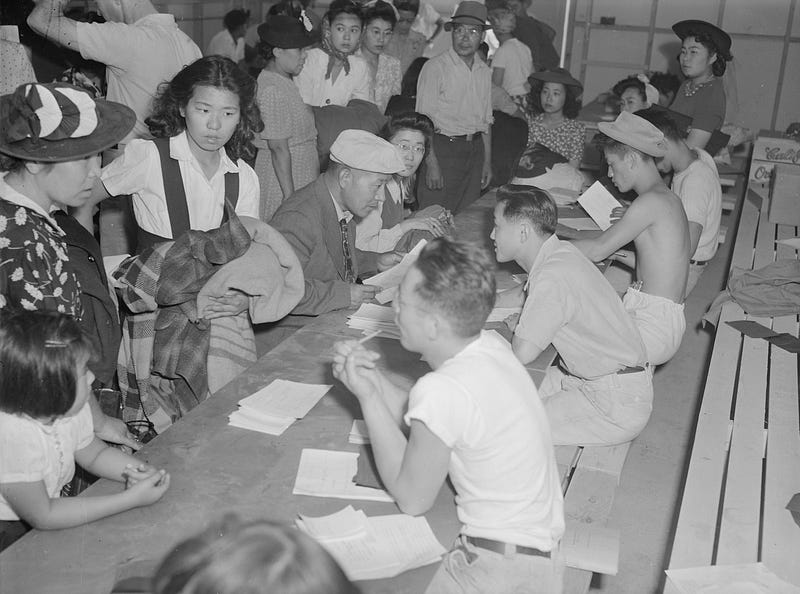

Around 7 years later, Stewart joined the War Relocation Authority (WRA). This government organization was still only a few weeks old when he walked into its San Francisco office. Its primary task was to resettle the so-called evacuees of Executive Order 9066, such as Japanese Americans, who had lived in wartime exclusion zones. He visited many centers to take photos.
Desolate echoes
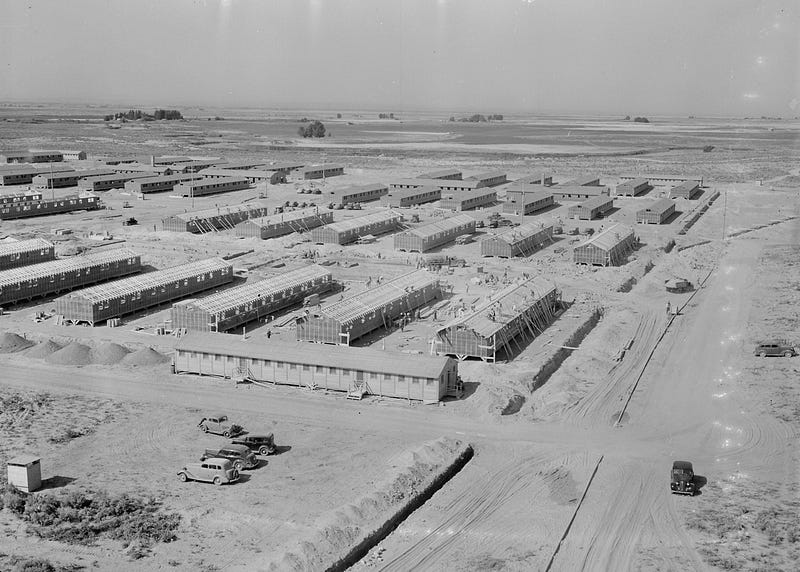

The Minidoka Center was one of 10 facilities that sprang up across American states. Its plot was on undeveloped federal lands in rural Idaho, which removed several legal barriers. The flat, empty plains differed from the families’ homes in the West. Paul Tomita recalled the trauma of the transportation process:
They did not tell us anything. So there were just these crazy rumours. There was a rumour that once we got off the train … they’d dug a huge pit and they were going to drive us there, line us up, shoot us in the back of the head and dump us in this huge hole.
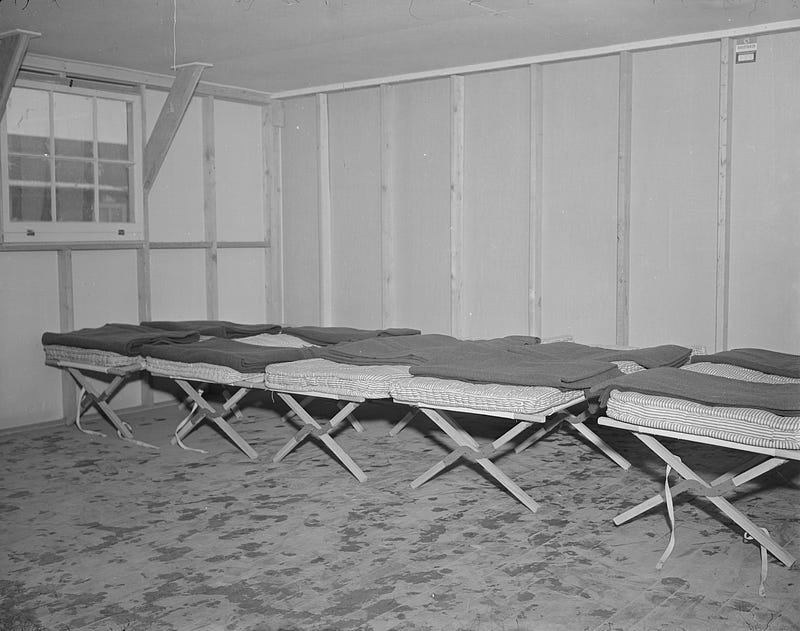
Construction on the buildings was not yet complete when the first internees had arrived in August 1942. In the early months, the new residents faced further challenges such as food and coal shortages. Minidoka expanded to host up to 10 000 evacuees.
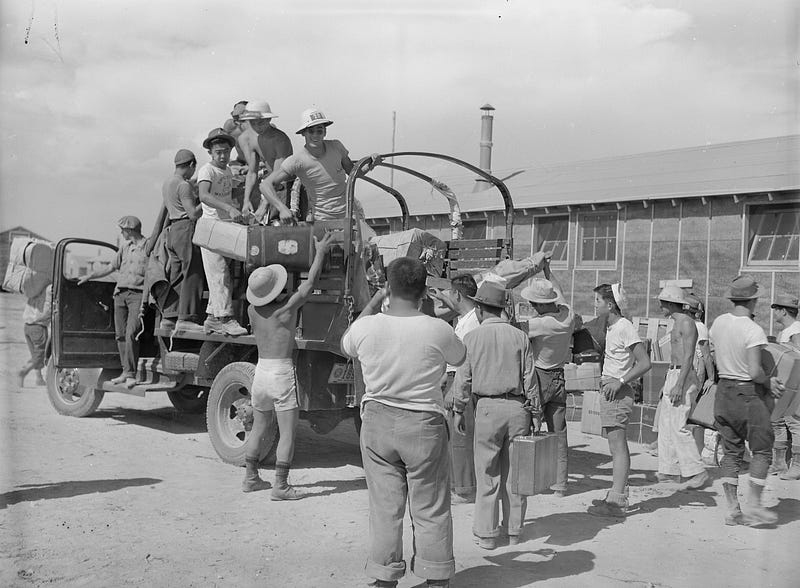

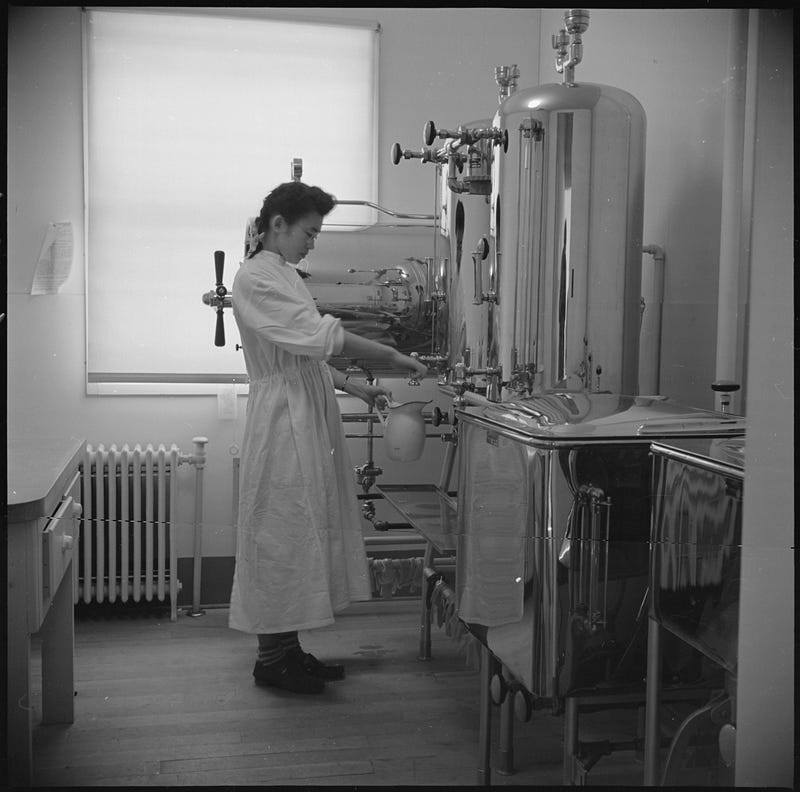
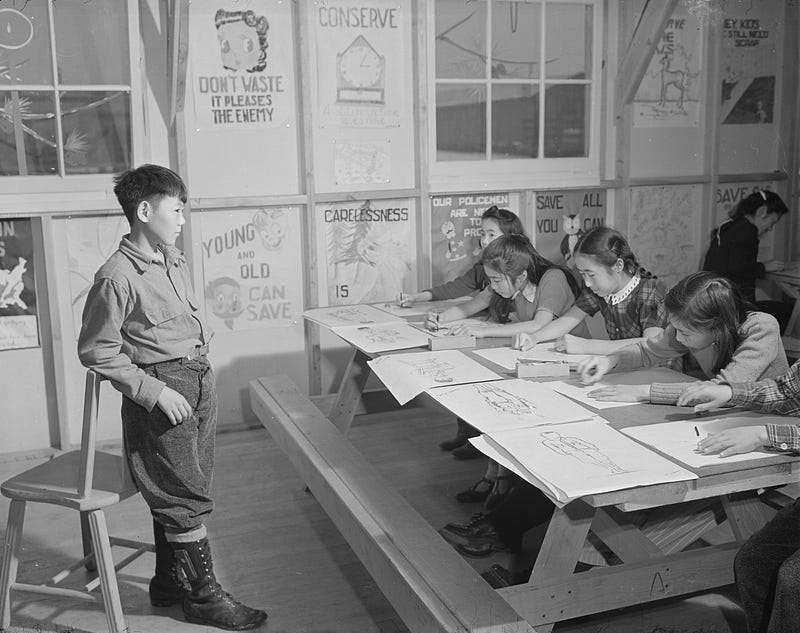
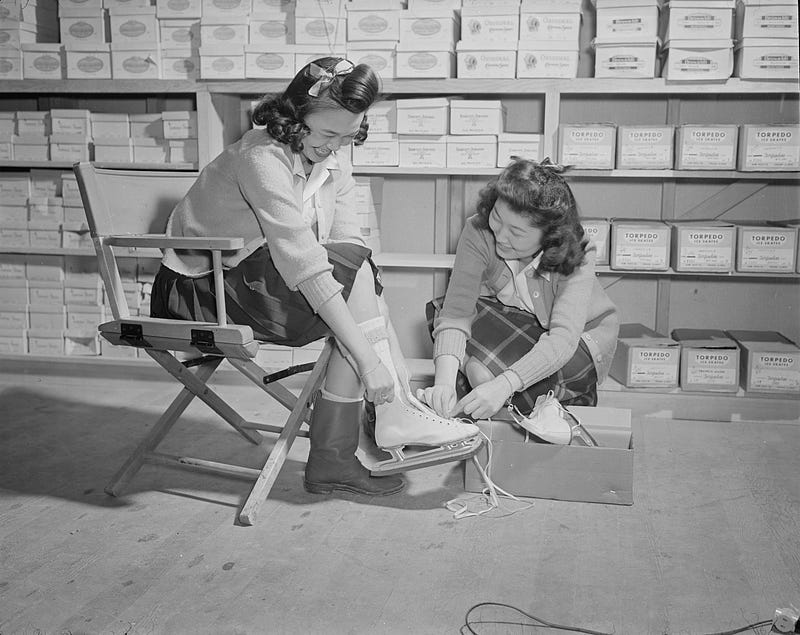
Minidoka had to be self-sufficient in various aspects. School houses, post offices, gardens, hospitals, a local newspaper, and farms served the new community. Barbed wire and guard posts were reminders they would need to apply for approval if they ever wanted to venture outside, though.

Fields in the farms
Some internees travelled beyond Minidoka’s gates for stints. At the center, agricultural companies or farmers recruited laborers for farms that faced staff shortages as a result of the war. In 1942, one internee talked about the process:
This spring, most of the Idaho farmers resented our coming and were hard on us. The Caucasian friend for whom I was working was threatened; they said that they would tar and feather him if he continued to use us. Due to the good work of the evacuees and to the public relations work of such companies as the Amalgated Sugar, the local people have final been won over…Some barber shops, pool halls, and theatres have discriminated against us, but things are looking up.
Thousands of Minidoka internees worked in fields in Utah, Wyoming, and Idaho during World War II. In 1942, their efforts saved the sugar beet crop harvest. Japanese Americans saved about a quarter billion pounds of sugar through their work.
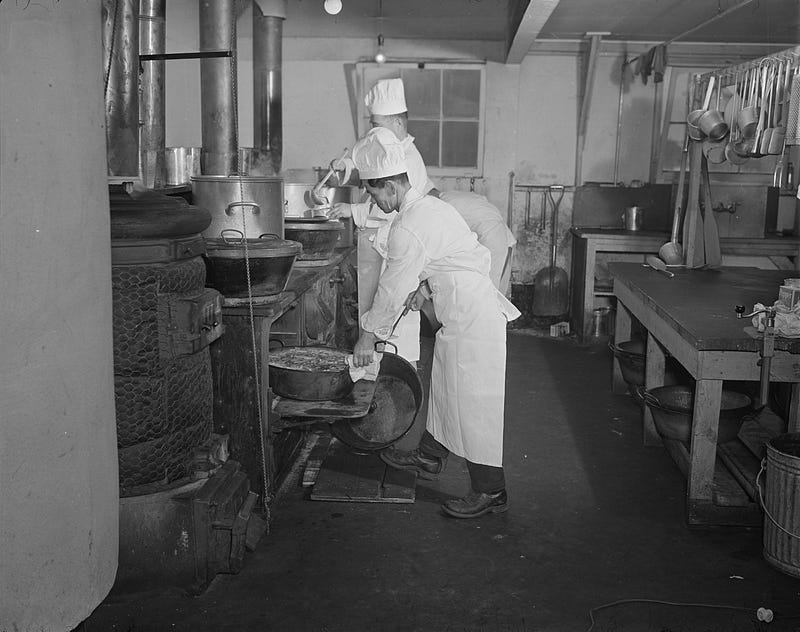

Internees also had to grow their own food at the center, too. One challenge was that, unlike some of the other centers, Minidoka hadn’t been farmland in the past. Another was that people preferred to work on external farms because the centre paid workers 10 times less than the usual rate. Nevertheless, Minidoka produced enough food to meet a significant amount of their demand. Excess production went to other centers and the open market.
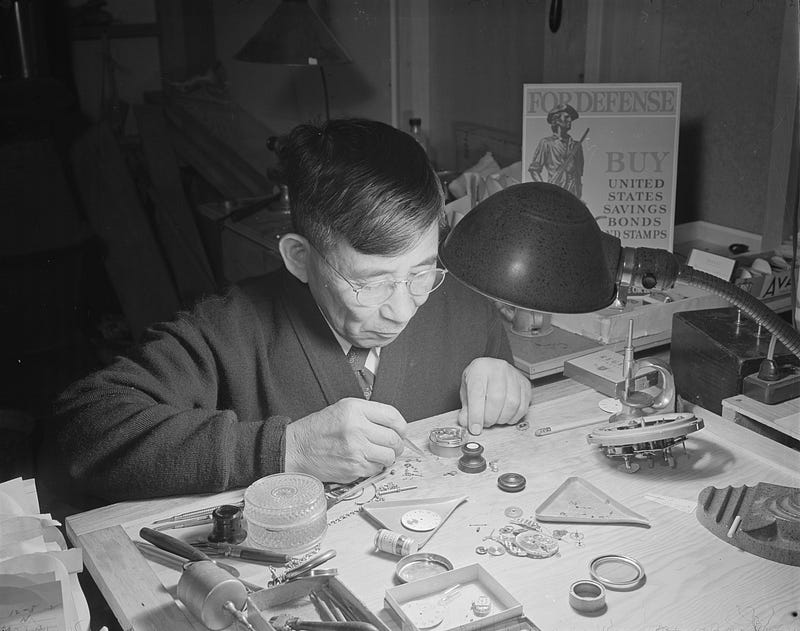

What was once a dusty plain became greener under the care of avid gardeners. Certain people found that the activity took their minds off of their situation for a short period. One internee, Yasusuke Kogita, created a rock garden that boasted two fish ponds and a wide selection of plants.
Opposition to plans
Francis Stewart resigned from the WRA on 29 May 1943. He cited “personal reasons” as the motivation for this move, but family members thought the true cause was the visits to the centers. While he photographed places, he came into contact with the living conditions of the internees, which weighed on him.
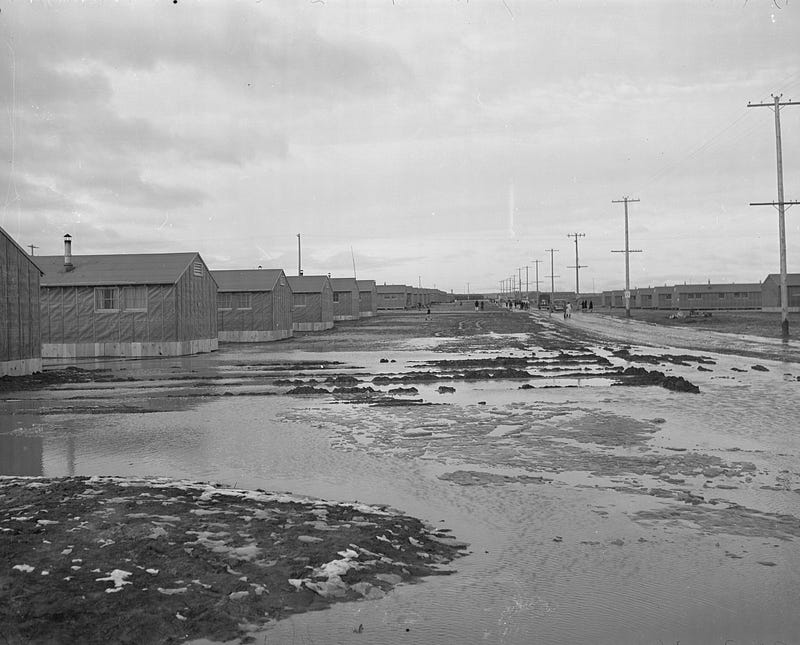

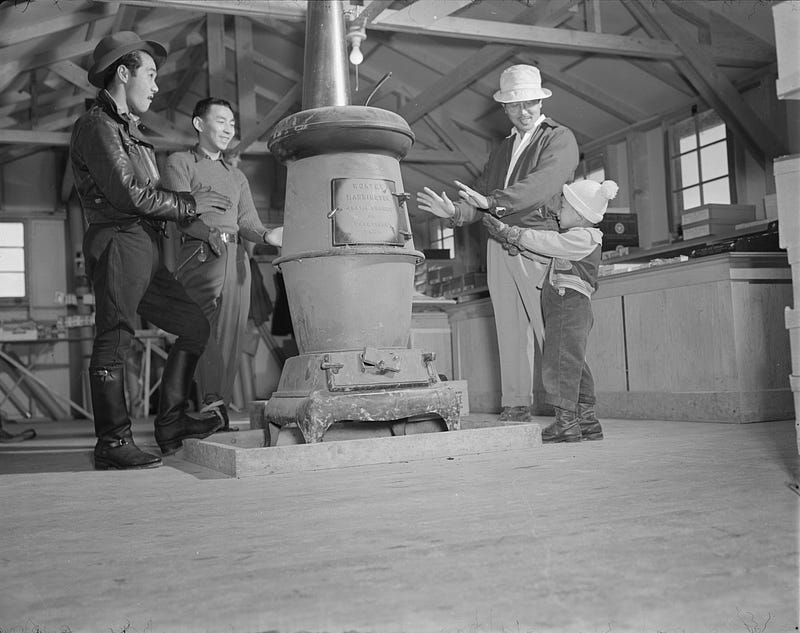
Cold weather could make it unbearable in the center. In January 1944, conditions worsened when boiler staff members, who fed coal into the stoves, went on strike because of their work conditions. Internees had to live without warm water for close to a week before the end of the labor dispute.

The Mitsuye Endo Supreme Court case of 18 December 1944 sent tremors through the status quo. After Executive Order 9066’s rise, Mitsuye Endo had lost her clerk position, after which she had been forced to live in an internment camp. The Supreme Court ruled the WRA didn’t have the authority to confine American citizens.
_Free-hand_drawing_class._-_NARA_-_536564.jpg)
A day before the decision came down, the WRA announced they would close the centers within a year. The WRA provided train fare, meals, and $25 for certain internees. Relocation itself was the people’s responsibility. Many could not return to their old lives, though.

Mr. Serata, a former Minidoka internee, travelled to his home — in Fife, Washington — to see if there were job opportunities, but only received death threats. After the war, to make enough money to return to Fife, he worked as a farm laborer in Eden, Idaho. This resembled many people’s experiences.

Recompense for the suffering in the centers came decades later, in 1988, when President Ronald Reagan signed a bill that provided $20 000 to former detainees. Minidoka itself became a recognized historic site. More and more people visit the remains to comprehend the events of this period of history.
Sources:
Anderson, H.A. 2020. “What Japanese-American Farmers Did For the West: A Brief History” in Sunset Magazine.
Banse, T. 2015. “A Pilgrimage To Minidoka: ‘We Can See The Memories Slipping Away’ ” in Alaska Public Media.
Buncombe, A. 2023. “ ‘Memorial to all who suffered’: survivors protest wind farm near Japanese American incarceration site” in The Guardian.
Burton, J.F. & Farrell, M.M. 2001. This Is Minidoka: An Archeological Survey of Minidoka. Tucson: Western Archeological and Conservation Center.
Chiang, C.Y. 2010. Imprisoned Nature: Toward an Environmental History of the World War II Japanese American Incarceration. Environmental History Vol. 15, №2: 236–267.
Guo, J. 2015. “Before people start invoking Japanese American internment, they should remember what it was like” in The Washington Post.
Hirabayashi, L.R. 2015. “Francis Stewart Gallery” in National Park Service.
Hirabayashi, L.R. 2020. “Francis L. Stewart” in Densho Encyclopedia.
Lillquist, K. 2010. Farming the Desert: Agriculture in the World War II-Era Japanese-American Relocation Centers. Agricultural History Vol. 84, №1: 74–104.
Martínez-Matsuda, V. 2020. Migrant Citizenship: Race, Rights, and Reform in the U.S. Farm Labor Camp Program. Philadelphia: University of Pennsylvania Press.
Serata, H. 2013. In Dempster, B.K. (ed.). Making Home from War: Stories of Japanese American Exile and Resettlement. Berkeley: Heyday.
Sims, R.C. 1991. Japanese Americans in Idaho. In Daniels, R., et al (eds.). Japanese Americans: From Relocation to Redress. Seattle: University of Washington Press.
Snodgrass, M.E. 2009. Civil Disobedience: An Encyclopedic History of Dissidence in the United States. Abingdon-on-Thames: Routledge.
The Guardian. 2016. “Uprooted: Japanese American lives in farm labour camps — in pictures” in The Guardian.
Young, M. 2013. Russell Lee in the Northwest: Documenting Japanese American Farm Labor Camps in Oregon and Idaho. Oregon Historical Quarterly Vol. 114, No. 3: 360–364.