
Is School Better At Teaching Than TV?
It can be, but too often it’s not.
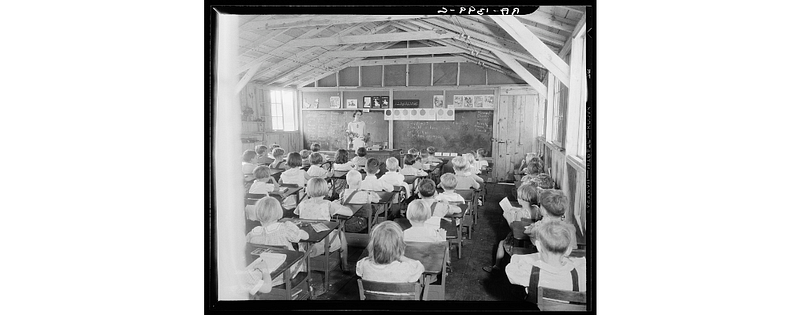
One of the main criticisms of the school system is that it doesn’t encourage students to think for themselves. Instead, it relies heavily on rote learning, where students are simply expected to absorb and regurgitate information without really understanding it. Which is the exact type of teaching that TV is capable of.
This kind of learning has its place. There are some things that are best learnt via rote. But when it comes to more complex concepts, this kind of learning falls short.
Take for example, the way many schools teach history. Students are simply given a list of dates and events to memorize, without any real understanding of the context or why these events are considered important. As a result, history becomes a dry and boring subject that students are keen to forget as soon as they leave the classroom.
A simple TV show or youtube show (like oversimplified for example) can often get across the same information that the current lessons do, in less time and in a more interesting way.
Maths often falls into the same problem, rote learning times tables, and then rote learning equations that can be plugged into a calculator without any independent thought.
Youtube shows also cover maths in a way that can ignite the imagination in a way that rote learning does not. Take 3blue1brown for example, which often explains examples of more advanced, and more intersting maths than is taught in most high schools and in an easy to understand way.
It does fail in one area though.
Another example of the ways schools fail to teach is the way many schools teach science. Again, students are often taught sub-subject, evolution, chemistry, biology, physics. They may have to do experiments within those subjects, but those experiments are predetermined, you do them, get the right outcome and write it down. If you don’t get the expected outcome it’s because you did it wrong.
This leaves students with an entirely wrong or absent view of what science is, leaving them to conclude that science is a list of facts, rather than a method of discovery.
It’s not just subjects like history and maths and science where this is a problem. In nearly every subject, students are spoon-fed information without being given the opportunity to really think about it or understand it for themselves. If this is what schools are offering, is it really any better than TV?
Educational TV I mean. The shows that spoon feed you facts, but never make you think.
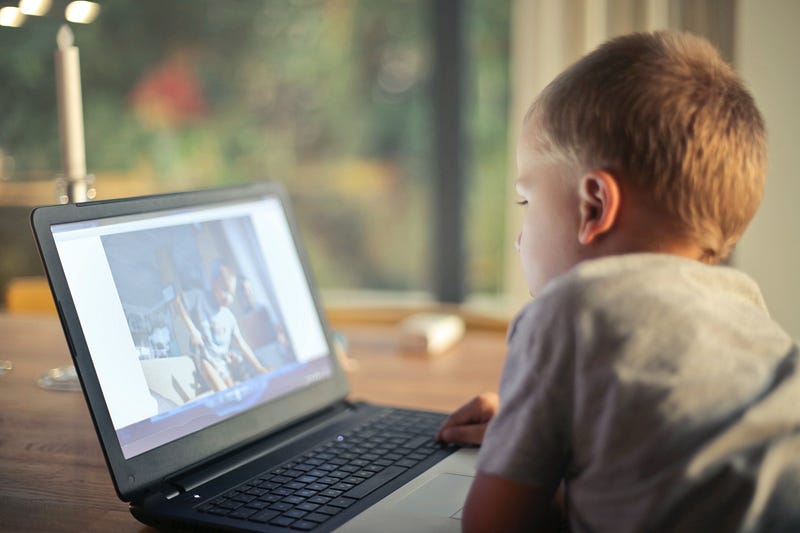
Well one of the ways that school is better is that it forces you to interact with the subject at least a little, write down those dates, hit those buttons on the calculator, turn on your bunson burner.
This leaves school being a bit more interactive, but by force, while shows are more engaging.
But school has the possibility to be so much more than that, A teacher to interact with, help in the classroom to identify strengths and weaknesses.
Overall the greatest advantage of having a human teacher over a quick interesting youtube video is the social aspect. Humans are social creatures, and we can not develop relationships with the YouTube video, like we can with each other. The video doesn’t care if we do or don’t understand it. We can’t interact with it, ask it different questions. It can’t find out what our interests are and give us a deeper information about that topic, or a side quest from it.
Actually the algorithms are getting better at that last one. But they still can’t replace human interaction that is individualized, differentiated and motivating that cares about the student as a human being, not just a receptor of information.
So that means schools are better right?
No.
It means that schools can be better than even the best educational video. But only if they are able to develop individual relationships, and differentiate the work.
Teachers, even the best teachers, aren’t going to be able to do that when they are overworked, have too many students to interact with individually, are busy dealing with behavior issues and keeping everyone safe and/or are micromanaged and teaching to a lesson plan made by someone far away, outside of their classroom.
If we want schools to do a better job of educating our children than youtube does, then we have to give them the tools they need to do that.
We have to give them a small number of students, a good education, that involves child development/pedagogy/how people learn, we have to give them safe classrooms and trust.
Trust to know and do what is best for the specific individuals in their care, and their growth, educationally and as little humans, becoming big humans.

If you enjoyed this article and are considering becoming a medium member, so you can read unlimited articles on medium, please consider using my link to give me a part of your membership costs at no extra cost to you:
