
Is Mulan Based on a True Story?
Does it matter after all?
Disclaimer: This is not a movie review.

You don’t have to be a movie-goer to appreciate the discussion around Mulan (2020), a new Disney live-action movie about the female warrior who went to war in disguise as a man for her father. I believe it just got a little unpleasant for the filmmaker and the company behind the movie when the discussion was overwhelmingly negative.
How did people react after watching Mulan?
I have to admit that I did not catch the movie due to a clear political agenda within and behind the production. For those who have experienced it, here is what they said:
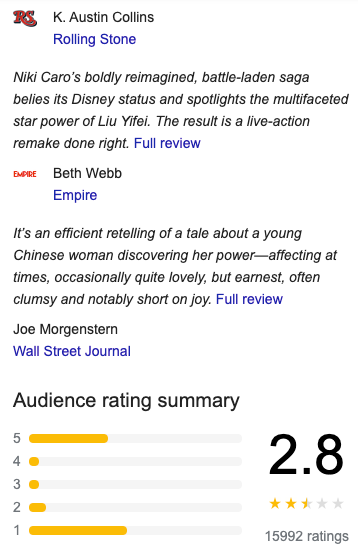
The full reviews were published by Rolling Stone, Empire, and Wall Street Journal. They highlighted great storytelling, how uniquely powerful Mulan is in the 2020 remake, and how the live-action was done right. The audience has a very polarized rating; who are these people and why did they enjoy/dislike the movie so much?
Besides these reactions to the 2020 version, are you curious about why people have adored Mulan for generations? And was the recent depiction culturally appropriated?
Remember The Warriors
When I was young, I was told, and later I learned to read, many stories about Chinese warriors. Yue Fei (岳飛)and Hua Mu Lan (花木蘭) were characters who were easily remembered because of their unique life stories.
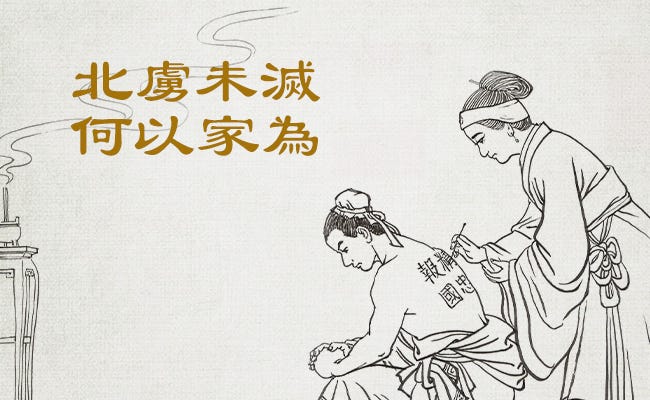
While Yue Fei was a historical war strategist turned poet in the later stage of his life, many were uncertain if Mulan was a real person. I do not know about others, but when I first read the story, I just assumed she was a real person. Ironically, I did not ask why Mulan and Yue Fei were remembered so well after they went to war. Were their tales commemorated in textbooks because they had sacrificed something larger than their lives in the process? Was it because she was a dutiful daughter?
The Warriors in the 21st Century
Fast forward to 2020, the coronavirus has stopped or distracted countries from fighting in wars. We are relying greatly on people within the healthcare profession to be the last line of defense. We should not see a public health crisis as a war, but healthcare professionals are fighting for humanity. In this context, it is more than just conquering another nation on behalf of your emperor. They save lives and they do not kill. For me, this is less dramatic but way more beautiful. I long for the days when the doctors, nurses, janitors, and the ambulance drivers get a major shoutout in a movie, regardless of their gender and culture.
Mulan and her sacrifice
If we could look at Mulan as a human being and not as a female warrior, we would be able to put down our lenses that glorify the notion of “the weaker gender sacrificing for a stronger one” because there is no need to praise something based on a gendered claim. This applies in many relationships, where the gendered perception has contributed to generalization with painful consequences.
“It is natural that women give birth to their children.” — So it’s no big deal to bear a child for nine months.
“Men are stronger than women.” — So men shouldn’t cry when in pain.
Mulan and her freedom
Maybe going to war was her source of freedom? We will never know if she rebelled against the idea of being married to someone she did not like or getting married at all. While we worship her sacrifices, we have yet to ask what she earned by doing it differently.
Perhaps we all need a Mulan in us — doing something for ourselves and cutting through the conformity of gender and other social constructs.
It is time to question the assumptions about the reality that we live in.
For more of the good stuff, follow Fourth Wave:
For more by this writer, try: