
Does My Mister Have a Happy Ending?
The South Korean television series reminds us to live with dignity no matter how absurd life is, with the help of Albert Camus.
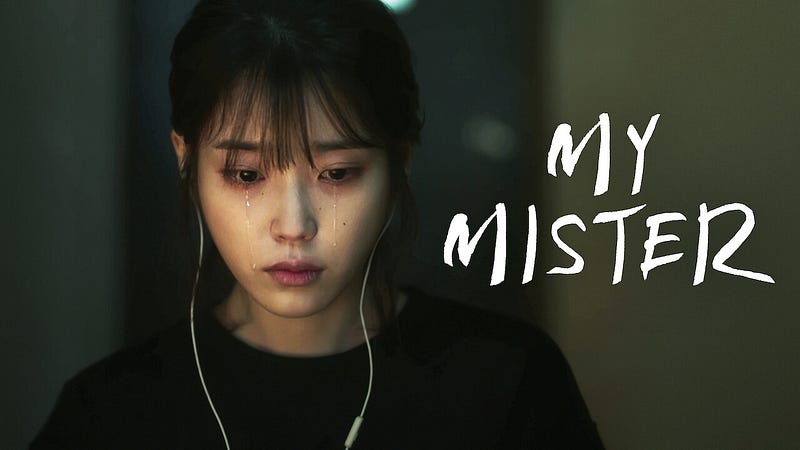
My Mister (sometimes titled My Ajusshi and 나의 아저씨 in Hangul) has been on my Netflix feed for the longest time. I have to admit that the still shot of the leading actress (as shown in the picture above) is not too convincing when I came across it. The auto-play promo clip did not work either. It does not give the slightest hint of how sincere the entire production is and how much heart-searching moments a viewer will endure watching it. When I finally threw myself into the story, it turned out to be really awe-inspiring.
If a good production makes you think, a great one like My Mister will inspire you to take action.
It inspired me to write. Personally, it deserves more than a remembrance. The critically acclaimed series owed its success to the cast and the crew of the entire production. The whole cast was said to have their lifetime performance.
The directorial work of Kim Won-seok never disappoints. Following his success in Misaeng: Incomplete Life and Signal, My Mister continued his storytelling mission, meeting a girl in her early twenties and a middle-aged man to examine the intertwined faith and facts of life. While destiny has brought two characters with starkly different backgrounds together, there is a constant ask in the series: Is this destiny or can we outlast it?
The scriptwriting of Park Hae-young gave lives to the minute details, which are usually things missed in plain sight of our everyday lives. At some points, viewers like me were curious if the unapologetic expression and prolonged silence were scripted. It emphasized the tension between the lead characters, who were connected to other substories, with a brilliant performance by the supporting cast.
“It’s called a romance because it’s not going to last.” — Sandra Oh
I am a sucker for any romantic stories. My hesitation earlier about watching this series was partly due to the unknown about the love storyline. I told my friend, “It feels like a gamble to spend so long and wait for the end. I just want to know if they finally hold on to each other.” In the relationship between ajusshi Park Dong-hoon and the equally pitiful girl Lee Ji-an, it’s a relentless battle between emotional sanity and moral decision. While expecting them to be romantically involved, there was fear that seeing them together leads inevitably to eventual desolation.
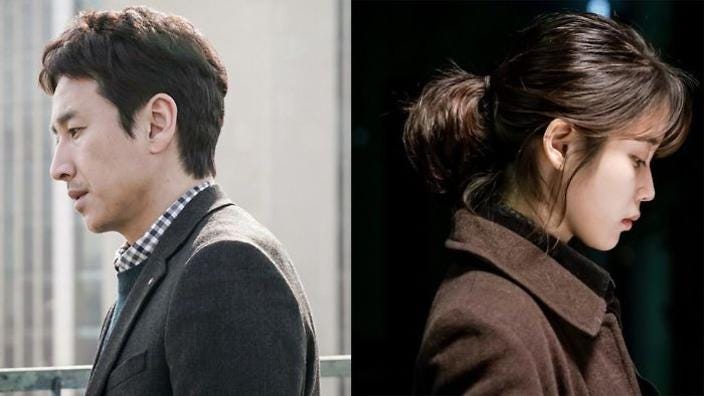
Dong-hoon was trying to ignore what others know about him. This reminds me of Albert Camus — “A man is more a man through the things he keeps to himself than through those he says.” He led a quiet life and assumed things untold were not known by others. Ji-an, a mortal, lived every day weighed down by a past that she would gladly reject if she has had the choice.
They met in the present but were connected through their pasts.
As Dong-hoon slowly came to know about Ji-an’s untold past, there were questions directed to the audience that could cause unease in some of us. My friend who took on the watching mission has rated it five-star in evoking pain: “心理脆弱一点的都会觉得人生没有意义。”(If you have a fragile heart, you will find life is meaningless while the story unfolds.) In the story, they were both pitiful and that is why they found each other.
“If I could, I will choose not to be born again” — Lee Ji-an
In Albert Camus’ words — “What is the meaning of existence?” That was how much a 21-year-old girl despised her life. As she was stuck in the poverty cycle, the idea of Sisyphus came to my mind. In her world, she had no one to fall back to. She just had to keep going, hiding, and paying for the past. She was seen toiling most of the days — in the kitchen, bruises on her face, transporting her incapacitated grandma from pillar to post.
“I am 3000 years old”, claimed Ji-an when asked by her colleague how old she actually was. She must have felt as if she woke up every day to a new life with the same misery. Her light frame, the innocence coupled with frequent bruises on her face formed a disconsolate figure.
The story is plain sad but it has a flip side that heals.
Ji-an shared the best moment of her young life with a group of ajusshis when her grandmother passed away. Sang-hoon, the elder brother of Sang-hoon was a self-defined loser who claimed he did nothing for half a century except eating and shiting. This is the only spoiler of this article: To Ji-an’s comfort and rescue, Sang-hoon spent all his life saving to send off her grandmother in a dignified way. While walking out of the funeral house, he looked up and exclaimed with joy: “This is the greatest day of my life!”. Ji-an was unfazed to declare: “It’s my greatest day too.”
I am fascinated by the power of the script, the storytelling, the amazing dialogues, and the take on death (funerals). It’s at this point that the story prompted me to examine what death means to me. Is death teaching us how to live? What can we do if we have just one day to live as who we are and be really happy?
“In the midst of winter, I found there was, within me, an invincible summer. And that makes me happy. For it says that no matter how hard the world pushes against me, within me, there’s something stronger — something better, pushing right back.” — A. Camus
As if I lived in the story
Spending 20 hours of my time to stream this series was deeply gratifying. It’s up on Netflix and I could have watched it like a hot streak. However, the story deserves to be watched as slow as possible. Besides the last two episodes, I spent 75 minutes every night before I slept to immerse myself in it.
Episode 14 has shaken me so hard that I could not stop crying in bed when I had a 6-hour drive the next day. Listening to the soundtracks especially Grown Ups did not help at all. This might sound theatrical but I wish I could tell you that “It’s okay to watch and you won’t feel anything”. I did not understand why I cried when it happened.
The pace was slow in the beginning and a few friends failed to finish the first episode. Dong-hoon and Ji-an rarely had long or wordy conversations. If you could brace yourself for three wretched episodes, you will continue to grow fond of every single character in the show. Every one of them taught me something. Their lives amplified the messages that the story wanted to send across.
Surprisingly, I can relate to every character and their decisions, which include the monk. In the end, it dawned on me. When I cried, I knew my pain is as real as it is. The scars are part of me. I acknowledged that I have flaws and am struggling to be a better person. It is okay because many people go through that. The only way is through.
Ask introspective questions
Paradoxically, how difficult could my life be? I found myself asking critical questions on what I ought to do tomorrow if there are no less than 24 hours to make it (life) right. Walking in Ji-an’s shoes, there is no foreseeable future but high volatileness and uncertainty. Will I wake up to the dawn or devil? Somehow, it connects to our deepest fear in this time of coronavirus. The difference between us and Ji-an is a more challenging uphill route for her towards the ramshackle home, a steeper path compared to most of us who are privileged to live indoor while others are helping us to fence off the coronavirus.
The story left me with many other existential questions. What does the coming of age really mean? Are we living for ourselves or others? Do we have the power to live at all? How do we live a dignified life? Is a dignified life so hard to come by? Can we co-exist, be happy and understand why we exist at all?
Maybe it is bigger than YOUR life.
While the hardship of Dong-hoon and Ji-an is intolerable, the people around them help them go through it. It doesn’t mean that they were happier. They were just there. The brotherhood, Dong-hoon’s best friend (the monk), the soccer team, and the bar were the important ingredients of My Mister. The title of this series could be My Misters. The three brothers were at the center stage of this story. Without them, Dong-hoon’s struggle will be out of context. His life was bigger than what he thought it was. If he was happy, others would be happy for him too.
I watched the finale twice. The second time I watched it with my friend virtually who eventually wrote this. I think Director Choi has always made ending so profoundly effective. I wish the ending was expected but I know that was the best.
Maybe it is not always about a happy ending. Perhaps it is about the struggle itself to be the person you want to be.
At long last, they found peace. So did we.
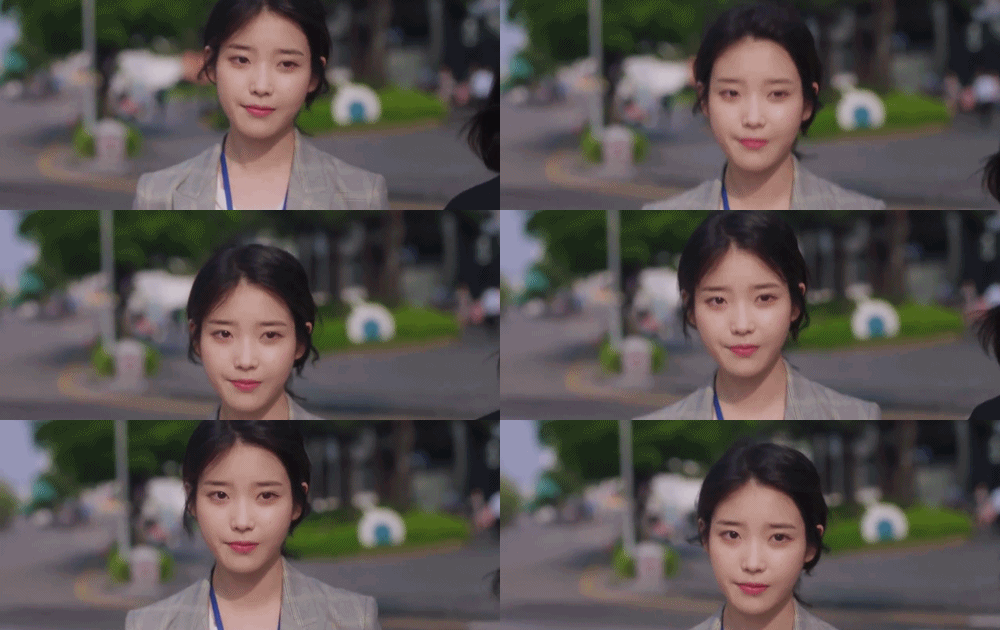
A SPECIAL TRIBUTE TO IU
How good was IU in the role of Lee Ji-an? Many reviews commended her performance due to her method acting as the best in her acting career, making a hopeless but gritty character come alive. There were many reports that highlighted the similarity between IU’s growing up and Lee Ji-an. As a singer, the confidence and her untouchable lightness on stage are in strong contrast to Lee Ji-an. That is exactly why she deserves the applause for such a transformation.
In the interview with Haruhana Magazine, Lee Sun-kyun (Dong-hoon) talked about Lee Ji-an: “Ji-an is a character that’s never been seen in a Korean drama before (laughs). She feels like a young, abandoned stray cat. She is dark, has internal scars, and is intensely guarded, but the stray cat gradually starts to find her place, and therein lies her charm. IU is my Lee Ji-an.”
If you’re a uaena (a fan of IU), these are going to be a painful twenty hours of your life watching her suffer from the beginning till, well, almost the end.
If you are not her fan, be ready for a new religion if you plunge into this series. 🤘🏼


