Machine Learning Art
Introduction to Diffusion Models for AI art
DEMO + CODE
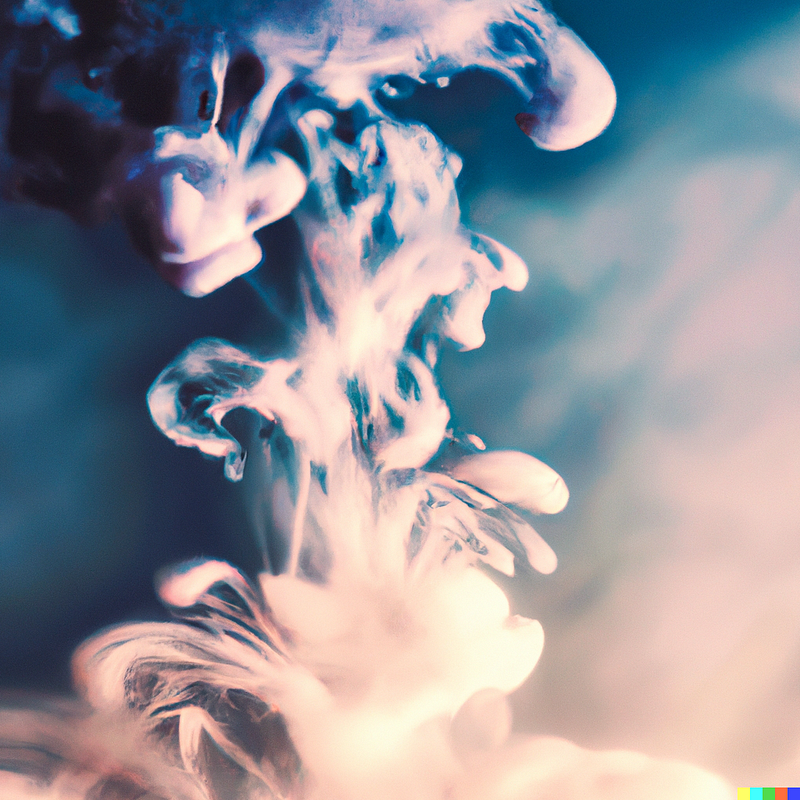
AI art has had the most success with diffusion models
- July 2022 — AI art tools update can be found ➡️ HERE ⬅️
Diffusion model means…
The diffusion model works by adding Gaussian noise to the training data and then learning to recover it.
Diffusion models have become a possible framework for generative modeling, which moves the state of the art in picture and video creation problems forward. In the case of photos and photorealism, diffusion models use a guiding strategy to increase sample fidelity at the cost of sample diversity.
Who first came up with diffusion models?
Sohl-Dickstein et al. was the first paper to talk about the Denoising Diffusion method.
One of the most important problems in machine learning is how to model complex data sets using very flexible families of probability distributions so that learning, sampling, inference, and evaluation can still be done analytically or with computers. Denoising Diffusion method is both flexible and easy to use at the same time.
The main idea, which comes from non-equilibrium statistical physics, is to use an iterative forward diffusion process to slowly and methodically destroy structure in a set of data. Then, we learn a reverse diffusion process that puts structure back into data. This gives us a generative model of the data that is very flexible and easy to work with. This approach lets us quickly learn, sample from, and evaluate probabilities in deep generative models with thousands of layers or time steps, as well as compute conditional and posterior probabilities under the learned model.
Diffusion models worked very well in artificial synthesis, even better than GANs for images. Because of this, they became popular in the machine learning community and are a key part of systems like DALL-E 2, Imagen, and Parti that use text to make photos that look real.
DEMO + CODE (scroll down)
The diffusion models have been the most useful in the field of computer vision. Still, these models have also done amazing things in other fields, such as:
🔵 reinforcement learning, and more.
But most of the recent research on diffusion models is not shared with the machine learning community as a whole and stays behind closed doors.
🟠 Here is the code that is ready to use and will walk you through the most important parts of a diffusion model. Make powerful machine learning systems like DALLE and Imagen and train your own model now.
Keywords: computer vision, Artificial Intelligence, Machine Learning, AI art, art, digital art, Dalle 2, Imagen, Parti, text-to-image, diffusion models, generative art, photographic quality, img by AI system, diffusion model, Ai art generator
I invite you to explore the concept of “AI creativity” by reading and learning from the many articles found on 🔵 MLearning.ai 🟠
- Check out my instagram with new material every week
- If you enjoyed this, follow me on Medium for more
- Want to collaborate? Let’s connect on LinkedIn
- https://linktr.ee/evartology
Data Scientists must think like an artist when finding a solution when creating a piece of code. Artists enjoy working on interesting problems, even if there is no obvious answer.
All our writers (members) receive the opportunity to be promoted on our social media, which increases the popularity of articles published on MLearning.ai
- Linkedin (19.4K+ ML-professionals)
- Twitter (5.1K+ followers)
- Instagram (2.2K + followers )
- Sketchfab * — individual vRooML!
- Youtube
- Apple Podcasts
- Substack
Project PAGE :
DEMO + CODE
How does a diffusion model work?