
International Business in China in A New Era of Geopolitical Tensions
Understanding the Evolving Business Landscape in China and Its Implications for International Commerce
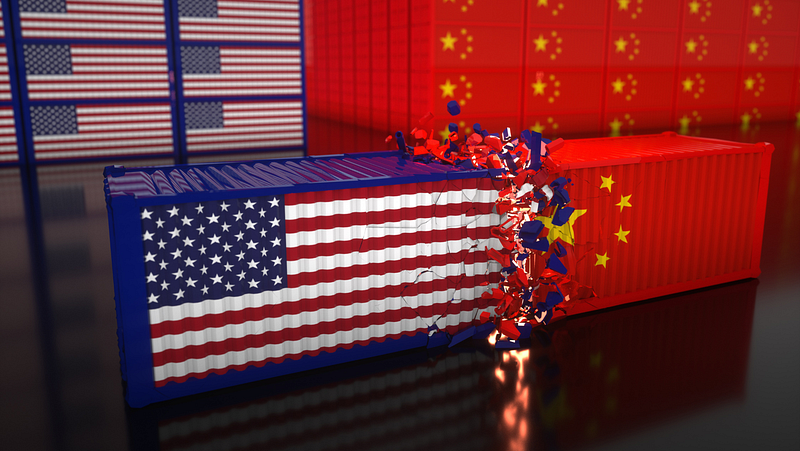
Once a golden goose for international commerce, the People’s Republic of China has, in the past three decades, drawn businesses from around the world with its remarkable growth and seemingly endless opportunities.
Companies have flocked to its vast consumer market, low-cost labour, and business-friendly regulations, reaping lucrative returns on their investments.
However, the landscape has been shifting dramatically since 2018. The fruitful bond of globalisation that once connected Beijing and Washington has been rattled by a wave of escalating tensions.
With increasing sanctions imposed by the United States, China’s firm clampdown on Hong Kong’s freedoms and threats in relation to Taiwan, China’s international business environment is no longer what it once was.
China has been gradually withdrawing itself from the global community for the last few years too — a move that has widespread implications for international businesses and investors.
In an interconnected world, with the threat of war between the US and China now rising, we need to be analysing what the implications of this transformation will likely mean for investors and consumers across the world alike.
The Catalysts for Change
In 2018, the United States, citing concerns over intellectual property theft and unfair trade practices, initiated a wave of escalating tariffs and sanctions on Chinese goods and businesses.
These measures were part of a broader strategy aimed at decoupling the intertwined US and Chinese economies.
The impact on the global business environment was immediate and far-reaching, casting a long shadow over the future of international trade and investment.
Simultaneously, China embarked on a path of tightening control over Hong Kong — a global financial hub and a symbol of freedom and democracy.
The passage of the National Security Law in 2020 effectively curtailed many of the freedoms that had previously made Hong Kong an attractive place for international business.
This move sparked outrage and concern among the international community and added another layer of complexity and risk to operating in the region.
China then began to insulate itself from the international community, distancing itself from global norms and institutions.
This self-imposed isolation has manifested in a variety of ways, including the implementation of stringent domestic regulations and a more assertive foreign policy.
China is currently enacting a broader crackdown on private enterprise too— a move that has reportedly wiped out more than $1tn from the market value of Chinese companies.
The action of Chinese authorities’ are causing concern and triggering uncertainty within the global business community.
Companies such as Shanghai-based Capvision Partners and other consulting firms that provide due diligence services have been subjected to investigations and raids, suggesting an escalation in China’s concerns about data security.
Certain business leaders have gone “missing” — some temporarily; others more permanently.
Critics argue that this increased oversight appears contradictory, as China actively seeks foreign investment to boost its economy, heavily impacted by the long-held zero-Covid policy.
These actions, experts note, may be a way for the Chinese government to maintain control amidst increasing pressures, but the arbitrary nature of law enforcement actions and the broad and undefined scope of ‘national security’ in newly passed legislation have added to uncertainty.
Adding to the atmosphere of apprehension, foreign access to certain financial and economic data of Chinese firms has been restricted.
Allegations of companies being used by foreign institutions to steal state secrets have further complicated the issue.
Faced with these challenges, companies are now forced to reassess their position and strategies in China, where the evolving landscape is now filled with new challenges and uncertainties.
These catalysts for change have profoundly reshaped the terrain of doing business in China, transforming it from a land of opportunity to a labyrinth of political, economic, and legal challenges.
The once-clear path to lucrative returns is now fraught with uncertainty and risk.
China’s Data Security Laws
Over the last decade, China has sought to reinforce its oversight on data security. In 2021, the country enacted a law aimed at protecting information relating to national and economic security, as well as issues of significant public interest.
This was followed by an update to China’s anti-espionage legislation, which broadened the definition of espionage and prohibited the transfer of any data pertaining to national security.
However, a clear delineation of what constitutes ‘national security’ was not provided, resulting in ambiguity and confusion among companies and foreign investors.
Such vagueness is seen as a tool for maintaining and enhancing the state’s control, often used by authoritarian governments. However, it poses significant challenges for businesses operating in China.
Due diligence services, which companies and investors commonly use to verify suppliers’ compliance with rules and regulations, have come under scrutiny.
With these services now at risk, it has become more difficult for potential investors to carry out due diligence before committing to business deals in China.
The new data laws have also impacted foreign access to financial and economic data of Chinese firms.
Reports suggest that China has recently curtailed foreign access to certain financial and economic data from Chinese firms, adding another layer of complexity and uncertainty for global businesses.
Adding to these complications are allegations that some companies, under the pretext of foreign institutions with ‘complex backgrounds,’ have stolen state secrets and intelligence in key sectors while circumventing the law.
These allegations further heighten the risk and uncertainty of doing business in China, driving companies to reassess their strategies and compliance measures to navigate this challenging environment.
The ambiguous and arbitrary nature of these data security laws, coupled with the ongoing crackdown on private enterprises, underscores the emerging complexities of China’s business landscape.
Firms and investors are now grappling with understanding and navigating these new challenges, which could significantly impact the country’s attractiveness as an investment destination in the future.
Microchips
Simmering geopolitical tensions between the US and China have also been amplified in a sector that is critical for both nations and indeed the world: the microchip industry.
At the heart of modern technology, microchips power everything from smartphones and laptops to advanced medical devices and vehicles.
Their strategic importance cannot be overstated, making the ongoing microchip war between these two superpowers a significant factor in the evolving international business climate in China.
Both countries have invested significantly in the semiconductor industry, seeking to secure their dominance in this critical market.
The US, in recent years, has now also implemented bans on several Chinese companies in the semiconductor industry, including Huawei and Semiconductor Manufacturing International Corporation (SMIC), citing national security concerns.
These restrictions have substantially impacted these companies, with reported sales drops and hampered access to advanced manufacturing equipment.
China has strongly criticised these measures, viewing them as attempts to stifle its technological progress and maintain US dominance in the semiconductor industry.
This clash over the control of microchip production and distribution has brought about significant disruptions in the global supply chain.
Companies worldwide are struggling to secure the microchips needed for their products, causing delays and shortages in various industries, including automotive and electronics.
The stakes in the microchip war have also been ratcheted up due to the geopolitical risks surrounding Taiwan — a significant player in the production of microchips.
A potential conflict over Taiwan could massively disrupt the global supply chain for microchips, impacting their production, shipping, and transportation.
This looming risk underscores the precarious position of businesses worldwide, caught in the crossfire of these superpowers’ bid for dominance.
The implications of this contest extend beyond trade to the balance of power in the global economy and national security considerations.
As both countries continue investing heavily in the semiconductor industry and their strategies diverge, the fallout will inevitably shape the future of international business in China.
The Changing Legal Landscape — From Due Diligence to a Minefield of Ultra-strict Rules
China’s new data security and anti-espionage laws have significantly changed the legal landscape for businesses in the country, transforming what was once a well-tread path of due diligence into a minefield of ultra-strict rules and regulations.
These changes have affected companies across all sectors, especially those offering due diligence services to assess suppliers’ adherence to various regulations.
Once routine tasks like auditing supply chains and carrying out due diligence have now become risky endeavours. The laws have cast a wide net, affecting a multitude of business activities and sectors.
The ambiguity around terms like ‘national security’ has raised alarm among businesses and investors who rely heavily on detailed, precise legal guidelines to make informed decisions.
Crackdown on firms, under the allegations of stealing state secrets, has also, as noted, sent shockwaves throughout the business community.
The investigations into these firms have highlighted the broad discretion of the Chinese government to enforce its laws and have brought forth questions regarding the arbitrary nature of the enforcement actions.
As a result, the American and European chambers of commerce in China have expressed concern, seeking a more reliable and predictable business environment.
This unpredictable legal landscape poses significant challenges for both domestic and foreign companies. It makes it harder for prospective investors to conduct their due diligence before committing to business deals in China.
The lack of clarity regarding what’s permissible and what’s not adds another layer of complexity to an already challenging business environment.
So, while China seeks to attract foreign capital, it is evident that it wants these investments on its terms.
The precise nature of these ‘terms’, however, remains unclear, making the Chinese market increasingly intricate for businesses to navigate.
International Implications
China’s intensified crackdown on companies for non-compliance with its national security laws, coupled with its ambiguously defined rules around data security, represent more than just a domestic issue within China; they have global implications.
As the world’s second-largest economy, China is a significant player on the international stage.
Its policies and the unfolding conflict with private enterprises can impact global economic stability, trade relations, and the operational plans of multinational corporations.
The question that now looms over the global business community is how to respond to these shifts. Many companies are reassessing their risk exposure and strategies in light of these recent developments.
This reassessment extends beyond businesses operating in China to include any company connected to Chinese markets, suppliers, or customers.
In the face of these heightened uncertainties, some businesses may decide to withdraw or reduce their operations in China.
Others might choose to adapt their strategies to comply with the new regulations, which may involve considerable cost and restructuring. Still, others might opt to wait and see how the situation unfolds.
The escalating threat of conflict has also drawn attention from international bodies and governments.
Foreign chambers of commerce have voiced concerns, seeking a more predictable business environment in China.
The Escalating Threat of Conflict
The geopolitical landscape in the Asia-Pacific region is also becoming increasingly precarious, marked by escalating tensions between China, Taiwan, and the United States.
Rooted in the aftermath of the Chinese civil war, this dynamic trilateral relationship is growing more complex and volatile.
China, bolstered by its growing global influence, continues to assert its historical claim over Taiwan with increased military exercises that often simulate large-scale invasions and breach Taiwan’s maritime boundaries.
This has sparked serious concerns in Taiwan and among its allies about China’s readiness to resort to military force to achieve reunification.
The United States, historically a staunch supporter of Taiwan’s sovereignty and democracy, has responded to these aggressions by escalating its military assistance to Taiwan, ranging from arms sales to training initiatives.
The US aims to enhance Taiwan’s capacity to deter and potentially defend itself against a possible Chinese incursion.
However, the escalating rhetoric and preparations from both sides are adding fuel to the simmering tension, creating a possible tinderbox in the region.
The timeframe for potential conflict remains uncertain, with opinions varying among analysts — its difficult to predict when the situation might tip over into full-blown conflict, but such a trajectory is looking increasingly likely.
A key strategic concern for the United States is determining the extent of advance warning it might have ahead of a potential Chinese invasion of Taiwan.
The increased naval and aerial activities around Taiwan are monitored closely, but interpreting these signs is complex due to the potential for false alarms and deception.
Balancing vigilance and overreaction becomes an important challenge in this situation.
On top of these, the United States also faces the ‘security dilemma’ — a paradox where attempts to increase its own security could unintentionally provoke feelings of insecurity in China, leading to a cycle of escalation.
Navigating this delicate balance, while maintaining regional peace and stability, is a complex task fraught with risks.
As the tension heighten, both Taiwan and the United States are increasing their defence readiness, further escalating the situation.
China meanwhile, is weighing up whether to risk a full-scale invasion, considering the potential political fallout and economic damage it could cause.
In summary, the escalating tension in the Taiwan Strait underscores the high stakes and complexities involved in this geopolitical conundrum.
The trajectory of events suggests that without significant diplomatic intervention, the situation is likely to continue escalating, posing a serious threat to regional stability and global peace — and of course, international business.
China’s rapid evolution has dramatically changed the landscape for international businesses, governments, and non-profit organisations.
Whether through shifts in its legal landscape, technological strides, or an escalating geopolitical crisis, China has become an arena fraught with challenges that demand a strategic approach.
The data security laws recently implemented by China pose new complexities for organisations operating within its borders.
These laws place stringent requirements on data storage, transfer, and processing, necessitating businesses to adapt their operations and implement robust data management systems.
In doing so, they must also consider the trade-offs between cost, compliance, and potential risks.
Simultaneously, the semiconductor industry is undergoing a significant shift as China propels itself towards technological self-sufficiency. This transformation is not just a result of China’s ambition, but also the evolving international policies, particularly from the United States.
The resulting ‘cold war over chips’ is engendering a new landscape for businesses. Companies must now assess their role and strategy in a reshaped global supply chain and prepare for the business implications that these shifts may bring.
The escalating geopolitical tensions between China, Taiwan, and the United States further complicate the picture. The potential for conflict, though unpredictable in its timeframe, poses a substantial risk to the stability of the region and the world.
The strategic conundrum faced by the United States in managing its relationship with Taiwan, while deterring China from a possible military intervention, underscores the intricate dynamics at play.
In light of these potential conflict scenarios, pragmatic planning and risk management strategies become paramount.
Organisations must develop contingencies for disruptions to their operations and supply chains, evaluate potential legal and financial exposure, and stay abreast of rapidly changing geopolitical developments.
The imperative is clear: to successfully navigate China’s evolving landscape, entities must not only be resilient and adaptable, but also prepared for the significant geopolitical shifts that could profoundly impact their operations in the region.