
US Encirclement of China — Preparing For War or Provoking One?
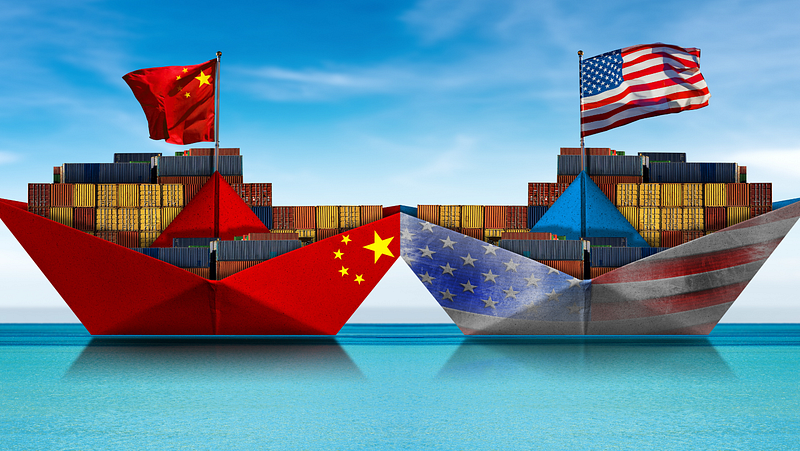
The US containment strategy toward China has been evolving and intensifying over the past decade, with a focus on the establishment of an imposing military presence in East Asia.
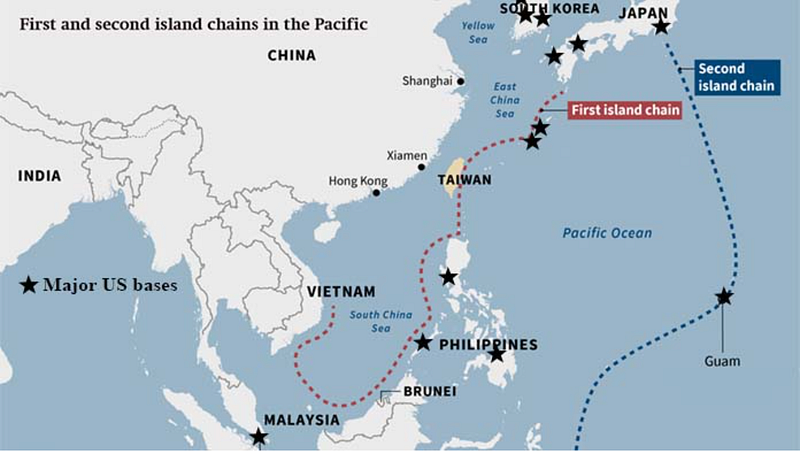
This strategy is characterised by an arc of military bases and alliances surrounding China — a formation that arguably fuels the rising tension between these two superpowers.
With 313 military installations in East Asia, contrasted with China’s eight overseas bases, the US has a strategic advantage that is hard to ignore. From South Korea to Japan, Guam, and Singapore, these bases represent the backbone of US military might in the region.
The concept of encirclement first emerged during the George W. Bush administration, with the recommendation from then-National Security Advisor Condoleezza Rice to form an anti-China alliance in Asia.
This strategic shift aimed to tilt the regional balance of power in favour of the United States.
Though initially sidetracked by the Middle East-centric “war on terror”, this strategy then re-emerged under the Obama administration’s “pivot to Asia”, with increased military cooperation with Vietnam, the Philippines, and Australia, and diplomatic mediation between Japan and South Korea.
It was the Trump administration that truly amplified this encirclement strategy though, with then-Secretary of State Mike Pompeo rejuvenating the Quadrilateral Security Dialogue (QUAD) — a security alliance between the U.S., Japan, India, and Australia, often referred to as the “Asian NATO”.
The aim was clear: to strategise against and offset China’s growing influence in the Indo-Pacific.
The Trump administration also fostered stronger diplomatic relations with Taiwan and reinforced military ties with Australia, Japan, and South Korea.
US military activity in the South China Sea also witnessed a significant upsurge, adding to the mounting tension.
The strategy of containment and encirclement has now further escalated under the Biden administration, marked by the creation of AUKUS (a military alliance between the US, the UK, and Australia) and JAPHUS (a trilateral alliance between the US, Japan, and the Philippines).
Both are primarily focused on countering China.
The 2022 National Defense Authorisation Act — a $768 billion defence bill with a particular emphasis on China’s containment — is a stark indicator of this escalating strategy.
A significant portion of this funding will be directed toward maintaining the US military presence in the South China Sea and strengthening military alliances in the Indo-Pacific.
Securing a deal with the Philippine government to grant US access to four of its military bases further then solidified the military arc surrounding China. This included three bases situated in the north, near Taiwan.
In addition, the United States and the Philippines conducted their largest ever joint war games exercise, the Balikatan, in preparation for potential military confrontations.
This included the proposal for full militarisation of Taiwan, employing a “porcupine strategy” to deter a potential Chinese invasion.
Altogether, these strategies signify an escalating commitment to countering China’s influence in the region, drawing allies into a wide arc of containment around the rising superpower.
The US is constructing its arc of containment, ostensibly under the guise of defending democratic values and ensuring regional stability.
But such actions should be evaluated critically — passive acceptance of the dominant narrative means blindly accepting hidden dynamics that may be at play here too.
On the one hand, the extensive military installations and alliances that the US has established in East Asia are rightly perceived by China as being far from purely defensive measures.
The evidence lies in the glaring asymmetry: while China maintains a relatively modest number of overseas bases, the US has 313 military installations in East Asia alone.
Recent developments must also be seen in the larger context of US power dynamics too.
The US’s geopolitical chess moves, though often veiled under the rhetoric of balance and defence, have an underlying objective of maintaining global hegemony.
The US’ involvement in the South China Sea, its closer ties with Taiwan, and its increased military activity in the region all serve a purpose: they are strategic attempts to offset China’s influence, but they are also about asserting dominance in the Asia-Pacific region.
Evidence for this perspective can be seen in the US’s history of foreign interventions — which are extensive and varied.
These range from overt military operations to covert actions aimed at influencing political, economic, and social conditions in other countries.
In other words, it has a long history of interfering and encroaching on the sovereignty of other nations.
In Latin America, for example, often the subject of US interventions, we have seen numerous breaches of sovereignty and encroachment.
From the 1954 CIA-orchestrated coup in Guatemala that overthrew the democratically elected President Jacobo Árbenz, to the 1961 failed Bay of Pigs invasion of Cuba, and the 1980s Contra War in Nicaragua, US actions have significantly impacted the political trajectory of these nations.
The US has also had a long history of involvement in the Middle East — it’s most significant involvment beginning with the 1953 coup in Iran that overthrew Prime Minister Mohammad Mossadegh.
More recent interventions include the 2003 Iraq War, justified by now-discredited claims of Iraq possessing weapons of mass destruction. That war led to significant loss of life, destabilisation of the region, and the rise of ISIS in consequence.
In Southeast Asia, the Vietnam War stands as a stark example of US interventionism too. From 1965 to 1973, the US was directly involved in conflict, resulting in a significant human toll and long-lasting environmental and social effects.
The US has also intervened in the internal affairs of nations through non-military means, often under the auspices of promoting democracy or human rights.
This has included economic sanctions, diplomatic isolation, or support for opposition groups.
Examples include its actions in Venezuela, North Korea, and more recently, its stance towards China, particularly relating to Hong Kong and Xinjiang.
These interventions have often been justified on the grounds of protecting US interests, promoting democracy, or ensuring global stability — and often there have been justifiable grounds for doing so.
As anyone who has read my other work will know, I am, for example, ardently critical of the human rights abuses that have been taking place in Hong Kong and Xinjiang.
However, US actions have also frequently — clearly — been about US interests first and foremost, with unintended consequences frequently resulting too, including loss of civilian life and destabilisation in the countries they have interfered with.
Relevance of the US Military-Industrial Complex
The military-industrial complex, a term coined by President Dwight D. Eisenhower, refers to the intricate relationship between the military, the government, and the suppliers of war materials.
This nexus has significant bearing on US foreign policy decisions, often steering it towards militaristic and interventionist strategies.
An important component of this complex is the defence industry, composed of large corporations that manufacture arms and military equipment.
Given their dependence on government contracts for revenue, these entities have a vested interest in promoting policies that justify military expenditure.
Their influence permeates various spheres, from lobbying in Washington DC to funding think tanks and policy research institutions that often provide intellectual backing for interventionist policies.
Simultaneously, the Pentagon, as the command centre of the US military, holds considerable sway over policy direction. It tends to advocate for maintaining global military superiority, which necessitates a significant defence budget and overseas military presence.
Consequently, US foreign policy often emphasises military readiness and showcases a willingness to use force when necessary.
Another layer to this is the US Congress, where defence-related decisions and budgets are made.
With many Congressional districts housing military bases or manufacturing plants tied to the defence industry, lawmakers often support policies that ensure the continued operation and funding of these establishments.
This support translates into votes for substantial defence budgets and often skews policy towards militarism.
This symbiotic relationship between industry, military, and government underpins the US foreign policy approach and is therefore also relevant to this discussion.
It’s instrumental in explaining why the US maintains a vast network of military bases worldwide and why it often resorts to military force or the threat thereof in international disputes.
In essence, the military-industrial complex promotes a self-perpetuating cycle: it contributes to an aggressive foreign policy, which justifies increased defence spending, leading to further expansion of the military-industrial complex.
This cycle not only impacts US relations with nations like China but also influences its involvement in other regions, as evidenced by its historical engagements in the Middle East, Latin America, and beyond.
It’s important of course to note that this does not absolve other nations of their actions or suggest they are merely reacting to US policies.
However, understanding the influence of the U.S. military-industrial complex provides important context when analysing the dynamics of international relations and US foreign policy.
US Alliances and Defence Perimeter
The US defence perimeter in East Asia is a strategic network of alliances and military bases designed to project US power and influence, as well as deter potential threats.
The strategic arc starts from Japan, moving down through the Korean Peninsula, extending towards Southeast Asia, and ending at Vietnam.
Japan has been a cornerstone of this defence perimeter since the end of World War II.
The US-Japan Security Treaty signed in 1951 allows for US military presence in Japan, primarily in Okinawa. With over 50,000 troops stationed there, Japan represents one of the largest US military deployments overseas.
Japan’s strategic location also provides the US with a forward base of operations in the Asia-Pacific, facilitating rapid military response if needed.
The Korean Peninsula is then another important point in the US defence perimeter. The US has maintained a significant military presence in South Korea since the Korean War’s armistice in 1953.
With around 28,500 US troops currently stationed in South Korea, the U.S. demonstrates its commitment to the security of its ally, while simultaneously establishing a buffer against potential threats from North Korea and, by extension, China.
Further south, the Philippines, once a US colony, has a long history of hosting US military bases.
The Enhanced Defence Cooperation Agreement signed in 2014 deepened military ties, allowing the US rotational deployment of forces at certain Filipino military bases, boosting its maritime domain awareness and defence capabilities.
At the southern end of the U.S. defence arc, Vietnam, once a war adversary, is now seen as a potential strategic partner against the rise of China too.
Although there are currently no US military bases in Vietnam, the US has been steadily deepening its defence ties with Hanoi. This includes increased high-level military dialogues, arms sales, and cooperation in maritime security.
This progression shows the US’s efforts to bring Vietnam into its network of alliances, further extending its defence perimeter.
Submarines also play a significant role in the US strategic plan in the Indo-Pacific.
Stealthy, flexible, and possessing significant striking power, submarines enhance the US ability to deter potential adversaries and support its allies in the region.
In the context of the US-Australia alliance, for example, a recent agreement to supply Australia with nuclear submarines will dramatically elevate Australia’s strategic capabilities.
Nuclear-powered submarines have critical advantages over their conventionally powered counterparts. Notably, they can remain submerged for extended periods and are harder to detect, providing Australia with superior defensive and offensive capabilities.
This ability to stay underwater for longer enables them to patrol vast areas of the Indo-Pacific, thus playing a vital role in the US defence perimeter too.
The sum of these alliances and deployments along this arc around China represents a significant demonstration of the US’s strategic containment policy towards China.
The Evolving Nature of US alliances in the Asia-Pacific region
Historically, US alliances in the region were primarily bilateral in nature, including those with Japan, South Korea, the Philippines, and Australia.
However, in response to China’s rise, there has been a trend towards multilateral security cooperation.
Examples of this include the Quadrilateral Security Dialogue (QUAD), consisting of the US, Japan, Australia, and India, and the AUKUS pact among the US, UK, and Australia.
These alliances are not just about military cooperation, but also diplomatic coordination, infrastructure development, and technological collaboration, designed to collectively counterbalance China’s influence.
In terms of strategic focus, the alliances have shifted from being mainly concerned with traditional military threats, to increasingly addressing a broader set of security issues.
This includes cyber warfare, space, economic coercion, and even issues like climate change and pandemic response — all areas where China is perceived as a major player.
There’s also been a push for allies to increase their defence capabilities, as seen in the AUKUS pact’s provision for nuclear-powered submarines for Australia.
This represents a significant upgrade in military technology for an ally and signals a more assertive approach to countering China’s military modernisation.
At the same time, there has been a focus on reinforcing the US’s commitment to its allies. This can be seen in the increased frequency of joint military exercises, defence dialogues, and affirmations of mutual defence treaties.
The aim is to reassure allies in the face of China’s assertiveness, particularly in disputed areas such as the South China Sea and the Taiwan Strait.
China’s Perspective
From China’s alternate perspective, they are striving to protect their sovereignty and regional influence and perceive US encroachment / encirclement as a threat to this.
China has consistently viewed the encirclement of military installations along its periphery as a potential threat and a manifestation of US hegemony.
It perceives these installations and alliances as an attempt to contain its rise and hinder its legitimate aspirations on the global stage.
They believe they are aimed at isolating China and constraining its regional influence too.
Simultaneously, China has been significantly increasing its military expenditure, becoming the second-largest spender globally.
While part of this is in line with its growing economic stature, it’s also a response to the perceived US threat.
China argues that it needs to bolster its defence capabilities to ensure its sovereignty and protect its territorial claims, including those in the South China Sea and Taiwan Strait.
The issue of Taiwan is particularly significant in this context. From China’s perspective, Taiwan is a breakaway province that must eventually reunite with the mainland, by force if necessary.
The US’s growing support for Taiwan, including arms sales and increasingly public diplomatic engagement, is thus seen as a direct threat to China’s territorial integrity.
China has responded with frequent military exercises near Taiwan and increasing diplomatic pressure to isolate Taiwan internationally.
The potential implications of the Taiwan issue for regional stability are immense. A conflict over Taiwan could easily escalate into a broader regional or even global confrontation, given the US’s implied commitment to Taiwan’s defence and China’s stated willingness to use force.
The increased military activity around Taiwan raises the risk of miscalculations or accidents that could lead to an unplanned escalation.
Despite these tensions, China also stresses the importance of dialogue and cooperation on shared challenges such as climate change, public health, and global economic governance.
China often frames its rise as peaceful and argues for a new type of international relations based on mutual respect and win-win cooperation, contrasting this with what it describes as the zero-sum mentality of US hegemony.
From China’s alternate perspective, they are simply striving to protect their sovereignty and regional influence and perceive US encroachment / encirclement as a threat to this.
Balancing Aggression & Defense: A Dual Perspective
Determining whether US actions can be perceived as aggression or self-defence is subjective, and contingent on the lens through which they are viewed.
From the US perspective, its actions are in line with its national security interests and are necessary to maintain a balance of power in the region.
The US frames its military presence as a deterrent against potential threats and a means of ensuring the freedom of navigation in international waters.
However, from China’s point of view, the US’s robust military presence and alliances can be seen as an aggressive containment strategy aimed directly at stymieing its rise.
In a similar vein, China’s actions can also be seen in two different lights. China justifies its military build-up as necessary for its defence, especially given the US’s extensive network of bases and allies in its periphery.
It argues that its actions, like the building of military installations in the South China Sea, are primarily defensive.
However, neighbouring countries and the US often interpret these actions as aggressive and expansionist, particularly when they involve disputed territories.
There is a tangible danger in this escalating cycle of military rhetoric and actions. Each action, viewed as defensive by the initiating side, tends to be perceived as a threat by the other, leading to a further escalation in response.
These dynamics are on track to create a volatile security dilemma, where steps taken by both the US and China to enhance their security end up making both feel less secure, thus increasing the risk of conflict.
Both nations’ military postures and rhetoric also impact regional stability.
Other nations in the region, including Japan, South Korea, Taiwan, Vietnam, and the Philippines, are caught in the middle of this power struggle.
Their security, too, is affected by the actions of these two global powers.
One prominent line of thought in critical international relations theory posits that imperialism and aggressive foreign policy, particularly as pursued by powerful states, often serve specific interests rather than the commonly proclaimed goals of peace, democracy, or security.
This perspective suggests that the US’s actions in the Indo-Pacific may be more about maintaining its global hegemony and serving its own interests than about countering legitimate threats.
Applying this line of thought to the US-China standoff, we might question the extent to which the US’s strategy is indeed a defensive response to China’s rise.
We might consider whether it could be, in part, a tool to maintain dominance, protect economic interests, or create markets for the military-industrial complex.
This view doesn’t absolve China of its actions, but it helps to contextualise the US’s role and its potential contributions to the escalating tensions.
This perspective offers a useful lens for understanding the situation. It encourages us to question the motives behind the US’s actions, to scrutinise the narratives surrounding China’s rise, and to consider the broader implications of military buildup and strategic alliances.
It emphasises the need for diplomacy, de-escalation, and multilateral solutions over military posturing and unilateral actions.
This perspective also highlights the role of power dynamics in shaping international relations and cautions against accepting official narratives at face value.
As we evaluate the current situation, it’s clear that the complexities of US-China military posturing extend beyond simple narratives of aggression and defence.
On one hand, the US frames its expanding military arc and strengthening alliances as a protective buffer — a necessary response to a rising China’s assertive stance and increased military spending.
On the other hand, China views these actions as threatening — an attempt to contain its legitimate aspirations and growth.
In terms of future trajectories, if current trends persist, we are likely to witness further militarisation and escalating rhetoric, intensifying the security dilemma.
This would inevitably increase tensions not only between the US and China, but also among other countries caught in this power struggle.
An arms race in the region could provoke more instability, heightening the risk of miscalculations and potential conflicts.
Given these possibilities, it is evident that there is an urgent need for de-escalation and a return to diplomacy.
Multilateral dialogues, confidence-building measures, and negotiation over contentious issues should be prioritised over military posturing.
While maintaining national security is important for both nations, the mutual benefits of peaceful co-existence and cooperation should not be overshadowed by the competition for regional dominance.
“The thing we see across all the wargames is that there are major losses on all sides. And the impact of that on our society is quite devastating,” said Becca Wasser, who played the role of the Chinese leadership in the Select Committee’s wargame and is head of the gaming lab at the Center for a New American Security. “The most common thread in these exercises is that the United States needs to take steps now in the Indo-Pacific to ensure the conflict doesn’t happen in the future. We are hugely behind the curve. Ukraine is our wakeup call. This is our watershed moment.”
Politico — The Pentagon Is Freaking Out About a Potential War With China
Is the “strong deterrent effect” the US is attempting with their encirclement the answer? Will it dissuade any potential hostile actions with the ultimate hope of maintaining stability and peace in the region?
Or are these actions actually putting us on a more likely path to war?
What do we think China is likely planning as a consequence?


