
Resurgence of Interstate Wars: The New Age of Global Conflicts
Unpacking the Roles of Russia and China in Shifting the Balance of Peace and War
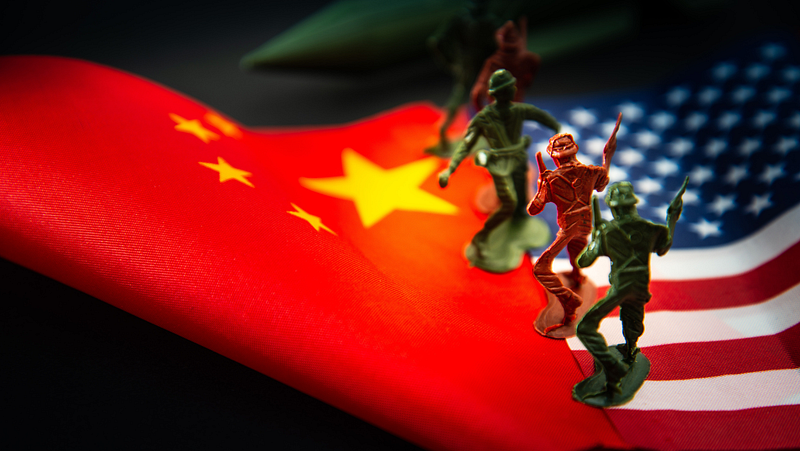
Since the end of the Second World War, we have seen a significant decline in interstate wars — a trend that has redefined the global peace and conflict landscape.
This shift is not to suggest that the world has attained a utopian state of tranquillity. Wars have not been completely eradicated; rather, their nature and scope have transformed over time.
Interstate wars — conflicts where one nation sends its armed forces over the border to combat those of another — have however, become far less common.
These large-scale wars have instead increasingly given way to internal conflicts and civil wars, such as those currently devastating Ethiopia and Sudan.
These conflicts may not make headlines like wars between countries do, but they do of course continue to inflict significant human suffering and disrupt the fabric of societies.
State repression and other forms of mass violence also persist. Governments around the world employ coercive measures against their populations, leading to widespread human rights violations.
Despite the decrease in traditional warfare, these forms of violence continue to plague nations, underlining the enduring complexities of global peace and conflict.
That all said, Russian President Vladimir Putin’s invasion of Ukraine in 2022, has now also presented what we had come to understand was a rarity in the modern era: interstate conflict.
His aggressive foray into Ukraine has not just been an act of war; it signals a throwback to imperial conquest — an outdated and widely-condemned model of asserting national dominance by invading a country to annex its territory.
This act is starkly at odds with the global trend that has emerged since the end of World War II.
As noted by historian and author Yuval Noah Harari, “most governments stopped seeing wars of aggression as an acceptable tool to advance their interests, and most nations stopped fantasising about conquering and annexing their neighbours.”
This shift in global perspective towards wars of aggression did not happen by chance.
It is the result of a collective recognition of the costs of conflict and the benefits of peace, rooted in bitter lessons learned from two devastating World Wars and numerous regional conflicts.
While the actors on the global stage and their motivations may change, the underlying consensus has been a move towards cooperation, dialogue, and diplomacy, and away from the destructive path of war.
Putin’s invasion of Ukraine, in this context, represents a disturbing outlier in international relations.
Putin’s imperial conquest, is not just an act of aggression against Ukraine; it is a challenge to a global order that has, for the most part, moved away from the pursuit of territorial expansion through military force.
It forces us to confront the reality that despite our progress, the spectre of old-fashioned, large-scale interstate warfare still lingers.
Factors Contributing to the Decline of Interstate Wars
Several key factors, ranging from economic changes to moral evolution, have significantly reshaped the global landscape of conflicts and contributed to the decline of interstate wars.
In today’s world, economies are increasingly interdependent, relying heavily on an intricate web of international trade relations. Conflicts disrupt these ties, often leading to severe economic consequences.
Economic interdependence acts as a deterrent, as nations become wary of the potential trade and economic disruptions that warfare can instigate.
Alongside this, the economy of the modern world has seen a significant shift from being predominantly reliant on land and natural resources to focusing on human capital.
Knowledge-based industries, technological innovation, and high-tech sectors are now at the heart of economic growth and prosperity.
Consequently, the appeal of invading and annexing territories for their resources has waned.
Human capital, the driver of the modern economy, is less susceptible to coercion and forced service than land or other tangible resources.
The implications of warfare on labour and trade further discourage conflicts.
Workers, especially those skilled in sectors driving modern economies, often choose to relocate from conflict zones or areas under invaders’ control.
Conflicts create a climate of insecurity and instability, discouraging economic activity and productivity, leading to a decline in economic activities in conflict zones. The ensuing restrictions on movement and trade further dampen economic growth.
Globalisation and technological advancements have therefore played significant roles in reducing incentives for territorial conquest.
The dramatic reduction in shipping costs, combined with the internet and other technological advancements, has also allowed countries to engage in trade and economic activities far beyond their geographical neighbours.
This interconnectedness and the resulting market integration make territorial conquest redundant for economic gain.
Democracies
The spread of democratic governance worldwide is also noteworthy. Democracies are typically more peaceful, as voters often disapprove of the human and economic costs of war.
This phenomenon supports the “Democratic Peace Theory”, suggesting that established democracies have not waged war against each other, although definitions of democracy supporting this claim can vary.
We’ve also seen a profound moral evolution that has led to the widespread rejection of certain practices that were once accepted or tolerated, such as slavery and the ‘divide and rule’ tactics of the British Empire.
A more universal acceptance of human rights and the dignity of all individuals, irrespective of their race, religion, or nationality, has made many forms of conquest and subjugation untenable.
Related to this, we’ve seen an international consensus against genocide and mass atrocities.
The Responsibility to Protect (R2P) doctrine, endorsed by the United Nations in 2005, for example, underscores the obligations of all states to prevent and stop genocides, war crimes, ethnic cleansing, and crimes against humanity.
This increased international vigilance and potential intervention deter states from engaging in large-scale violence and conquest.
Strong international norms and institutions have therefore emerged since World War II, discouraging actions such as annexation and making it difficult to rule a group of people against their will.
The international community is now more inclined to intervene to prevent large-scale conquests, a trend which further dissuades states from pursuing aggressive territorial expansion.
Nuclear Weapons
Another game-changer has been the existence of strategic nuclear weapons too. The potential for mutually assured destruction these weapons carry has dramatically increased the stakes of warfare.
In a strange paradox, these potentially cataclysmic weapons have helped maintain a fragile peace among nuclear-armed states.
Putin’s invasion of Ukraine, appears in stark contrast to the historical trends of the past few decades though.
According to data from the Correlates of War, no large-scale territorial conquests had occurred since the late 1970s, until the annexation of Crimea in 2014.
Putin’s decision to invade Ukraine serves as a potent reminder that factors such as geopolitical considerations, national identity, historical claims, and the pursuit of strategic advantage can still influence the decisions of state leaders though — sometimes compelling them to act against the prevailing global norms and trends.
Putin’s invasion not only flouts the norms against territorial expansion and aggression but also presents an inherent risk of intensifying repression and mass violence.
The challenge for the international community is to navigate this complex landscape, balancing respect for national sovereignty with the moral obligation to prevent mass atrocities, all while striving to uphold the norms that have significantly contributed to the decline in interstate wars since World War II.
The recent events in Ukraine serve as a reminder that the world is still grappling with the dual nature of state sovereignty and human rights, as well as the persistent allure of territorial conquest despite the high economic and human costs.
Western Response to Putin’s Invasion of Ukraine
The invasion of Ukraine by Putin posed a major challenge to the West and the broader international community.
The immediate reaction was (rightly) an unequivocal condemnation of the action, followed by a series of sanctions targeted at the Russian state and key individuals within the Putin regime.
In a unified effort, the European Union, United States, Canada, and other allies imposed these sanctions, which ranged from travel bans to freezing of assets, to exert economic pressure on Russia.
Despite Russia’s relative economic independence with its vast natural resources, these sanctions have had a significant impact, particularly on Russia’s financial sector and its ability to do business globally.
The West has also provided support to Ukraine in the form of humanitarian aid, military equipment, and political backing.
The Western response to Putin’s invasion is emblematic of a shift in the nature of warfare and conflict resolution.
Rather than escalating the situation into a full-blown military conflict, the Western powers chose to leverage their economic clout and influence over international institutions to isolate and pressurise Russia.
The efficacy of these measures remains a point of ongoing debate though.
What About Taiwan?
Contemplating a potential response to a hypothetical Chinese invasion of Taiwan is more complicated, but also relevant to this story of a world moving back towards interstate war.
As I’ve noted in previous articles, China’s actions in relation to Taiwan, as well as more broadly in the South China Seas, are a threat to international peace and security.
That’s in addition to their severe human rights abuses in Xinjiang, which are also reminiscent of those that occurred in the 1930s in the lead up to World War II.
The economic interdependence between the West, especially the United States, and China is far greater than with Russia.
This fact complicates potential responses, as punitive economic measures could have significant repercussions for Western economies too.
In the event of a Chinese invasion of Taiwan, the initial Western response would likely involve a combination of diplomatic pressure, economic sanctions, and potentially a show of military support in the form of increased naval presence in the South China Sea.
However, the extent and nature of these sanctions could be tempered by each nation’s economic ties with China.
Beyond economic and military measures, the West could leverage international institutions to isolate China diplomatically.
Given China’s ambition to be a global leader, such diplomatic isolation could be a powerful deterrent.
The United States’ official policy of ‘strategic ambiguity’ regarding Taiwan further complicates this issue.
While the U.S. is committed to the island’s defence, it has been deliberately vague about the circumstances under which it would intervene militarily.
This policy, meant to deter aggression without provoking conflict, would face its ultimate test in such a scenario.
In both cases, the actions of Western countries highlight a broader shift in how conflicts are managed in the modern era.
Military retaliation is no longer the default response, with economic and diplomatic tools often being the first line of defence.
That all said, more traditional warfare is still a very real possibility too — something I’ve discussed previously as well.
We see this in Japan’s military levelling up, in coordination with the US, as these states pragmatically also prepare for this unfortunate possibility (likelihood?) in the future.
How Did We Get Here?
The potential shift back towards an age of war is both puzzling and alarming given the significant strides made in ensuring global peace.
This shift can be largely attributed to the resurgence of nationalist sentiments, power consolidation efforts by certain state leaders, and the perceived weakening of international institutions.
In several nations, we’ve seen leaders stoking nationalist sentiments to consolidate power. These leaders often leverage historical grievances, territorial claims, and perceived threats to national security to justify aggressive actions.
This trend appears to defy the logic of globalisation, which has led to an unprecedented level of interconnectedness and interdependence among nations.
The perceived weakening of international institutions also plays a crucial role in this potential shift.
Institutions such as the United Nations have long served as the guardians of international law, including the principles that prohibit territorial conquests.
However, these institutions’ perceived inability to effectively enforce these principles has emboldened certain states to challenge the established norms.
Putin’s invasion of Ukraine and China’s aggressive posturing in the South China Sea and towards Taiwan are symptomatic of this shift.
Both Russia and China have used narratives of national revival, historical territorial claims, and strategic considerations to justify their actions, defying international norms in the process.
Putin’s annexation of Crimea was justified by invoking historical connections and the protection of ethnic Russians, despite international outcry.
Similarly, China’s expansionist activities in the South China Sea and threats towards Taiwan have been justified on historical and strategic grounds, even in the face of strong international condemnation.
These troubling developments invite us to reflect on the period of relative peace and prosperity we’ve enjoyed since the end of World War II.
The decline of interstate wars, the advancement of democratic governance, and the strengthening of international norms and institutions have contributed to an era of unprecedented peace and prosperity.
The global economy has also seen a transformative shift from being resource-driven to knowledge-based, reducing the incentive for territorial conquest.
However, these accomplishments should not have led to complacency.
The recent aggressive actions by Russia and China serve as stark reminders that peace is fragile and the factors that contribute to it must be continuously nurtured and defended.
In the face of these challenges, the international community must reaffirm its commitment to the principles of peaceful coexistence, respect for national sovereignty, and the prohibition of territorial conquest.
It is through the consistent enforcement of these principles that we can hope to prevent a regression to a potential new age of war.