
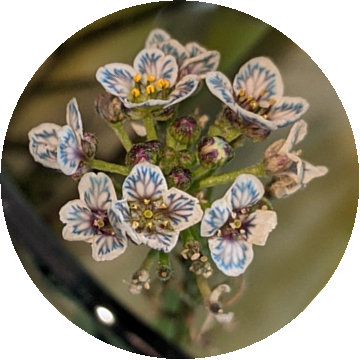
Fun with liquids physics, colors, and flowers!
Injecting colors into flowers
The phenomenon of capillarity enables some cool things such as dying flowers with specific colors. Come and see!
Sherry Kappel recently saw my post on orchids and she asked about these lovely “blue” orchids:
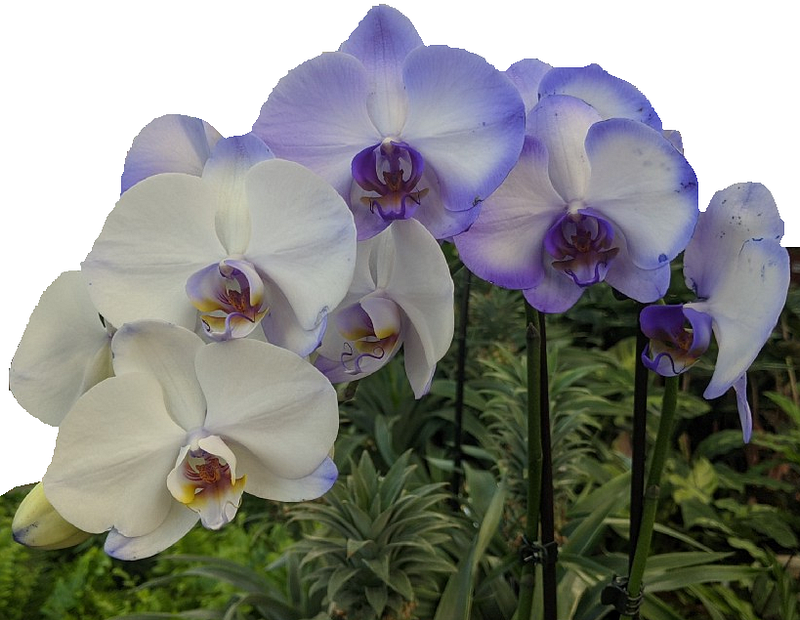
Well… bummer… it turns out that these orchids aren’t naturally blue. I bought that particular orchid recently, and on inspection I found that the blooming stems have one small “injury” each. The injuries look blue, and I’m quite sure that they are the product of injecting blue ink into the plants. These flowers are naturally white.
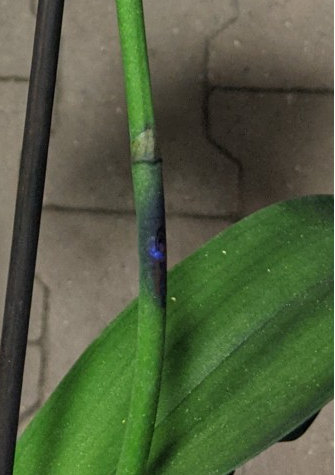
I guess they inject blue ink that then circulates up dying the flowers’ petals. As Sherry says, the flowers still look nice though!
This all reminded me of an experiment I did loooong ago, when I was probably 10 years old or so: cut a piece of celery, place it in blue or black ink, and see how it slowly flows up through the plant’s vascular system. I just tried this experiment now but with fennel. And then went for flowers!
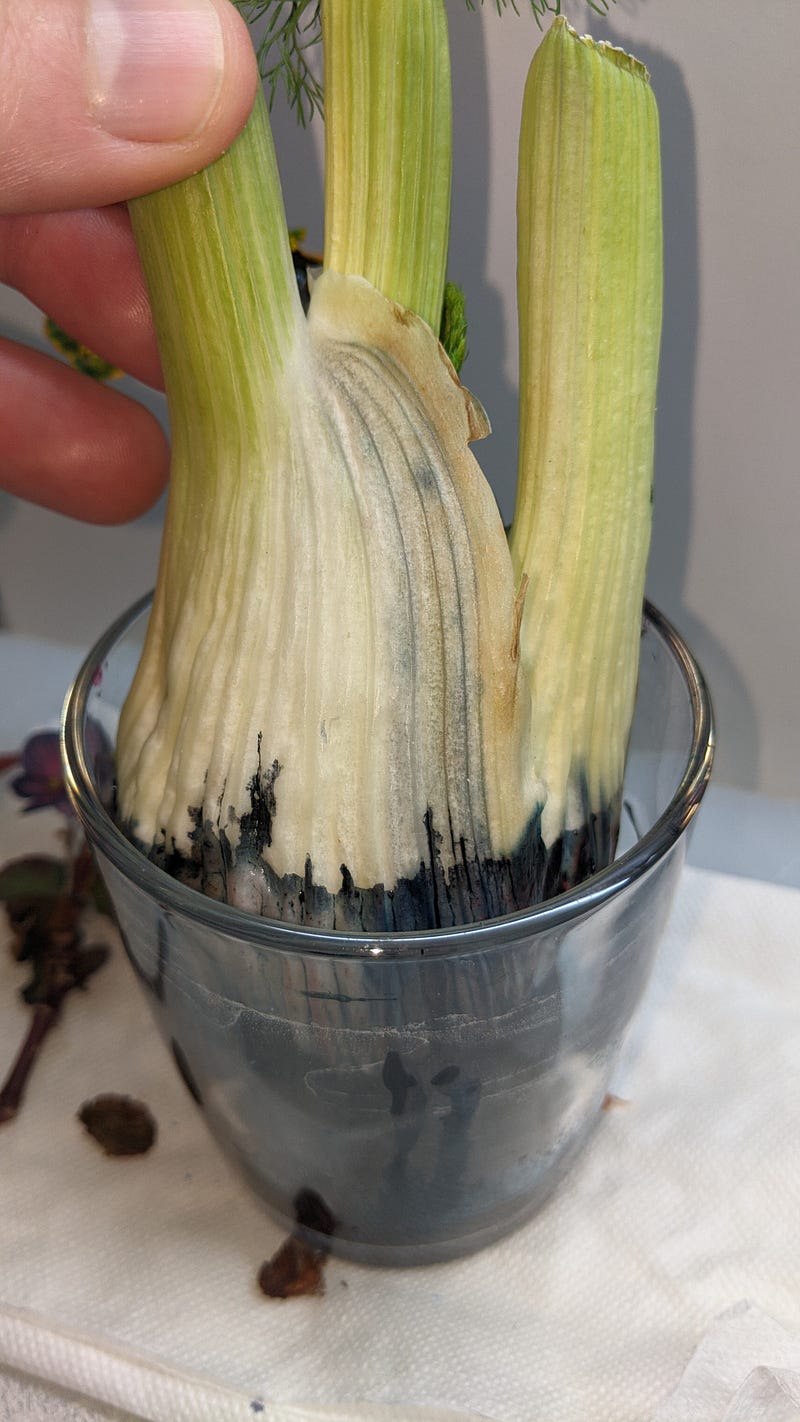
Here you have the fennel after overnight soaking of the base in ink:
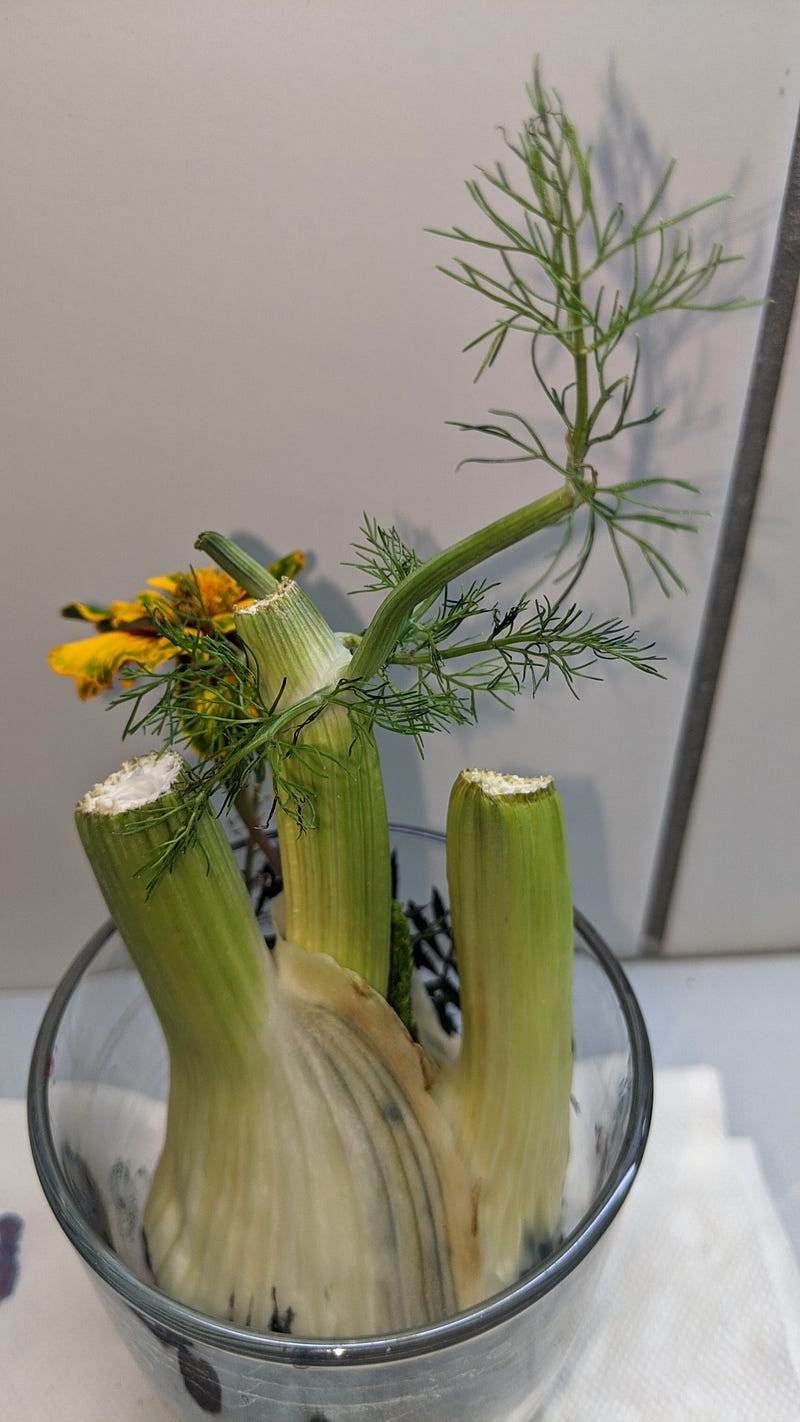
It’s not as awesome as the orchids, but at least we can verify that the ink can indeed flow up. You can even see some of the thin leaves at the top that look quite dark.
Here’s a closer look at the white part, where you can clearly see some capilars dyed stronger than their surroundings:
Extension to flowers
What would happen with flowers? By this time of the year, well into the fall, there aren’t too many flowers to play with… But fortunately I still have some white alyssum, some pink begonias, and many marigolds.
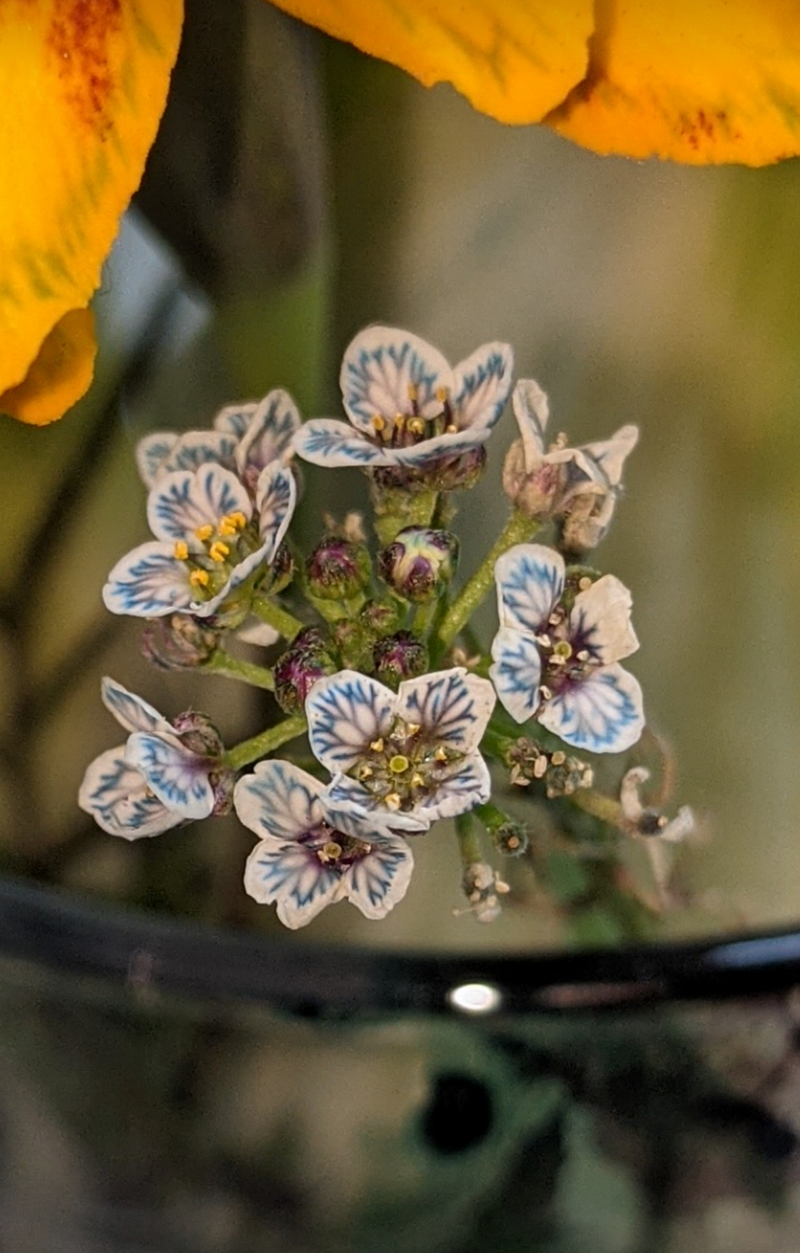
I cut flowers keeping 5–10 cm of stem, and placed them in the ink. In over an hour the alyssum looked so cool!
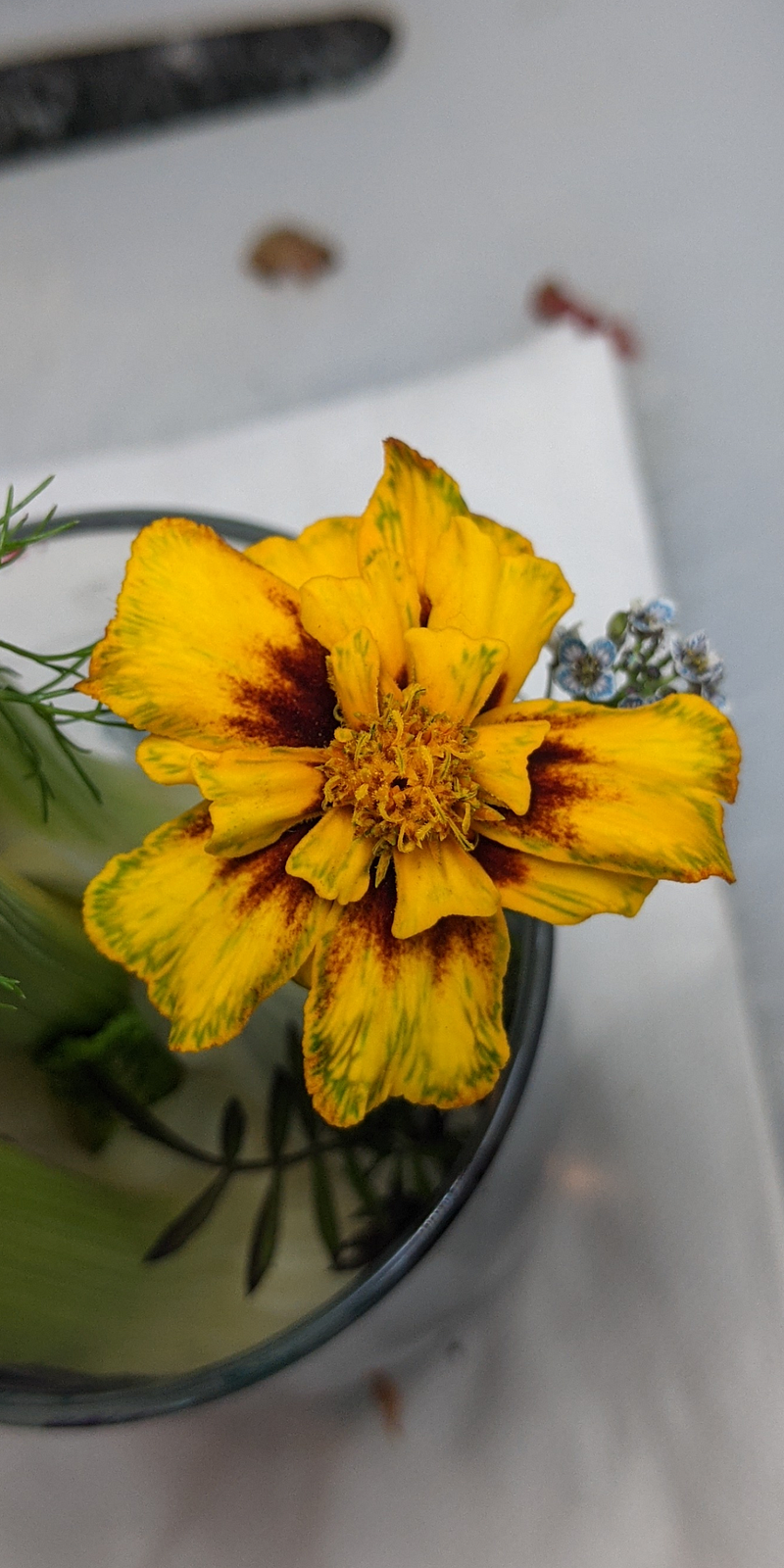
The marigold took longer, but it eventually also took up ink:
Same with the begonia:
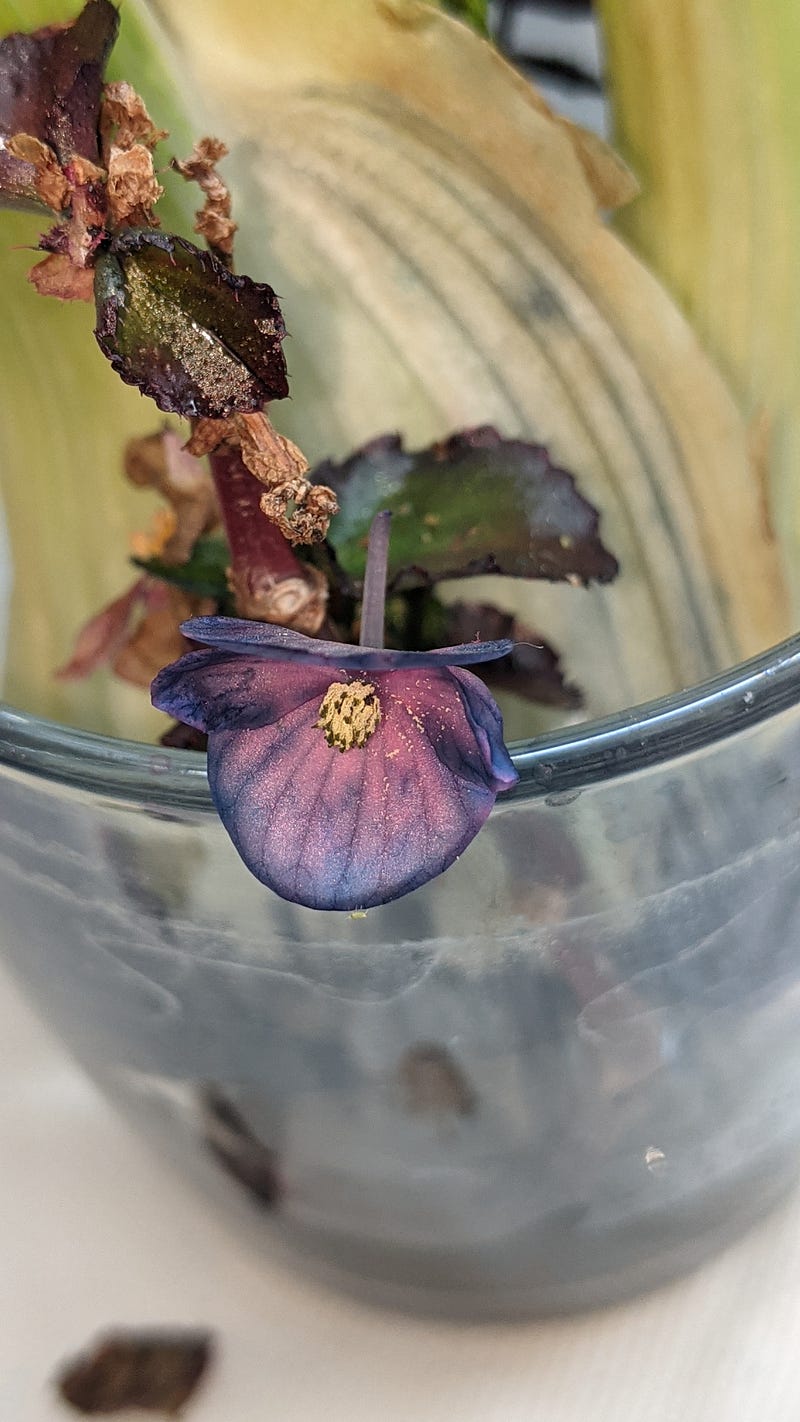
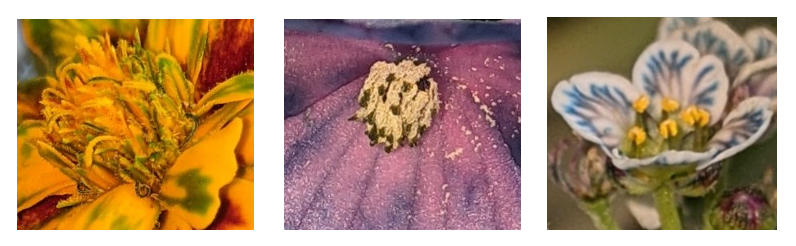
Notice how even the pollen filaments get colored:
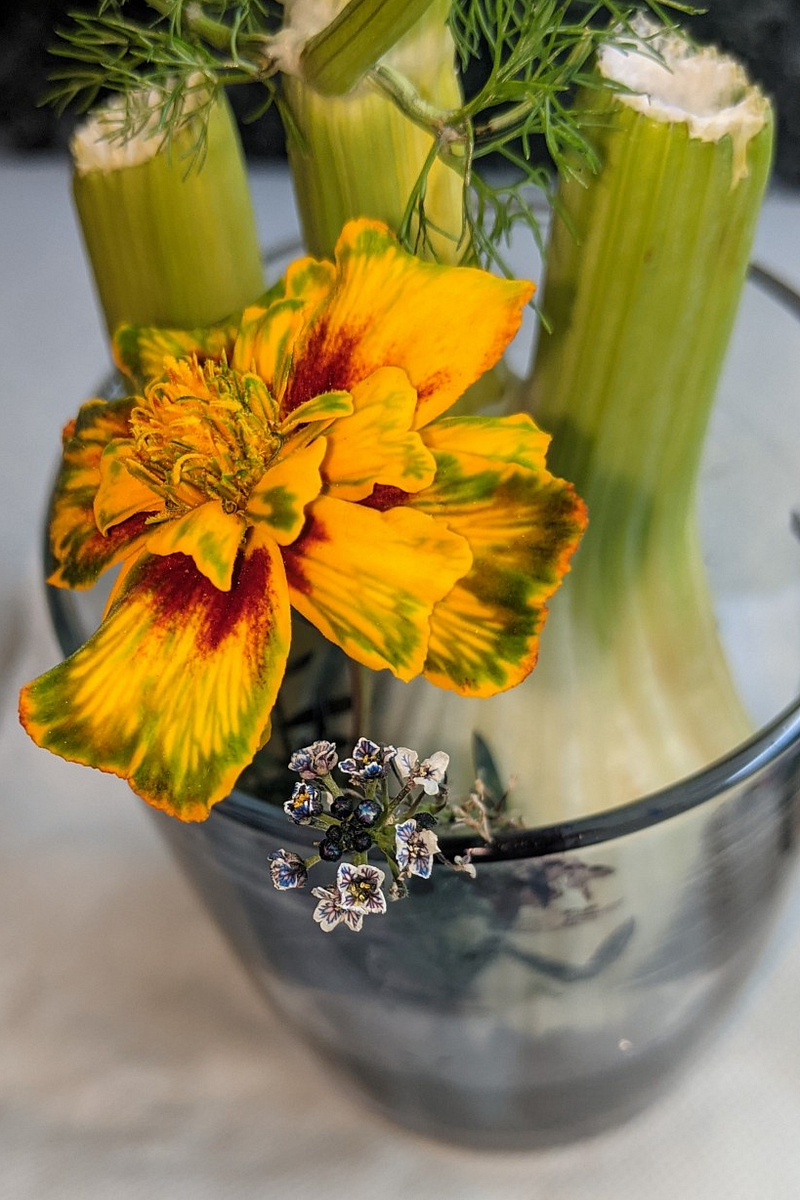
To close this story, a composée of the marigold and alyssum together:
Want to do this yourself? It’s very easy, just follow the steps in this other story:
Fancy some more science with colors? Check this out!
I am a nature, science, technology, programming, and DIY enthusiast. Biotechnologist and chemist, in the wet lab and with computers. I write about everything that lies within my broad sphere of interests. Check out my lists for more stories. Become a Medium member to access all its stories and subscribe to get my new stories by email (original affiliate links of the platform for which I get small revenues without special costs to you). Donate here through various means. Contact me here for any kind of inquiry.
To consult about small jobs (on programming, biotech + bioinf project evaluations, science outreach + communication, molecular data analysis and design, molecular graphics, photography, private courses and tutorials, private lessons, teaching and tutoring, etc.) check my services page here.


