
Increasing Emotional Intelligence Can Improve the Quality of Your Life
It is never too late to increase EQ — start by increasing personal awareness and staying in the present moment — here’s one pathway

Anyone can improve their Emotional Intelligence Quotient at any age. Doing so will build skill sets that will enhance not only your performance in your career but all interpersonal (interactions with others) and intrapersonal (self-interactions) relationships. By improving your EQ, you can, and will:
· Create personal awareness
· Learn to problem solve
· Develop relationships
· Avoid and manage stress and conflict
· Process and express emotions
· Enjoy life more
Conformity teaches one not to talk about and express their emotions. There are no good or bad, right, or wrong emotions. Our emotions are simply our body’s reaction to our thoughts, and each and every one of them exists to teach us lessons that go far beyond the primitive flight, fight (sympathetic nervous system), or freeze (parasympathetic nervous system) reactions we have inherited from our primitive, pre-hominid, possibly even reptilian evolutionary ancestors.
Not surprisingly, societal conformity infects our educational systems and further ingrains these unhealthy habits in our children. As Ravyne Hawke posited discussing the Dali Llama’s belief that we all possess the Buddha within us:
His Holiness The Dalai Lama did a Q&A with some business students from Harvard this morning and many times he related that when we are born, we are pure of heart, much like an enlightened Buddha. We do not know division — of race, religion, or status — and he believes it is through our horrible education systems that we learn of these things. Imagine if our education systems taught us how to embrace others and be compassionate toward all. Imagine a world of seven plus billion people fully embracing who they really are. Imagine how loving and kind this world would be.
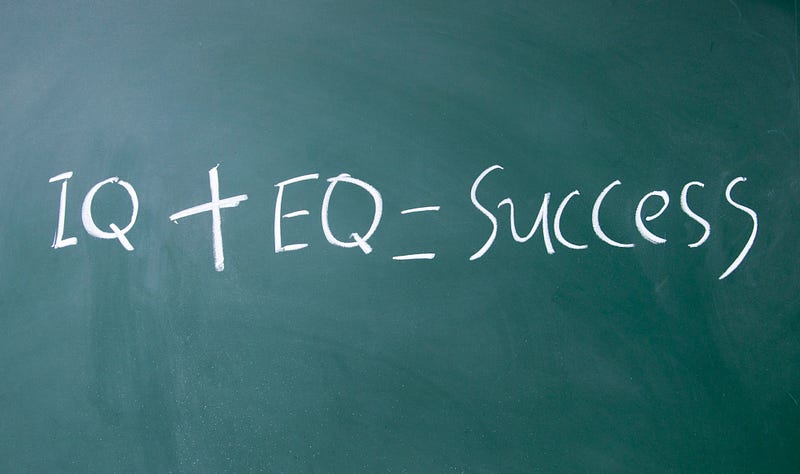
By no means do I discount the benefit of IQ. Together, they best enable one to navigate this world.
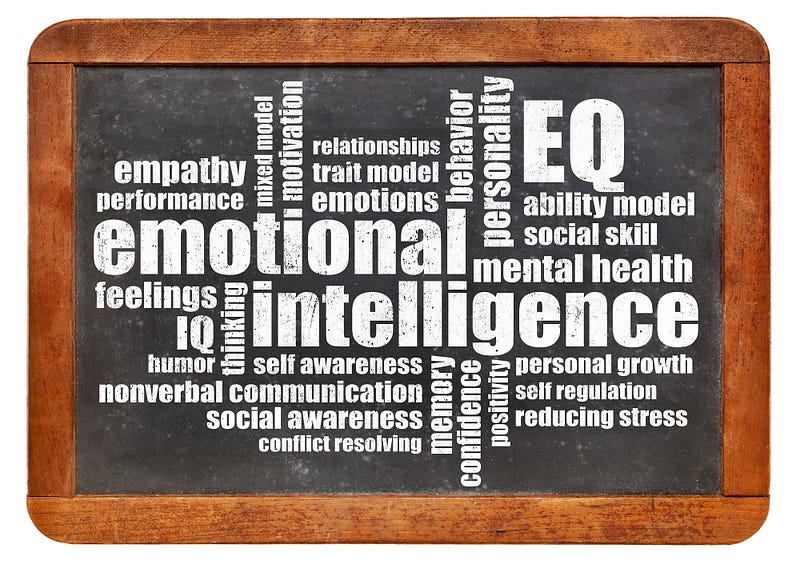
We have evolutionarily inherited fear of change — but what serves a gazelle hampers us. Many times, we do not know why we feel a certain way and that is because 95 percent of our thoughts are unconscious and possibly primitive and reek of herd mentality. Our education systems do not teach critical thinking, rather they spew dogma. Intelligently processing our emotions enables us to ascend beyond our fears and achieve growth and think as individuals for both our individual and the collective good.
I have left the herd By wondering wanderers I hope to be heard To affect mentality Does a shepherd need a flock
While the author of that poem posed it as a question to his readers, I happen to know that he thinks the answer is a resounding no! Rebecca Romanelli agrees and responded to him thusly:
Personally, I don’t think a shepherd needs a flock. If we live our lives with personal integrity, people will take notice and realize they need to follow their own dreams.
On the emotional scale, we have good feeling emotions on the positive side and bad feeling emotions on the negative side. On the highest degree of the positive end of the scale reside joy, appreciation, and love. On the lowest end of the negative end of the emotional scale hides fear, despair, and powerlessness. In the center of the scale lives bliss — contentment. Contentment is the ideal space in which I strive to live and return to as quickly as possible when life challenges me. In a state of contentment, I do not feel stress, tension, or worry. I feel relaxed, focused, and clear-minded.
I strive for and wish for you that you achieve an ever-increasing/higher altitude of contentment. Contentment should not imply settling — strive for higher and higher plateaus upon which to rest.
When I get triggered and spiral downward into a negative emotional state, I ask myself:
- How do I feel and why?
- Are there any benefits from feeling this way?
- Why does this bother or affect me?
Then I remind myself to come back to the present moment. Whatever painful negative feeling I was experiencing was most likely associated with something from my past or a fear of something in the future — F.E.A.R — false evidence appearing real.
“The cave you fear to enter holds the treatsure you seek.”~ Joseph Campbell
Mindfulness Provides the Key to Unlocking the Treasure Chest
Mindfulness is not a complicated practice. It’s quite simple really, and breathwork may be all you need. I take notice of my body and my breath. When in a fearful state, my breathing is most likely shallow and rapid at that moment, so I try to slow it down by taking long deep inhales and long deep exhales. I start to look around me and take notice of the space and light around me. Then I ask myself, at this moment, what is beautiful? What do I appreciate? What do I prefer to think about?
I then practice positive affirmations. Suddenly I am closer to my baseline of calm. I may not get there all in one step depending on how negative the emotion I experienced was, but I point myself in a more positive direction by practicing present moment awareness.
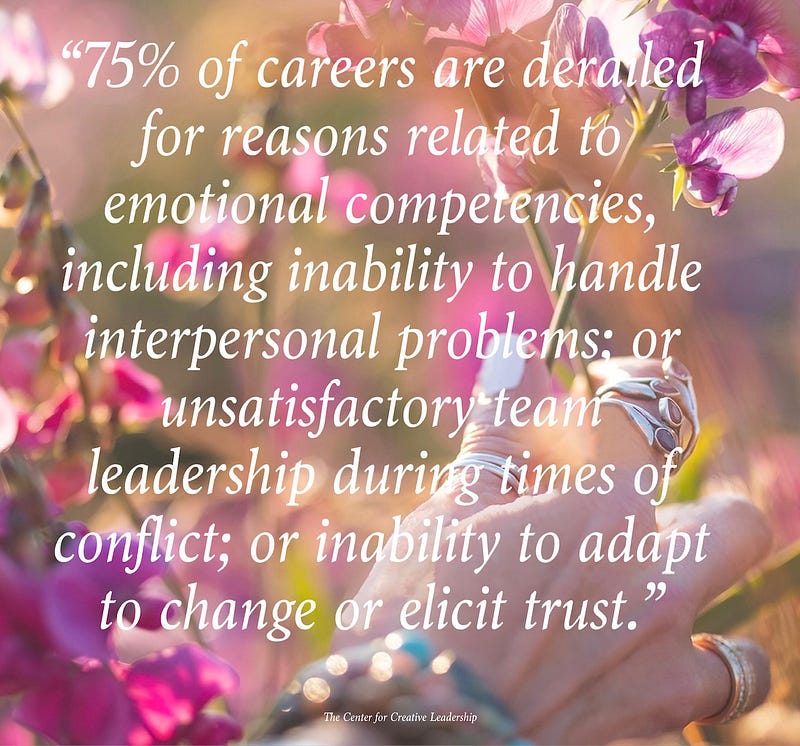
Developing self-confidence also builds our ability to bounce back from negative emotions because we are less likely to need external validation or appreciation from others when we are confident in our own abilities and decisions.
How I build confidence:
Be okay with failure: I learn from my mistakes, but if I do not try, I sure as heck cannot get ahead. I surrender to setbacks, learn from them, and do my best to avoid making the same mistake twice, knowing full well I likely will.
Practice positive affirmations: I look at myself in the mirror each morning and say things to myself like, “I am worthy of all that I desire,” I will succeed because I am confident in my abilities,” “I am powerful,” whatever it is that I need to hear. By practicing and truly believing what I tell myself I am reprogramming the subconscious mind to be more supportive, confident, and positive.
Wear clothing that I feel good in: When I feel good about myself, I feel more confident. I stopped hiding in overly baggy clothing. I watch my posture. Stand tall. Our physiology impacts our mood.
Find my voice-speak up and do not hesitate to voice my opinion on matters. Ask when I want something. The worst that can happen is that I can be told no, but if I don’t ask I will never know. Watch how I speak to myself and practice kind self-talk.
Exercise and eat well: I will automatically have more confidence if I feel good about my body. It is not about being skinny, it is about feeling good in my own skin!
Surround myself with inspiring supportive people: The right people around me will lift me up and encourage me which will also build my confidence. If I am surrounded by people who put me down and hold me back from accomplishing my dreams, I ask myself if those people are worth keeping in my life?!
Life is not linear. We experience many ups and downs. Things constantly change around us and inside of us and we evolve. Our environment, including how our parents raised us, and the thoughts, emotions, and actions of those we allow within our boundary spaces, affects our emotions. Treat yourself gently and with kindness as you create a higher level of awareness and develop a deeper sense of how to process and effectively express your emotions. By doing so you will gain better composure and be able to return to that ever higher baseline of contentment much more quickly which means you will experience more fulfillment in life.
Thank you for taking the time to read this. I am Libby McAvoy. I survived physical and emotional abuse and I believe that teaching and coaching Emotional Intelligence is one of the best ways to reduce domestic violence. Although there are not enough proven studies it only makes logical sense that when we provide people with the necessary tools to gain empathy, confidence and learn how to process and express emotions there would be less of a need for explosive violence. I now know my mission is this cause and I hope to help empower others who have been abused find their voice and their freedom to live the life they love.
I hope you will enjoy some stories I have written as well as some I now cite by Andy Murphy and Marcus about emotional intelligence.


