
Why Taking Control of Your Emotions Will Change Your Life Forever
Learn how to regulate your emotions to live a happier, healthier, and more peaceful life
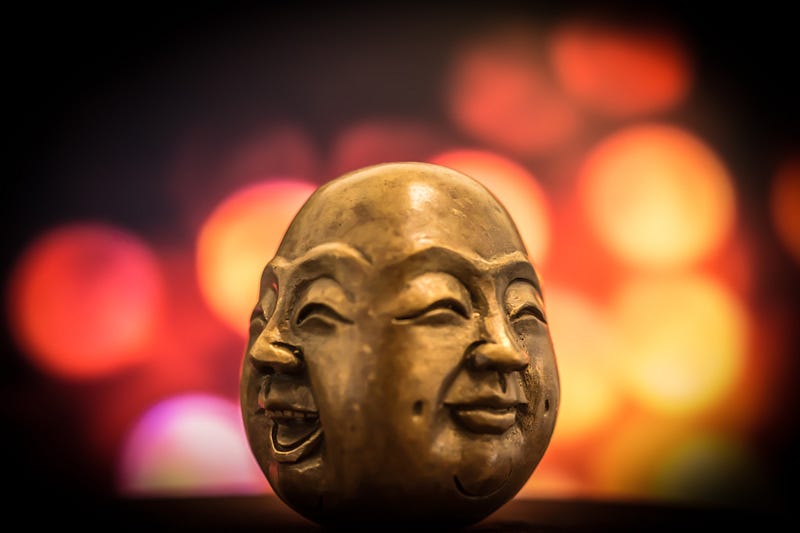
Learning how to regulate your emotions is a superpower worth chasing.
However, when we think about regulating our emotions we can quickly come undone as they seem too big.
For example, if I ask this question — how do I live a happier life? That’s a lot of pressure! But if I ask this question — what makes me happy? That’s a lot easier. It’s a psychology thing. One feels huge and (for most) unattainable, while the other is small so feels it more manageable.
The trick to living a happier life is to find the things that make you happy and then do them more and more. If that sounds as simple as it is it’s because it’s meant to.
Life is a series of moments in a row. If you have enough good moments you’ll have a good life. The devil is in the detail.
Living a happier life can be a life-long goal but without knowing “how to get there” (or the lifestyle habits that support the journey) it can remain a goal for a long long time.
“Many people think they lack motivation when what they really lack is clarity” — James Clear
Think about that. Many people move so fast nowadays feeling like that the more they do, the more they’ll know but without clear direction, so much time and energy gets wasted until eventually, all motivation falls away.
If I have clarity on what makes me happy I feel way more motivated to keep creating happy moments. If I don’t, I can wake up every day willing myself to feel happier when in fact I can’t as I don’t know what makes me happy.
Clarity creates direction. Direction creates inspired action and inspired action is joyful. Once you find this magical cycle it keeps on feeding itself over and over again.
A lack of clarity, however, can cause frustration, a lack of motivation, and a strong will to procrastinate. I face this cycle on certain days when I sit down to write without a clear plan. First, there’s the motivation to find direction and break through the writer’s block, then comes copious amounts of frustration when nothing does, no matter how hard I try until eventually, I’m finding every conceivable excuse to take me away from what I sat down to do. My creative genius to procrastinate amazes me every time!
Finding good habits
It’s a lot easier to stick to better habits if we’re presented with a better environment, whether that be through new structures, a cleaner workspace, or a new routine. The trouble comes when we set the environment for ourselves and then fall into our bad habits.
“Be the architect of your environment, not the victim of it.” — James Clear
This action creates more “moments in a row” and if you have enough good moments in a row there will enormous amounts of energy to keep creating more.
Jay Shetty says that we love to generalise how we’re feeling by negating it to one moment. So, if I have one bad hour in the morning, I often say that I’m having a bad morning. If I think I’m having a bad morning, I can often think I’m having a bad day. If I’m having a bad day I can think that I’m having a tough week. If I’m having a tough week I can think that I’m having a bad month. If I’m having a bad month I can think I’m having a tough year. If I feel like it’s a tough year I can quite often feel like I’m living a hard life.
Do you see what Jay means? I do!
How we speak to ourselves (and others) has a tremendous effect on how feel. Instead of generalising or negating everything down, we can make it more a momentary thing. For example, instead of saying “I am anxious” (or “I have anxiety”), we can say “I am experiencing an anxious moment” or “in this moment my body is feeling anxiety.” It might sound small but it can make a big difference!
Learning to not take things so personally
“It’s not happening to me, it’s just happening” — Priscilla
How we respond to what’s happening is the biggest choice we have. Read that again.
How we choose to react to any given situation either empowers us to go with the flow, to adapt, to learn, and to grow, or to take it personally and feel victimised. That’s the choice we have in every moment.
If I say — “I’m an angry person, I’d like to be less angry” it can feel a big task to not be angry. I will even notice my anger A LOT more. I know this from my own battles with anxiety. As soon as I wanted to hide my anxiety or not to feel it at all, it got a helluva worse!
To change this way of thinking ever so slightly I could say “I’m feeling anger in this moment — what can I do to not be angry?” This makes it feel way more manageable. It takes away the need to control. It accepts and responds instead of denies and reacts.
The language we use is so subtle but it makes a HUGE difference.
In learning how to regulate the harder emotions of fear, sadness, shame, and judgement, we can learn to regulate all emotions. By regulating all emotions we can up-regulate love, bliss, happiness, joy, and gratitude for longer and longer periods of time, and down-regulate fear, sadness, shame, and judgement. This is where the balance tips favourably in the direction of happiness, health, and peace.
Regulation is key. It’s empowering to know that no outside influence can disrupt inner peace. Chaos can swirl all around but the centre point within can remain still.
Taking control of your emotions trains your mind and your body to regulate adrenaline and cortisol levels, to relax your nervous system, and keep a clear mind. Without it, all hell can break loose. Anxiety, panic attacks, and depression are all a by-product of the inability to self-regulate.
By paying attention to what makes you feel good and what doesn’t will help to regulate your emotions when you need it most, right there in the moment it’s happening.
Emotion = Energy in Motion.
Change the direction of where the energy is moving to and the emotion will change with it.
Two tools to regulate your emotions in everyday life
1. Breathing
The breath is an incredible tool as it directly affects the rhythm of our heart and turns our nervous system up or down. That’s why exercise feels so great but why a heated argument feels so terrible.
The breath speeds up in both cases, adrenaline is released, and the part of the nervous system responsible for the flight or fight response is turned up which makes the body and the mind alert and sharp. Exercise can channel this energy healthily while a heated argument can not.
Because the breath is such a potent tool, if all you did was to find ways to regulate your breath, your emotions would regulate themselves as a by-product.
A simple rule of thumb is this: for more energy, breathe faster. For less energy, breathe slower.
To go one step further: Breathe in through your nose instead of your mouth and breathe out longer than you breathe in (in for 2 seconds out for 4 seconds, for example). This turns on the part of the nervous system that supports relaxation (the parasympathetic nervous system). To read more on this subject matter check out another blog that I wrote here.
2. Soft eyes
This is a beautiful technique to calm the mind and create deep relaxation. Looking out at an open, expansive horizon has the same effect but that’s not always available. The good news is that we can create this experience without one.
The tools I love to share are those that are free and easily accessible in every moment. They’re for when peace and balance is needing to be restored.
Like the breath, our eyes can reveal our inner state of being. Sharp, focused eyes often reflect high concentration or alertness. Soft, relaxed eyes often reflect a calm, open mind. When we’re on high alert our pupils dilate and we narrow in on a specific object. This has been evolved over millions of years to keep us alive. This kind of alertness helps us to pay close attention to an imminent danger by blocking out the surrounding environment. Wild animals do this a lot in real life when faced with a life or death situation like being hunted, for example.
Humans don’t have that worry nowadays but from our high levels of stress, overwhelming workloads, and the ever-rising anxiety levels among many we invoke the same stress response in the body.
A great way to restore balance is to oscillate between these highly focused states (during work etc…) to more open, easy, and relaxed ones. Creating “soft eyes” is an easy trick to support this process.
How soft and relaxed we allow our eyes to become can dramatically affect our inner state. Combine it with the breath and you have a ready made self-regulating system built within your magnificent body whenever you need it.
This practice can be great to relieve stress, reduce anxiety, open up space for creativity and intuition, and staying present.
Putting it into practice:
- Sit comfortably and allow your breath to relax and deepen
- Look straight ahead whilst also seeing what’s in your peripheral vision
- Expand your awareness to the spaces above and below you whilst continuing to look ahead
- Allow your focus to be on ‘all things’ as your eyes ‘soften’
- Stay connected to your breath
- Remain here for as long as comfortable
In closing
We have all the tools that we need to regulate our emotions available to us in every moment. Regulating our emotions is about utilising the systems that are here to support us like the breath and our vision.
Your happiness, health, and peace depend on your ability to regulate your emotions. Changing the way you speak to yourself and others can dramatically support you on this journey.
Find clarity on what makes you happy so you can keep on doing it. Clarity brings motivation and direction and direction and motivation brings more clarity. It’s a beautiful feedback loop that continues on and on once you jump on board.
Be the architect of your environment and not the victim of it, just as James Clear advises. Create the most optimal environment for you to succeed.
Don’t take things so personally. Whatever is happening is just happening. How you respond to the ever-changing nature of life is the only decision you have to make.
And breathe, for nothing else than to know that you’re alive.


