
IMPULSIVE| ADHD | ADOPTION | DEPRESSION | ADOPTED
Shooting Myself In The Foot
Worked on my Master’s Thesis for Four Years and What That Has To Do with Adoption
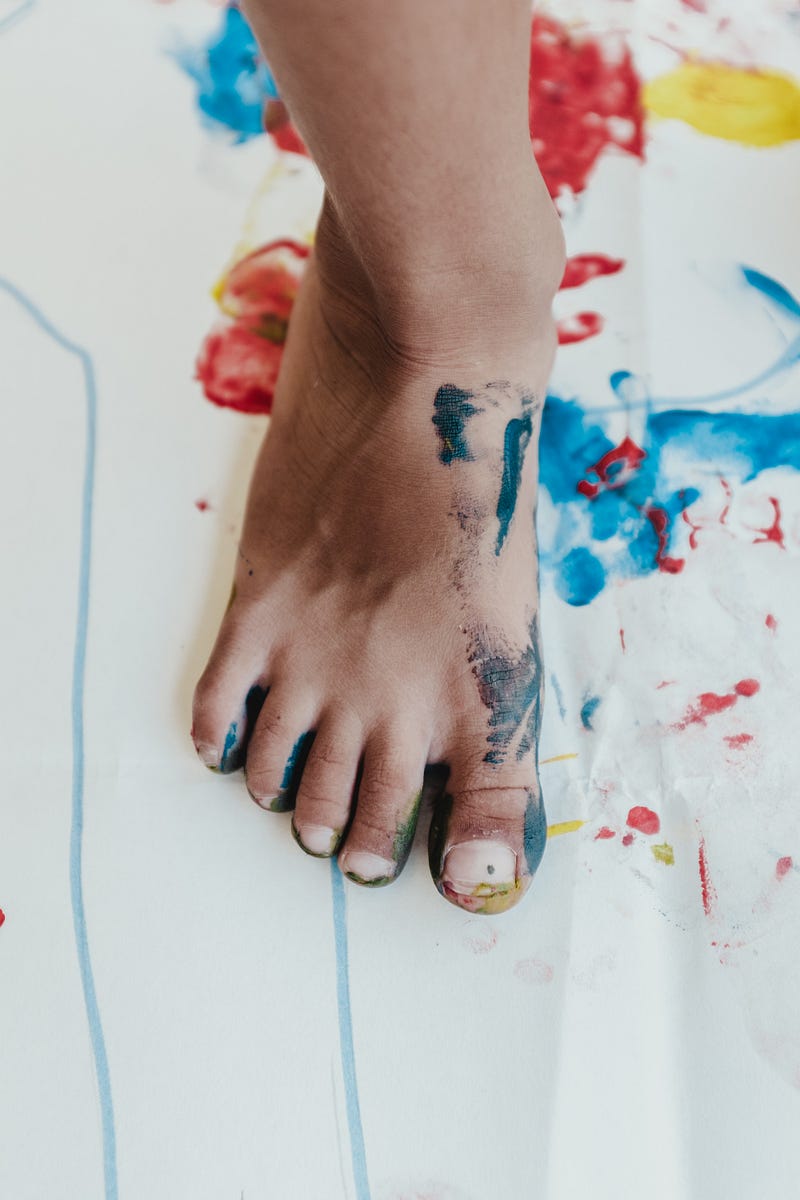
What an adopted daughter does to four years of work because of fear and guilt that her Father would disapprove . . . and could be taken back to the orphanage.
Starting To Work on the Thesis
When I told the story I’m telling you, an “expert” listening to my story on a webinar told me NEVER to tell it again. He said, “MaryJo, people will think you’re crazy.”
You be the judge.
It all started when I’d completed the requirements for a master’s degree in musicology (that’s a fancy word for music history) from Ohio State University. Now it was time to write a master’s thesis.
This involved choosing a composer from the Middle Ages or Renaissance about whom little had been written. A composer for whom music still existed but had never been transcribed into modern notation.
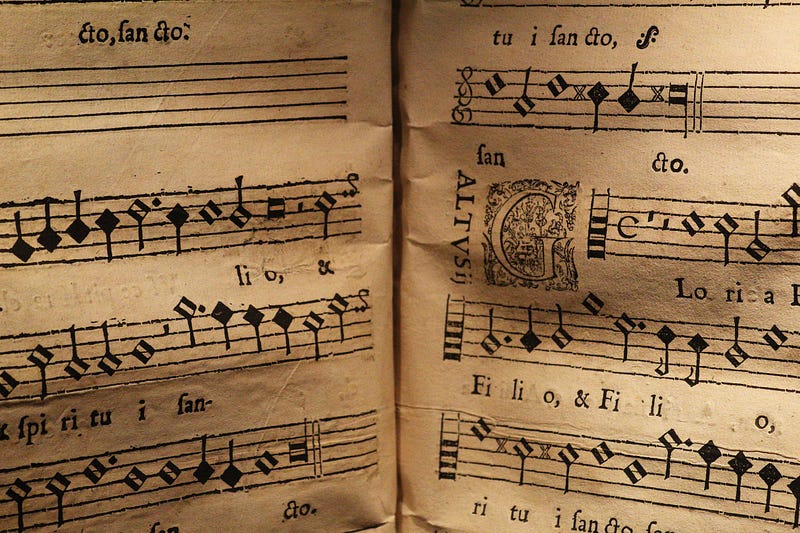
One would dig around in the archives to find such a person. That was easy. And then you’d start looking for the location of the music itself. You’d cross your fingers that the music hadn’t been lost or destroyed during the War.
I found Thomas Simpson, an English composer who had written music for viols. (String instruments of various sizes from violin to cello.) I was in luck. Nobody had written about Simpson other than a brief biography in Groves Dictionary of Music and Musicians.
I wrote to the scholar in England who had written the entry. He replied that he barely remembered anything about Simpson and had no more information. Dead end.
Now to find the music. Without it, I had no thesis. Eventually I discovered the manuscript in a library in Germany that had survived the ravages of Allied bombing. (Early music from all over Europe often ended up in German archives.)
I ordered Thomas Simpson’s “Consort for Viols,” sent an international money order, and waited.
My Mother Plans the Wedding
In the meantime while waiting for the music to arrive, I was getting married. My Mother was in a tizzy. The wedding had to be perfect.
Perfect by her standards for a middle-class Protestant wedding: not too showy, simple but proper, no liquor at the reception in the church. Guests would enjoy cake, salted nuts, pastel-colored mints, coffee and red punch. (If a guest preferred tea, too bad.)
My Father, who had signed my adoption papers all those years ago and who had raised me with great love, had died suddenly just the year before. I was still grieving.
That my Father wouldn’t be there to “give me away” at the altar was unthinkable. The idea that an uncle whom I was not fond of would “give me away” was too much to bear.
My Mother and I argued. I wanted something small with only the family. We continued to argue until I finally announced that my future husband Max and I would choose the music — no Mendelssohn Wedding March, no Wagner wedding processional from Lohengrin.
We would choose the minister. I would choose my dress. It would be simple, tailored, perhaps linen — no frills, bows, lace, tulle, or satin.
Mother could do everything else: the plans, the arrangements, the invitations. I would stay out of it and agree to whatever she wanted. I would spend the summer away from home, working all day on my master’s thesis. No more arguing.
Two Boxes
A cardboard box with a gray shiny lid arrived from Germany at the same time my walk-me-down-the-aisle uncle rang the door bell. My aunt had a package in her hand.
I received the music of Thomas Simpson and a string of “real” pearls in a black velvet box to wear with my not-yet-purchased wedding dress. My Mother was annoyed that I found the gray cardboard box more interesting than the black velvet box.
But we followed through on our agreement. Mother did the wedding while I hid out in Denver Public Library, working on my thesis.
After the wedding, Max and I returned to New Haven, CT where he was finishing a PhD at Yale.
I worked on my thesis.
The next year he was offered a year-long Congressional Fellowship. We moved to Virginia for easy commuting to the Senate Office building in D. C.
I worked on my thesis.
Still Working on the Thesis
We moved back to New Haven. I worked on my thesis. Max received his diploma and accepted a teaching job at the University of Victoria on Vancouver Island in BC. We moved to Canada.
I worked on my thesis.
Now I’ve worked on my Master’s thesis for longer than most work on their PhD dissertations. I’d worked on my thesis for four years.
Using a fountain pen and special ink, I transcribed 35–40 pages onto music paper. I wrote and typed an equal number of text pages on a manual typewriter with footnotes at the bottom of each page. I sent drafts of my thesis to my advisor.
He’d make a few minor comments. I’d make the corrections, retyping the pages with footnotes at the bottom of the page. I’d send the corrected drafts back. (Little did I know at the time that in the future, with a computer and a decent word processing program, footnotes at the bottom of the page would be no big deal.)
I was disappointed that my advisor didn’t commend me for discovering that the music was for viols of various sizes rather than one size as the esteemed English scholar writing in Groves had suggested. (Details like this are ridiculously important in the world of scholars.)

I corresponded often with my beloved music history professor from my undergraduate days at Colorado College. He encouraged me, promising that when I’d finished the thesis, the Colorado College Music Press would publish the music.
“Transcribed by MaryJo Wagner” would appear on the front page. I was thrilled! I also received kudos from him that I had read the music carefully enough to dispute the original article in Groves.
The last letter from my overly-pedantic Ohio State advisor suggested that I change the style of the footnotes to correspond with the latest revision of the Chicago Manual of Style.
It had come out just a couple weeks after I’d sent him my last draft. (And given that the CMS is revised more times than makes sense, it didn’t matter.)
I was discouraged. Too discouraged to answer his letter. Too discouraged to redo the footnotes and retype the entire thesis with the footnotes at the bottom of each page.
Going, Going, Gone
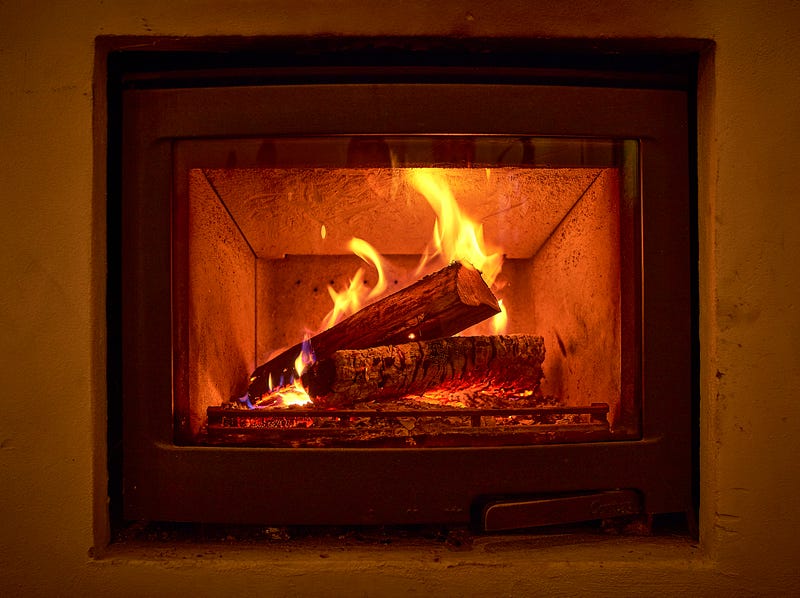
In a flash of impulsiveness, I picked up the thesis, the original music, my transcriptions, all my advisor’s letters, and threw them on top of the blazing logs in the fireplace.
The thesis was gone. The music was gone. My transcriptions were gone. No back up copy. Nothing!
My Colorado College professor was disappointed for me. And disappointed that I hadn’t at least saved the music as the Colorado College Press would have published it, thesis or no thesis.
Nobody else cared. My advisor didn’t care. My family didn’t care. And friends were probably tired of hearing me say “I’m working on my thesis.”
Burning my thesis was impulsive. I regretted it, but oddly not nearly as much I thought I would. In a strange way I didn’t understand at the time, I was relieved.
I never got a master’s in musicology from Ohio State University. I’d shot myself in the foot.
I divorced a wonderful man who is still one of my dearest friends. Moved again. Changed fields and received a PhD in American history from the University of Oregon.
Wrote a dissertation which the University of Illinois Press accepted for publication. I never completed the corrections for publication. My editor at the Press retired.
Unlike the consequence of burning my thesis. I did get the PhD, but my college teaching career was short-lived as I had never published my dissertation. I didn’t have a book.
I had shot myself in the foot again.
Must Be ADHD
Years, later, having been diagnosed, I blamed the impulsiveness of tossing my thesis into the fireplace on ADHD. “Impulsiveness” appears on a long list of behaviors common to people with ADHD.

But Wait?
Was it really impulsiveness from ADHD? Exhaustion from working on my thesis for so many years? My advisor suggesting yet more corrections?
Could It Be Connected to Adoption?
We know that adopted folks, especially women, often become people-pleasers. Down deep at an unconscious level of our younger self, we worry that if we don’t make them happy and do as they say, will they un-adopt us? R
Rejected once by our birth-mothers, wasn’t it possible that we could be rejected again for not behaving. Would I be taken back to the Colorado State Home for Dependent and Neglected Children?
Never would my parents have thought such a thing! But that’s my logic brain, my conscious mind, my adult self making sense of the world, knowing I am deeply loved by my parents, grandparents, uncles, aunts, and cousins.
It’s that hidden unconscious part that so often screws things up. The catch is, because it’s unconscious, it’s often hard to discover what’s under a self-destructive behavior or negative feeling that seemingly comes from nowhere.
It’s taken me fifty years to understand why I burned my thesis. Why I never published my dissertation. During that time I spent years in therapy, read dozens of self-help books, went to endless workshops and programs, mastered a wide variety of healing modalities.
I learned to do inner child work, probably the most important piece for adoption healing. I became an expert in adoption as I healed myself.
How My Thesis Opened the Fear of Rejection
The summer before I went off to graduate school, my father stood at the top of the stairs yelling at me: “No daughter of mine will ever go to graduate school!”
I yelled back from the bottom of the stairs, “I’m going! You can’t stop me!” My Mother ran around the house closing all the windows so the neighbors wouldn’t hear Raymond and MaryJo yelling at each other.
Six weeks later I was on a plane headed for Columbus, Ohio and graduate school in the Music Department at Ohio State University.
My Father was angry. I’d gone against his wishes. But he drove me to the airport and gave me a big good-by hug. He would miss me. Nana, my grandmother, and Mother came with us.
My mother was stoic. Nana cried. I was her favorite. I was leaving her, the granddaughter who could find the lost coin purse, the reading glasses, the house key. The granddaughter who knew exactly how she wanted her instant coffee.
Nana had also been an orphan. And she agreed with my Father. No granddaughter of hers should go to graduate school.
I’d gone against my Father’s (and Nana’s) strict code of behavior for women: Go to college. Marry a lawyer or a doctor. Work for a year. Have two babies. Stay home.
And to give my Father credit, he would have been a fabulous grandfather, happily playing Parcheesi and Clue with Stephen, taking him for a Dairy Queen. Telling funny jokes to make him laugh. Going hiking in the Colorado mountain parks. He wasn’t a monster.
And down deep, I think he would have been proud to see his daughter’s name on some old music by a composer nobody had ever heard of, to be played on rare instruments— even though he disliked my college professor. (The feeling was mutual.)
I burned my thesis because I couldn’t defy my Father — even though he’d passed away several years before I started working on my thesis.
Now I was married. I did the right thing. I would have a baby. I did the right thing. I stayed home — at least for awhile. I did the right thing.
Getting a master’s degree and publishing some music was the wrong thing. Do the wrong thing, and what if he un-adopts you? What if you die in the orphanage from tuberculosis? (I had TB at the time of my adoption.)
Unfortunately, one’s unconscious doesn’t care whether one’s father is dead or alive. Doesn’t care about the age of the adopted daughter doing the wrong thing.
Adoption wounds and our behaviors stemming from them can often move us to do self-destructive things. Cause us to burn our master’s theses. Cause us to avoid publishing our dissertations.
We shoot ourselves in the foot. And we hope with understanding and knowledge, we don’t do it again.
This is the second story of the acronym: ADOPT. A is for abandoned, D for Discouraged, O for the Overwhelm of ADHD, P for people pleaser, and T for trauma. These five are common feelings and life issues that many adopted women experience.
For a more comprehensive list, you’ll want to grab my free Adoption Checklist for Women: 25 Life Issues.
A is for abandoned shows up in my Memorial Day story about my birth-father who died on D-Day. Many years later an actor would play him in Steven Spielberg’s Band of Brothers.
You might also like my musings on Staying at Home because of COVID 19: The Good, The Bad, and the Not So Ugly. Or perhaps my story about Losing the Letters of Willa Cather: An Adoption Story about Unworthiness.
You’ll find me at LivingWithAdoption.com. I also write about ADHD and random topics that strike my fancy. Thanks to raging ADHD, I’m writing two books at the same time: “Finding My Hero: An Adoption Memoir from World War Two” and “Growing Up Adopted: Love Wounded.”
In between writing, I coach adopted women, giving them tools that make healing faster than just talking.


