
I’m A Lesbian Who Can Sew Cushions To Go With Your Couch
I’m LGBTQ but you don’t know this about me
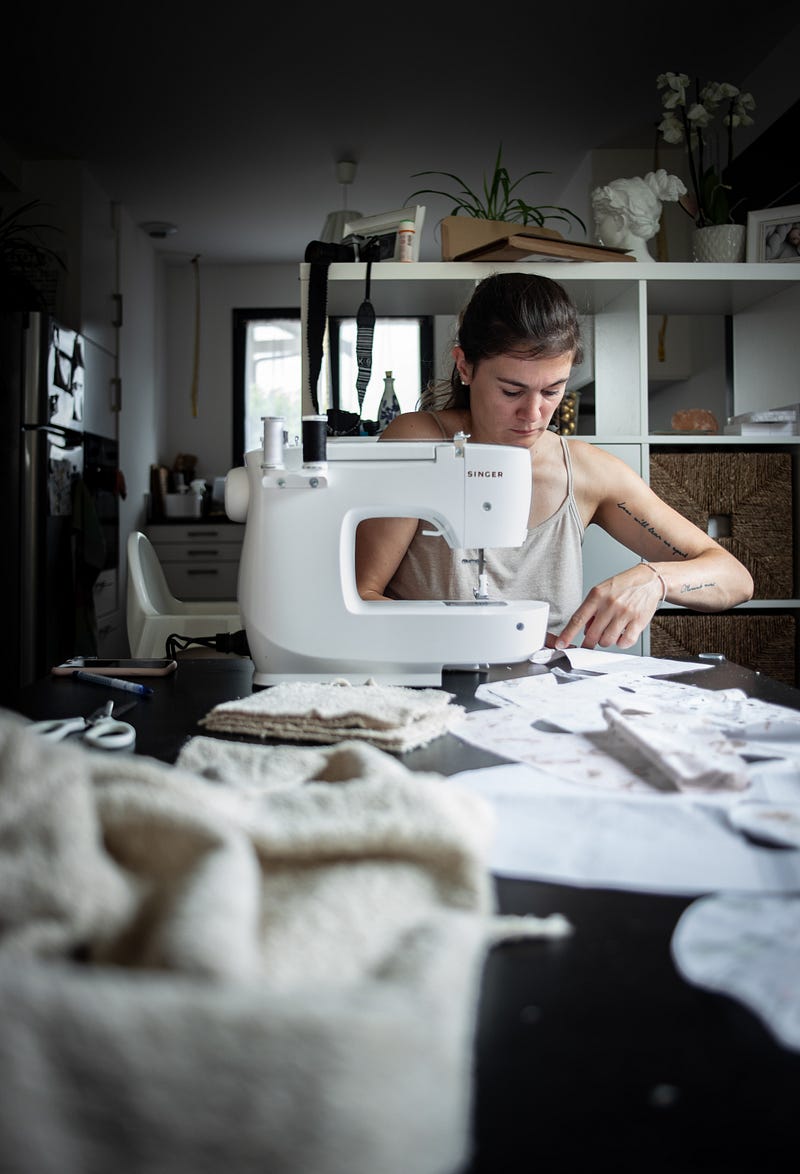
I’m excellent wife material. Not because I ever aspired to be, but due to a particular configuration of circumstances that led me to become skilled in the domestic arts.
I grew up in the country. A townie rather than a farmgirl but just as constrained in my access to the spoils of commerce. We were all resourceful in our own ways. From an early age, I learned to grow, cook, paint and decorate things. And I learned to sew.
I can’t actually remember how I learned to sew other than absorbing it from the various female relatives in my orbit. Somehow it stuck. There was a practical imperative: way before the advent of online shopping, it was difficult to find decent clothes to buy, much less those that fitted my shorter than average frame.
I was also highly receptive to an activity that was solitary and allowed me to retreat into a world dominated by creativity rather than confusing social rules. I became hooked on the mastery involved in completing a process from inception to completion.
It’s not rocket science but skills learned in adulthood just don’t embed themselves at the cellular level in the way skills learned in childhood do. I doubt that I would find the patience or commitment to learn to sew now.
Being able to sew has served me well into adulthood. As a university student I clothed myself by re-modelling things from second hand shops in what would now be called “upcycling”. Decades on, my legs haven’t gotten any longer and I’ve saved a small fortune in alteration costs by being able to hem new clothes.
Useful though it is, having this traditionally feminine skill has brought about dissonance within my largely gender non-conforming self. How odd to be the parent who can readily alter school clothes while the otherwise highly gender conforming mothers trot off to the alterations shop or grandma’s house. And then there’s the surprise evoked when I offer to repair a new partner’s ripped shirt.
Sewing doesn’t fit the image of the cool lesbian about town. Sewing skills are unlikely to feature in a perusal of online dating profiles in the way that say, home renovation and repairs, car maintenance or even gardening might. Sewing screams “housewife”; evoking a hundred outdated gender norms. So it’s always felt like something to keep on the down-low, never fully owning it and far from being proud of it.
I’ve been driven by a need to distance myself from anything wifey or girly because of what those things represent for me: adherence to restrictive gender role expectations and and the exclusion from opportunities, status and financial independence that it brings.
It’s also a matter of what I find attractive and that doesn’t include the unquestioned following of gender norms. I’m drawn to people who step outside social expectations to explore the complexities and contradictions of who they are.
So it also follows that someone who blindly attaches herself to the stereotypes of lesbian identity isn’t going to do much for me. Sure, if being a lesbian poster girl happens to coincide with an authentic expression of identity, go for it. But I wonder just how many lesbian women truly feel free to be themselves and are open to evolving over time.
Holding back parts of myself doesn’t sit well at a stage of my life where authenticity is everything. Labels are a good thing as long as they help illuminate who you are but it’s time to throw them off once they constrain individuality. Above all else, being LGBTQ is about living your truth rather than adhering to a prescribed way of being — whether that’s outside the LGBTQ world or within it.
I get that the insecurity that comes with being rejected in one world makes people wary of rejection in one that is meant to provide refuge. But if we want to create an environment where people feel safe to be themselves, we all need to be willing to accept the whole person, not just those bits that fit with our pre-fabricated wishlist. We are all complex creatures and few of us fit neatly into categories and if we do, it probably means we’re giving up something of ourselves.
There’s also no freedom in hanging on to the idea that activities belong to particular genders. There is nothing inherently female about sewing and therefore no need to apologise or minimise skills in this area. These days I’m moving towards a more expansive view of gender and what being a woman means to me — basically whatever I want it to mean.
There is as much value in being able to mend damaged clothing as fixing a leaking tap. Failing to acknowledge is just playing into the feminisation of types of work and entrenched low pay and status for women all over the world.
There’s something deeply reassuring about wearing something when you not only know its provenance but have been able to control the production process. These clothes exude a much more positive energy than those made through the exploitation of vulnerable populations.
Far from being a vehicle for oppression, being able to sew has contributed to an overall sense of self-reliance and control over my environment. It doesn’t take away from the fact that I can also put together flatpack furniture or unblock a drain. There’s as much room for the sewing kit as the tool kit. Quite simply, being the only adult in the house means that I’ve had to deal with the full range of household demands. The gendered division of labor I see between some couples just seems like a ridiculous fiction.
Interestingly, I’ve been able to challenge the gender binary in small ways through sewing. On face value, making my young daughter’s clothes may have looked like a deeply traditional thing to be doing. But I was driven by frustration with the relentlessly gendered demarcation of children’s clothing. Suddenly my choices weren’t confined to the pink, pastel and flouncy.
Being able to sew has also afforded me more freedom in expressing my own clothing preferences which have veered towards the functional, comfortable and roomy in quality fabrics and interesting colors. In focusing on these attributes, I’m bypassing the heavily gendered world of fashion retail. Far from shackling me to gender norms, being able to sew has allowed me to transcend them.
At its best, sewing forms part of my my self-care: I can still tap into the feeling of escape it offered me as a child and it’s more necessary than ever. There’s something enormously therapeutic about losing oneself in a zone of focused creativity. Its methodical rhythms provide a kind of meditation from which I emerge recharged and equipped to face the world. During Covid lockdowns I churned out cushions and tote bags. The question of what I did with them was secondary to life affirming and grounding effect of making them.
My feminist principles of self-determination and equality remain intact. As I did as a child, I’m harnessing the skill for my own needs. As far as the adults around me knew, I was well on the way to becoming someone’s wife. Little did they know I was quietly re-appropriating the skills for my own counter-cultural purposes.

This story is a response to the Prism & Pen writing prompt: I’m LGBTQ, but You Don’t Know THIS About Me.


