
If I Hear "If He Wanted To, He Would," One More Time…
I am carving my heart out with a machete.
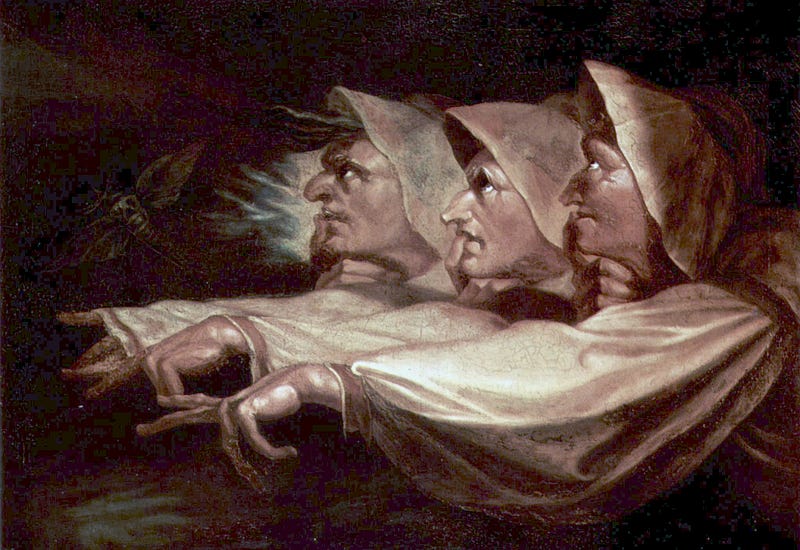
Recently, I was out to lunch with a group of single girlfriends. My friend Medea* asked for some relationship advice. The guy she was dating was getting distant, and she feared he would return to his ex.
The weird-colored cocktails had not even hit the table, and my girlfriends turned Macbeth's witches feisty. All the advice had the same toil and trouble repetition.
If he were thinking about you, he would text.
If he wanted to be with you, he would make plans.
If he were interested, he would make time.
And then one friend delivered the coup de grâce of tough love advice:
“If he wanted to, he would.”
As soon as the words were spoken, Medea hung her head, exhaled, and wrapped her arms around her as if we had suddenly stuffed her in a frigid meat locker.
Medea had been shamed into accepting the truth.
Please…for the love of my blistered swiping thumbs, can we please stop giving our friends this insipid advice? It makes them feel so much worse.
Yet, I keep hearing it everywhere. The "if he wanted to, he would" meme has become the battle cry of modern love. It spawned tentacles out of its other evil twin, "he's just not that into you."
I get why this advice resonates with many. We no longer pursue relationships with the courage we did before dating apps. In an age of half-hearted love, getting a date is now easier than ordering a pizza (and quicker). The commodification of love has us discarding and recycling people like paper cups. This advice holds lazy people accountable.
Unfortunately, the “If he wanted to, he would” advice also stuffs the rejected person into one neat unthinking box — someone has not chosen you. And you are a damn fool for not seeing it.
If only the human heart were as binary as its left and right ventricles. Yes, I choose you. No, I don't. The truth is that there are a thousand and one reasons why someone pulls away. Maybe they are not in a space to give and receive love. Maybe they found someone else who is a better match. Maybe they stopped texting because they got cholera and died a slow, painful death while screaming your name. Who the heck knows?
But the most common reason why someone rejects you sounds simple but is not:
You are fabulous but not familiar.
Whether they are aware of it or not, people are drawn to the familiar. It could be how she flips her hair that reminds him of his mom. Or how he fixes the leaky faucet triggers a cherished feeling her dad gave her. Or perhaps the ways the person smells, laughs, walks, or hula hoops… conjures up memories of a lost love. Or darker, how a partner hurts us reminds us of a childhood hurt we never resolved.
Sometimes, the familiar is not in past experiences but in ourselves. We are attracted to people who look like us, have a similar-sounding name, or listen to the same music. Heck, research shows we even choose pets that look like us.
Humans are egocentric creatures drawn to similar egocentric creatures. There's a reason why only humans and apes recognize themselves in mirrors.
There's a mirror in every person we choose.
And despite the rom-com plot twists of opposites attracting, science says differently. Researchers have been studying attraction for decades only to come to one conclusion.
Assortative mating wins. We choose the people who are most like us.
Most likely, Medea wasn't this guy's familiar.
To be clear, it is also possible that Medea was getting strung along as a placeholder. But pathologizing bad behavior doesn't breathe life into the corpse.
The answers to many love dilemmas will reveal themselves in time. Instead of reacting to events, have the patience and strength to sit quietly with the unknowable. Because only in that silent space can you understand your barriers to giving and receiving love.
At the end of the meal, I reached across the table and put my hand over Medea's. I had been quiet up to this point.
"Sweetie, you have told us a lot about what he might want and might not want. We even know what his ex wants. What about what you want?"
Medea looked at me like I had asked her to turn the martinis into water. So I repeated myself.
"What do YOU want? If you wanted him, you would have mentioned why."
“There is nothing either good or bad, but thinking makes it so.” — Hamlet, Act II, Scene 2
*Names changed.


