avatarCarlyn Beccia

Free AI web copilot to create summaries, insights and extended knowledge, download it at here

2815

Abstract

on in your eyes to better get you to do its bidding.</p><h2 id="08c5">It’s all about me</h2><p id="f18b">It could also be that humans are just a bunch of narcissists who want our lovely image reflected back in our pets. Research shows <a href="https://www.bbc.com/future/article/20151111-why-do-dogs-look-like-their-owners">our eyes are not the only features to be the same as our dogs.</a> Long-haired dog owners are more likely to have dogs with long, floppy ears. Short-haired dog owners are more likely to have dogs with short, pointy ears. And sadly, <a href="https://www.sciencedaily.com/releases/2019/09/190919095230.htm">obese dog owners are more likely to have obese dogs</a>.</p><p id="a32c"><a href="https://www.tandfonline.com/doi/abs/10.2752/175303713X13795775536093">One research study</a> even found that our dogs resemble our cars. (Who is funding this research?)</p><p id="ba81">And does this mean <a href="https://www.cnbc.com/2018/05/22/neuticles-testicular-implants-for-dogs-have-made-gregg-miller-rich.html">those oversized neuticles</a> your pooch proudly sports have a deeper meaning? (Please don’t answer that.)</p><h2 id="17b5">Copycat emotions</h2><p id="eeca">Appearances are not the only similarities between dogs and owners. Researchers have found that dogs and humans mirror each other’s emotions. Some anthropologists even theorize that <a href="https://www.nytimes.com/2002/11/22/us/from-wolf-to-dog-yes-but-when.html">humans domesticated early wolves</a> because they could read our emotions and imitate them.</p><p id="d8eb">For example, a <a href="https://journals.plos.org/plosone/article/file?id=10.1371/journal.pone.0170707&amp;type=printable">study from The University of Vienna</a> found pet owners who suffer from anxiety or depression will have dogs who experience the same. (The research also found a chill dog will calm an anxious owner but not to the extent that the owner influences the dog.)</p><p id="e859">Researchers also found that we tend to share our “<a href="https://journals.plos.org/plosone/article?id=10.1371/journal.pone.0054907">Big Five” personality traits with our dogs</a> — neuroticism, extraversion, conscientiousness, agreeableness, and openness. This research even found more shared personality traits between dogs and owners than married couples.</p><p id="d769">So next time your dog sticks its nose in a guest’s crotch…you might have some explaining to do.</p><h2 id="6bfc">If dogs had hands they would copy us more</h2><p id="26ff">Dogs even imitate humans when it is not in their best interest to do so. In a study from <a href="https://www.ncbi.nlm.nih.gov/pmc/articles/PMC3013390/pdf/rspb20101142.pdf">The Royal Society</a>, dogs were taught to open a sliding door with either their head or paws. The dogs then observed their owners open the

Options

same door with either their head or their hands. (I am not sure how one opens a door with your head, but researchers have the best job.)</p><p id="3dbb">After observing their owners, the dogs had to open the same door again. Surprisingly, the dogs forgot their previous instinctual learning. If the dog saw its owner open the door with their noggin, the dog did the same. And if the owner used their hands, the dog used their paws. (It would have been far more amusing if the humans were forced to wear paw-shaped mittens, but my sense of humor gets perverse.)</p><p id="9c4c">The researchers speculated that this copying was due to ‘automatic imitation’ — the tendency to imitate others’ gestures, speech patterns, and postures. This effect has been observed in babies and parakeets, but this was the first time researchers found it in human/dog interactions.</p><p id="faad">Whether it is dogs morphing into humans or humans morphing into dogs, one thing is clear — opposites do not attract. The same reasons that made you select your mate also made you choose your dog. <a href="https://readmedium.com/why-you-are-attracted-to-the-wrong-type-7784d83969a6">Humans are always drawn to the familiar</a>.</p><p id="1022">So next time you fashion your hair into a gigantic poof… no need to look in a mirror to see if it works. Just look at your poodle with the same majestic coif.</p><h2 id="75a5">More from Carlyn Beccia:</h2><div id="8de9" class="link-block"> <a href="https://readmedium.com/why-you-should-stop-hugging-your-dog-ba55675ed06f"> <div> <div> <h2>Why You Should Stop Hugging Your Dog</h2> <div><h3>There’s a better way to show your dog love</h3></div> <div><p>medium.com</p></div> </div> <div> <div style="background-image: url(https://miro.readmedium.com/v2/resize:fit:320/1*jhqbCC8GfqJQzWLvedy5Tg.jpeg)"></div> </div> </div> </a> </div><h2 id="f896">To read more, please visit my affiliate link. A portion of your Medium subscription supports my work:</h2><div id="428c" class="link-block"> <a href="https://carlynbeccia.medium.com/membership"> <div> <div> <h2>Join Medium with my referral link - Carlyn Beccia</h2> <div><h3>Read every story from Carlyn Beccia (and thousands of other writers on Medium). Carlyn Beccia is an award-winning…</h3></div> <div><p>carlynbeccia.medium.com</p></div> </div> <div> <div style="background-image: url(https://miro.readmedium.com/v2/resize:fit:320/0*S7fHFitiXW2KxvUY)"></div> </div> </div> </a> </div></article></body>

Yes, You Look Like Your Dog

But there’s a scientific reason why
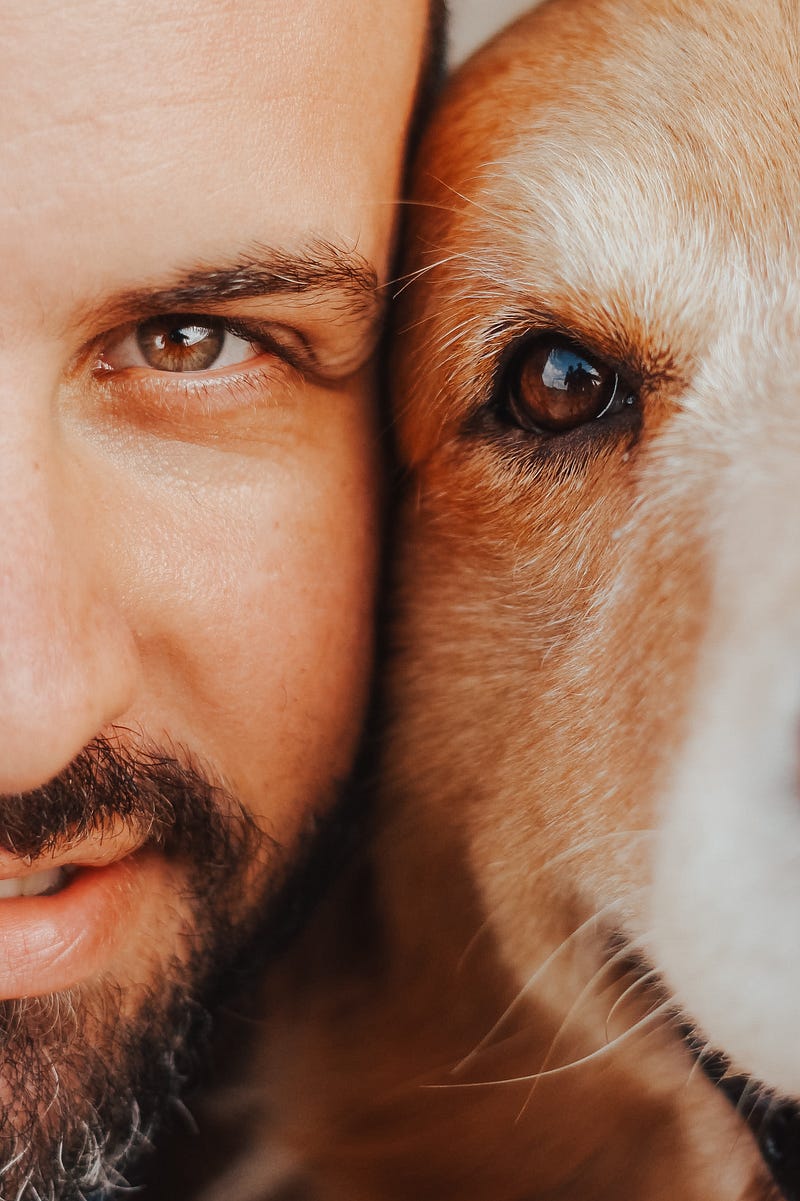
Photo by Kamille Sampaio from Pexels

With everyone staying home more, you might also spend more time gazing lovingly into your dog’s eyes. Maybe you have noticed your COVID runaway hair is starting to resemble your dog’s equally disheveled mange. And if you happen to put on that pandemic fifteen, your dogs might also be looking a little pudgy around the middle.

It’s not your imagination. You really do look like your dog. In a study from Japan’s Kwansei Gakuin University, researchers found strangers were able to match dogs to their owners with 80% accuracy.

What is going on here? Is your dog trying to steal your style or are you getting style points from your dog?

Researchers have finally discovered why we look like our dogs. And there is one body part attracting us to our four-legged friends…

Is your dog trying to steal your style or are you getting style points from your dog?

In the second part of the study, psychologist Sadahiko Nakajima took photos of dogs and their owners. This time he blocked out either the mouths, the eyes, or neither. With the mouths hidden and eyes visible, subjects matched dogs to owners with 73% accuracy — still statistically significant. And with only the eyes visible, subjects matched dogs to owners with 74% accuracy — also statistically significant.

But here’s where things got interesting. When Nakajima covered either the human or the dog’s eyes, match rates dropped to 50% — no better than a coin toss.

Nakajima concluded that owners really do have eyes for only their pooch. In other words, we are choosing dogs that have similar eyes.

How dogs catch our eye

Most dogs can make their owners melt like butter with one droopy puppy dog look. Recent research shows a dog’s eyes evolved to pull on our heartstrings. Through years of domestication, the muscles that raise their inner eyebrows changed to have that rounder, adorable “feed me” appearance. Your dog might even be mirroring the expression in your eyes to better get you to do its bidding.

It’s all about me

It could also be that humans are just a bunch of narcissists who want our lovely image reflected back in our pets. Research shows our eyes are not the only features to be the same as our dogs. Long-haired dog owners are more likely to have dogs with long, floppy ears. Short-haired dog owners are more likely to have dogs with short, pointy ears. And sadly, obese dog owners are more likely to have obese dogs.

One research study even found that our dogs resemble our cars. (Who is funding this research?)

And does this mean those oversized neuticles your pooch proudly sports have a deeper meaning? (Please don’t answer that.)

Copycat emotions

Appearances are not the only similarities between dogs and owners. Researchers have found that dogs and humans mirror each other’s emotions. Some anthropologists even theorize that humans domesticated early wolves because they could read our emotions and imitate them.

For example, a study from The University of Vienna found pet owners who suffer from anxiety or depression will have dogs who experience the same. (The research also found a chill dog will calm an anxious owner but not to the extent that the owner influences the dog.)

Researchers also found that we tend to share our “Big Five” personality traits with our dogs — neuroticism, extraversion, conscientiousness, agreeableness, and openness. This research even found more shared personality traits between dogs and owners than married couples.

So next time your dog sticks its nose in a guest’s crotch…you might have some explaining to do.

If dogs had hands they would copy us more

Dogs even imitate humans when it is not in their best interest to do so. In a study from The Royal Society, dogs were taught to open a sliding door with either their head or paws. The dogs then observed their owners open the same door with either their head or their hands. (I am not sure how one opens a door with your head, but researchers have the best job.)

After observing their owners, the dogs had to open the same door again. Surprisingly, the dogs forgot their previous instinctual learning. If the dog saw its owner open the door with their noggin, the dog did the same. And if the owner used their hands, the dog used their paws. (It would have been far more amusing if the humans were forced to wear paw-shaped mittens, but my sense of humor gets perverse.)

The researchers speculated that this copying was due to ‘automatic imitation’ — the tendency to imitate others’ gestures, speech patterns, and postures. This effect has been observed in babies and parakeets, but this was the first time researchers found it in human/dog interactions.

Whether it is dogs morphing into humans or humans morphing into dogs, one thing is clear — opposites do not attract. The same reasons that made you select your mate also made you choose your dog. Humans are always drawn to the familiar.

So next time you fashion your hair into a gigantic poof… no need to look in a mirror to see if it works. Just look at your poodle with the same majestic coif.

More from Carlyn Beccia:

To read more, please visit my affiliate link. A portion of your Medium subscription supports my work:

Pets
Relationships
Love
Psychology
Education
Recommended from ReadMedium