
I Stopped Paying for Spotify
An experiment studying the excessive economy.
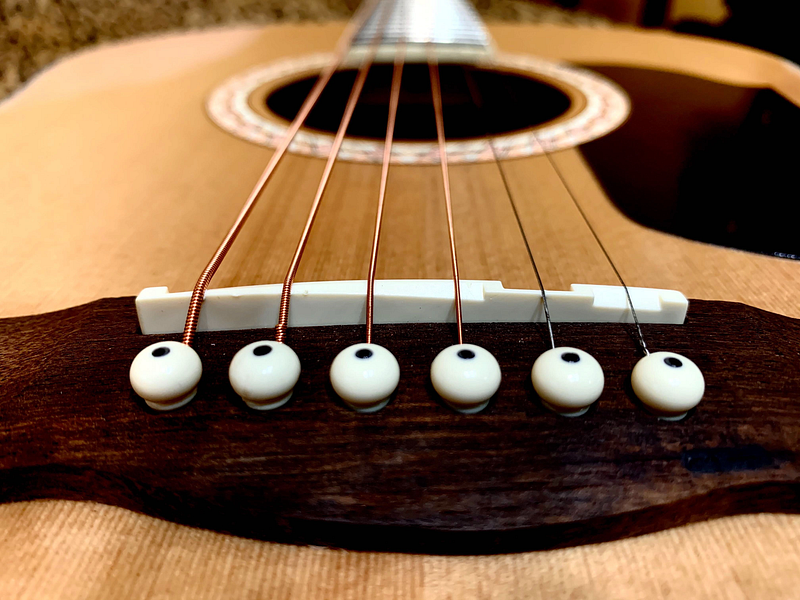
Today is my four-week anniversary since I decided to pick up the guitar.
Playing guitar has been one of the many things that has emboldened my appreciation for the arts. Yet there’s something different about playing an instrument that solidifies my position on the arts.
As of now, I know how to play three guitar riffs and two full songs fluently. It doesn’t sound like a lot, unless you’ve picked up an instrument yourself for the first time. The first full song I ever learned was Street Spirit by Radiohead. I didn’t realize it when I first started learning — apparently this is a difficult song to master. Oh well. My innocent mindset — not coming from any sort of musical background — has proven to my benefit.
In Street Spirit, I play three different chords that have their own unique strumming patterns. There’s a total of sixteen notes played each time I do one of the chord strumming patterns. That’s a lot of notes, especially for a beginner musician. I wasn’t intimidated while learning the song because I love this song so much. That’s another thing I learned about playing music. I’m not going to learn a song because it’s easy or difficult to do. I’m only going to learn songs that speak to me in that moment. I don’t care about learning how to play guitar for the sake of knowing how to play it. I care more about the output of the sounds I’m making. I care more about how it makes me feel. I want to be a musician, not a technician.
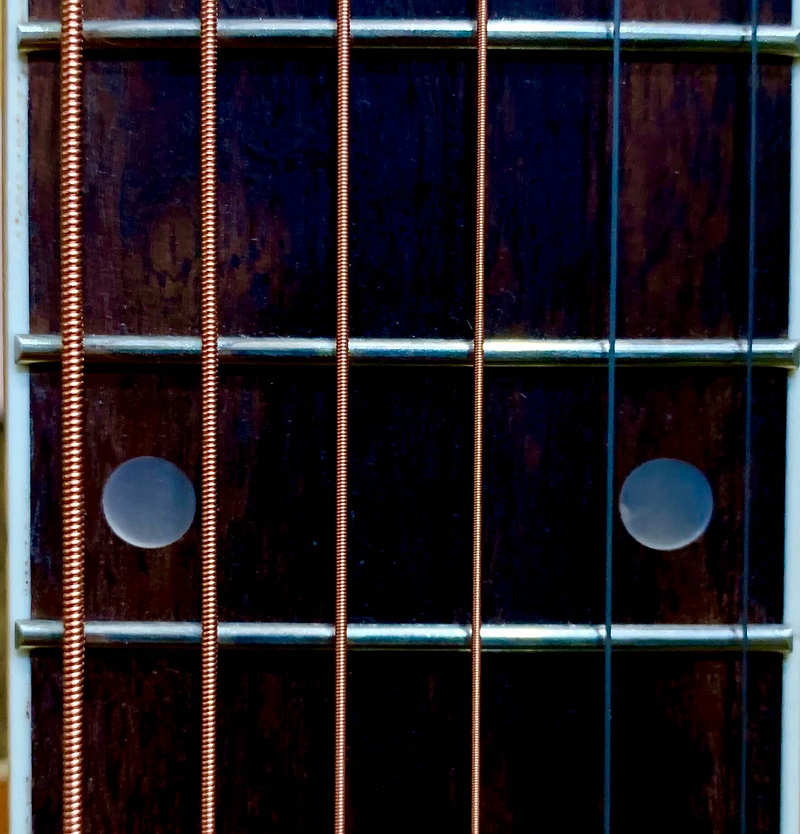
Street Spirit most certainly speaks to my mood over the past few months — a mood full of ups and downs, a mood full of inconsistencies, a mood full of horror and mystery. It’s not a happy song, but it makes me happy when I play it. It was the first song I ever learned to play in my life. How could I not love playing it, even when the melody isn’t all roses and daisies?
Duh nuh guh nuh buh guh nuh buh guh nuh nuh buh muh nuh buh guh…
Playing this song opened my eyes to music in a way I’ve never seen it before. When you’re first learning a song and you’re not apt at playing the instrument, you take things very slow. It took me about a week just to get the first chord pattern alone. A week full of hours and hours of strumming and missing the same notes over and over again. But once I got all the notes together — both at speed and on key — I was outright shocked by what entered my ears. This is the song! This is it! It was a feeling of accomplishment, it was a moment of exuberance. I couldn’t believe that I did that.
Playing my guitar hasn’t been solely learning songs as much as it’s been me fucking around with the machine. What sound will it make if I strum an open A string, or the same string but with my index finger on the fifth/sixth/seventh/etc. fret? You know Quora, the social network for asking and answering questions? Imagine if playing guitar were using Quora but between yourself and the machine. That’s all it is. And I wouldn’t have fun without doing that either. Envisaging myself only learning song after song sounds like a song from hell. No, not Iron Maiden. LOL.
While playing Street Spirit, I’m not performing the whole song either. In fact, I rarely do that. I spend most of my time repeating the same chord patterns, the same melodies, over and over again for hours.
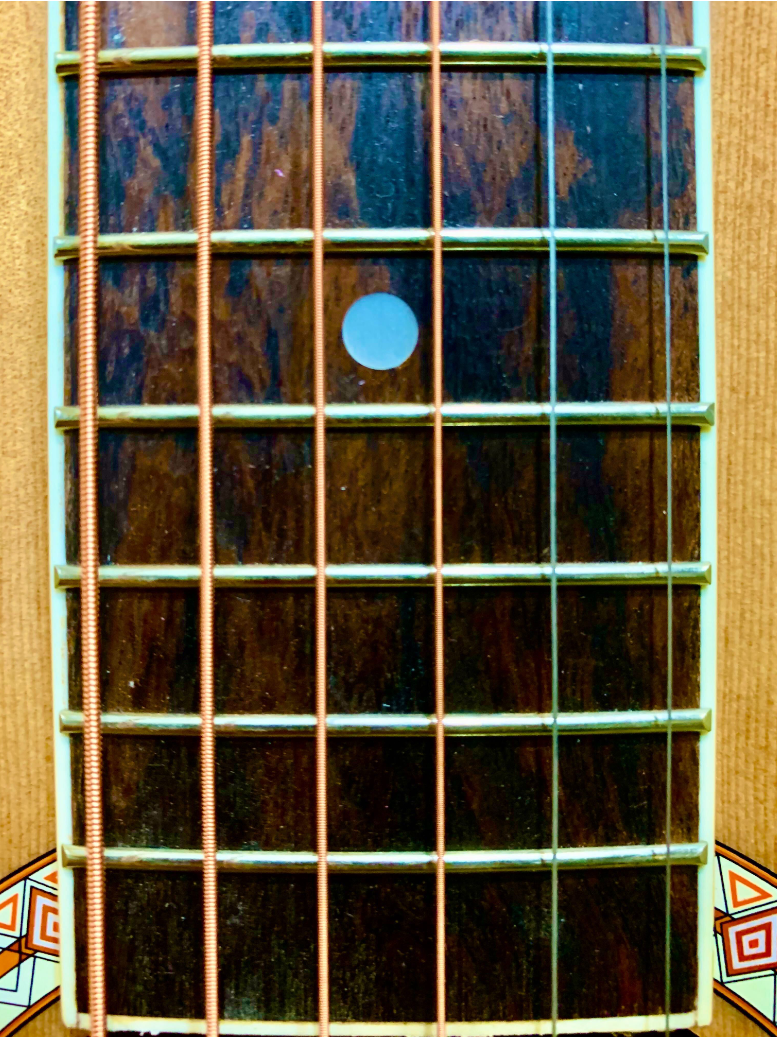
You’re probably wondering, how do I have the patience for that? How would anyone have the patience for that? In the age of unlimited music and eight-hour-long playlists, why would I choose to strum the same melody for hours?
The answer is in the moment. You can take this same criticism and apply it to my writing, as I write a lot about music. You can apply it to Anne’s writing, too.
How does he write so much about music without getting bored? How does she write so much about travel without getting bored?
Again, the answer lies in the moment. In this very moment, I’m having the time of my life. I’m so passionate of what I’m writing that you can hear me crushing my keyboard!
Equally speaking, the same goes for playing the same melody for hours. It’s my expression of love for sound. It’s love for composition. 16 notes sound nice by themselves, but sound 10x better when together.
It makes me question Spotify’s model. Why am I paying $9.99 a month to have access to 50 million songs, when I’m having more fun playing one song on my guitar?
Beyond Spotify, it makes me question excess-as-a-service. That’s what we should start calling business models like Spotify’s: excess-as-a-service. I can have access to 50 million songs for only ten bucks a month. But access to art is less valuable than the art itself.
It reminds me of all of those times when I’m walking and skipping songs on my Spotify. Why am I skipping songs when the algorithm thinks that I’ll like them? It’s less a matter of taste and more a matter of being overwhelmed. There’s just so much stuff out there. Sound bytes on Twitter, videos on TikTok, songs on Spotify. It’s too much. And it feels like it never ends.
It makes me wonder what would happen if I were to end my Spotify subscription for a month. I’ve been thinking about experimenting that and seeing what happens. Would I miss my favorite musicians too much and return before the experiment ends? Or would I appreciate music even more than I do now, as my music listening behavior is drastically reduced in lower doses?
Not only do I question how it’ll affect my perception of music, but also of the musician. My view of the musician has already been changing. A year ago I didn’t know anything about being a musician and couldn’t care less about the status of them. I simply assumed that it was their choice to be artists, thus their choice to live that #poorartistlife. I feel like an ass for thinking that. I viewed musicianship from the angle of business. That musicians, like businesses, were competing against each other for people’s attention. This is as inaccurate as it can get. It’s not mutually exclusive to like multiple musicians. I see competition as a limited framework in general, including in business. Winners don’t take all in every tech market. If this were true, then what explains KAYAK or Priceline or Airbnb? They’re all three online hospitality companies, and they all survived COVID. And as a consumer I can use all three.
The weird part of the excess economy is that we’re basically saying we’re comfortable seeing the plight of artists in favor of unlimited consumption. That our access to 50 million songs, when many of us only listen to the same twenty a month, is more important than the musician making a living from their art. How selfish have we become. How selfish have I become through my action of being a Spotify subscriber.
I guess there’s only one thing left for me to do: stop paying for Spotify and see what happens in a month.
Here it goes…

❤ — Noah
P.S. If you liked my story, here are some of my favorite personal essays I’ve written!