
I Write to Make Art, Not to Make Money
If you’re writing for the money, then it’s not art!
It feels good to be back.
I haven’t written anything new for almost two weeks up until yesterday. I got inspired to write some satires out of procrastinating my work for The Riff.
I remember once reading in Adam Grant’s Originals that innovators create well under procrastination and that it’s actually not as bad as we think. In fact, Grant himself — a professor at UPenn’s Wharton School of Business — had the opportunity to invest in a few procrastinators-as-students. Grant declined their offer, and at the time his thinking made sense. After all, these students were not even working full-time on the business. That business? Warby Parker, the billion-dollar glasses company.
To me, it’s not that procrastination incubates innovation as much as it’s the time and space to think that does. Especially in America, we constantly do, do, do. Work all the time, constantly produce. Even here on this site, some advocate (including myself) that we need to be consistent with our writing. This constant insecurity that because you didn’t write for a while you’ll lose readers. While consistency is a good strategy to get people to keep reading your content, it doesn’t mean that inconsistency guarantees poor performance. One of my articles yesterday has already been performing despite my inconsistent behavior.
Time and space to think is crucial. It’s how we change, it’s how we get better, it’s how we create. If I were writing all the time, I don’t think my writing would be all that good. Or original.
So what have I been thinking recently, after a brief hiatus from the mighty keyboard that is my Microsoft Surface?
I’ve been appreciating art more than I ever had in my life.
When I went to university in Washington, D.C., I most certainly took advantage of my access to the Smithsonian Institution. For those who don’t know, the Smithsonian is a group of museums funded by American taxpayer dollars and lets anyone around the world enter the museums for free. And these weren’t just any free museums, the buildings had some of the finest jewels in the world. At the Museum of Natural History, you can see the Hope Diamond. At the American History Museum, you can see the Star-Spangled Banner.
And at the National Gallery of Art, you can see the place that first got me into art.
I took an art history class my freshman year of college, specifically in my second semester. I was probably the only freshman in that class, as it was filled with kids who were sophomores or above. The class was barely lit as the blinds were closed and the professor, Sarah Gordon, never turned on the lights. We spent much of our time looking at PowerPoint slides she assembled that only comprised of artworks and bullet points analyzing those artworks. Despite the dullness of the environment (you can count on much of the class being asleep), I was intrigued by every lecture and paid attention to every single word she said.
We started that semester by looking at paintings from the Neoclassical era, and the first one we saw was Jacques-Louis David’s Oath of the Horatii. At that moment, I was immediately captivated by the detail of the painting. The perfection that David put into everything on that canvas — from the shadows of the legs to the sandals in front of them — I didn’t know how to feel. Was I fascinated by the sum of the parts, the parts of the sum, or both? Probably both.
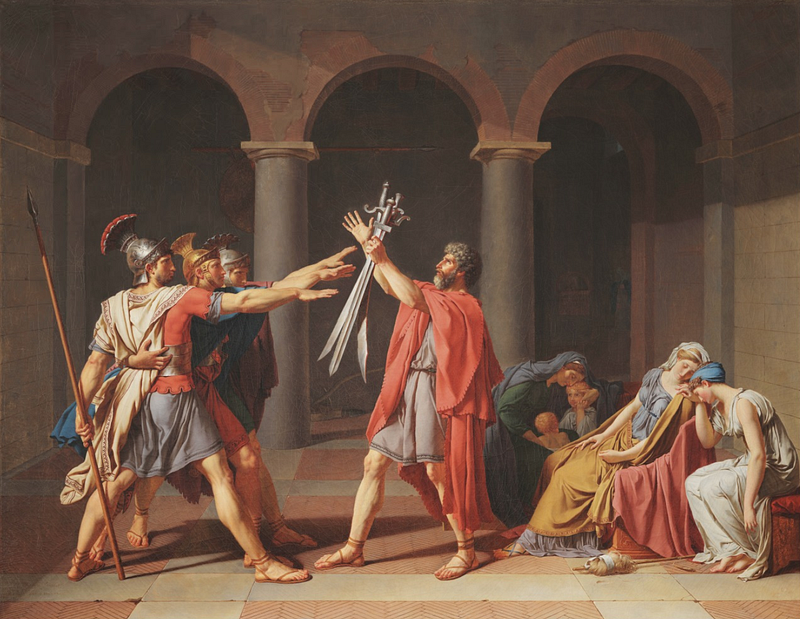
Either way, I never looked at art the same. That class inspired me to go to the National Gallery of Art many times and spend many hours there chaque fois.
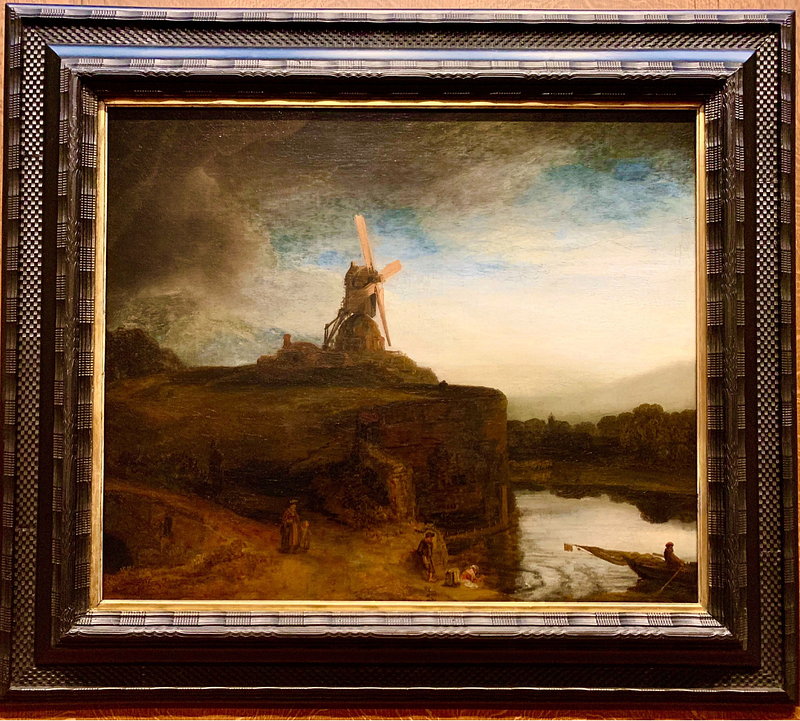
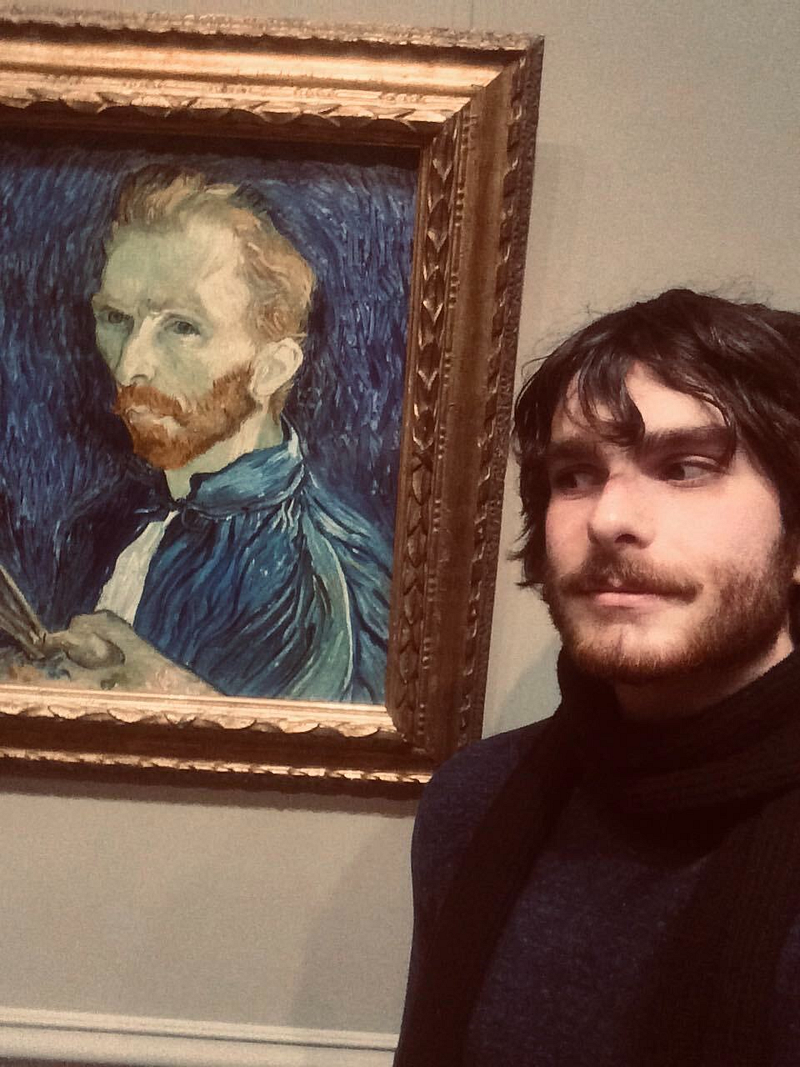
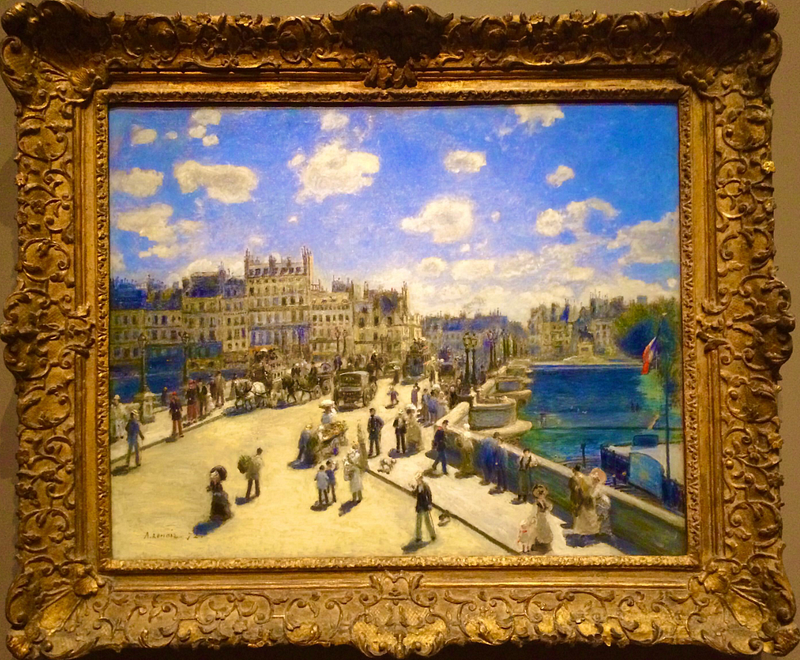
The more I saw art that intrigued me, the more I was compelled to learn of the arts.
Unexpectedly, I learned a lot about art from reading Malcolm Gladwell’s David and Goliath, one of my favorite books to this day.
There was a chapter in the book that described the art scene in 1860’s Paris. There was a thing called the Salon and it was essentially a room full of paintings. Having an artwork accepted in the Salon was like getting into Harvard today. It was the thing that people aspired to do.
But the Salon wasn’t even that good for artists. Chances were people would not see your painting. Albeit the room being full of them, it was so swollen with art and crowded with viewers that it was practically impossible for one work to get a person’s attention. If you think of it, digital platforms like Spotify are the Salons of today!
Like in every bloated artistic atmosphere, which is always ripe for disruption, there was a thriving scene underground that no one in the mainstream paid attention to. I’ll give you a hint: the movement was propelled by a few dudes named Claude, Pierre-Auguste, Edgar, Paul, and more. Of course, I am talking about Impressionism.
The idea of Impressionism is so simple yet too complex or out of style for the mainstream Salon to initially adopt.
“The fair dictated that art works be impeccable. That meant there needn’t be any visible brush strokes, and to pander to the decision makers, the artists had to produce politically correct paintings. ‘The kinds of paintings that won medals were huge, meticulously painted canvasses showing scenes from French history or mythology, with horses and armies or beautiful women, with titles like Soldier’s Departure, Young Woman Weeping over a Letter, and Abandoned Innocence,’ Malcolm Gladwell quotes art historian, Sue Roe.
“‘The Impressionists had an entirely different idea about what constituted art,’ Gladwell proceeds in his book, David & Goliath. Underdogs, Misfits and The Art of Battling Giants. ‘They painted everyday life. Their brushstrokes were visible. Their figures were indistinct. To the Salon jury and the crowds thronging the Palais, their work looked amateurish, even shocking.’” — Themba Jay, November 2016
What can we learn from Impressionists like Claude Monet and Paul Cezanne?
For starters, just because art is popular today doesn’t mean that it’ll be popular tomorrow. Why is this important? The reason is simple: your art might be suited for conditions that today’s system deems as high quality.
A good rule of thumb is that you shouldn’t make art just because it succeeds in a popular system when that popular system can become bloated enough that it’s disrupted. What worked for Jacques-Louis David in 1784 would’ve not been as successful in an Impressionism-loving Paris 1870’s and beyond.
This brings me to another and more important point: once your art is about being successful in the system and not about the actual art, it’s no longer art. It’s a commodity trying to be successful in the popular market. But art isn’t about being commercially successful, it’s about expressing yourself and what you’re feeling.
I’m not writing this blog to make money, I’m writing this blog because I have feelings and thoughts that I want to share with the world. The great part about platforms like Medium is that they provide me readers that can appreciate my art. Of course, the more people appreciate my art, the more I may be encouraged to continue creating. But truly that’s not the case. I’m doing this because I love making this, not simply because many may love reading this.
That’s why I stopped writing articles about making money on Medium, or writing articles that fit typical Medium curation standards. I’m not going to write for the sake of getting curated on Medium or having one of my articles go viral. If both of those things happen (news flash: they almost never do for me), great. But that’s more consequence than cause.
In the digital age, it’s easier than ever before to become viral, believe it or not. It’s true. All you have to do is see what the platform you’re trying to be viral on tends to reward, make shit that gets rewarded, and market it to a bunch of people who are part of rewarding it.
But if our goal is to get viral, then what’s the point of writing or reading? To make money, when we can make more money doing something else?
No. I will not succumb to that, because I am not a sell-out. And neither should you.
Art for the win!
❤ — Noah
P.S. If you liked my story, here are some of my favorite personal essays I’ve written!