
Sell Your Brand, Then Your Product
Unless you want to end up like Toys “R” Us, Circuit City, and Borders
This morning I read a 2018 interview with Scott Galloway about his bestseller, The Four. Part of the interview intrigued me. They were discussing whether partnering with Amazon is good for your business. Galloway took the approach that it’s not, especially if you’re a big brand already. Here’s his reasoning:
“Amazon partners with brands like a parasite partners with a host. In general, the most powerful, best-performing firms make terrible partners. Why? Because they don’t need you. ToysRUs, Circuit City, and Borders (all early partners with Amazon) outsourced their ecommerce to the platform…and where are they now? They’re all bankrupt. The Amazon environment is an extremely competitive one that forces brands to offer aggressive couponing and discounts. Between 2016 and 2017 the top ten best-selling Personal Care products on Amazon each saw a decline in their average price from 14% to 77%. Not to mention, Amazon’s push into private label ensures their algorithms favor their own products over the competition.” — Scott Galloway, author of The Four
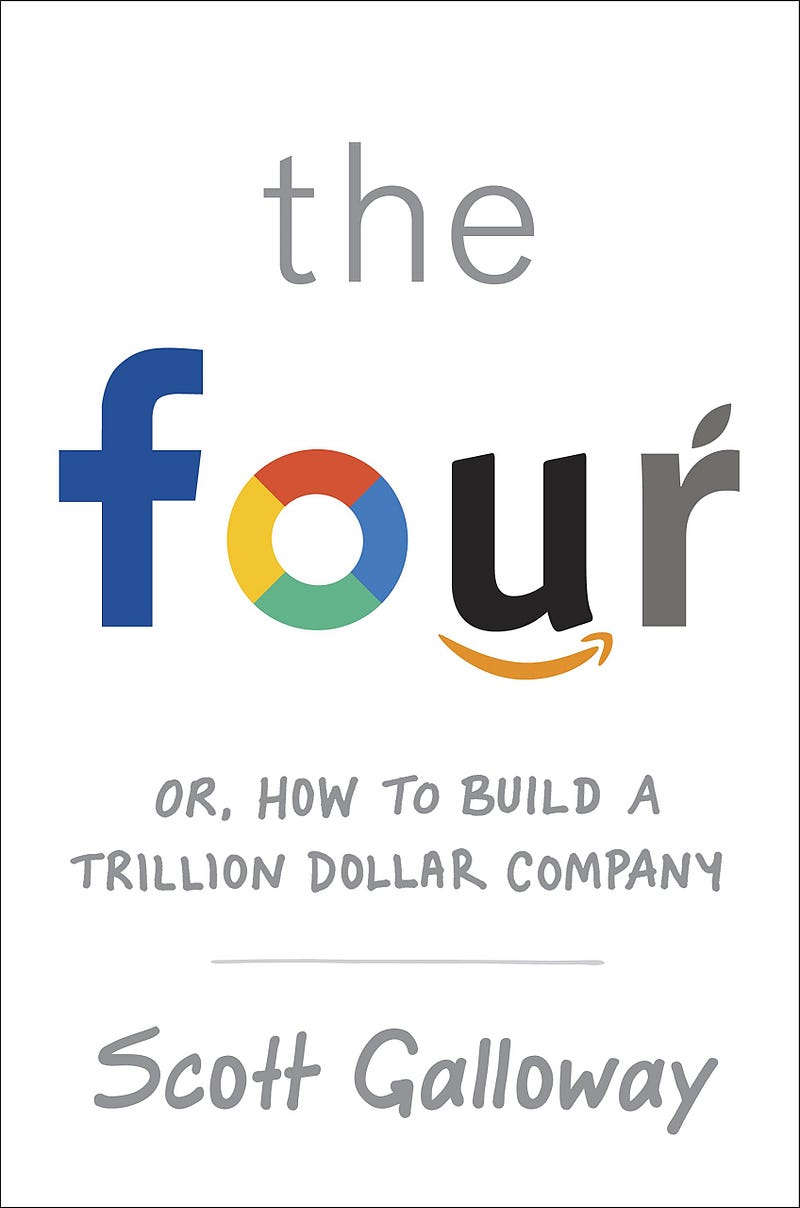
This is an interesting take: Selling on Amazon, as a brand, can actually hurt you in the long run.
Sure, there are great benefits with an Amazon partnership —there’s no need to build your own e-commerce site, or provide logistics — but the problem is that it’s so competitive. To even get eyeballs on your product on Amazon.com, brands have to compromise themselves and do things that hurt them in the long run . Discounting too much so they can’t make a profit unless they have a boatload of customers, which is hard to do when everyone is competing for the same eyeballs! And if you don’t do that and Amazon notices that the market is either under-served or not reaching its potential (i.e. customers aren’t buying as much or there could be more customers), Amazon can simply manufacture its own version of your product more cheaply and use Amazon.com as its consumer-facing distribution channel. It can put its own products above yours and for less. That’s how you get crushed.
Here lies an interesting paradox: Amazon.com, “the everything store,” is where over 38% of e-commerce transactions occur in the U.S. Partnering with Amazon hurts you, yet you need to connect with customers — what should you do?
First and foremost, the notion that you need to be on Amazon.com in order to connect with your customers is a fallacy for two reasons. The first reason is that just because Amazon is the e-commerce market leader in America doesn’t actually mean that your target customers shop on Amazon for your product or products similar to yours. The second reason is that shoppers don’t exclusively shop on Amazon. 38% of e-commerce transactions occur on Amazon.com, but this doesn’t mean that 38% of shoppers purchase on the website. Many shoppers, including myself, buy products both on and off Amazon.
Therefore, it’s safe to say that brands can still hit a home run without having to sell on Amazon.com. The question is how do they do that.
Before analyzing how to effectively sell online, you need to ask yourself the following question: What am I trying to sell — a product or a brand?
There’s a huge difference. If your intention is to sell a product once and only once for a specific customer, then your focus is more on how to increase the likelihood of the transaction. You focus more on optimizing the chances of this one-time transaction of happening. The aggregate amount of such transactions is how you measure that product’s sales performance.
But what about products that have recurrences, where you need to purchase that product again? What about renewals and maintenance? Subscriptions? This is where you should actually focus on selling your brand over simply selling your product, because selling your brand means that you’re selling a relationship between you and your customer. The hope is that the relationship lasts forever.
The simplest way of figuring out whether or not you’re selling a product or a brand is by measuring your customer lifetime value in the form of the following metrics:
- Frequency of use: how often does this customer interact with your product?
- Frequency of purchase: how often does this customer need/want to purchase your product?
- Loyalty: what is the likelihood that this customer will return to your firm to make the same purchase?
- Revenue: no need for explanation.
This even applies to singular product firms (firms that sell only one product), because if your product is replaceable or has an end to its life (i.e. shoes, toothpaste, french fries, etc.) then the customer is still going to be a customer of something. People will always need to walk and brush their teeth (maybe not eat french fries). The question, though, is will they go to your brand to do those things?
The bigger lesson here is that even if you sell a product that customers don’t have to shop for often, you should still focus on selling your brand. Nothing lasts forever and a consumer will look for a replacement when their product’s life is over like a damp shoe or an empty tube of toothpaste.
Brand UX vs Product UX
How do you sell a brand rather than merely a product online?
That’s where we need to distinguish the user’s experience with a brand versus their experience with a product.
Brand UX key characteristics
- Users trust that product(s) will consistently perform to expectations set by the brand.
- Users have online and/or physical distribution channels to interact with the brand’s product(s).
- Users have a seamless way of purchasing the brand’s product(s).
- The brand’s product(s) is easy to use.
Product UX key characteristics
- Users trust that the product will perform to expectations set by its seller/manufacturer/developer.
- Users have online and/or physical distribution channels to interact with the product.
- Users have a seamless way of purchasing the product.
- The product is easy to use.
The difference between brand UX and product UX couldn’t be clearer thanks to Warby Parker. The New York unicorn — famous for disrupting the quasi-monopolized glasses industry — sells prescription glasses starting at $95. The product that the end-user is consuming is eyeglasses, but is Warby Parker selling a single product or a relationship with customers who purchase it?
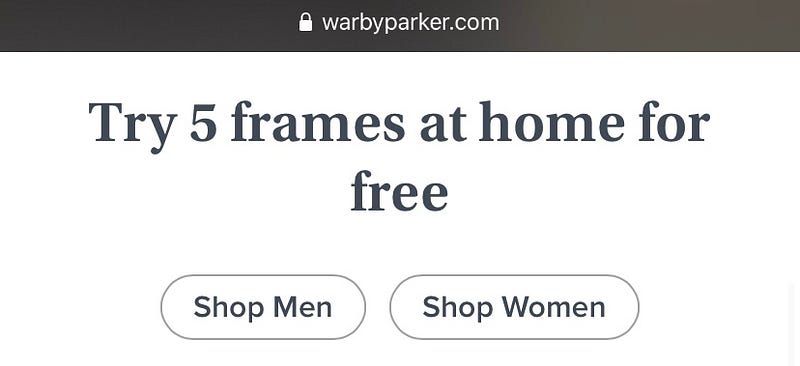
The Warby Parker experience makes the answer clear. If you want to try on glasses but don’t want to go to a store, you can get up to five free pairs to try on at your doorstep.
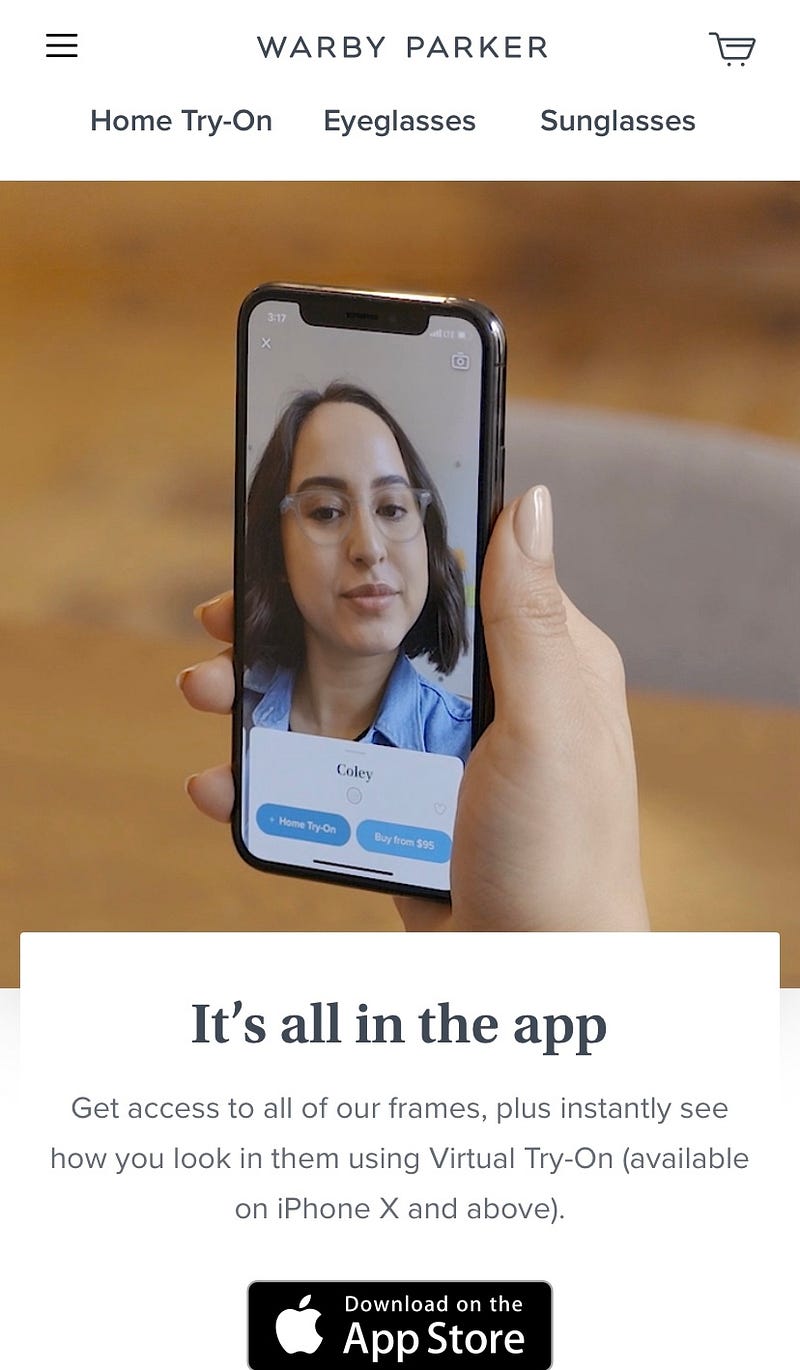
If you’re antsy and don’t want to wait for the shipment (or if you don’t have a place to ship them), you needn’t worry — Warby Parker has an app that lets you use augmented reality to try out glasses on your phone.
If you’re too impatient to wait for free demos but don’t feel like augmented reality is the best way to try on frames, then don’t worry, Warby Parker has a solution: Go to one of their growing number of stores. (There are four stores in Miami-Dade County, Florida alone.)
What about deciding on what frames fit your style? There isn’t a worry with this startup, they even have a quiz for you to help you decide which frames you like best.
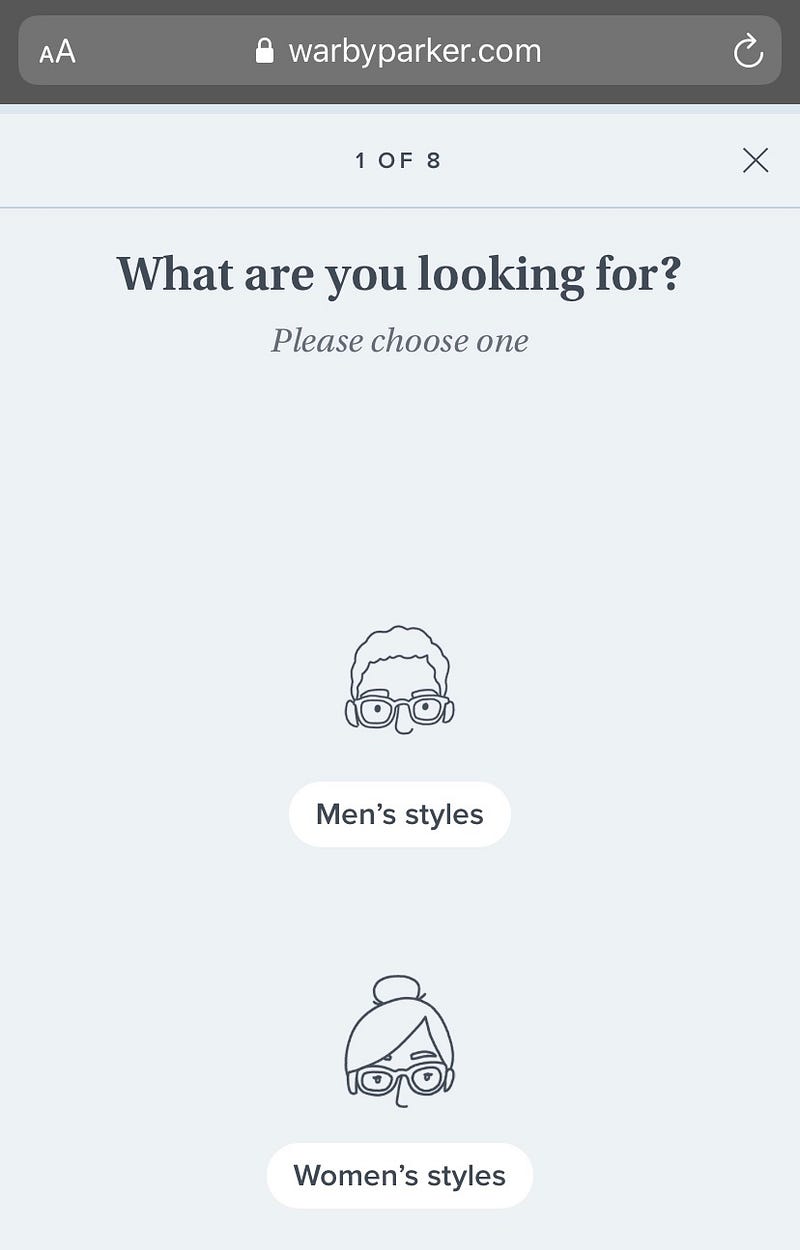
What about knowing what prescription you should get? They even offer eye exams, for only $40. You don’t have to go to an optometrist to check your eyes out anymore.
Warby Parker isn’t selling you glasses, they’re selling you a relationship with them around anything to do with getting glasses.
When building a brand, Warby Parker isn’t just asking itself how to make the best (and most affordable) pair of prescription eyeglasses, they’re asking how they can make the customer experience so optimal that they continue to use Warby for their vision needs.
If Warby Parker were only selling glasses and not a relationship with the consumer, then Amazon is perhaps is a decent place to make a sale.
But the fact of the matter is that most products are purchased more than once (this report suggests that consumers replace their prescription eyeglasses once every two years or less), so unless you are looking to make quick cash, building a brand that fulfills all the needs and desires of the consumer is by far the best strategy for having customers return. After all, our eyes only get worse with age and we need an institution where we can constantly inquire about our vision and improve it. Warby Parker intends to be that institution.
It’s clear that Amazon is not the best place to build and sell a brand like Warby Parker. Users who already know about it might trust the company, but how do you get new users to trust Warby? You don’t have the proper digital (augmented reality to try on glasses) or physical (stores, shipping five frames for free) distribution channels for consumers to test out the product. How do you expect them to trust a product like eyeglasses on Amazon without such interactions?
This doesn’t mean that we should ignore product development. In fact, the nitty-gritty is what makes this all come to fruition. But we need to change our goals.
Brand development places more emphasis on business model fit (more on this below) whereas product development doesn’t. Product development emphasizes creating the best service for users, brand development does that along with assuring that the business is capable of continuity. It’s the yin and yang of business.
A byproduct of building a brand is longevity of the business. This is because you have to create an entity that’s able to last long enough to meet and serve demands. That means figuring out your unit economics earlier on in the business’s life, so it can last forever.
That is why brand building can solve what I’d like to call the unicorn crisis, or what some people call f****d.
Though an unrelated phenomenon, changing the focus on selling your brand might be remedial to what we’re seeing in today’s private markets: high tech startups with egregious capital infusions not maintaining longevity (thanks, SoftBank).
By focusing on selling your brand (rather than solely product), you inevitably have to build the brand for it to last. This means figuring out revenue streams earlier in the business’s life. I’m not a top Deutsche Bank suit or a charismatic billionaire, but that doesn’t mean I don’t have a point!


