
How Music Became My Therapy
I wasn’t musically inclined, until I was.
It was September 2019 and I lost almost everything in my life.
I was running an investment-backed startup in Washington, D.C. — the city that I called home for four years during and after college. I also had a girlfriend at the time who I met during my travels while studying abroad.
While I wasn’t running the venture for a terribly long time (from March to that September), everything at the end fell on top of me at once. In a matter of four days, I lost my girlfriend, my company, my job, and my city. It was the worst time in my life.
In addition to all of this, I was already going through a lot of anxiety beforehand. In retrospect, an outsider could’ve seen this coming to me. I had a very poor, one-sided relationship with my patrons meanwhile I didn’t know how to run a real business. My relationship was also becoming toxic with my girlfriend and I was becoming somewhat depressed. I was being controlled both by my patrons and her. I felt like I had no freedom, and I felt like I had no one to talk to.
When everything fell apart in my life at once, I tried my best to keep an upbeat attitude. While I couldn’t control the actions of those who wronged me, at least I could control my reactions to it.
And so I did.
There was a period of two or three weeks when I was in D.C. before I would move to Nashville for the next few months. I decided on Nashville because it was the best option at the time and I had relatives who welcomed me in the comfort of their home.
During that hiatus between D.C. and Nashville, I did absolutely nothing but walked and walked and walked. I walked through the trails of Rock Creek Park, a national park that covers a large landmass of the city. Sometimes I’d walk in my flip flops to connect my body with the grass. I walked from near the Maryland border where my university was all the way to near Virginia. I walked miles and miles all by myself.
Except I wasn’t. I was walking with the musicians who helped me cope.
I didn’t realize at the time how powerful music was as a therapeutic solution. Hell, I didn’t know that music was even a therapeutic solution.
I had no musical inclination all my life, to be honest.
I’m the son of a rocker mom who was in a band herself and, for a short time in her life before I was born, she even worked at Y-100. I listened to the music that she listened to because in the car she’d put it so loud that we didn’t really have a choice. Classic rock is wonderful though, so no complaints. Then I’d listen to that same music with one of my best friends to this day, Jake. We listened to The Eagles and Kansas and Boston.
But then I went to college and had a musical hiatus. It’s no surprise though, because as we’ve seen, I was listening to music mainly by default, not by design. In fact, it was not until a few months before those ides of September that I discovered Spotify’s radio feature. I didn’t know up until last summer that if I played one song, such as Hotel California, Spotify would automatically curate another selection based on that song. Ironically, I was always anal about being in control of what I was listening to. But because my musical taste lacked in scope, my pool of options was limited to listening to the same songs over and over again.
In the first weekend of that September when I lost almost everything, I woke up that Saturday around seven a.m. It wasn’t by choice, it was a hurt soul waking up because it had to. I couldn’t go back to sleep and was too exhausted from that week to make a decision, so I said “screw it, I’m gonna go on a run.”
And so I did. I left my danky basement apartment in that depressed old woman’s house with nothing but my wrap-around earbuds, my shorts, a shirt and shoes, and lots and lots of metal.
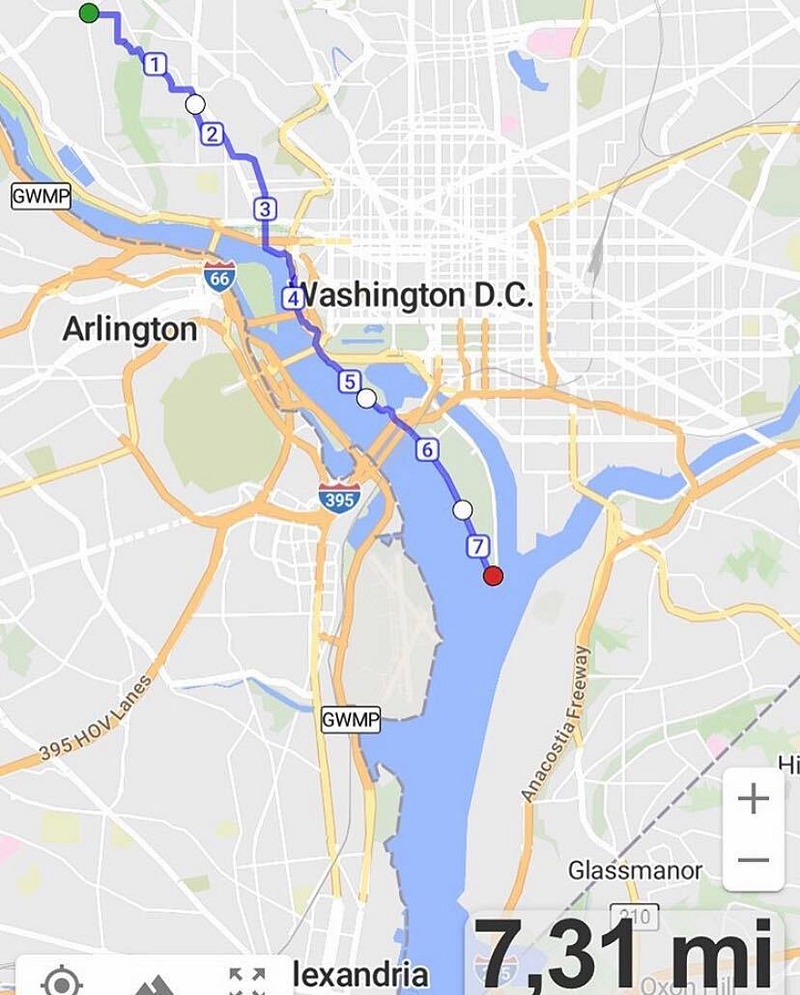
I was fucking pissed at everything and everyone around me, so I started my run with some Black Sabbath’s Heaven and Hell. Then Spotify’s algorithmic magic played Hallowed Be Thy Name, and then Master of Puppets, and so on and so forth. I was so into the music that I neither felt mental nor physical pain. I ended up, off a whim, running more than seven miles across Washington, D.C. without stopping. I ran as if Jenny told me to. I ran without giving a fuck, from near American University just a mile south of D.C.’s Maryland border to the edge of East Potomac Park, which was on the complete opposite side of the city.
After that run, the pain started to shock my legs and lungs and I had to pull out my wrap-around earbuds à la the intensity that just happened. My body and soul have never felt more fulfilled until that moment. I felt like I was on the top of the world but at the end of it all at once.
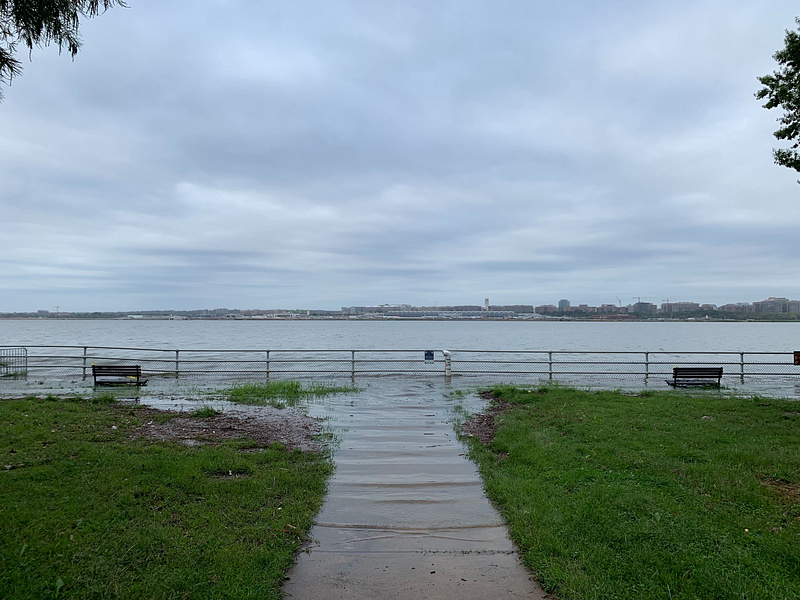
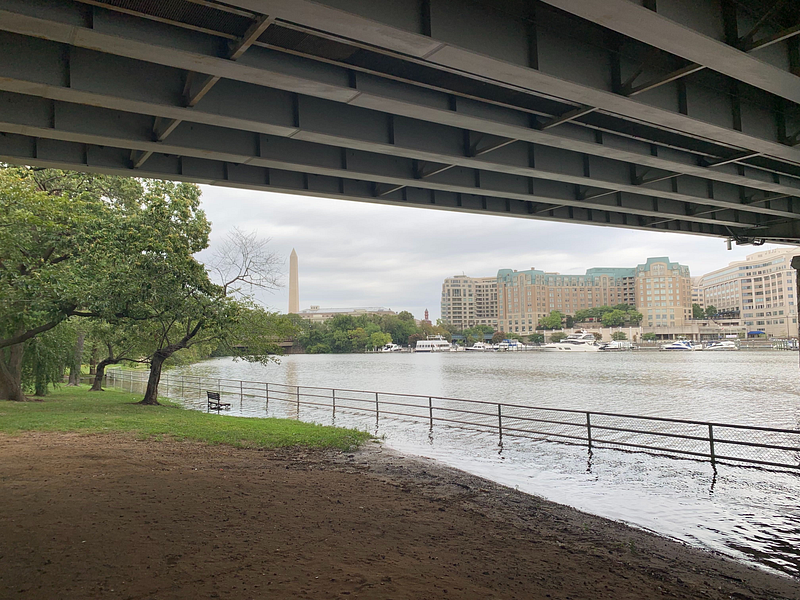
After the shock of what I just did, I put back on my earbuds and was listening to more music. To be honest, I don’t remember the exact tracks that I was listening to. It was definitely not something as intense as metal, it was classic rock. A genre that goes well with a cool down.
For the rest of that day, I wasn’t listening to anything else after that run. For those few weeks, however, it was a different story.
Reminiscing my freshman year — a time that I wasn’t musically inclined — I still had photographic memory of one band that had left an impression on me: the Red Hot Chili Peppers. I don’t know what it was about them that had left the impression that I had got. Was it their sound? Their lyrics? I don’t know. All I know is that Snow was playing in the car on my drive back from a debate tournament at Johns Hopkins in Baltimore, and on that road trip I had never felt more connected to a song like that until then.
So I started to rekindle my relationship with this funky four and that relationship has continued to this present day. I’ve even written multiple articles on RHCP. Writing has been another method for me to connect with the soul. But I’ll get to that later.
The song that the Chili Peppers, by far, has left the most profound impression on me is The Adventures of Rain Dance Maggie. I never had a song that made me bop my head so much that resulted in me being dizzy. I became so curious with the song that I did what any curious millennial would do: I Googled and Googled and read what I Googled. I remember reading in one article that Flea woke up one morning and said “I’m going to write a classic bass line. You can’t stop me.” And that’s how the funky magic happened.
I don’t remember where I first learned of Maggie, but after that, I was completely sold. I started to listen to the This is Red Hot Chili Peppers playlist on Spotify. At first I had listened to it on shuffle. Then I quickly learned that the best way was to listen to it like vinyl: from front to finish.
Song after song I was more and more in rhythm. I had never felt so connected to music in my life. The playlist started with Scar Tissue — which was completely relevant considering the time — then it went on to Otherside, and after that By The Way. It was as if the guitar solo at the end of Scar Tissue was engineered to make you cry.
I would listen to RHCP more in Nashville and eventually in Barcelona, where I now live biannually when we’re not in a global pandemic.
It was in Barcelona, though, where the real jamming began.
I’ve traveled to a decent amount of cities in Western Europe before, but I never explored them the way I had in Barcelona. I was your standard American traveler: I’d go from city to city and would stay for weekends at a time. But it was in Barcelona where I had first actually connected with a European city. I had lived in a French village for five months in 2018, yet it wasn’t the same considering it was quiet and mainly a resort town.
I moved to Barcelona in the beginning of December 2019, so it wasn’t as if I had completely gotten over everything I had gone through. So what did I do to cope? I walked, I jammed, and I conquered.
While my academic side is telling me that I have much of the world to see before making such declarations, my romantic side is telling me that there truly isn’t a city like Barcelona in Europe. It’s situated just below mountains right on the Mediterranean Sea. It’s large enough to feel like you’re in a big European city, but it’s small enough to walk from Plaça de Catalunya to the beach in half an hour — assuming you walk fast and are six feet tall like me.
It’s also an incredibly diverse city in terms of architectural and cultural variety. Barcelona, like many cities, is divided into neighborhoods, but the difference here is that each neighborhood is compact and completely different from one another. El Raval is different from El Gòtic, and so on a so forth. El Raval is where the skaters and the grunge-y and the immigrants live and hang out, whereas El Gòtic is where the tourists and the shoppers and the wealthier locals spend their days. In Barcelona, no matter where you go, you are bound to explore something new everyday that you’re there, even if you spend your much of your time in the same neighborhood.
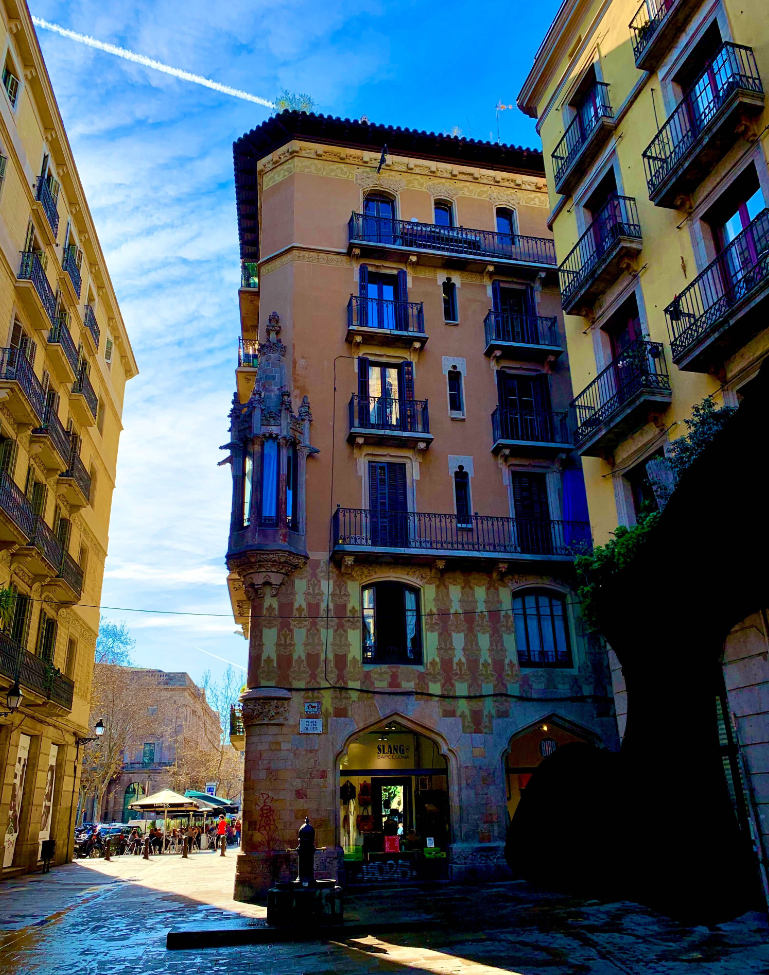
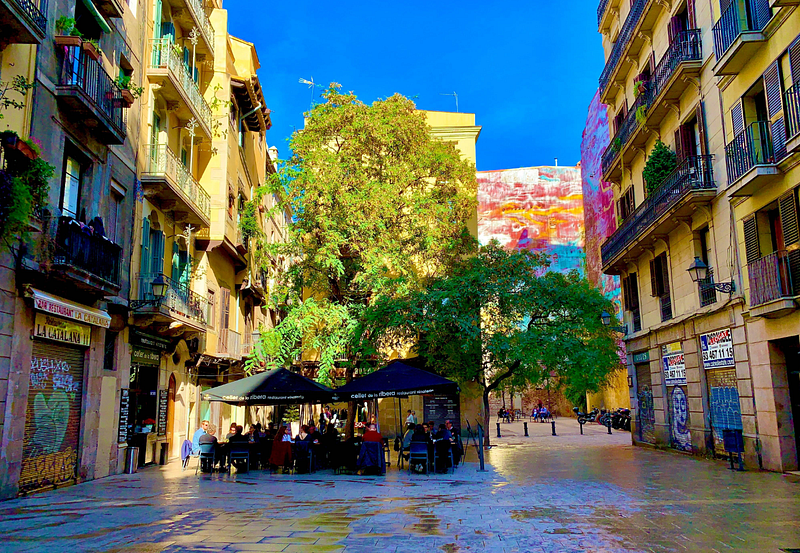
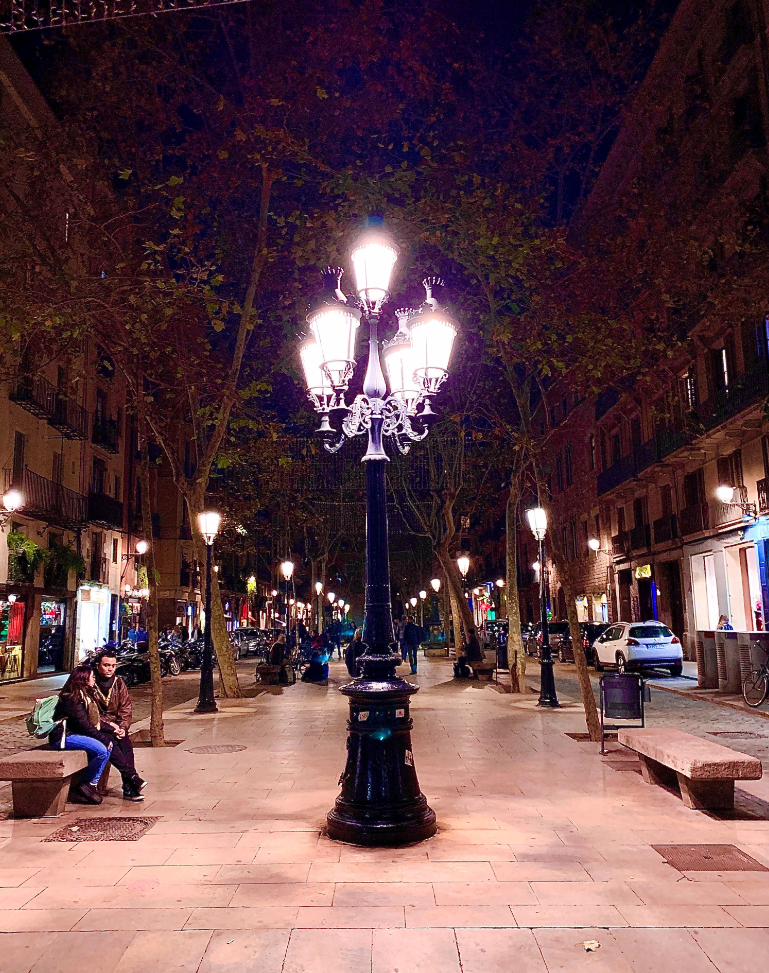
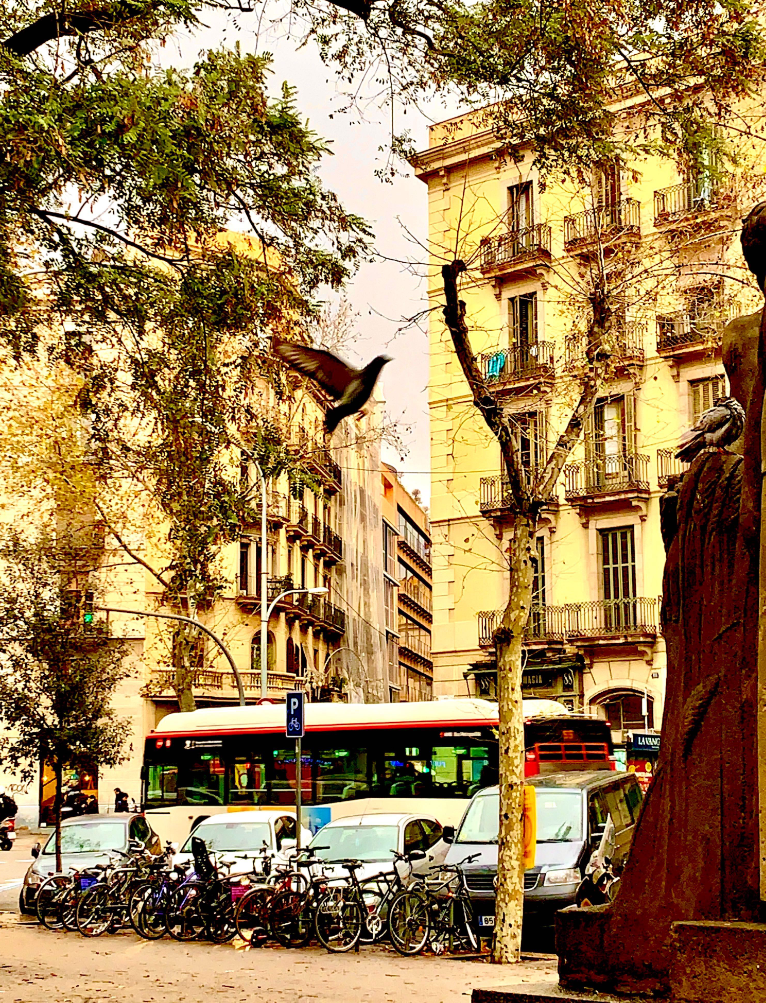
Being such an eclectic city, you can imagine that Barcelona is incredibly artistic. You can find a work of art anywhere you go. While some might argue that a “work of art” is distinguishable from something that is not, Barcelona blurs the lines. Even the way someone decorates their balcony with pots of plants feels like you’re seeing something from a movie or a museum.
I’m not sure what the science behind this is, but for me at least, being surrounded by so much art made my connection to art even deeper. And what did I do when I was exploring the art of Barcelona by foot?
I was jamming to more music and taking a shit ton of pictures.
I haven’t viewed myself as an artist until this past year. It feels weird because now I refer to myself as an artist regularly, but in the environment I was in before Barcelona I felt like I had to choose. You see, in American higher education, at my university in particular, it became less about learning and more about career building. Everything I was told to do in college had to have some mythical goal. (I say mythical because it is humans who decide the value of something like a degree, we didn’t succumb to the idea of the degree being an asset until the myth was ubiquitously accepted enough to become a reality. To learn more, read Nobel Prize-winning economist Robert Shiller’s Narrative Economics.)
I wasn’t able to pursue my passions — consume and create art — because instead I had to build my resume. I had to intern for people for free, or kiss ass to the “adults in the room” at networking events, or both. The professional part of college was truly the most soul-sucking endeavor in my life. I felt like an opportunist, because I was. That’s what the machine had conditioned us to be.
But when I left that environment and started to jam to a shit ton of music and take pictures, I got over my identity crisis and declared myself an artist. Everything that I did was to either make myself or other people feel something — not to necessarily “build my career”. I was not raised to be an opportunist, either. My mother and step-father had given up their own lives to make mine better. Everything they did was for their kids.
Between my experience at university — where people would not do something unless it benefited themselves — and in my Washington professional life where I saw the same thing in action, I became disgusted with what I was becoming. This wasn’t what I was raised to do or be.
So it was decided that I, Noah Levy, shall be an artist forever. Everything I would do from here on out was for the greater good of other people and not just for myself.
And the artistic version of myself was the better version of myself. Not only did I start to take pictures of things that interested me in Barcelona, I also rekindled another relationship that had once been lost: pen and prose.
After walking everywhere, jamming to more music, and taking more pictures, I started to write more seriously on Medium. I became inspired by other writers who had experienced success on the platform, and it made me realize that work for money and doing what you love don’t necessarily have to be dichotomous. I can make money and be happy while doing it? What? My $150,000 degree never taught me that!
Even today, during a global pandemic, I’m still doing the same thing: jamming to music, writing my heart out, and walking my thoughts out (around the pool in circles to not leave the house).
I’m even luckier though because the quarantine happened just after this self declaration of my artistic endeavors. I didn’t have to hesitate to decide on what to do. I’m continuing to do what I love. And I’ve never felt more creative than today.
In the past month alone, I have written 37 pieces and, of that number, 17 have been interviews with musicians. Having an outsider’s perspective in the music world, I became fed up with the commercialization of the industry. I started to listen to local bands from Asheville via the recommendation of my friend Mara, who’s from there, and I was truly amazed. I was not only intrigued by how good the music was, but I was particularly appalled that I had not known about it. Why is it that we’re told to listen to Nicki Minaj, who has 41 million followers on Facebook, when we could listen to Harriers of Discord, who barely has over two thousand followers on the same platform but is tenfold better?
I was disheartened that this art was not being recognized in the way that it should’ve been and I went out to do something about it.
In 2020, I’ve literally dedicated my life to the arts. My “real” job is in podcasts, my writing is about everything from fiction to music, and my breaks are exercising and listening to more music. I don’t consider anything that I do as “work” because “work” tends to have a negative connotation. I consider it all to be art. I’m not doing “work”, I’m working on something in which its output is art. I’m working on art for 12–14 hours a day, with many thinking walks and jamming sessions in between, and I’ve never felt happier in my entire life.
Recently I’ve been listening to a lot of Radiohead, which is what I jammed to while writing this piece. I was inspired to listen to Radiohead after watching a viral YouTube cover on it by two musicians in the Netherlands, and I had the pleasure of interviewing them today. It’s amazing what artists like them do to us and the world. I never even thought twice about listening to Radiohead — for some reason, every single time they were brought up on my Spotify, I wasn’t interested enough to listen to their songs. But then I watched John and Bas’s cover of Creep and my Radiohead binge had thus commenced.
Looking back at the tumultuous times in my life, it’s bizarre to me that this all happened within an eight month period. It feels like a lifetime, but at the same time, it feels like I was reborn for a new one. And so I was.
Earlier in this piece, I recalled that I had lost “almost everything”. Most in a situation like mine would lament that they had lost everything. But I didn’t, because I had music.
When you’re going through a tough time, especially when you have lost something or someone, you’re going to feel that it’s the end of the world. But it’s up to you to shift the paradigm of your own life. Is it really the end or a better beginning?
I know that for me it was the latter. And if it weren’t for the artists who made me feel the way I had, it would’ve been significantly harder to have overcome my struggles.
You’re inevitably going to go through pain and it’s up to you to choose how you react to that pain. Are you going to do nothing about it and crawl up in your shell? Or are you going to turn to yourself and realize that it’s up to you to make things better?
For me, I had chosen the latter. And it was music that was my therapy of choice.


