
I spill facts about a Catholic hero—now Catholics are big mad?
The sex life of G.K. Chesterton is a religious problem
When you grow up Christian you’re presented with all the heroes of the faith—the great men of God! In 2019, I began doing highly-researched Medium posts about their actual tawdry lives.
In early 2023, I did two posts on G.K. Chesterton. The first was on the puzzle of his sexuality, the second on his alcoholism. I moved on.
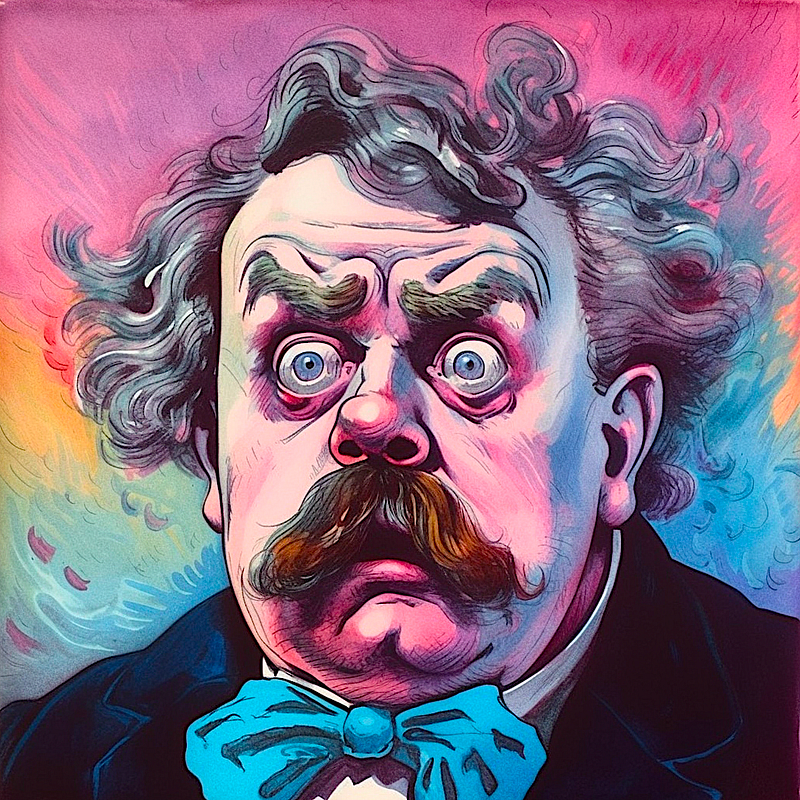
Looking over his life, I’d found a range of suppressed sources.
I remember the moment I’d realized what had happened, and laughed. The great Catholic commentator on sex was a lifelong virgin.
The source? Ada Chesterton, his sister-in-law, a noted journalist. A formidable woman who knew him well.
She had to be erased from his biography. She’d said too much.
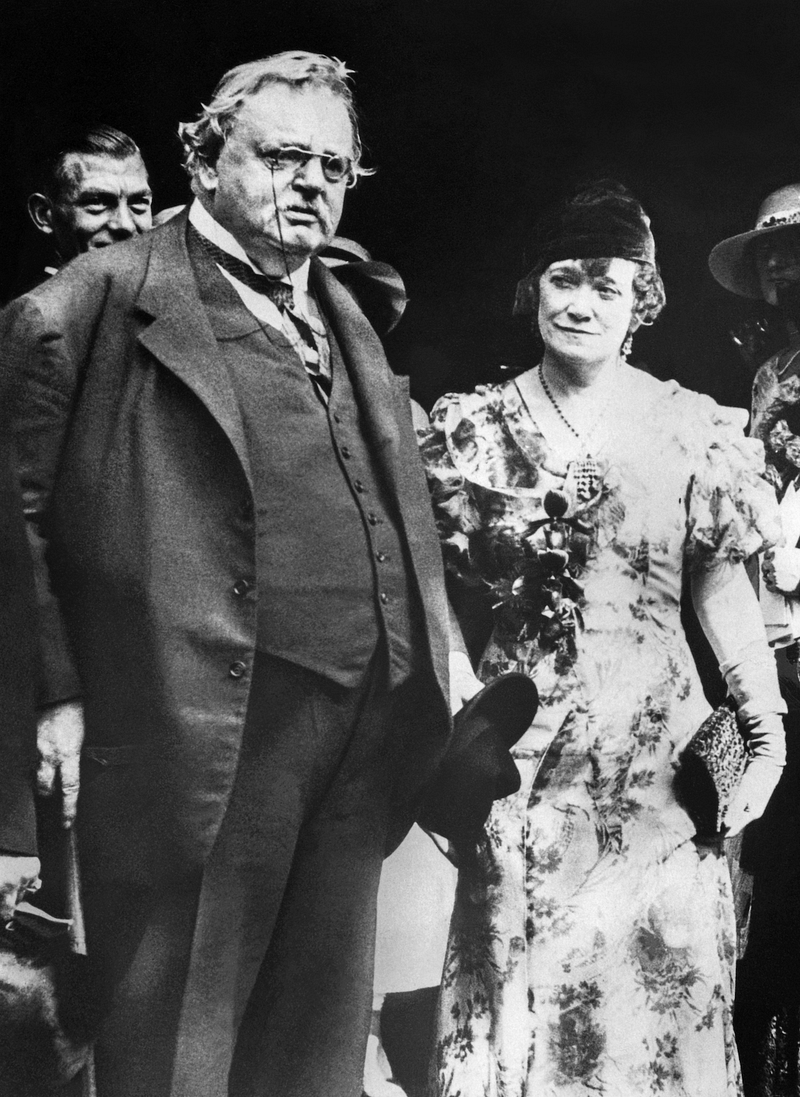
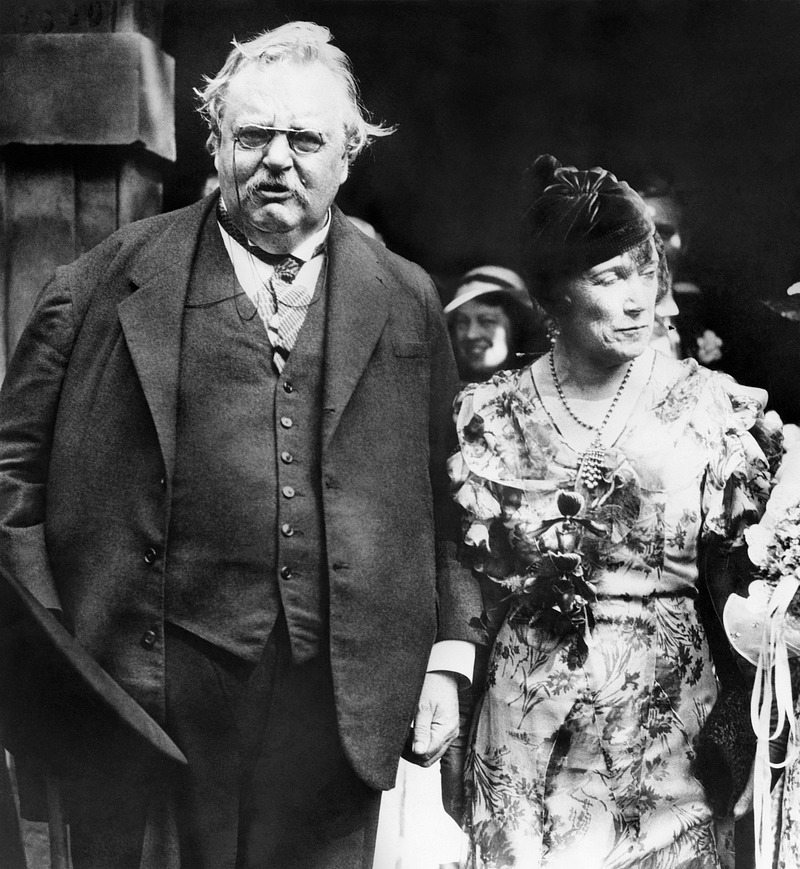
I’d noticed a popular Twitter thread on Chesterton’s critique of feminism.
An interesting subject that ventured on even more interesting subjects. I decided to try my own thread. It got some 360k views.
I’ll reproduce the result here, adapted a bit and with hyperlinks to sources.
G.K. Chesterton is often cited in support of traditional Christian sexual “rules.” Let’s take a look at the life of this particular obese alcoholic incel.
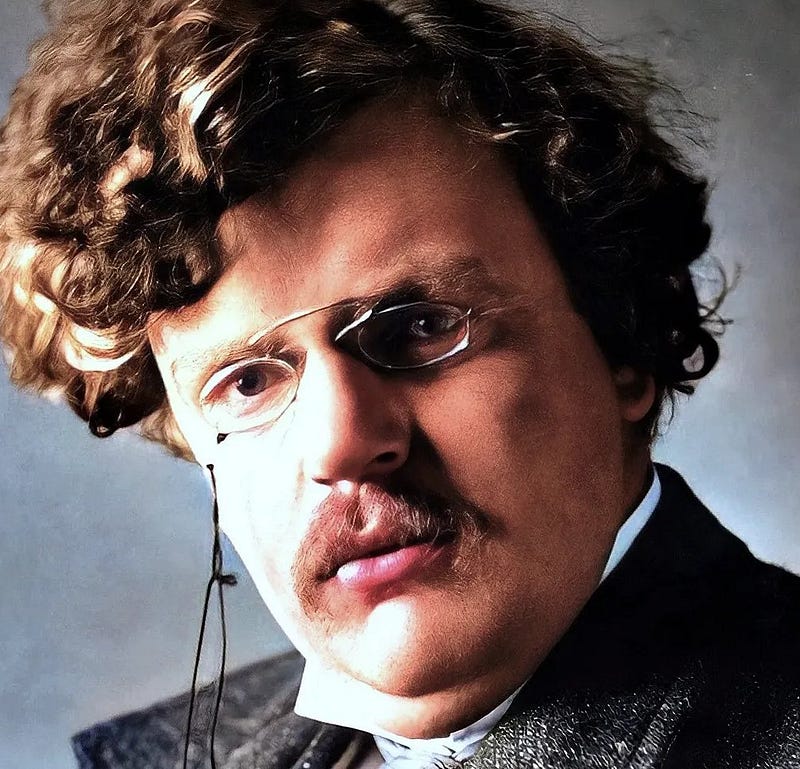
Gilbert Chesterton was born in London in 1874 and raised liberal Unitarian, girlish even in a period style of raising boys with long hair.
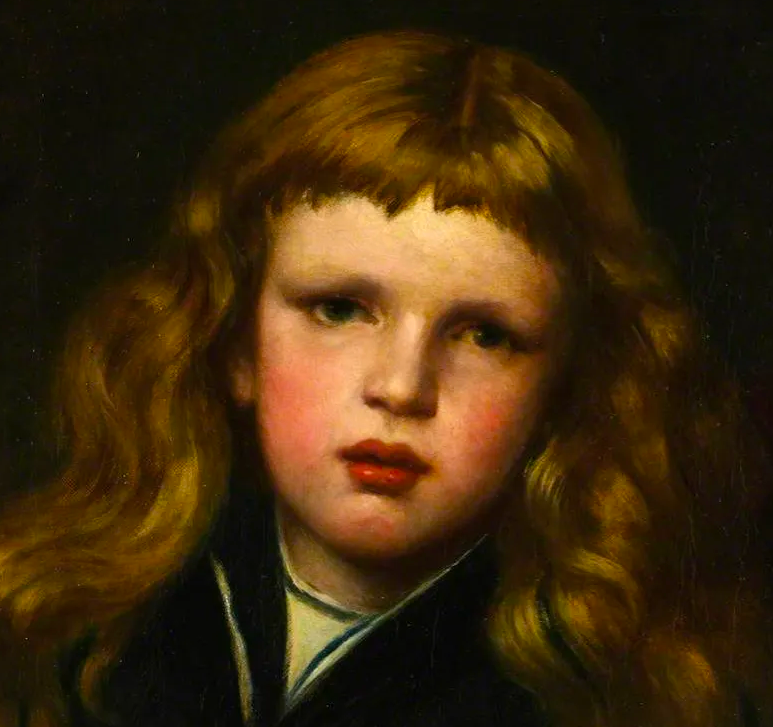
As a teenager Gilbert was tall but his voice didn’t change. A 1973 biography notes: “even in adult life, Chesterton was to speak in a high tenor.” His adult voice was described as “cracked and creaking, which gave the impression of adenoids.”
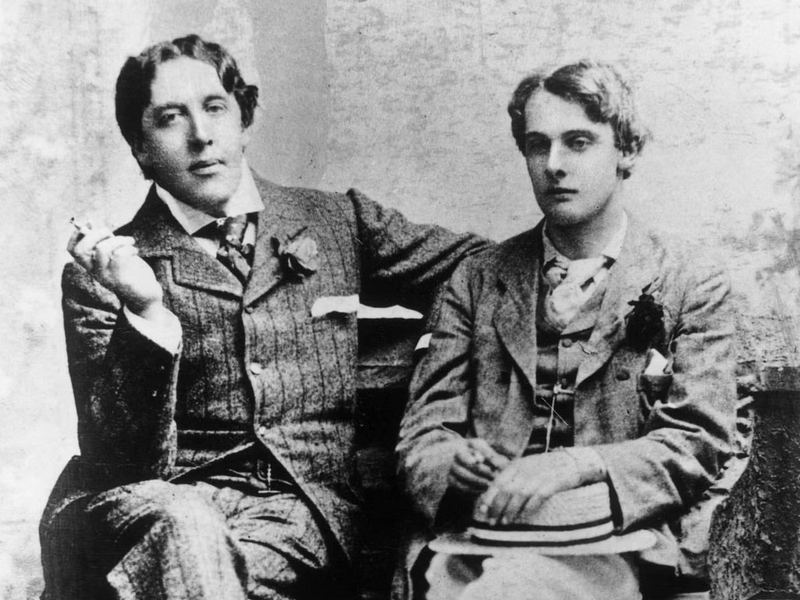
He’d call his teenage years his “morbid” period and blame Oscar Wilde, whose career he closely followed. Chesterton recalls his horror at the Wilde circle’s “perpetual hints of the luxurious horrors of paganism…”
As a teenager Chesterton drew horror sex images, “the worst and the wildest disproportions of more normal passion” he recalled, as he plunged “deeper and deeper as in a blind spiritual suicide.”
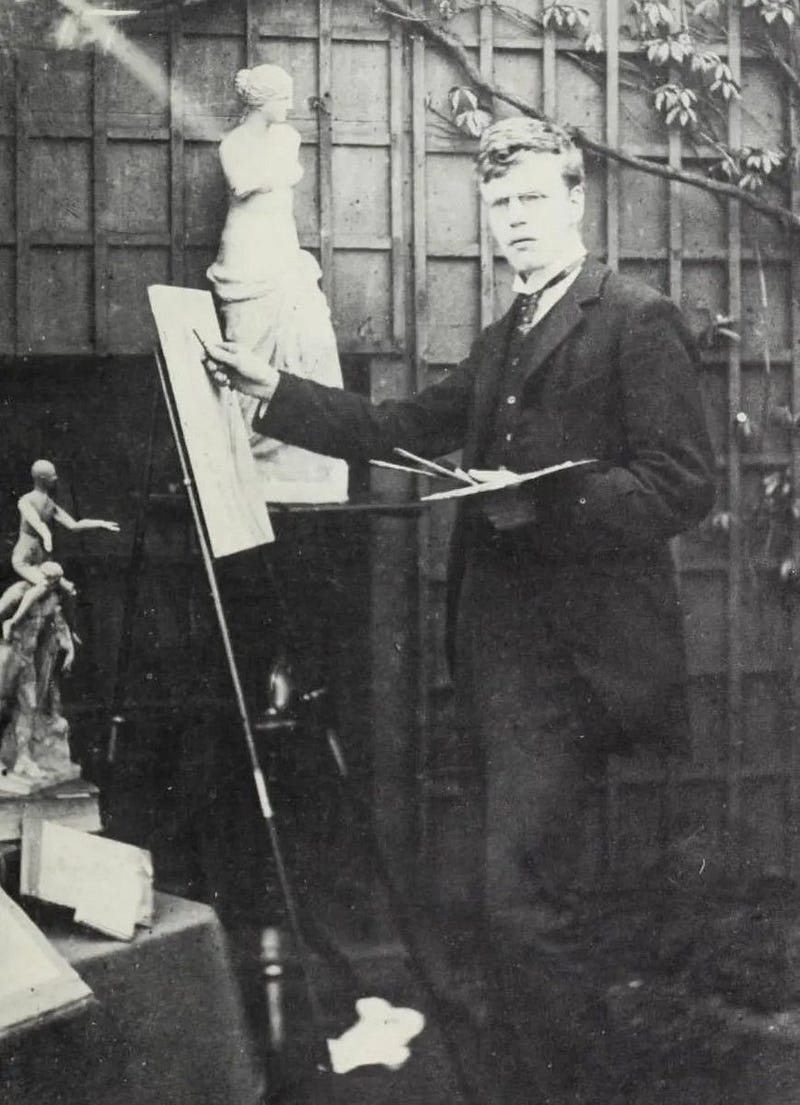
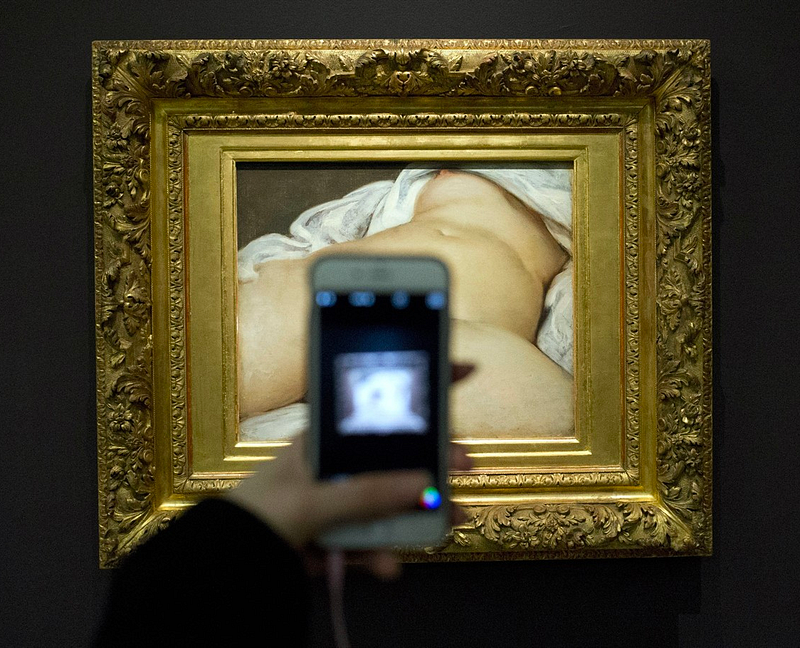
A 1986 biography by Michael Ffinch narrates it this way: “His fits of depression became more and more frequent, he filled his notebooks with grotesque and often sadistic figures, and there appeared for the first time a woman in what might be called an ‘inviting position’.”
This drawing a woman in an ‘inviting position’ is the only evidence that G.K. Chesterton ever knew what a naked woman looked like.
The depression lifted owing to a vigorous reading of Walt Whitman’s poetry collection Leaves of Grass. As Ffinch puts it: “It had been Whitman who had lifted him out of the mood of pessimism into which Wilde and the Decadents had sunk him.”
Chesterton writes: “I have never indeed felt the faintest temptation to the particular madness of Wilde…” Ffinch adds: “Chesterton’s denial of any homosexual tendency is supported by all the evidence, and only worth mentioning because he has occasionally been accused of it.”
But Chesterton had actually written of a homoerotic passion with a fellow student, Edmund Clerihew Bentley. He later wrote: “Yea, a sick cloud upon the soul when we were boys together.”
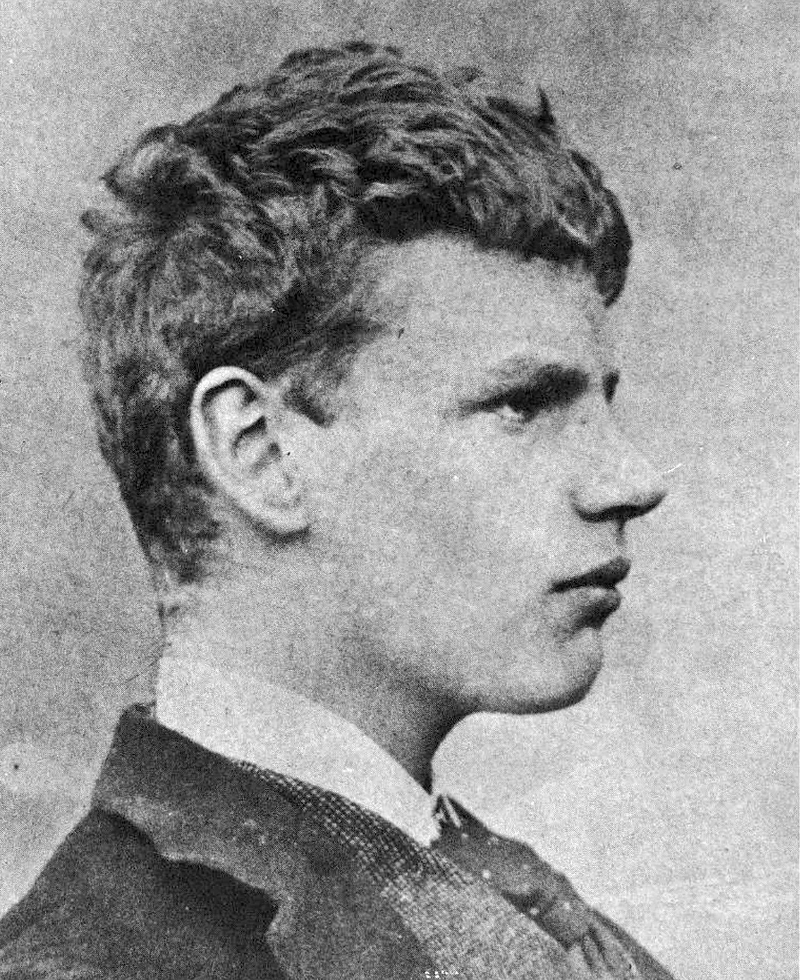
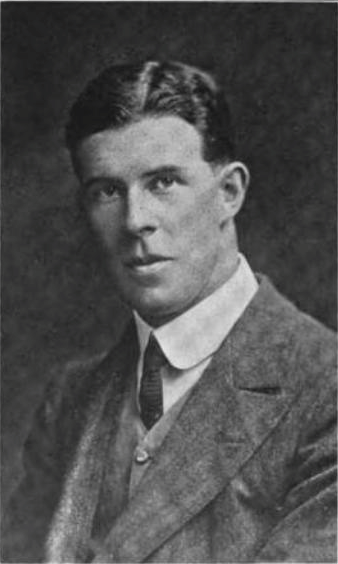
As the scholar Merrick Burrow puts it: “The possibility of reading a homoerotic aspect to this transition from boyhood friendship, with its ‘doubts that drove us through the night’, is clearly available…”
There is then, Burrow adds: “the possibility of a queerness secreted at the heart of Chestertonian orthodoxy . . .”
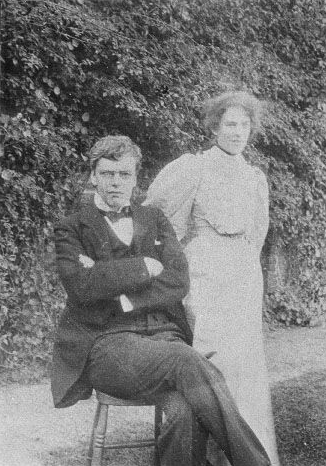
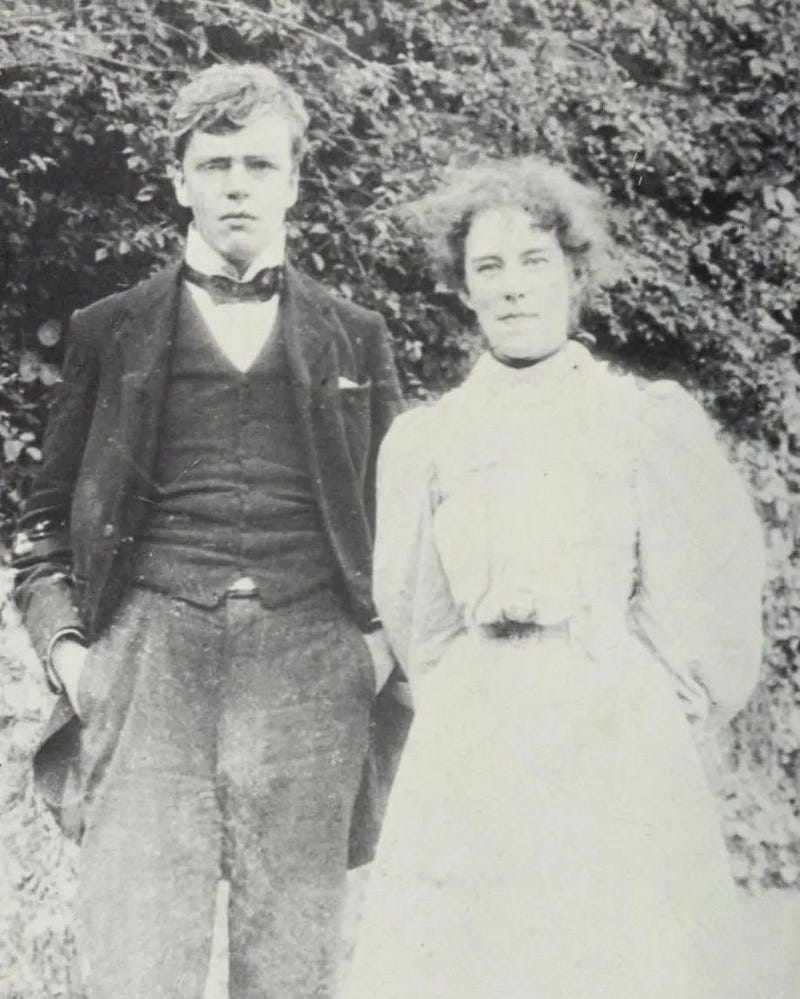
Chesterton married in 1901. He seems never to have been sexual with his wife Frances. A biography by a relative, Ada Chesterton, recorded: “The woman he worshipped shrank from his touch and screamed when he embraced her.”
Ada Chesterton adds in her book, The Chestertons: “The final adjustment between them seems never to have been made, and Gilbert, young and vital, was condemned to a pseudo-monastic life, in which he lived with a woman but never enjoyed one.”
Frances Chesterton reads to me as clearly lesbian.
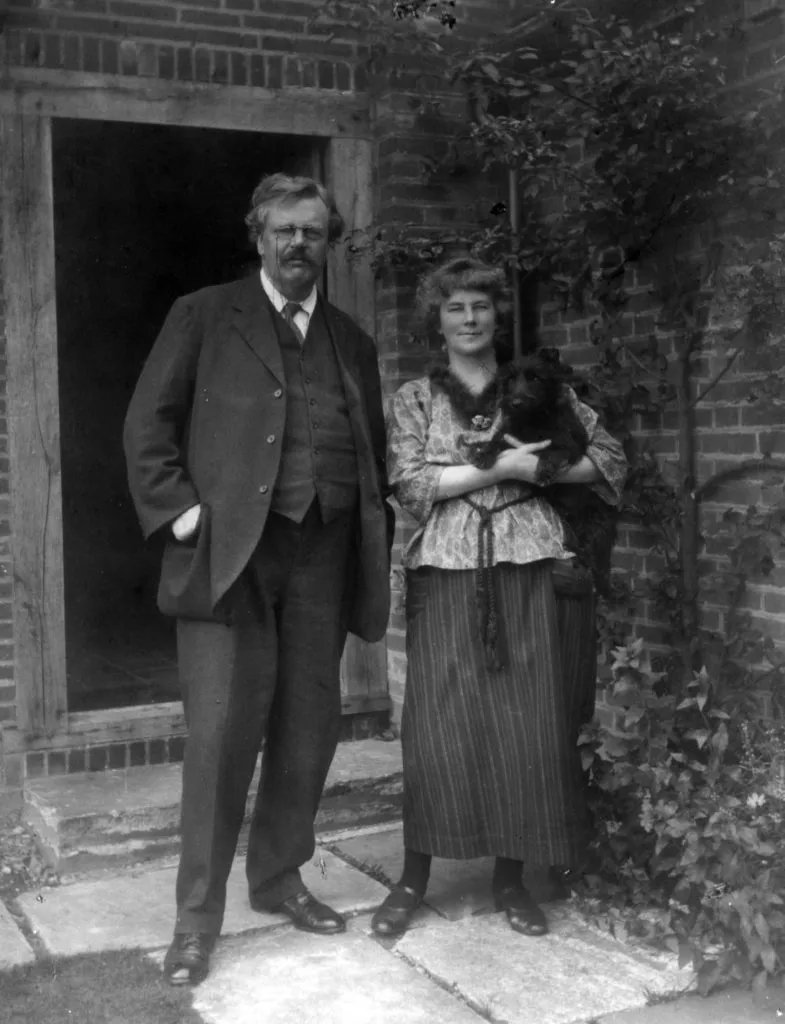
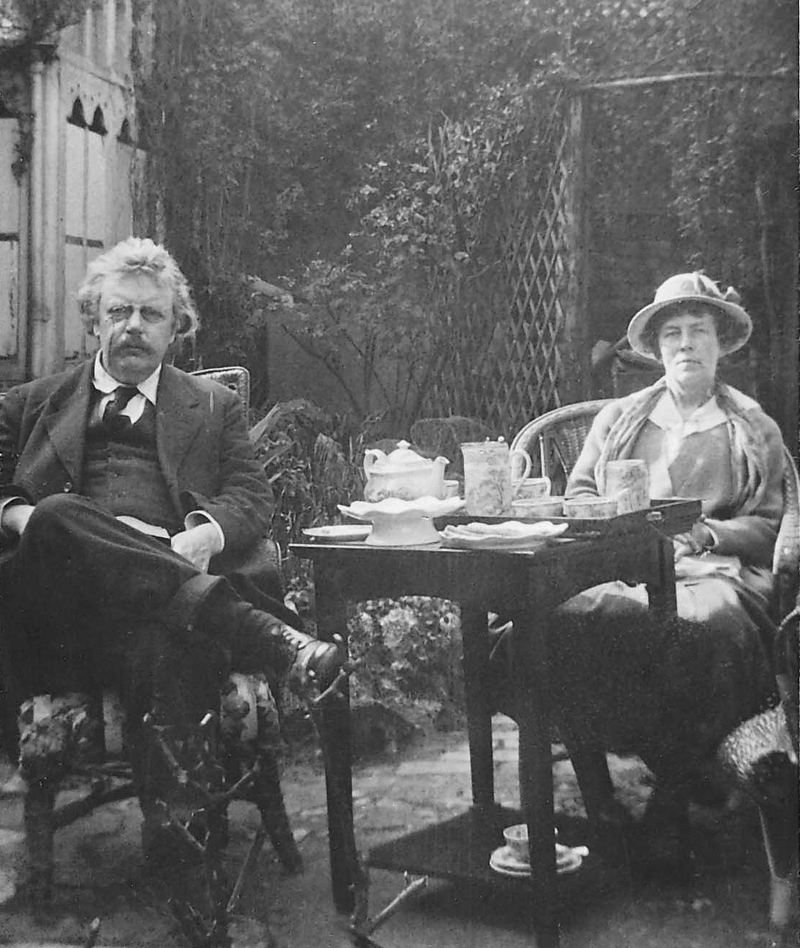
Instead of having sex, he ate and ate and ate. Chesterton grew in size year by year. He’d end up at around 400 pounds. He’d try to get out of his car sideways, he said, but “I have no sideways.”
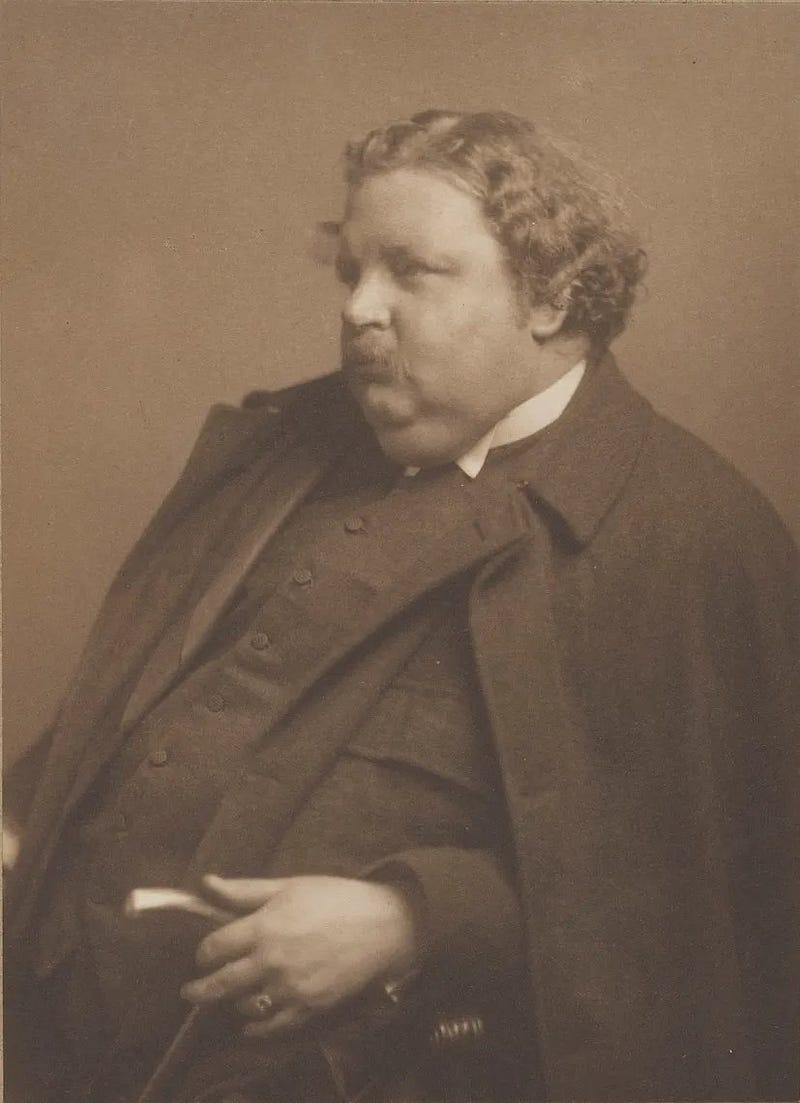
Chesterton’s writings are the alcoholic ramblings of a depressive incel desperate for cash. Biographer Masie Ward reported that “he had come to depend, ‘almost absent-mindedly’ one said, on the stimulus of wine for the sheer physical power to pour forth so much.”
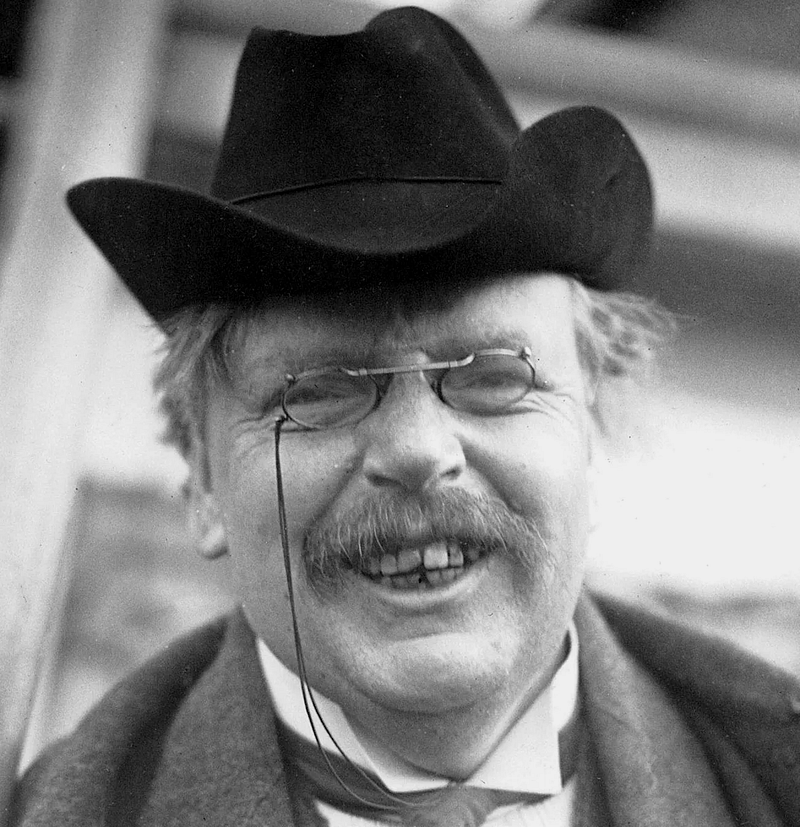
His wife and doctor made up shifting, vague causes of death, trying to preserve his Catholic credibility. But Ada Chesterton reported that “it was his liver, poisoned, resentful and inert, that killed him.” He was 62.
The alcoholism is concealed in Catholic presentations of Chesterton’s life. But in 2019, the Catholic church announced he wouldn’t be made a saint, citing the lack of a “pattern of personal spirituality…” It was the closest they’d come to saying he was a fall-down drunk.
He is often invoked as a Catholic speaker against feminism and homosexuality. He writes that gay sex “is not true to human nature or to common sense,” and rambles on about the “cult of Ganymede.”
He has no knowledge of sex of any kind.
Fictions were written to conceal his actual life and prop him up as some kind of sage of the ages. His books reek of booze, Christian despair and homosexuality. He was a sick victim of his own teachings.
The thread seemed to have gone deeply into ‘Catholic Twitter’—which wasn’t pleased.
Often denounced as “slander,” etc., the Catholic responses were less about Chesterton than about me. I was angry, I was blah blah blah.
That’s nothing new. The religion teaches: Destroy the messenger.
I have been destroyed many times.
In responses to the post, I noticed, Ada Chesterton’s disclosures were dismissed as “rumors,” or not even mentioned—as if they’d never existed.
My Medium posts were scoured for material to portray me as a lunatic.
One from 2021, about the scholarly case for Jesus having been raped during the Crucifixion, was scorned as “drivel” by a “deviant.”
A religious “hero” isn’t easy to create. It’s an unnatural state, and takes time to fabricate, and such work is not easily undone. 🔶


