
I Quit Amazon KDP
Every now and then, I receive messages from subscribers sharing their decision to quit Amazon KDP.
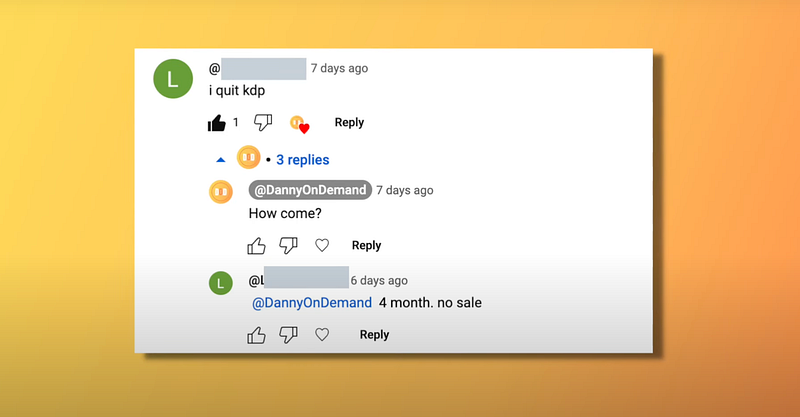
Mostly driven by low or no sales despite countless hours invested in crafting and researching for their books.
The frustration of exerting much effort with little to no return is something I resonate with deeply, having also quit for a period early on in my KDP journey.
A Rough Start
My journey into KDP began with sparks of hope, but reality quickly set in as the initial returns were hardly jaw dropping.
The month of June saw a meagre earning of $27.30, which nudged slightly upward to $22.20 in the following month, and then plummeted to $22.15 in the next.
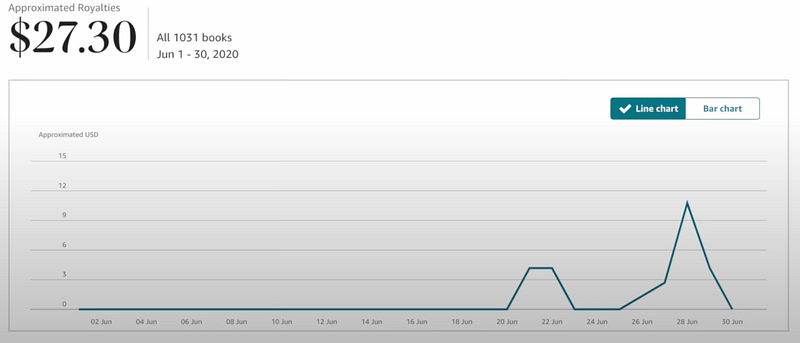
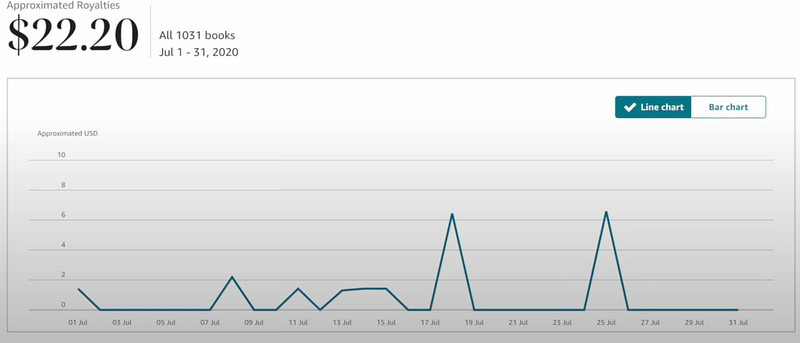
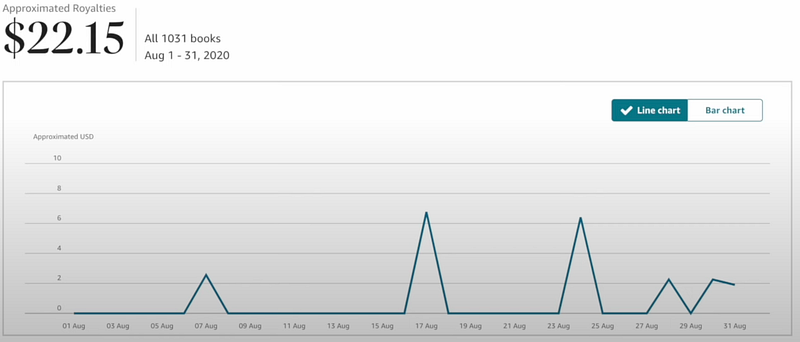
The erratic nature of sales, coupled with days of absolute silence on the sales dashboard, was disheartening.
The rollercoaster of emotions continued as my earnings in the fourth month ascended to $87.60, thanks to a logbook that began gaining traction.
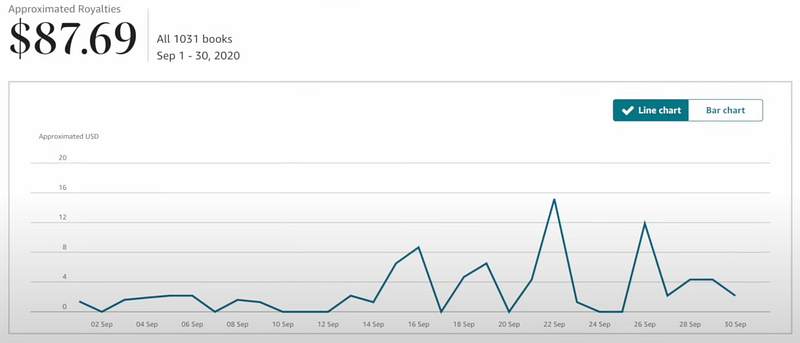
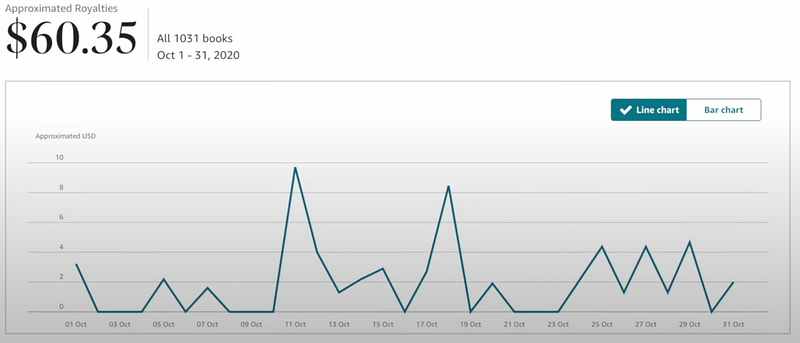
This minor success reignited the dying embers of motivation, pushing me to create more books. But again, the subsequent month hurled a harsh reality my way as earnings nosedived to $60.30.
This was when I decided to take a break from KDP as the income I was making was far from substantial to support my daily needs.
The Grind and the Learning Curve
On top of my full-time job and other commitments, I dedicated 2 to 4 hours daily to KDP, sometimes even more.
The thought of raking in thousands monthly from KDP seemed like a far-off dream.
Despite not earning thousands in my first 5 months. I had been laying a solid foundation by delving into niche research, honing cover designing skills, and crafting engaging descriptions.
Taking consistent actions, seeking the right advice, and learning from individuals who had attained what I aspired for, gradually built up my skillset and confidence.
The journey was a blend of patience, learning, and grinding, even when results were not immediately visible.
Turning the Tide
The month of November heralded a shift as I earned $437.27, and December brought a more significant triumph with earnings skyrocketing to $1,688.45.
The patience and hard work of the initial five months had started to bear fruit. The beauty of KDP, as I realized, is the potential for any of your books to take off unexpectedly, and when that happens, it’s a game-changer.
Key Takeaways
Reflecting on my journey, three pivotal areas emerged as crucial for success in KDP:
1.Research: Diving deep to identify niches with high demand and low competition is fundamental.
A well-researched niche can be the difference between a thriving book and one that sinks without a trace. You can have the best cover and ads strategy but without research, your book will fail.
An easy research process would involve typing some keywords into the Amazon search bar for example: lion coloring book.
The first step was to check the number of existing results on Amazon, which stood at a little over a thousand — a decent number to compete with.
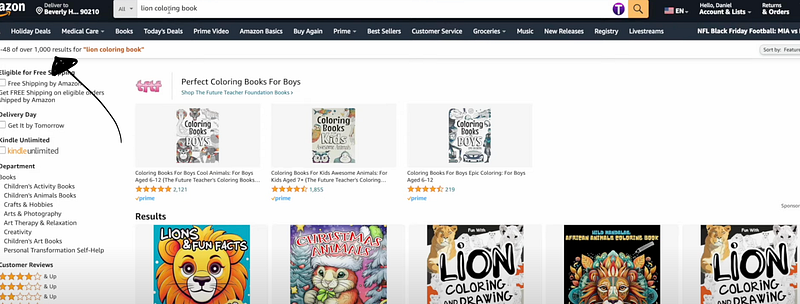
However, the real eye-opener was when I delved into the Best Seller Rankings (BSRs) of these books. A lower BSR indicates higher sales. I noticed one book with a BSR of 164,000, which seemed promising.
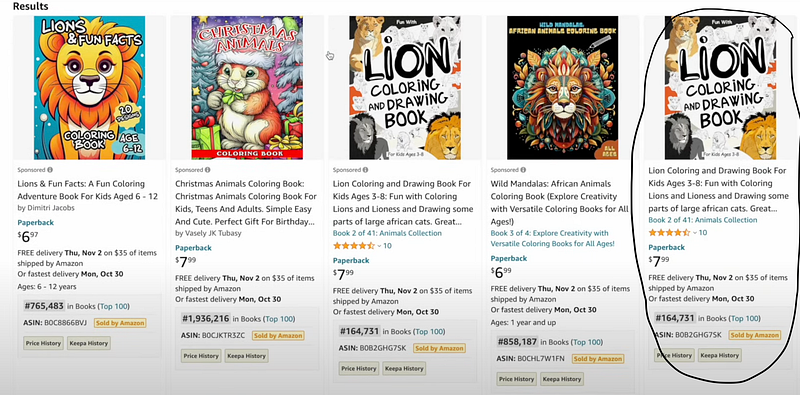
Yet, a closer look at other books in the same niche revealed BSRs of a million plus, indicating a lack of substantial demand.
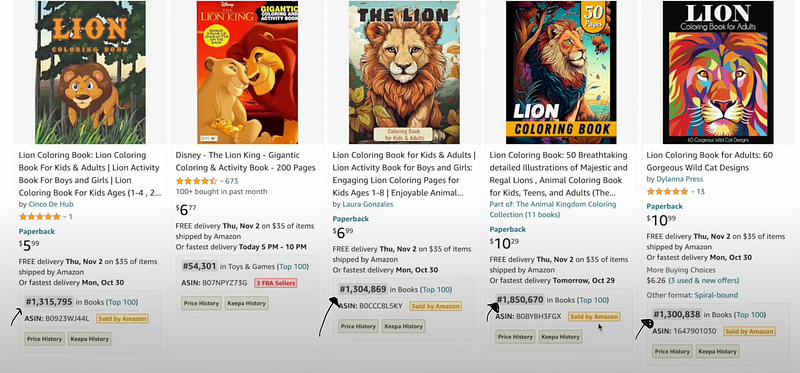
This example was a clear indicator that a single successful book doesn’t necessarily depict a thriving market.
I realized that merely replicating a seemingly successful book without understanding the overall demand within the niche could lead to wasted efforts and resources.
Ensure that you particularly look at the performance of recently published books. If recent selling books have high BSR’s that indicates the niche is dominated by older books.
This process of meticulously analyzing search results, BSRs, and the performance of recent books provided a clearer picture of what niches and keywords to target and which ones to steer clear from.
2. Cover Design: The cover is the first thing potential readers see. Investing time or even a small budget in creating captivating covers can significantly impact sales.
As a beginner, I recommend hiring a freelancer if you can or using AI tools as it can take a long time to learn good cover design. It will improve the overall quality of your book and allows you more time to focus on other areas of the book
3. Advertising: While ads won’t fix a bad book, they can amplify the visibility of a good one.
It’s essential to understand the dynamics of advertising, be patient, and willing to learn from the data.
You won’t get ads right at the start and you will lose money. But only spend money on ads that you are willing to lose.
I began my adventure with advertising on Amazon KDP back in 2020, exploring both the US and UK markets.
The initial stages were filled with trials and a fair share of errors, yet each step was a lesson in disguise.
Ads In The US Market
In the US market, my first month saw an ad spend of $4.45, which dropped significantly to $0.29 and $0.20 in July and August respectively.
Despite the spending, I still had no sales until September when, with a higher spend of $2.46, I celebrated my first sale. October saw a further increase in spend to $3.27 with no sales, but November was a quiet month with no ad spend at all.
The turning point arrived in December. I spent 23.50 on 12 orders. The previous months of testing different ad strategies began to bear fruit, marking the end of the money-losing phase and the beginning of a more promising chapter in my advertising journey.
Ads In The UK Market
Meanwhile, in the UK market, I started with a modest spend of £5.71 which surprisingly led to seven orders in the first month. However, the success was short-lived. The next two months saw a rise in ad spend to £5 and £5.92, but without any sales to show for it.
Frustrated, I halted my advertising efforts in September. Yet, resilience got the better of me, and I decided to give it another shot in October with a spend of £5.67.
Though it didn’t yield immediate results, November brought new hope with the first sale spending £5.37, and by December, things started looking up as I spent £22.10 and got 9 orders.
The experience taught me the essence of patience and the importance of small, consistent efforts.
Each month of ad spend, no matter how fruitless at the beginning, was a stepping stone towards understanding the Amazon KDP advertising landscape better.
The gradual success towards the end of the year, especially during the fourth quarter, bolstered my confidence and motivated me to continue testing ads.
It Takes Time
We all want instant success but the reality is starting anything new will take time.
The story of Amazon itself offers a valuable lesson in patience and long-term thinking. Jeff Bezos founded Amazon in 1994 yet it took almost a decade until 2003 for the company to turn an annual profit for the first time.
There is no rush. Don’t put pressure on yourself especially in the first year.
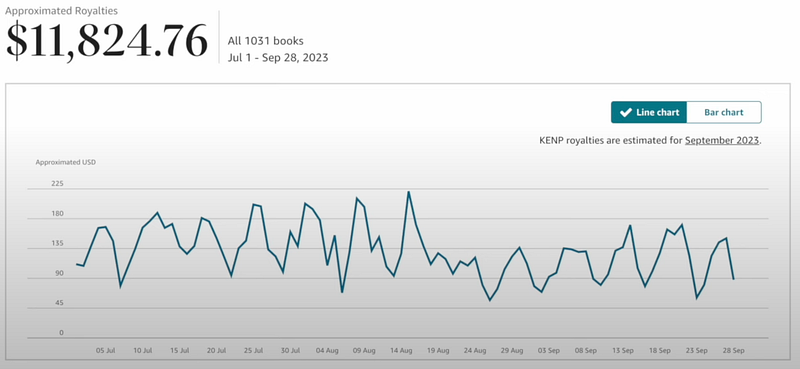
Now, as I step into my third year, the fruits of persistence have started paying off and over the recent three months — July, August, and September, I’ve generated close to $12,000 from this venture alone.
Final Thoughts
The first year on KDP or any business, may not meet your financial expectations, but it’s a pivotal period to lay a solid foundation, understand the mechanics of the platform, and refine your approach.
The journey may be longer than anticipated, but the potential rewards can be well worth the wait.


