
I Ignored The Pandemic To Deal With My Own Problems
Is it okay to put your own problems first when other people are suffering more?
Severe acute respiratory syndrome coronavirus 2 (SARS-CoV-2). Or Covid-19, as it’s more commonly known. This virus has caused a level of social destruction that we can only pray is a once-in-a-lifetime event.
At the time of writing, over 4 million people have become infected, with over 200,000 dying. And those are just the official numbers. Families have been decimated. Lives irrevocably altered.
And yet, as we slowly begin to reenter society, I find myself facing an uncomfortable truth regarding my relationship with the severe acute respiratory syndrome coronavirus 2 (SARS-CoV-2) pandemic.
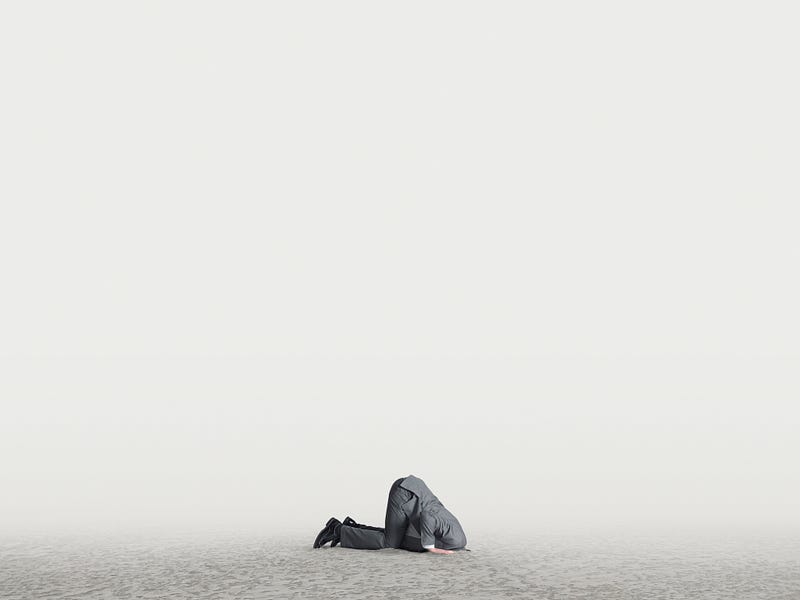
I feel like I sat it out.
For the last year, I feel like the pandemic is something I let other people deal with while I got on with my own problems.
How am I supposed to live with that?
At first, I thought these feelings were survivor’s guilt. But now, I’m not so sure.
Survivor’s guilt is very real, and it’s something a lot of people are going to have to learn to live with. The fact that you survived something terrible while people you loved didn’t is a terrible thing to have to process.
In truth, it’s not logical for someone to feel responsible for another person’s fate, but guilt is not something we necessarily have any control over. However, survivor’s guilt is a normal response to loss. Not everyone experiences this type of guilt, but it’s often a feeling that is difficult to shake. It’s been said that some people are more prone to it, such as those with a history of depression and low self-esteem. — Psychology Today
So if this sounds like you, please have a read of the articles I’ve linked above. They contain lists of symptoms of survivor's guilt, a lot of which can feel like “standard” depression. Be aware, look after yourself, and reach out if you need to.
But having read these and other articles myself, I don’t think this is my problem.
As society begins to emerge from the pandemic, I feel like I’m reentering society as a whole. I had stepped away to deal with my own issues.
What I feel is that I stepped away and stopped being involved.
Obviously, that’s not true. I’ve been here for the whole thing. I’ve been isolated, been put on furlough, and lost my job. I’ve gone without seeing friends and family for over a year. I’ve worn face masks. I’ve washed my shopping before putting it away.
I was there.
Then my own problems took over.
Just as the first Lockdown was winding up, my marriage came to an end, just about the same time as I was made redundant.
And just like that, two of the main anchor points in my life had been swept away.
The next six months were hard. To keep my head above water, I needed to do a lot of work on myself. I had one therapist at the start to help me through the process of the separation. Then once I’d got my bearings, I found a new therapist to begin more long-term work on myself. I needed to step aside and take the time to think about who I was, who I wanted to be, and what I wanted in my life. I ended up going on anti-depressants, living with my parents for a year and deciding on a career change.
This is where my head has been for the last year. Not the pandemic, nor any of the other things that happened in 2020/21 that other people haven’t had the option of ignoring.
The best way I can describe it is as society begins to emerge from the pandemic, I feel like I’m reentering society as a whole. I had stepped away to deal with my own issues. Everyone else dealt with the whole Covid-19 problem — and everything else that’s been happening, like Brexit, Black Lives Matter, or the climate imploding — and I just sidled back into the group after everyone else had done all the work.
Does that make sense?
How did I deserve the luck and the privilege to be able to feel like I sat out a pandemic?
What does it say about me that I don’t feel connected to the biggest global event of the last century? What does it say that the disruption and pain I’ve gone through over the past twelve months has been parallel to the pandemic, not caused by it?
I started working on this article thinking I felt guilty because I’m in a good place coming out of the pandemic. But now I recognise it’s not that at all. It’s why I’m in a good place that I feel bad. Because I had the privilege to be able to work on myself.
I don’t feel bad that I took the time to step away and care for myself. Mental health is something we need to be comfortable taking time for. And boy, did I need it. If I hadn’t decided to focus on myself this past year, I would be a complete mess right now.
What’s bothering me is the privilege it shows that I was able to step away.
How did I deserve the luck and the privilege to be able to feel like I sat out a pandemic?
I guess the hard answer is I didn’t. It was just the luck of the draw.
Life is chaotic. Something it hands us opportunities seemingly out of nowhere. Sometimes it causes everything to crash down around us with no warning. Some people like to put this down to the hand of some god or other in an attempt to convince themselves it’s all part of some plan. Personally, I think it’s just the chaotic nature of life.
The thing that determines how we are able to cope with these ups and downs is an accident of birth.
I can’t apologise for my privilege. Because, quite frankly, I’d never stop. I’m not exactly part of the 1% here, but as a straight, white, middle-class, male-presenting, cis-man, I am so playing life on easy mode.
But as my therapist puts it:
You shouldn’t feel bad for your privilege, and you can’t apologise for it, but you have to be aware of it.
I can’t help that I could take time for myself when so many other people didn’t have that opportunity. But I can be aware of that privilege and look at my life to see what I could do to spread it around.
I did what I needed to do, within my ability to do it, for my mental health. And hopefully, this means I will be in a better place going forward to do more good for the work that I would have been able to do otherwise.
Until then, I will feel guilty. And hopefully, sooner rather than later, I’ll be able to channel that guilt into doing something good.
Ready to become a full member of Medium — and help me earn a referral fee along the way? Then sign up today using my link to get full, unlimited access to every single article on the platform!


