
I Doubled My Podcast Listens By Changing This One Thing
How I went from 80 average listens to 200
I’ve been running a small podcast since 2019, and it’s been an extremely slow growth.
100 listens in 2 weeks was a good episode.
One or two of them went bonkers and got 300 listens in a YEAR. The average number of listeners was stuck at 80 though.
It finally started to change in December.
Gaining podcasts listeners is a hard game, but a rewarding one.
Because there is no recommendation algorithm like on YouTube. It’s all about gaining enough followers and reviews to appear in top lists. Or already having a following on social media.
But it’s worth it nevertheless.
The best thing about podcasts are the people listening. In my experience, they are dedicated, serious and when they enjoy an episode or two, they stick around for a long time.
So you don’t need a lot of followers to feel like you are making an impact.
My ‘less than 100’ listeners per episode brought me some business. Often times, more serious business than from Instagram or YouTube. Recurring students that would stay on for a year or more with me.
The space is healthy, too. No harsh comments, and I feel like it’s a lot more about WHAT you have to say, rather than your style of editing.
So I kept at it.
In December 2022 though, I changed something.
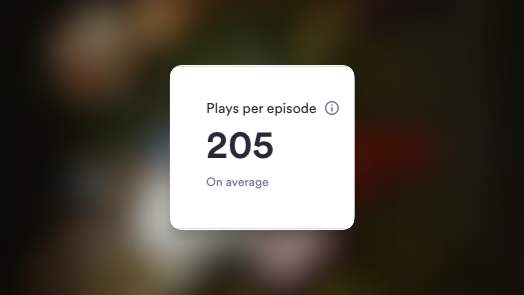
And I went from 80 average listeners to 200. A couple of my most recent episodes even reached the 500 listens.
What did I change?
Not the quality of the sound — I’m still using a simple Meteor Samson, plugged directly into my computer.
Not my recording system, either — I’m using good old QuickTime Player.
Not my podcast hosting — still using Anchor for free.
Not the platforms on which I distribute — I’m on Apple Podcast, Spotify and Google Podcast and a couple of other small platforms.
I did not change anything about the way I speak, or the format of the episode. It’s still a one-woman show between 6 and 15 minutes. Ending on the same call-to-action to join my weekly all-French newsletter.
I even shorten the description — keeping it super simple with a line about the theme of the day, and links to whatever I am talking about, and to the newsletter.
No, the one thing I changed is… the way I write my episode titles.
How to write better podcast episode titles
I had started writing on Medium a couple of months prior, and it was like I was suddenly training for all other aspects of my businesses.
Writing every day, even if it’s about something else, helped me understand how to write better. Much more than reading about writing will ever do, I suspect.
Prior to this, my podcast episode titles were simple, to the point.
I did not want to confuse the listener, and I wanted it to be no misunderstandings as to what I was talking about.
My strategy was to be as helpful as possible, starting from the title. So I would almost copy and paste what my students were telling me or asking me. I figured if that resonated with them, it will resonate with potential future clients too.
I stand by that strategy. It’s one of the basic principles of copywriting.
So my titles could sometimes look like :
- A question
- A simple ‘how-to’
- Ways to say X in French
But… yes, it works when you are on a sales page. It works when your clients already know they have a problem. When they are browsing for something to listen to? It lacks a certain… sparkle, surprise, curiosity.
Those episodes are not bad. Their titles are just not as performing as others.
Let’s compare to some of my most performing episodes titles:
This is how to approach French grammar — so it’s not overwhelming or difficult
3 mistakes that keep you from making progress in French
Teaching French is impossible
Curiosity levels are high.
They want to know this method to approach French grammar. They want to check if they are making the 3 mistakes. They wonder what that statement even means.
And that’s what drives the listens.
Titles are key
I knew titles were important. In all kinds of platform, the title is what people ultimately click on. So it better be good, and at least as great as your content.
But knowing, and cracking the code are two different things.
Not that I cracked the code. 500 listens is just my new personal record to beat.
But I know one important battle in that fight is going to be writing better and better titles. So I can increase my number of average listeners, help more French learners, and bring more students to my school.
And one way I’m going to do that, is by continuing writing here and on Twitter. To sharpen my skills.
A warning before you go
Interpretations of success are just that… interpretations. Could I be blind to a factor that actually influenced my views to go up? Maybe.
So, take this article as a nudge to pay more attention to your titles, and to start writing more.
And not as a definite guide of what will work for you.
More stories from me :


