
I Didn’t Become a Baker, Fisherman or Carpenter
But I haven't wasted my life.
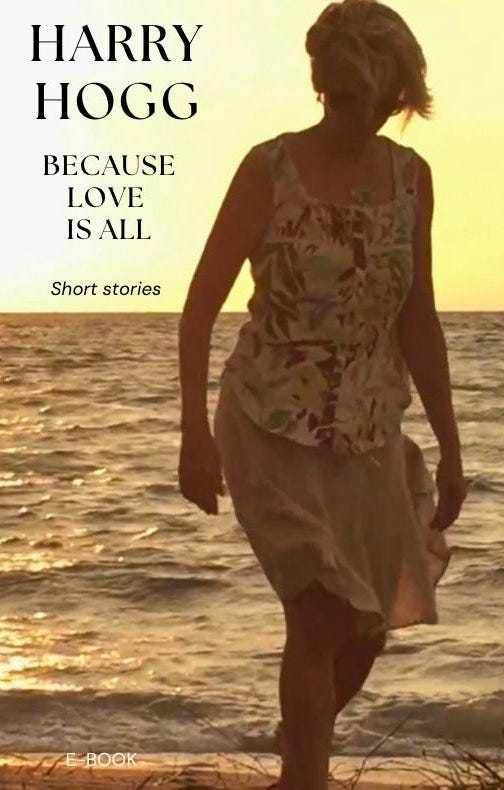
I love to squander time perusing second-hand bookstores, having no idea what I’m looking for. On Friday afternoon, I found an interesting book. The cover drew my attention, scruffy, dog-eared, neglected-looking volume. Although badly faded, the cover featured a picture of a Nazi concentration camp.
Nonetheless, I was intrigued enough to examine its pages. I paid an exorbitant amount to own it and headed to lunch in the Terrace Room at the Cliff House restaurant overlooking Seal Rock in the Land’s End area of San Francisco.
I ordered a turkey sandwich and a pint of Guinness. After an hour, I concluded the book lacked functional language and was written in a minimal form, yet it showed all human compassion and emotional range in its pages in a glaringly blunt style. It sickened me. It was brilliant.
It could have been written by any aesthete who wrote to consider every situation and every emotion and end up with none that was human.
I might have thought less of the writing had it been written in any other style.
I consider my writing style inadequate. I have learned that no art form can fully express all that is human. Art can use a smattering of emotion and babble but reveal little.
Since becoming a writer, I have struggled to imagine the kind of writer I wish to be. Most importantly, the anti-academia-intellectual spirit of my youth, my deadliest enemy, has been slain. I’ve come a long way to grow up. My penmanship links me to the humble, ordinary person who knows his worth and has no illusions.
But honestly, I never wanted to belong to everyday people, and I did not want my outlook to look simplistic.
I have come to doubt whether my simple say-it-as-it-is style is any better or if it is the right one for a writer with only a simplistic message. Perhaps the only message is trying to convince myself, so I string along just to be the adult I’ve become.
I wonder what happened to the boy whose father asked at supper one night:
“What will you choose to do? You can be anything you want. What is it?”
“A fisherman, Dad.”
“You can’t be that! It’s not a proper profession.”
Parents would be shunned for such words today, but Dad was right. “It was silly.” I was in a daze — what a dream, poor young thing.
I watched the baker bake, the fishermen fish, and the carpenter carve.
My turkey sandwich is almost done.
Today, I’m an old guy looking out on the vastness of potential.
Someday, I’m going to fulfill all I want in my writing.
There won’t be any recognition, but even at this age, lots of conviction.
Please visit and read: The Doctor — Joanie Adams
Read about the concerns, insecurity, wonders, and why we all strive for readers when posting our work on Medium. Then, hit the follow button.
More from Harry:
Karen Schwartz, Nancy Oglesby, Katie Michaelson, Bernie Pullen, Michelle Jimerson Morris, Amy, Julia A. Keirns, Tina, Pat Romito LaPointe, Brandon Ellrich, Misty Rae, Karen Hoffman, Susie Winfield, Vincent Pisano, Marlene Samuels, Ray Day, Randy Pulley, Michael Rhodes, Lu Skerdoo, Pluto Wolnosci 🟣, Paula Shablo, Bruce Coulter, Ellen Baker, Kelley Murphy, Leigh-Anne Dennison, Patricia Timmermans, Keeley Schroder, James Michael Wilkinson, Whye Waite, John Hansen, Trudy Van Buskirk, | Dixie Dodd | The Doctor — Joanie Adams| Adda Maria | Dennett | [email protected] | Nancy Santos | Jenny Blue | Jack Herlocker | Love | Barbara J. Martin | Audrey Clifford | Maria Rattray | Jerry Dwyer | Denise Shelton | Trisha Faye | StorySculptress | Deborah Joyce Goodwin (Red:The-Lady In Blue) | Kelly Corinne Elliott | Emma Vincent | izzibella Beau | Karen Grant | Shay Bishop | RosenberryRJ
(No offense will be taken if you dislike being tagged for various reasons. Please let me know, and I’ll be sure it doesn’t happen on my posts again. If, on the other hand, you’d grace me by allowing a tag, I’d be thrilled to add you.
*


