
Mental Health
I Celebrate Every Day With Song and Dance
Music opens the heart and lets the love in
I haven’t written of my home since my first post here sharing the spirit of Ubuntu.
The rhythms of Africa dwell in each cell in my body — a vibrational energy that brings me light even in the darkest days.
This week’s prompt, Celebration, at once brought to mind a song from 1983 — Jabulani — meaning in Zulu to rejoice.
This deep connection with such music stretches back to the era of apartheid where two white musicians, P.J. Powers and Johnny Clegg (RIP) crossed the racial divide to synergise African and Western styles.
Let me stop here for a moment to explain the significance of these events.
The Nationalist government mastered the art of segregation — where you could live, where you could work, which toilets you could use, which park bench you could occupy. This divide included social activities — separate cinemas, theaters and concert venues.
White audiences could watch either an all-white or all-black performance, and the same rule applied to black audiences.
But they couldn’t control which radio station you listened to or what you purchased. Music brought us together in spirit.
When I’m despondent, pondering whether our dream of the Rainbow Nation will come true, I raise my head and hear the songs from my past. I may not sing and dance, but I can play and listen.
How precious the healing power of music!
Musical Icons
PJ Powers
She began her professional singing career with the all-girl band Pantha in 1979. (The same year I auditioned, unsuccessfully I might add, for another all-girl band.)
PJ formed a new group in 1980 — Hotline — and in 1983 crossed from rock to Afro-pop.
That same year they produced Jabulani, their first big hit, and their popularity in the black townships soared. She earned the nickname Thandeka — meaning the loved one. The band’s fame spread to Namibia, Mozambique and Botswana.
As an anti-apartheid activist, PJ performed at a concert for war orphans in Zimbabwe in 1988, sharing the stage with Miriam Makeba (living in exile) and Harry Belafonte. As punishment, the government banned her from radio and television for a year.
She received a letter from Nelson Mandela, still a political prisoner, encouraging her to continue her singing career. They later formed a close relationship.
In 1994 she performed at his inauguration.
The following year her World in Union with Ladysmith Black Mambazo became the theme song for the 1995 Rugby World Cup, hosted in South Africa, which she sang live at the opening ceremony.
In 2009, this featured in the movie Invictus.
(We won that year, also in 2005 and yet again in 2019. These milestones, especially the latest, show the power of sport to give us cause to celebrate!)
Her music career spans 40 years and counting. She has shared the stage with many local and international stars such as Eric Clapton, Joan Armatrading, Annie Lennox, Peter Gabriel, Hugh Masekela, Sibongile Khumalo, the Mahotella Queens and Youssou N Dour.
In 2014 she released her memoir, co-written with Marianne Thamm, titled Here I Am.
“From the dizzying heights of international stardom to the dark depths of her struggle with alcohol, this is a must-read to explore the heady mix of politics and music of the time.”
I have it on my Books to Buy List once I have the funds.
Acclaimed as one of Africa’s top artists, she continues with live shows, philanthropic activities and motivational speaker engagements.
Recipient of many awards, what best reflects her was the prestigious annual award to her and Sibongile Khumalo for promoting reconciliation by “singing people together”.
(The latter is a celebrated jazz and opera singer. I will share one of her recordings at the end.)
Johnny Clegg (RIP)
Nicknamed the White Zulu, he was born in England on 7 June 1953 and died of pancreatic cancer on 16 July 2019 in South Africa.
He spent his first seven years with his mother, a cabaret and jazz singer, in Zimbabwe (then Southern Rhodesia). They moved here after a short stint in Zambia when she remarried.
His stepfather was a crime reporter, and he often accompanied him on his work assignments into the townships, where he observed cultures other than his own.
As a boy of 13, he began playing the guitar and developed a liking for Zulu music. He’d sneak out to visit hostels of migrant workers to practice his guitar and learn how to dance. The police arrested him for contravening the Group Areas Act.
While teaching anthropology at Wits University, he started creating a fusion of English lyrics and western melodies with Zulu musical structures. He formed a band, Juluka, with Sipho Mchunu, whom he’d met when visiting the townships.
Although the law did not allow mixed races to appear together, they used a loophole by keeping to private functions. But they became so popular they appeared and universities and played live shows — often raided by the security police.
In 1971 Juluka performed at the first Free People’s Concert held on the Wits University Campus.
I was there! Our own Woodstock!
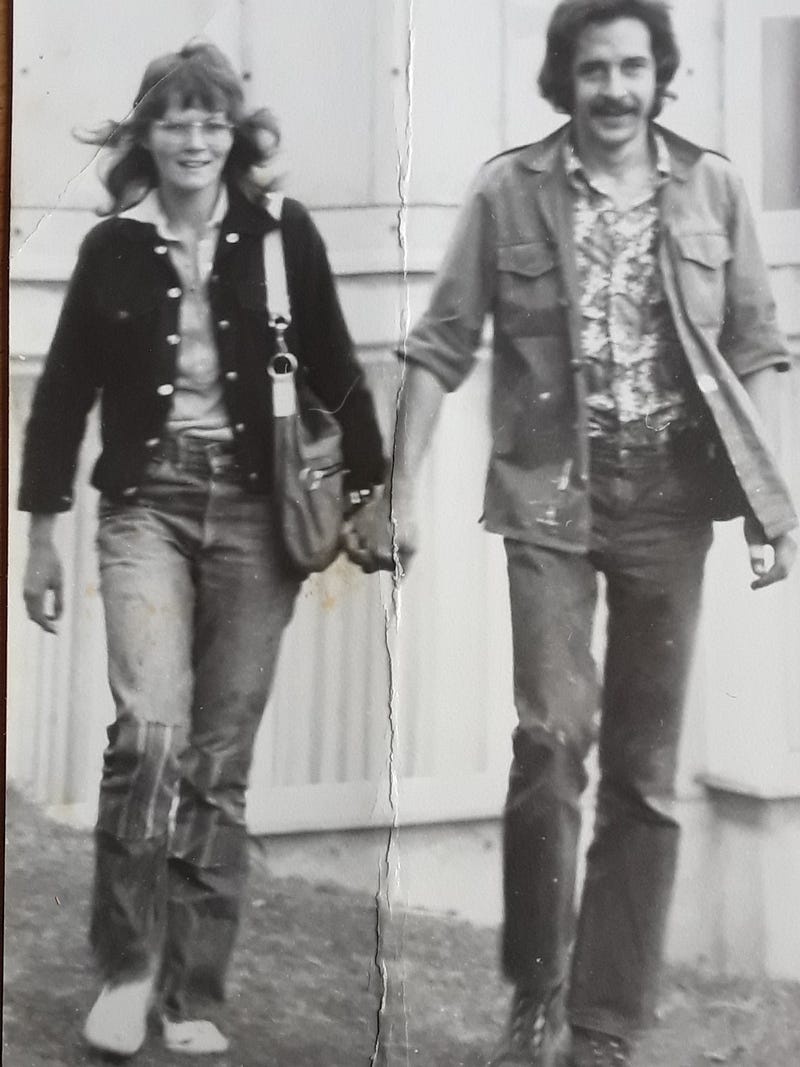
How do I describe the overwhelming joy of South Africans — whites, blacks, coloureds (mixed race) and Indians — singing and dancing as one nation, laughing and connecting in ways the law forbade?
The police and government got into a tizz seeing black and white musicians and concert-goers having a whale of a time together!
I could go on forever relating his career spanning 30 years, but the citation when the South African Government conferred the Order of Ikhamanga, Silver, on him in 2012, reflects the man he was:
“For his excellent contribution to and achievement in bridging African traditional music with other music forms, promoting racial understanding among racially divided groups in South Africa under difficult apartheid conditions, working for a non-racial society and being an outstanding spokesperson for the release of political prisoners.”
I celebrate every day
As a child growing up in those days of segregation, I was colour blind. Though I wasn’t an activist, I treated individuals with dignity and respect, no matter their cultural background.
Correction — I avoided those who hid their racism behind the philosophy that ‘separate development’ (apartheid) helped people reach their full potential — what a load of bull.
My nickname is Caz.
In the workplace Black employees called me Mama Caz, the Zulu word for mother.
On the domestic front, when I was running a commune in 1971, Judy, the maid who came in twice a week to clean house, said to me one day,
“Caz, you’re not like the other madams.” (Non-whites addressed whites with deference, as madam or master.)
“Why do you say that?”
“You treat me as a human being. You don’t talk down to me or give me separate cutlery, mugs and plates to use.”
That was a portent of what I came to learn about my Self — that I am a compassionate being who loves our diverse humanity.
I celebrate each moment of every day — past and present. Without the fears, the tears, the breakdowns and rising again, who would I be today?
But when the news is too much to bear and throws me into despair, I turn to music.
I hope you enjoy this compilation
1. An up-dated 2010 version of Jabulani with PJ Powers and Hip Hop Pantsula:
2. Johnny Clegg performs Asimbonanga (We do not see him)–France 1999
When Clegg originally wrote this in 1987, he dedicated it to Nelson Mandela (RIP), Steve Biko (RIP) and other anti-apartheid activists. Those in power banned the song.
Nelson Mandela, an outstanding leader and man of compassion and forgiveness whom we sorely miss, appears in this performance.
“It is music and dancing that makes me at peace with the world — and at peace with myself.”
3. Spirit of the Great Heart — Johnny Clegg & Friends
(Story of The Starfish included!)
4. The Crossing (Osiyeza)— A Tribute
Johnny Clegg wrote this song in memory of band dancer and percussionist, Dudu Zulu, who lost his life in 1992 trying to mediate a dispute between two rival taxi groups. (The taxi wars continue today.)
50 musicians put together this version in 2018 as a surprise for Johnny, who passed away last year.
5. Siyabonga Khumalo — Plea from Africa 2005
She performed this operatic song as a prayer for peace on our continent. What a voice!
With so much sonic beauty, what’s not to celebrate!
Thank you for being here.
Thanks to 𝘋𝘪𝘢𝘯𝘢 𝘊. for this week’s prompt. You sent me on a musical journey!
If you’re hungry for more, take a listen to our National Anthem in this story:
In case you missed it, this story explains Ubuntu — sorely missing in our current political climate:


