
Hydra Haiku
Hydra’s sleep shows us how ancient the machinery of sleep is…
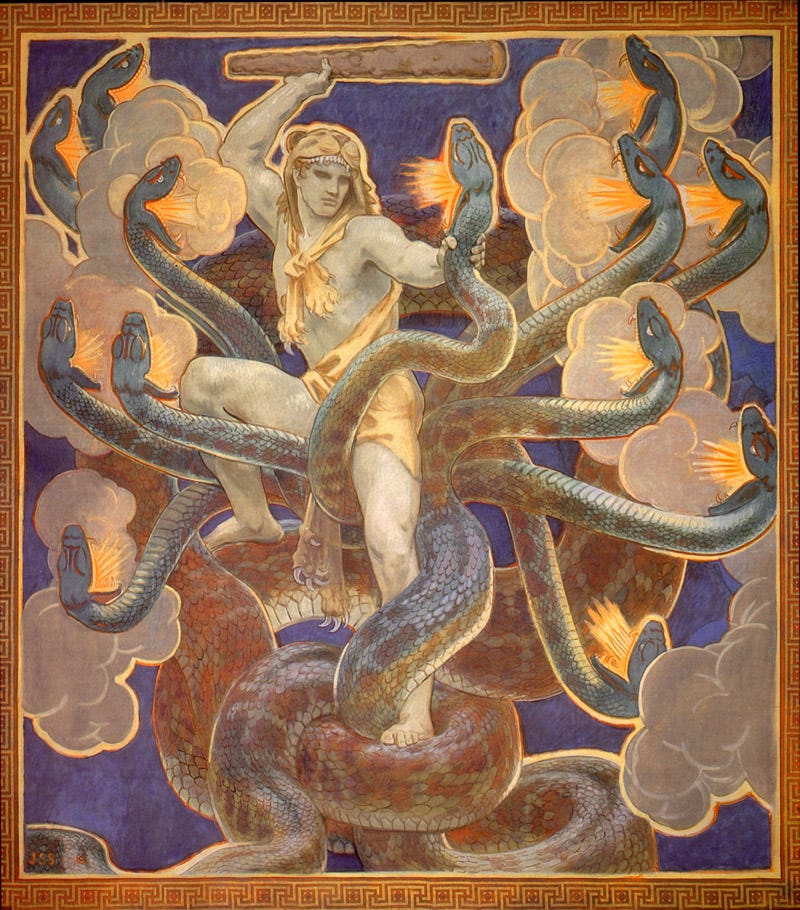
Hydra’s Sleep
Tentacles waving. Eating. Then arms down. Quiet. Do it all again.
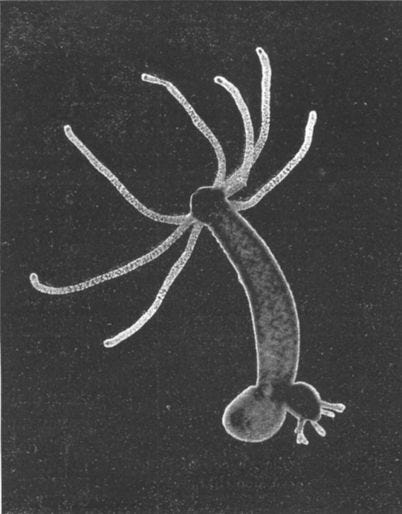
We look at the common pond critter, the hydra, and think this little monster looks nothing like us. And we’d be right. But it’s the things we can’t see which amaze. It’s the genetics, and the discovery of how deeply this little tentacled carnivore’s sleep behavior reflects the ancient origins of our own sleep.
I wrote about research into the sleep of the hydra and what it tells us about our sleep, and its essential nature, here:
Sleep is so essential and fundamental to animal behavior that many chemicals (like melatonin) that induce sleep or wakefulness act in similar ways in hydra and humans. There are exceptions, but those reinforce the ancient origins of sleep’s genetic machinery.
What we know now is that sleep is essential and that without sleep, all animals die, including humans. That is why sleep deprivation is one form of torture used all around the world, including by Americans. What we still don’t know, despite over a century of focused research on sleep, is why it is essential, why it is so important, why we die if we don’t sleep. That is still a mystery. So the search continues.
I also wrote about sleep research more broadly, and showed some of the darker aspects of this research, here:
One of the most fascinating aspects of modern sleep research is the discovery that the gut seems to play an essential role. There appears to be a linkage between the gut, microbial infections and good bacteria, and sleep.
But perhaps one of the most fascinating discoveries links the gut, sleep, and free radicals.
Dragana Rogulja is a Harvard Medical School researcher whose team recently showed that one of the causes of death from sleep deprivation is accumulating free radicals, reactive oxygen species, in the gut. In this work, Rogulja showed that sleep deprivation in flies and mice caused a significant increase in free radicals in the gut. She further showed that the free radicals are not just a symptom of sleep deprivation, but are the cause of death. She did this by eliminating the accumulation of free radicals by several means including oral antioxidants, or genetic engineering the animals to produce antioxidant enzymes. These treatments prevented death from sleep deprivation.
Rogulja concluded that “death upon severe sleep restriction can be caused by oxidative stress, that the gut is central in this process, and that survival without sleep is possible when ROS accumulation is prevented.”
Lack of sleep eventually causes death from the accumulation of free radicals in the gut. In flies and mice, taking antioxidants prevented free radicals from accumulating in the gut, and extended survival during sleep loss.
For More on the #30DaysOfScikuChallenge: