
A guide to starting an Agile Community of Practice
All experiments are learning experiences, even when they don’t go as planned. -Paige Hudson
For someone who loves to experiment, this community was one of those experiments. As we all know with experimentation comes risk, uncertainty, creativity, innovation and investment. I wanted to increase the odds of collaboration and minimize the time and effort spent in planning and structuring such events. It is not in my job role to create, plan and manage the community of practice but certainly my passion to collaborate and learn with the community of practitioners. Hence, I wanted to keep it as ‘Lean and Agile’ as possible which can allow me to remain sustainable with a full-time job.
Community is about doing something together that makes belonging matter and learning valuable.
Our organizational strategy had a key pillar around collaboration with our other divisions in helping them become more powerful, agile and resourceful.
I first brainstormed with myself, I know this sounds ridiculous, but trust me reflecting with self and challenging your thoughts is a great way to self-coach. Following up on this, I created a confluence page internally (which I cannot share). I drafted it based on my reflections on self-coaching. Feel free to refer to this template and make use of it as deemed appropriate. And if you’ve used it, please do not forget to let me know :)
Experiment planning
(I called this an experiment because I was uncertain of the outcome)
Overview
Add details about the experiment at a high level, including information like:
- What type of experiment is this?
- What problem is being solved?
- What practice does this belong to?
- Whom shall we cater to?
- What areas do we need to focus on?
Success Measure
List the primary and second metrics for this experiment:
- Choose one primary metric (e.g., I chose sustainability)
- Choose one secondary metric (e.g., I chose participation and engagement)
Targeting
- Where will this experiment run?
- Who will attend it?
- Who will organize it?
- Who will manage it?
- Who will facilitate it?
Investment
- How much budget do we need?
- Where will we utilize the budget?
- Who will sponsor the budget?
- How much time should I spend on planning and organizing?
- How much time should the audience spend attending?
Other Notes and Learning
- What feedback do you have to share with internal teams (risks, process or planning gaps, etc.)?
- What did I learn from the process?
- What improvements does our audience suggest?
- What was the feedback from the facilitator?
- Who could provide me with a helpful perspective of this community?
- What could be the worst community of practice? (use the TRIZ method here)
- Do I have enough capacity to make this work?
- If I’m saying Yes to this, what else am I saying No to?
Results
Experiment start:
Experiment end:
Highlights:
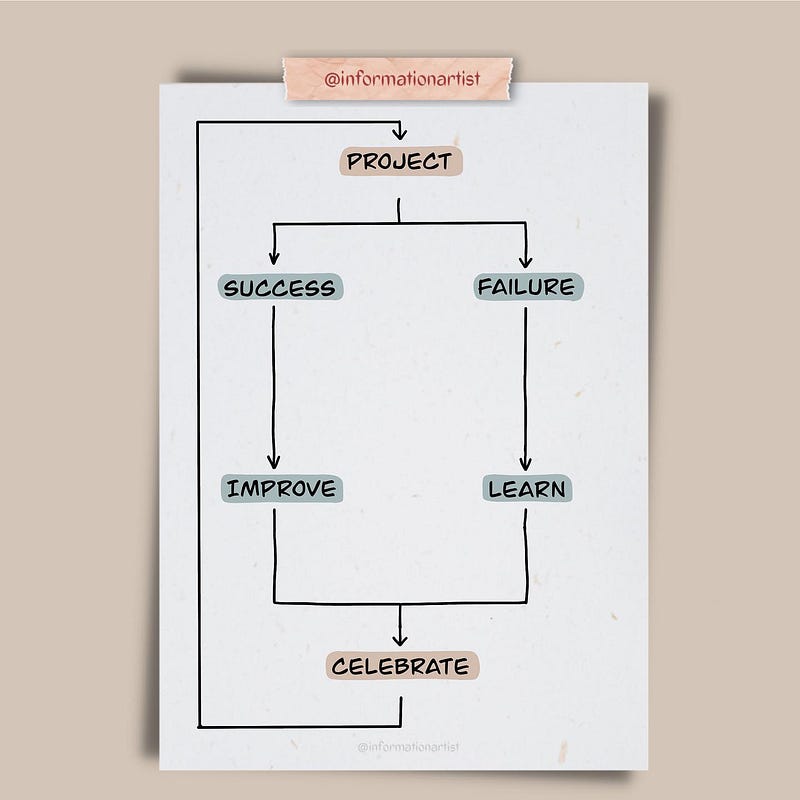
Lessons Learned:
Follow-up actions:
Knowledge is Power. Community is Strength.
If you’re stuck with an idea, feel free to use of my coaching questions above. This was an inspiration from my coaching habit which I turned inward to myself and self-coached to understand the purpose of my objectives and identify the challenges.
We started this community in Feb 2022, and within 2 months, we had our calendar full for the rest of the year. Speakers lined up, topics curated, facilitators sorted, invites sent.
Don’t judge each day by the harvest your reap, but by the seeds you sow. — Robert Louis
I’m certainly proud of the seed I sowed, but I’d like each and every colleague of mine to reap its benefits. Though it started as a single-leader community, the direction I’m paving toward is shared leadership and a co-owned community, which I read about in Emily’s book. I will be sharing a few more insights on this in future articles. Keep watching this space for more...
If you have any tips, recommendations and feedback, feel free to drop them as comments below.
Thank you for reading and clapping! If you’d like to go the extra mile to support my writing, please consider buying me a coffee or joining Medium using my referral link. This article contains affiliate links.


