
How we can use the tragedy of COVID to build better societies
The aesthetically stunning butterfly is the definition of fragile. Yet it begins its life with tremendous suffering.
The butterfly emerges from its cocoon not with an energetic flourish, busting through the sides with an eagerness to explore the world from a height previously denied to it, but with pain and struggle.
In order to gain that ability to fly, the butterfly has to squeeze through the cocoon’s barrier. This forces the water from its body and into its wings, which is what enables it to fly. Without that struggle, the butterfly would remain grounded.
The easy way forward would prevent the butterfly from reaching its potential.
And the same is true for humans.
Most people don’t like change. Not significant change, anyway.
Like the butterfly, it can take enforced struggle for us to look for improvements. Then we look back and say “Huh, that wasn’t so bad. Why didn’t we do this before?”
It took the sinking of the Titanic before ships were made to have enough lifeboats for every passenger (amazing, right?).
It took the Dunblane massacre for new gun laws to be passed in the United Kingdom.
And the Boeing 747 Max needed multiple fatal crashes before finally being given the investigation that it should have had before it was let into the skies in the first place.
Today, we stand looking into the future, in a very altered landscape. The whole world has felt the impact of COVID-19 and while there’s a lot of talk of “a return to normal,” the big question is: should we go back to how we were?
Or, instead, is this the pivotal event that will force us to confront what was wrong with the status quo, and make optimisations for the future?
Life is already different
Being in the UK, my life hasn’t been “normal” since we entered the first lockdown in March 2020. Things opened up briefly but we went back into lockdown, with restrictions tightening further shortly before Christmas.
When people ask me how I’m getting on, I respond honestly it’s been largely positive for me. I say that with a touch of guilt, because I’m well aware that the suffering and hardship has been acute to millions all over the world, not only those who lost their lives to the virus but also in other ways like missed funerals, suffering with isolation, and financial hardship.
But what I mean when I say it has been positive is this:
The pandemic has given me a once-in-a-lifetime opportunity to pause and build my days with intentionality. I no longer wake up and rush out the door to drive for an hour to work, where I’m forced to be for the next 9 hours, then drive another hour home before an hour in the gym before having dinner and going to bed only to repeat it all the next day.
Yes, I know that’s a long sentence — you running out of breath reading it is how I felt living it.
Today, my days are my own. Even with a job planted in the middle of it, merely losing the commute gave me an extra 10 hours a week.
During lockdown I have read more books, completed 75 Hard, signed up for a marathon and begun training for it, and learned the power and importance of winning the morning.
In short, I’ve introduced intentionality and purpose into my days. This has been a revelation, making me realise how much life we aren’t living because we’re chained to desks for the majority of the day.
Both my wife and I have taken up new hobbies and have used the time to work on personal development. It’s given us an opportunity to think about what we really want, both personally and professionally.
It’s not until you stop driving 400 miles a week that you realise how different your mornings look, for instance.
Life is also different on a wider level. With people working from home, coffee shops and franchises have complained they aren’t selling so many lunches and morning coffees anymore. Starbucks will have to wait a little longer for any sympathy from me, though.
Of course, the biggest change has come in how we work. In the recent past many bosses still felt it was impossible to work remotely, and now we’ve all shown just how possible it is. Beneficial, even, in many cases.
When we’re at home, we realise just how much of our life we outsourced.
Working from home may feel routine now, but it brings huge changes.
Childcare, doggy day care, people to clean our houses, home deliveries of food — these are all services we buy to help us win back some time, because we’re at work all day. We’re at work longer than we think, and longer than we get paid for, because we have to get there and get home again.
The job I had at the start of 2020 was for 40 hours per week. That doesn’t include lunch breaks, though. Nor does it include the commute. Combined, that’s an extra 2.5 hours each and every day that my mind and body were “at work” but which I wasn’t being paid for. Over the week,12.5 hours.
That’s 50 hours a month! Think what you could do with 50 hours a month, or 600 hours a year.
Lessons from lockdown
One of the earliest realisations I had in lockdown was “I love being in my house. I love my house, and it’s nice to finally have time in it.”
I appreciate my living space more than ever. How crazy is it that we pay a small fortune every month to live somewhere that we spend very little waking time?
It makes such a difference to be able to see my dogs and cat at any time of day, to make lunch in my own kitchen, and use my own bathroom. Last week, I hired someone to do some work in my garden, bringing it back to life after the winter months. When I worked from an office, he would have had to do it on the weekend. It leads me to assume that as a result of people being home more, he may actually be able to have more customers and work steadier hours.
And with working from home being a new norm, people can live where they want to live rather than within a certain proximity to the office.
And this all culminates into why I think COVID could be one of those seismic events that changes the future for the right reasons. Just as the tragedy of the Titanic sinking resulted in changes that still save lives today, the forced appraisal of and changes to modern living could benefit generations to come.
What the future of society could look like thanks to COVID-19
Work dominates our lives in ways that we don’t even think about until we aren’t in the office.
We buy cars to take us to the office.
We buy lunch and coffees at the nearest shop.
We pay other people to look after our children, clean our homes, walk the dogs, deliver our shopping, iron our clothes.
When we return home, we’re so tired that we want to do nothing but sit on the couch and watch Netflix — perhaps with a meal that someone else cooked and delivered.
That’s the world we got used to.
Now consider this:
If we’re working from home, we aren’t buying coffee and lunch. We’re also not commuting every day. If we aren’t commuting every day, we’re less likely to want to pay for an expensive monthly car payment.
That’s an extra £200, £300 or more in your bank every single month. That’s before we even get to the price of fuel, insurance based on mileage, replacing brakes and tyres and paying for other wear and tear. What does this extra money mean for you? Additional savings? More holidays? Spending more in the economy and local community?
Now let’s look a little further afield. We’ve decided not to get another new car and are enjoying having hundreds of pounds every month in the bank account. We’ve also noticed that our friends haven’t been so quick to change their cars either. Maybe we start walking more too, now that we aren’t so rushed all the time.
If we aren’t buying so many cars and aren’t driving so much, that could have a significant impact on town planning. Our cars are so important to us that we practically plan our lives around them. As Mr Money Mustache puts it:
“Instead of wasting trillions of dollars on separating and isolating ourselves just to accommodate giant racetracks for our gas-powered wheelchairs, we could make everything about 75% less expensive (and many times more fun) by making cities that work without cars.”
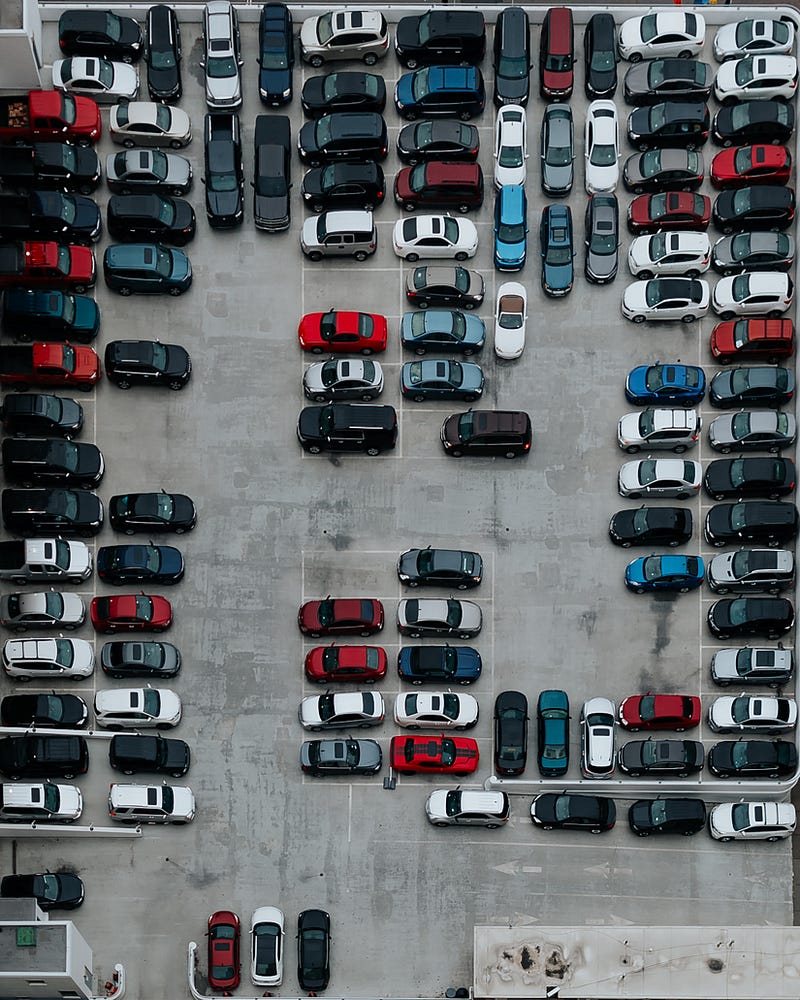
Imagine an urban landscape that wasn’t car-centric.
The paths for walking and cycling — in the Netherlands, cycling is so commonplace that there are more bicycles than people!
The space that could be used for something other than parking cars (the great irony of our love affair with the motor vehicle is they spend around 95% of their time empty and parked).
The quieter streets. The traffic reduction. Not having to avoid “rush hour”.
This isn’t a big utopian dream of having no cars and everybody taking a monorail to work. Flip that picture upside down. We would all still have cars but, without the daily commute, we would have significantly less reason to drive them. With less reason to drive them we would be less motivated to always have a new one. With fewer journeys, and a reduction in how many journeys happen at the same time, we could rethink our infrastructure.
Our actions influence our decisions, so by changing our actions we also change future decisions.
And by being able to live where we want to, not close to the office, we may even see an exodus from the expensive and overcrowded cities and an influx into the quieter, more peaceful locations.
(Since first drafting this article, there are news reports of similar actions already happening in Europe: in Sweden, furniture units and plants are replacing some parking spaces, and Paris authorities “aiming to scrap 70,000 parking spaces as part of a drive to make the city greener.)
A quieter pace of life.
More money in our bank accounts.
More support for local businesses and the smaller economies, with less reliance on Amazon.
More time in our homes.
More time with our loved ones.
More time to relax and work on our own personal development.
And a true work-life balance.
“Return to normal”?
No thank you. I was happy with life before the pandemic, but now I look back and think perhaps we were just too used to it to realise the drawbacks.
We are peering into the future: a global workforce, a focus on mental health, a healthier pace, and a new lease of life for the local economy.
Working from home was just the beginning.


