
Is 75 Hard Worth It?

750 pages
150 workouts
No chocolate
No alcohol
No cheat meals
No junk food
On Saturday September 19, 2020, I first heard of 75 Hard. I can’t remember exactly where, but I was instantly intrigued. I found some people on Instagram doing it and raving about it, and it appealed to me that this challenge was primarily about mental fortitude rather than another grandiose 90-day physical programme that ultimately lets people down.
Yes, there are physical requirements and yes, done properly you will almost certainly see improvements to your physique. But unlike a diet or a workout plan, if you miss a day, 75 Hard doesn’t let you pick up where you left off.
Nope. Back to the beginning you go, like a real life game of Snakes and Ladders (or as Americans apparently play, Chutes and Ladders).
It’s a mental challenge because you need to push on, completing each requirement every single day regardless of how you feel.
Even if you can barely keep your eyes open late at night, those 10 pages need doing.
Those workouts need finishing. There were times I had to wake up at 5.30am to go for a walk or run because I knew my schedule wouldn’t allow for two workouts later in the day.
And if you’re doing it over the holidays, prepare to skip the pumpkin pie, chocolates and booze.
Unless you want to go back to day 1.
Why a mental challenge appealed to me
2020 is a year that doesn’t need an introduction. It’s been different to say the least, and not without its challenges.
When I lost my job in May I was determined to see the positives of the opportunities this year offered. Sure, everyone was affected differently but for me, I couldn’t overlook that lockdowns and enforced time at home just don’t happen – ever.
Suddenly, we all had the time that we’ve said for years we wished we had.
Overnight, there was time to read more. To workout. To eat better. To optimise our daily routines, sleep and wake at sensible hours.
So that’s exactly what I did. And two of the books I read were “Can’t Hurt Me” by David Goggins, and “Living With A SEAL” by Jesse Itzler, where the SEAL in question is the aforementioned Goggins.
Suffice it to say that these books had an immediate impact on me — to the extent that I’ve signed up to run my first marathon as a result.
What is 75 Hard, anyway?
75 Hard is described by its creator Andy Frisella as a mental challenge. The rules are simple: follow the plan for 75 straight days, and if you fail in any area, you begin at day 1 again.
Quite literally, if on day 74 you forget to take a progress picture, you’re to start the entire thing over again.
The plan is this:
- 2 workouts of 45 minutes each, every day, one of which must be outside (they cannot be back-to-back i.e. you can’t lift weights for 45 minutes, then go for a 45-minute run)
- Follow a diet of your choice (it says your choice but IIFYM style are not permitted and on his podcast episode, Andy says a single chocolate chip means you’ve failed)
- Take a progress picture every day
- Read 10 pages of a non-fiction book — audiobooks do not count
- No alcohol
- Drink 1 gallon of water
Is 75 Hard, hard?
Let’s go back to September 19, for a second. It was about 10 o’clock at night, my wife had gone up to get ready for bed and I was doing some browsing on my phone downstairs. I stumbled across the challenge, did about 5 or 10 minutes of reading into it, and decided I wanted to do it.
I text a link to my wife and asked if she’d be up for trying it too. After the initial shock of realising it requires two workouts a day and not a week, and doubting her ability to get past day day 2, she said yes, thinking it might be just the thing she was in need of (and not realising until too late that we would still be doing it over Thanksgiving).
We began the very next day.
I suspect that diving straight in with no time to ponder it too much put us in good stead.
If we had first scoured the Reddit threads and the articles from people who failed or bemoaned it as impossible, we very well might not have started.
Whether or not the challenge is considered difficult ultimately comes down to your existing lifestyle. In all honesty, I found it a breeze for the most part — but that’s not because I’m super awesome and can handle anything, but largely because of my current daily routines and how the challenge complements my natural preclusions.
- I’m no longer commuting 2 hours a day. Those twice-daily workouts would have been much harder.
- I very rarely drink alcohol, so that wasn’t a challenge.
- We had no anniversaries, birthdays or Christmas to be tempted by cake or wine, and we delayed Thanksgiving by a week.
- I love to read anyway, so 75 Hard held me more accountable.
- I have a garage gym and have been consistently working out this year. Not twice a day and not every single day, but going from 4–6 workouts a week to 14 is easier than 0 to 14.
I can’t deny that on the highway of 75 Hard, I was already on the on-ramp before I began.
For people who drink every day, have their days swallowed by long commutes and demanding work schedules, and a dislike of reading, the experience would be completely different.
That said, it was still a challenge:
- Waking up at 5.30am to go for a jog or a walk
- fighting to keep my eyes open when I had my reading to do
- resisting the cravings for a slice of cake (thankfully rare, but there was a period of about 4 consecutive days where I really wanted chocolate)
- carving time out of my afternoons to hit the gym every single day
And above all, the consistency. 75 Hard is relentless, and merciless. Fell asleep on page 9? Sorry bud, back to day one.
Checked everything off the list except for that progress picture? Day one.
Got hit with the flu and couldn’t get out of bed? That’s a fail, start again.
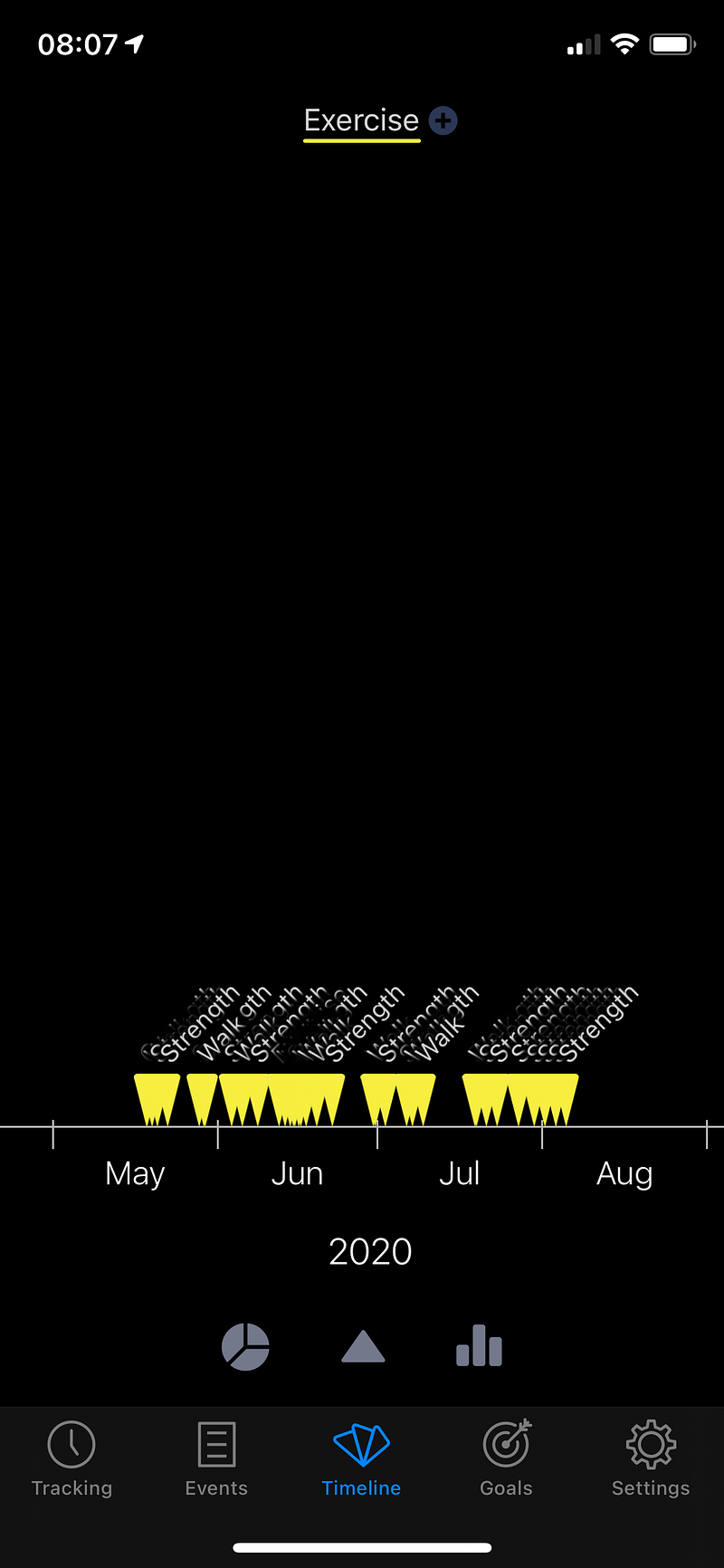
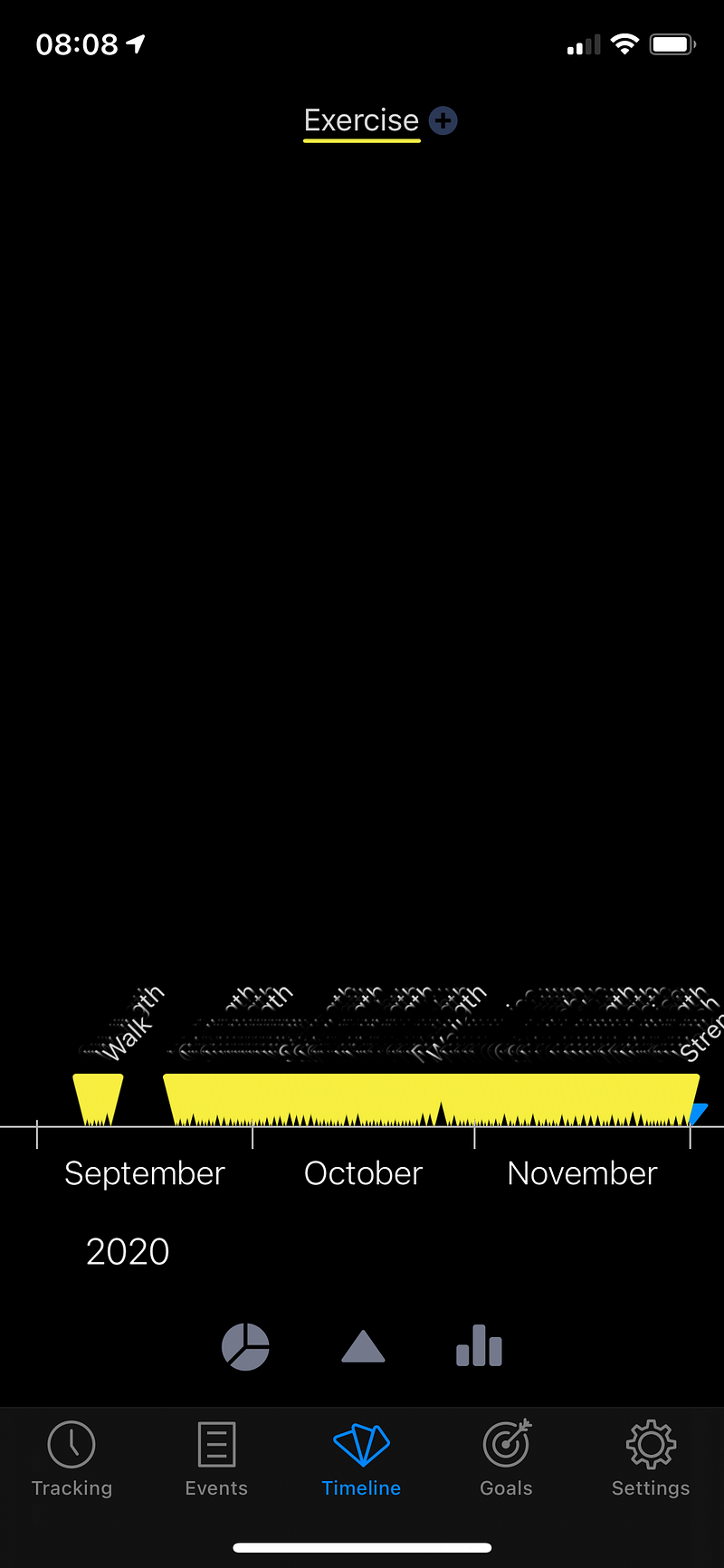
Courtesy of the app Timelines, here’s a picture showing how much exercise I was doing earlier this year. I was fairly regular but inconsistent and missing weeks at a time, including almost all of August. At the tail-end of September, though, I did a minimum of two forms of exercise every single day, and sometimes I’d do a third form, either another walk or a stretching routine:
What results can you expect on 75 Hard?
I’ve deliberately avoided posting progress photos on this article. Results will vary for everyone and you get out what you put in — if your workouts are a leisurely walk or only gentle stretching, and you follow a diet plan but it keeps you at your maintenance calories, then plainly you won’t see the same results as someone who has constructed their approach to pack on muscle or lose body fat.
But I’ll say this: when you trust and stick to systems, results come.
If you go with the aforementioned stretching routine, then after 75 days you can expect to be significantly looser and more flexible. It’s also long enough to lose a noticeable amount of weight, rack up strength on your lifts, or complete the Couch to 5k jogging programme.
It is, in short, enough time to change your life.

You just read another post from In Fitness And In Health: a health and fitness community dedicated to sharing knowledge, lessons, and suggestions to living happier, healthier lives.
If you’d like to join our newsletter and receive more stories like this one, tap here.


