
How to Transition into Data Science from a Non-Technical Background
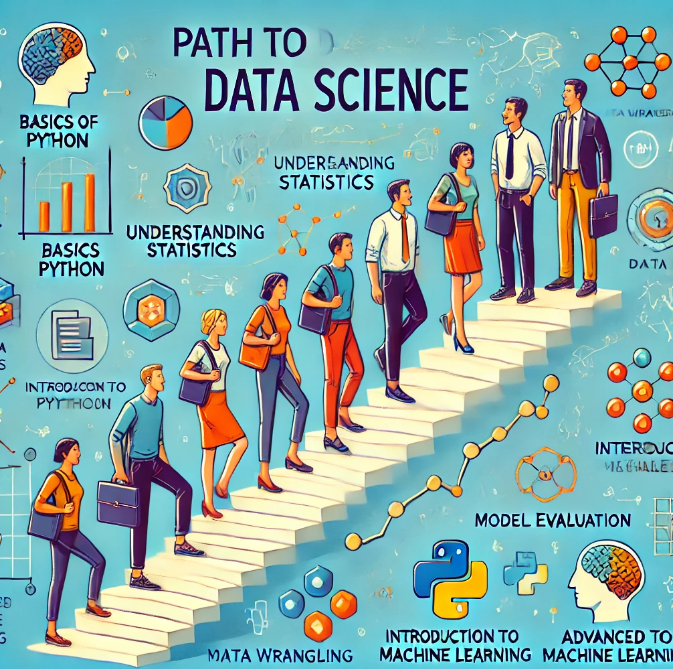
So, you’ve decided to make the leap into the world of data science, and here you are — a brave adventurer from a non-technical background, eager to navigate the world of data.
Welcome! You’re probably wondering if you’re going to need to learn 20+ and counting programming languages, build a time machine, or start drinking triple espressos just to keep up. (Spoiler alert: Only one of these is true, and it’s probably the espresso part.)
Relax! It’s not as daunting as the training institutes or the LinkedIn posts have made it look like!
You don’t have to be a wizard with coding or have a Ph.D. in math to enter this fascinating field.
Let’s break down some tips and strategies to help you transition smoothly and (relatively) painlessly into data science and machine learning universe.
1. Embrace Your Inner Detective
You don’t need to be a genius who knows everything. It’s about being a detective — solving puzzles, finding patterns, and asking the right questions. If you’ve ever binge-watched a crime drama and thought, “I could totally be a detective,” then you’re already halfway there.
Tip: Start honing your problem-solving skills by working on simple projects. Think of something you’re curious about — like analyzing your favorite TV show’s ratings over time or finding the best route to work based on traffic patterns. The goal is to cultivate a data-driven mindset: questioning, exploring, and drawing insights from data.
2. Get Friendly with Excel (Yes, Excel!)
Surprise! You don’t need to jump straight into Python or R right away. Excel is a fantastic place to start. And despite all the hype, Excel is the go-to analytics / decision making tool for many CXOs.
Many successful data scientists began their journey by mastering Excel’s functions, pivot tables, and basic data visualization tools. It’s a great way to get a feel for data manipulation without getting overwhelmed by code.
Tip: Practice with Excel’s advanced features Data Analysis Add-ins, VLOOKUP, and good old Pivot! These skills will give you a head start in understanding data wrangling before you move on to more complex tools.
3. Learn a Programming Language (Don’t Worry, It’s Not That Scary)
Python is your new best friend here. It’s like the Swiss Army knife of programming languages — versatile, easy to learn, and widely used in the data science community.
Tip: Start with the basics of Python. There are so many free resources and tutorials online that make learning Python feel like a fun game rather than a chore.
And remember, everyone starts as a beginner — your goal is to get comfortable, not to become a coding ninja overnight.
4. Take a Crash Course in Statistics (Without the Headache)
Wait, please don’t run away!
I promise this isn’t the difficult statistics class you just managed to survive in college. Statistics is your secret weapon and you should use as your friend, rather than an adversary.
Understanding key concepts like mean, median, variance, correlation, and standard deviation will help you make sense of data and tell a compelling story with it. (to get started, refer this blog)
Tip: Focus on the practical applications.
5. Get Your Hands Dirty with Real Data
Learning is good, but doing is better. Nothing beats the real practice.
This could be anything from public datasets available on websites like Kaggle or UCI Machine Learning Repository to even the data you collect from your daily life (your stock market performance, perhaps?).
Tip: Choose projects that interest you personally. Love sports? Analyze player stats to predict game outcomes. Into investments? Scrape data from yahoo finance to see which stocks are buzzing!
The key is to have fun while learning, and trust me, when you’re working on something you care about, the learning comes naturally.
6. Learn to Tell Stories with Data
Data science isn’t just about crunching numbers; it’s about telling a story with those numbers.
Your non-technical background could actually give you an edge here. If you’re coming from marketing, consulting, or any field that values storytelling, you already have a valuable skill: communicating insights clearly and persuasively.
Tip: Learn data visualization tools like Matplotlib, Seaborn, or Tableau.
7. Network, Network, Network!
Join data science communities online and offline. Attend meetups, webinars, and workshops.
Follow thought leaders on LinkedIn and Twitter. Engage in discussions, ask questions, and share your experiences.
Why? Because the data science community is incredibly welcoming and collaborative. Plus, networking can open up job opportunities and give you access to real-world insights that you won’t find in a textbook.
8. Build a Portfolio (Show Off a Little!)
Once you’ve got a few projects under your belt, start building a portfolio to showcase your skills. This could be a GitHub repository with your code, a personal blog where you discuss your projects, or even LinkedIn articles where you share insights from your work.
Why It Matters: A strong portfolio demonstrates not only your technical skills but also your ability to communicate findings and solve real problems. It’s a powerful tool for job hunting and networking.
9. Stay Curious and Keep Learning
The field of data science is always evolving. New tools, techniques, and theories are popping up all the time. The best data scientists are those who stay curious, keep learning, and aren’t afraid to step out of their comfort zones.
Final Words
Embrace a growth mindset. Be patient with yourself. The journey from a non-technical background to a data science role may have its bumps, but it’s also filled with exciting discoveries and opportunities for personal and professional growth.
Happy learning, future data scientist!
The following blogs may help you get started:
- Analyzing Loan Data with Binomial and Poisson Distributions in Python
- Exploring Credit Risk and IRFS9 Models
- Mastering Credit Risk Analysis: A Step-by-Step Guide to Descriptive Statistics in Python
- The What, Why, and How of Generative AI
- Credit Risk Modeling in Python
- Top 20 FAQs on Descriptive Statistics for Data Science Aspirants
- Top 15 Probability Distribution Questions for Data Science Interviews
- 10 Movies to Binge-Watch for Data Science and AI Nerds!
If you’re as passionate about AI, ML, DS, Strategy and Business Planning as I am, I invite you to connect with me on LinkedIn.
#DataScience, #PythonProgramming, #PMachineLearning, #Careers, #DataScienceJobs


