
The What, Why, and How of Generative AI
Unlocking the Power of Generative AI: Understanding Its Impact, Challenges, and Solutions
The field of Generative AI doesn’t need any introduction. It’s a fascinating field that’s transforming industries and opening up new possibilities.

But what exactly is it, why should we care, and how can we tackle the challenges it presents?
In this tutorial, we’ll break it down step by step, making it easy to understand, even if you’re new to the concept.
1. What is Generative AI?
Generative AI refers to a subset of AI that can create new content — such as text, images, music, or even code — from scratch.
Unlike traditional AI models, which are typically designed to recognize patterns or make predictions, generative AI models learn from existing data to generate entirely new, original content.
Think of a generative AI model as an artist who has studied countless paintings and can now create unique pieces of art that blend different styles and techniques.
Some well-known generative AI models include GPT (Generative Pre-trained Transformer) for text, or DALL-E for images.
2. Why Use Generative AI?
Generative AI has wide range of applications across industries, making it a powerful tool.
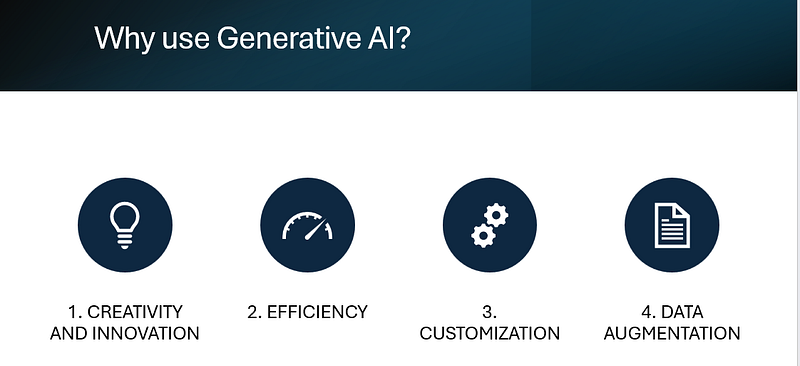
- Creativity and Innovation: Generative AI can help artists, designers, and writers push the boundaries of creativity by offering new ideas and perspectives.
- Efficiency: Automation of several tasks has led to efficiency enhancements, that would have typically required significant human effort, such as writing reports, designing graphics, or generating personalized content.
- Customization: Businesses can use generative AI to create tailored content for individual users, enhancing customer experiences.
- Data Augmentation: In machine learning, Generative AI can be used to create synthetic data to augment little or no training datasets, facilitating in modeling and improving model performance.
3. What Are the Data Challenges of Generative AI?
While generative AI is powerful, it comes with its own set of data-related challenges:
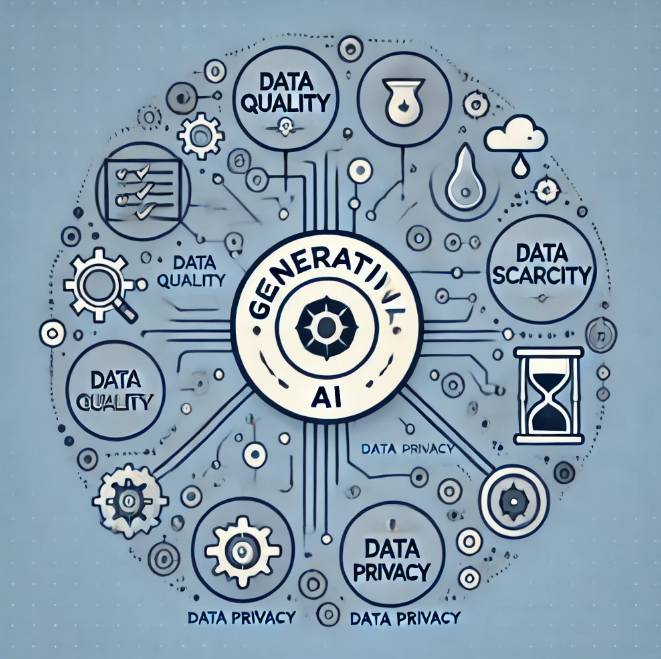
- Data Quality: Generative models require high-quality data to produce meaningful output. In absence of it, the model can produce not just inaccurate, but also harmful results.
- Data Scarcity: In some domains, there may not be enough data to train a robust generative model, leading to overfitting or poor generalization.
- Data Privacy: Privacy is arguably one of the biggest challenges to Generative AI models. These models often require large datasets to provide meaningful outputs, but the downside is that the input data can include sensitive information. Ensuring data privacy and compliance with regulations (like GDPR) is crucial.
4. How to Overcome the Data Challenges of Generative AI?
Overcoming these data challenges requires careful planning and strategy:

- Data Cleaning and Preprocessing: Ensure that your data is clean, relevant, and unbiased. This involves removing noise, filling in missing values, and addressing any bias in the dataset.
- Synthetic Data: If you lack sufficient real-world data, you can use synthetic data. In-fact, Generative models themselves can be used to create this synthetic data, which in-turn can then be used to train other models.
- Data Encryption Techniques: Use techniques like differential privacy, where noise is added to data, or federated learning, where models are trained across decentralized data sources without moving the data itself.
5. What Are the Computational Challenges of Generative AI?
Generative AI models are often complex and computationally intensive, leading to several challenges:
- High Computational Costs: Training and running generative models can requires significant computing power, making it expensive and time-consuming.
- Latency Issues: Generative models can be slow, especially when you are using it to generate large or complex outputs in real-time, which can affect user experience.
- Scalability: As models grow larger, they require more resources to scale effectively, both in terms of data and computational infrastructure.
6. How to Overcome the Computational Challenges of Generative AI?
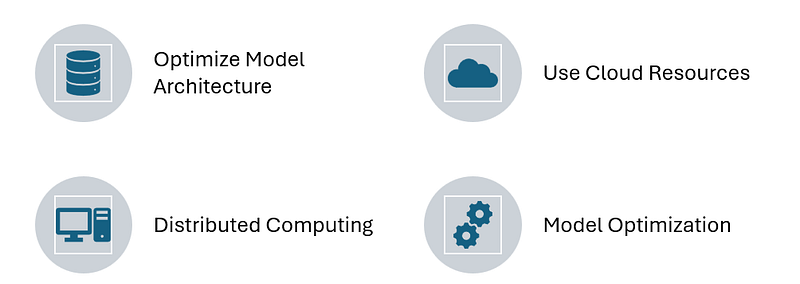
- Optimize Model Architecture: Use model compression techniques like pruning and quantization to reduce the size of your models without sacrificing performance.
- Use Cloud Resources: Leverage cloud-based AI services that offer scalable computing power on demand. Services like AWS, Google Cloud, and Azure provide tools specifically designed for AI workloads.
- Distributed Computing: Train and deploy models across multiple GPUs or even distributed clusters to balance the computational load and reduce latency.
- Model Optimization: Implement techniques like transfer learning, where you start with a pre-trained model and fine-tune it on your specific dataset, reducing the computational cost of training from scratch.
Conclusion
Generative AI is revolutionizing the way we create and interact with content.
From automating creative processes to generating synthetic data, its applications are vast and varied.
However, to harness its full potential, it’s important to understand and address the data and computational challenges it presents.
By following the strategies outlined in this tutorial, you can effectively navigate these challenges and leverage generative AI to its fullest.
If you’re interested in exploring generative AI further or have any questions, feel free to reach out and connect with me on LinkedIn!
Hope you liked this tutorial and found it useful.
#GenerativeAI #AI #MachineLearning #DataScience #Innovation