
How To Tell If Somone Has The Emotional Intelligence of a Cowboy Riding an Ostrich
Emotional intelligence is declining. Here's how to spot those that have this prized skill.
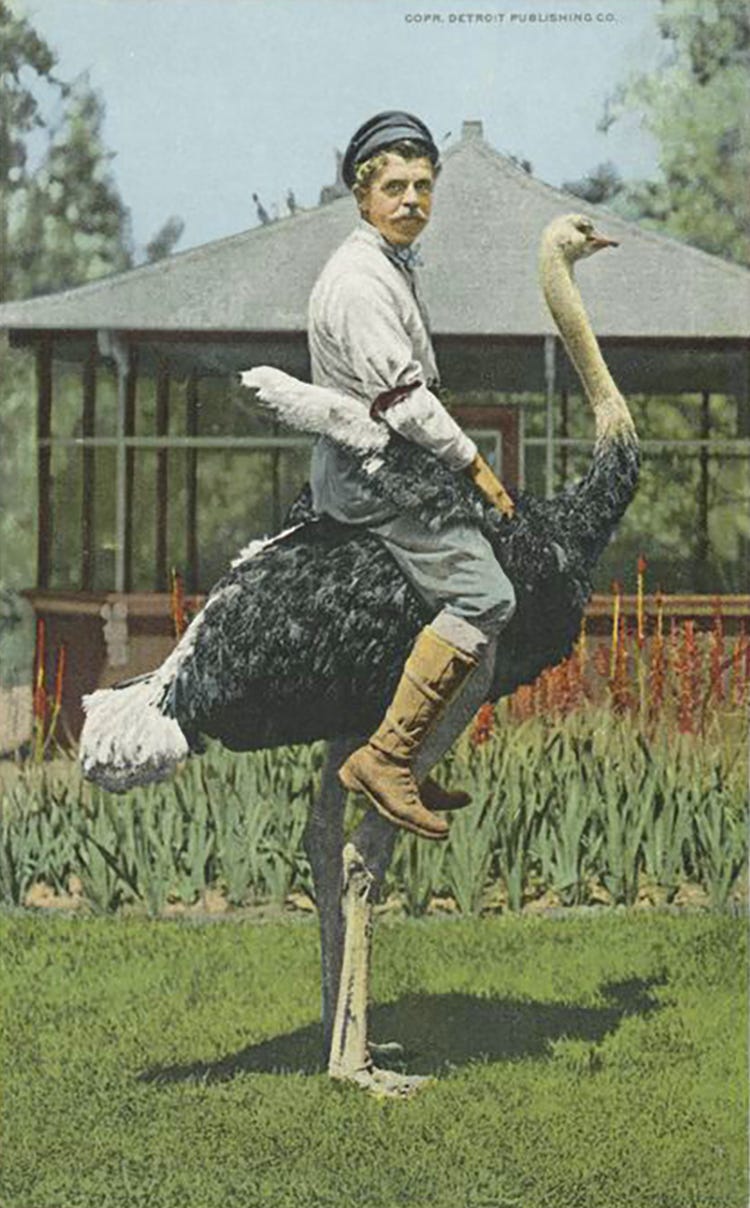
It never ceases to make me drop an ovary. Whenever I go to a party, bar, or networking event, I meet kind, sexy, intelligent men. And I thank the heavens that there are single men who still can carry a conversation and make me laugh until my solar plexus aches.
To all the gentlemen trying to date with intention, thank you.
But…
Whenever I open a dating app, I feel like I have stepped onto the Island of Misfit Toys. Suddenly, every man is a cowboy riding an ostrich with a jelly-squirting water pistol. (Only Gen X and older will get that reference. The rest of you will have to read to the end.)
I met such a jelly squirter recently on a dating app. Let's just call him Charli.
Charli and I exchanged numbers and had some light, flirtatious banter. But about a week into our flirtation, he sent a text telling me he had a rough day.
I responded that he could call if he would like to vent. Since I had not agreed to a date yet with Charli, I was expecting a work or friend drama. Maybe a tragic tale of eating some bad crab and swearing off all shellfish.
That was not Charli's drama.
Charli told me a woman rejected him on a video date and regaled me with the gory details of how he really liked her and hoped to get a date with her.
First off, video dates. Belch. Gross.
Second, come on. This is emotional intelligence 101. Do not talk about other dates with someone you are trying to date. Seriously. Cut that crap out. It's rude and makes you look like you have the seduction skills of Quasimodo without a bell tower.
I usually don't offer advice to strangers, mostly because people often need empathy more than solutions. But I also had a rough week, so my inner Sicilian was itching to come out.
I advised Charli that he might have more luck getting to a first date if he didn't discuss his other dates. (For the record, this was the second time he had done it.)
Of course, he didn't appreciate my unsolicited advice. He immediately got defensive and defended his faux pas by informing me that women always talk about their other dates on dates with him.
The old "everyone does it" argument. No, sorry, emotionally intelligent people do not do this. They seduce someone by giving them their undivided attention. The room might be crowded, but they make the person feel that they are the only one in it.
I suspect I don't meet many men like Charli because I am not active on dating apps. The emotionally intelligent men are not blistering their thumbs swiping. They have a network of connections and the social skills to meet women through friends, work, the gym, parties, associations, bars, and shared hobbies.
The research supports my anecdotal evidence. A recent study found that greater access to technology correlated with decreased emotional intelligence, especially self-control and a sense of well-being.
And since younger people are more likely to use technology to connect with others, they may encounter more ostrich-riding jelly squirters.
Here are a few signs someone lacks emotional intelligence.
Emotionally intelligent people do not play the victim.
Ever notice that the people who only see meanness in others are the meanest people? Victims never become victors. They are too busy tilting at windmills and writing dark conclusions to every narrative.
Unfortunately, one of the greatest weaknesses of immaturity is to see malice where there is really misunderstanding.
When people constantly only see the evil in others, it is usually rooted in deep self-hatred. That old cliche of having to love yourself to love others is a cliche for a reason.
Or perhaps you have a friend whose advice is always negative or ego-driven. If you come to that friend with an interpersonal problem, their reply is always the same — the other person is the asshole. They cannot see both sides.
Emotionally intelligent people don't do this. They understand that often our partners wound us because they are wounded themselves. That's not to say they excuse bad behavior. But they don't interpret others' bad behavior as a reflection of their self-worth.
Emotionally intelligent people help those that cannot benefit themselves.
In the classic children's tale The Lion and the Mouse, a mouse awakens a sleeping lion. The lion is about to eat the mouse, but the mouse promises to help the lion someday if he lets him go. The lion is bemused by this offer. How can a lowly mouse help a regal lion? Still, he lets him go.
A few days later, the lion is caught in a hunter's snare. The mouse hears the lion's roar, runs to his aid, and frees him from the ropes.
The lesson is simple — true kindness is helping those who cannot repay the kindness. It is not transactional.
In Adam Grant's book Give And Take: Why Helping Others Drives Our Success, he asks a clever interview question — give an example of when you helped someone who could never repay the kindness. In other words, the colleague who is a mouse.
Grant asks this question because he wants to hire team players, not users. The kind of people whose generosity and goodwill will lift the entire group. We all know it only takes one immature bad apple to sour a whole office environment.
Emotionally intelligent people don't emotionally dump on others.
I went on a few dates with a guy who mistook his anguished confessions for vulnerability. He told one sad story after another. Eventually, I got tired of every date becoming a therapy session. It was exhausting.
At one point, I teased him that he had to tell a happy story for every sad story he told.
He could not. I then realized he was not sharing his vulnerabilities. He was emotionally dumping on me.
Emotional dumping is sharing your thoughts and feeling without regard to another's emotional state.
Of course, we all sometimes need to get things off our chest. But people who emotionally dump are not seeking a cathartic cleansing. Nor do they want a solution to their problems.
Their intent is not to unload a problem. Their intent is to bury someone else with their problem.
Unfortunately, emotionally unintelligent people struggle to self-regulate their emotions, stress, and impulses.
For example, when I suggested to Charli that he not talk about his dating woes with strangers, that would have required him to self-regulate. And self-regulation is really hard for emotionally unintelligent people.
Emotionally intelligent people use humor to lift people up, not to bring them down.
This is one I struggle with. My sarcasm is a feral beast. And one I need to keep on a tighter leash.
Humor can be a dangerous weapon in the wrong hands. But emotionally intelligent people use humor to peel back truths without leaving others skinned alive.
And if their humor wounds, they don't gaslight someone with the old "Relax…I was only joking." They recognize their teasing was too salty and add some sweetness with a simple act of maturity — an apology.
In today's touchy social discourse, comedians have taken their share of heat for "punching down." Conservatives view these complaints as another example of "woke" culture.
But really, the comedians who punch down are simply not funny. Their low-hanging fruit jokes attacking minorities or any group with less power are rather too easy.
History better illustrates this point. During the Renaissance, court jesters or fools were the bully pulpits of the court. They were the only ones allowed to poke fun at the king— the person with the most power.
But many times, they went too far. And some paid with their life.
For example, Henry VIII got so angry at his court fool, Will Sommers, that he almost strangled him with his bare hands. And when Francis I's fool, Triboulet offended the king; he ordered his beheading. (Triboulet talked his way out of his predicament.)
It takes far more courage to mock the powerful king than the powerless commoner.
In the 1964 classic Christmas special Rudolph the Red Nose Reindeer, a bunch of weird toys no kid wants are banished to "The Island of Misfit Toys." One of these toys was a cowboy riding an ostrich named Charli.
The character was not entirely fictitious. In the 1800s, ostrich riding became popular entertainment throughout the Midwest.
The pastime eventually died out. To start, ostriches cannot carry the weight of a human without tearing tendons. Riders also got hurt because ostriches tend to get ornery when in pain. (Of course, if you get kicked in the head for getting on an ostrich’s back, you might have deserved it.)
The entire stupid, cruel sport is a classic example of humans making poor decisions.
Don't be the cowboy riding an ostrich. Be the knight on a regal steed — conscientious, brave, loyal, and emotionally intelligent.